


P0342

Thread Starter
Drifting


Joined: Jul 2002
Posts: 1,329
Likes: 8
From: Corpus Christi Tx.
 P0342
P0342
Okay new engine, engine harness, all new sensors and cannot get rid of this code. The only code I get is P0342. If I switch the outboard wires I get P0343 and the car does not start nearly as well, so I am confident that the extension harness is correct.
Have replaced the cam sensor twice with new ones (not a easy swap BTW) and still no joy. The cam gear worked fine when it was on my LS2 402 with my current PCM.
Anyone have a suggest as to were to go next ????
Have replaced the cam sensor twice with new ones (not a easy swap BTW) and still no joy. The cam gear worked fine when it was on my LS2 402 with my current PCM.
Anyone have a suggest as to were to go next ????

Tech Contributor


Joined: Jan 2007
Posts: 19,448
Likes: 1,155
From: Dyer, IN
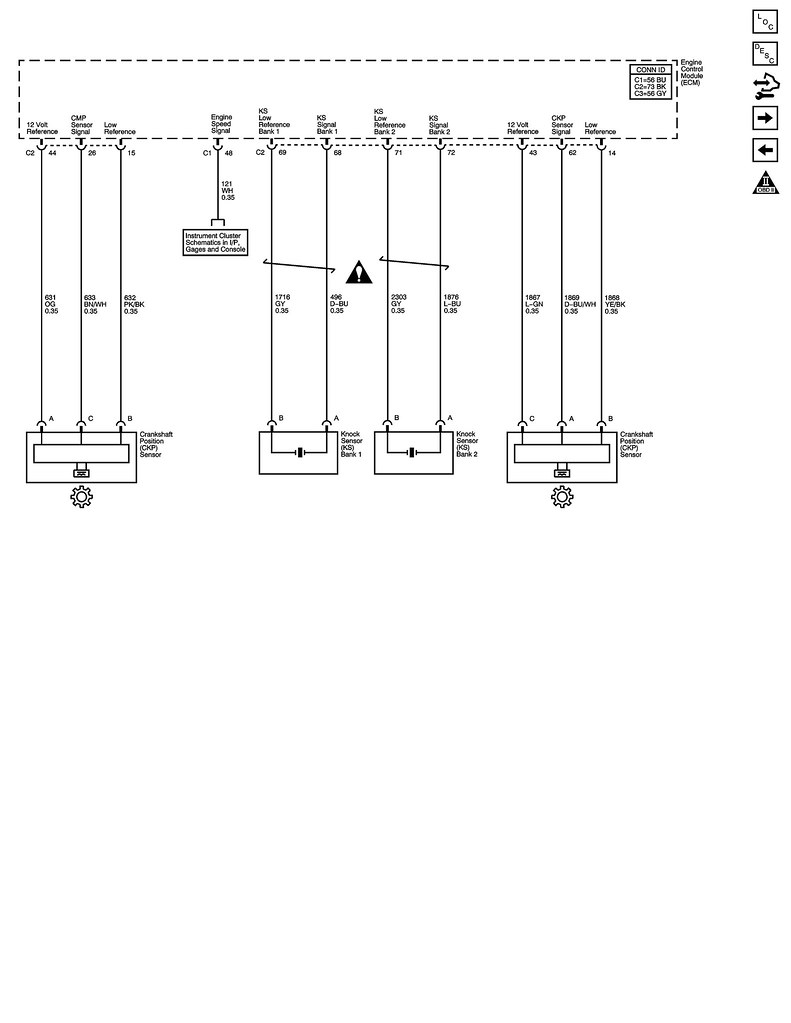
I'm certainly not confident based on your description. The only way to be certain, is to check each wire from the CMP connector to the PCM connector in the following ways:
1) Reading the resistance of each wire(connector to connector)
2) Reading the resistance of each wire to another wire i.e. Pin A to Pin B; Pin A to Pin C ; Pin B to Pin C

Thread Starter
Drifting
Joined: Jul 2002
Posts: 1,329
Likes: 8
From: Corpus Christi Tx.
For lucky131969- still no resolution, I had to send the Maggie to be rebuilt and awaiting it's return so I can reinstall and continue troubleshooting the issue. BTW sometimes we can't post a resolution until the problem is found and resolved.
Thread Starter
Drifting
Joined: Jul 2002
Posts: 1,329
Likes: 8
From: Corpus Christi Tx.
still continues
The mystery continues, As per my previous post I have a cam sensor issue that I cannot resolve.
History - replaced my LS2 402 with a LS3 427. Kept the same heads and cam that was on the 402. Have traced and rewired the harness from the PCM to the cam sensor. Verified that connections were correct at the PCM according to wiring schematics. Switched the cam sensor twice with new sensors.
Currently if I switch the wires on the high and low outputs the code switches from P0342 to P0343 which is what I would expect to see
So anyone have a idea of where I should go next.
The CMP sensor works in conjunction with a 1X reluctor wheel on the camshaft. The reluctor wheel is inside the engine immediately in front of the rear cam bearing. The PCM provides a 12 volt power supply to the CMP sensor as well as a ground and a signal circuit. The CMP sensor determines whether a cylinder is on a firing stroke or on an exhaust stroke. As the camshaft rotates, the reluctor wheel interrupts a magnetic field produced by a magnet within the sensor. The sensors internal circuitry detects this and produces a signal which the PCM reads. The PCM uses this 1X signal in combination with the Crankshaft Position sensor 24X signal in order to determine crankshaft position and stroke. This diagnostic for the Camshaft Position sensor tests for a loss of Camshaft Position sensor signal.
Observe that as long as the Crankshaft Position sensor 24X signal is available, the engine will start. The PCM can determine top dead center for all cylinders by using the Crankshaft Position sensor 24X signal alone. The Camshaft Position sensor 1X signal is used by the PCM to determine if the cylinder at top dead center is on the firing stroke, or the exhaust stroke. The system attempts synchronization and looks for an increase in engine speed indicating the engine started. If the PCM does not detect an increase in engine speed, the PCM incorrectly synchronized to the exhaust stroke and will re-sync to the opposite cam position. A slightly longer cranking time may be a symptom of this condition.
Conditions for Running the DTC
Conditions for Setting the DTC
The PCM detects the Cam signal is stuck low when the signal should be high for 5.0 seconds.
Action Taken When the DTC Sets
History - replaced my LS2 402 with a LS3 427. Kept the same heads and cam that was on the 402. Have traced and rewired the harness from the PCM to the cam sensor. Verified that connections were correct at the PCM according to wiring schematics. Switched the cam sensor twice with new sensors.
Currently if I switch the wires on the high and low outputs the code switches from P0342 to P0343 which is what I would expect to see
So anyone have a idea of where I should go next.
The CMP sensor works in conjunction with a 1X reluctor wheel on the camshaft. The reluctor wheel is inside the engine immediately in front of the rear cam bearing. The PCM provides a 12 volt power supply to the CMP sensor as well as a ground and a signal circuit. The CMP sensor determines whether a cylinder is on a firing stroke or on an exhaust stroke. As the camshaft rotates, the reluctor wheel interrupts a magnetic field produced by a magnet within the sensor. The sensors internal circuitry detects this and produces a signal which the PCM reads. The PCM uses this 1X signal in combination with the Crankshaft Position sensor 24X signal in order to determine crankshaft position and stroke. This diagnostic for the Camshaft Position sensor tests for a loss of Camshaft Position sensor signal.
Observe that as long as the Crankshaft Position sensor 24X signal is available, the engine will start. The PCM can determine top dead center for all cylinders by using the Crankshaft Position sensor 24X signal alone. The Camshaft Position sensor 1X signal is used by the PCM to determine if the cylinder at top dead center is on the firing stroke, or the exhaust stroke. The system attempts synchronization and looks for an increase in engine speed indicating the engine started. If the PCM does not detect an increase in engine speed, the PCM incorrectly synchronized to the exhaust stroke and will re-sync to the opposite cam position. A slightly longer cranking time may be a symptom of this condition.
Conditions for Running the DTC
- The ignition voltage is between 9.0 volts and 17.0 volts.
- The engine speed is less than 4,000 RPM.
Conditions for Setting the DTC
The PCM detects the Cam signal is stuck low when the signal should be high for 5.0 seconds.
Action Taken When the DTC Sets
- The PCM illuminates the malfunction indicator lamp (MIL) on the second consecutive ignition cycle that the diagnostic runs and fails.
- The PCM records the operating conditions at the time the diagnostic fails. The first time the diagnostic fails, the PCM stores this information in the Failure Records. If the diagnostic reports a failure on the second consecutive ignition cycle, the PCM records the operating conditions at the time of the failure. The PCM writes the conditions to the Freeze Frame and updates the Failure Records.
Tech Contributor
Joined: Jan 2007
Posts: 19,448
Likes: 1,155
From: Dyer, IN
The mystery continues, As per my previous post I have a cam sensor issue that I cannot resolve.
History - replaced my LS2 402 with a LS3 427. Kept the same heads and cam that was on the 402. Have traced and rewired the harness from the PCM to the cam sensor. Verified that connections were correct at the PCM according to wiring schematics. Switched the cam sensor twice with new sensors.
Currently if I switch the wires on the high and low outputs the code switches from P0342 to P0343 which is what I would expect to see
So anyone have a idea of where I should go next.
The CMP sensor works in conjunction with a 1X reluctor wheel on the camshaft. The reluctor wheel is inside the engine immediately in front of the rear cam bearing. The PCM provides a 12 volt power supply to the CMP sensor as well as a ground and a signal circuit. The CMP sensor determines whether a cylinder is on a firing stroke or on an exhaust stroke. As the camshaft rotates, the reluctor wheel interrupts a magnetic field produced by a magnet within the sensor. The sensors internal circuitry detects this and produces a signal which the PCM reads. The PCM uses this 1X signal in combination with the Crankshaft Position sensor 24X signal in order to determine crankshaft position and stroke. This diagnostic for the Camshaft Position sensor tests for a loss of Camshaft Position sensor signal.
Observe that as long as the Crankshaft Position sensor 24X signal is available, the engine will start. The PCM can determine top dead center for all cylinders by using the Crankshaft Position sensor 24X signal alone. The Camshaft Position sensor 1X signal is used by the PCM to determine if the cylinder at top dead center is on the firing stroke, or the exhaust stroke. The system attempts synchronization and looks for an increase in engine speed indicating the engine started. If the PCM does not detect an increase in engine speed, the PCM incorrectly synchronized to the exhaust stroke and will re-sync to the opposite cam position. A slightly longer cranking time may be a symptom of this condition.
Conditions for Running the DTC
Conditions for Setting the DTC
The PCM detects the Cam signal is stuck low when the signal should be high for 5.0 seconds.
Action Taken When the DTC Sets
History - replaced my LS2 402 with a LS3 427. Kept the same heads and cam that was on the 402. Have traced and rewired the harness from the PCM to the cam sensor. Verified that connections were correct at the PCM according to wiring schematics. Switched the cam sensor twice with new sensors.
Currently if I switch the wires on the high and low outputs the code switches from P0342 to P0343 which is what I would expect to see
So anyone have a idea of where I should go next.
The CMP sensor works in conjunction with a 1X reluctor wheel on the camshaft. The reluctor wheel is inside the engine immediately in front of the rear cam bearing. The PCM provides a 12 volt power supply to the CMP sensor as well as a ground and a signal circuit. The CMP sensor determines whether a cylinder is on a firing stroke or on an exhaust stroke. As the camshaft rotates, the reluctor wheel interrupts a magnetic field produced by a magnet within the sensor. The sensors internal circuitry detects this and produces a signal which the PCM reads. The PCM uses this 1X signal in combination with the Crankshaft Position sensor 24X signal in order to determine crankshaft position and stroke. This diagnostic for the Camshaft Position sensor tests for a loss of Camshaft Position sensor signal.
Observe that as long as the Crankshaft Position sensor 24X signal is available, the engine will start. The PCM can determine top dead center for all cylinders by using the Crankshaft Position sensor 24X signal alone. The Camshaft Position sensor 1X signal is used by the PCM to determine if the cylinder at top dead center is on the firing stroke, or the exhaust stroke. The system attempts synchronization and looks for an increase in engine speed indicating the engine started. If the PCM does not detect an increase in engine speed, the PCM incorrectly synchronized to the exhaust stroke and will re-sync to the opposite cam position. A slightly longer cranking time may be a symptom of this condition.
Conditions for Running the DTC
- The ignition voltage is between 9.0 volts and 17.0 volts.
- The engine speed is less than 4,000 RPM.
Conditions for Setting the DTC
The PCM detects the Cam signal is stuck low when the signal should be high for 5.0 seconds.
Action Taken When the DTC Sets
- The PCM illuminates the malfunction indicator lamp (MIL) on the second consecutive ignition cycle that the diagnostic runs and fails.
- The PCM records the operating conditions at the time the diagnostic fails. The first time the diagnostic fails, the PCM stores this information in the Failure Records. If the diagnostic reports a failure on the second consecutive ignition cycle, the PCM records the operating conditions at the time of the failure. The PCM writes the conditions to the Freeze Frame and updates the Failure Records.
Thread Starter
Drifting
Joined: Jul 2002
Posts: 1,329
Likes: 8
From: Corpus Christi Tx.
I agree
Yes the cam and gear remained the same, I am afraid you are right and time to tear the front of the motor and check the bolts. Unfortunately I have discovered a few bolts that were not torqued to spec by the shop that did the work.
Tech Contributor
Joined: Jan 2007
Posts: 19,448
Likes: 1,155
From: Dyer, IN
That sucks, but it sounds like you have coverd the bases. It would not be such a PITA......if it were not for the rack....









