



REAL HP Difference between 2001 & 2002 LS6 ?

Thread Starter
Race Director


Joined: Apr 2005
Posts: 11,138
Likes: 11
From: Fremont CA
St. Jude Donor '06-'07-'08-'09-'10-'11-'12-'13-'14-'15-'16-'17-'18-'19-'20
NCM Sinkhole Donor
 REAL HP Difference between 2001 & 2002 LS6 ?
Posted in the Z06 section, but not getting a lot of response, so maybe here will do better....
Ok, I know that GM claimed a 20 HP gain on the LS6 in 2002. However, I also know that they do their engine Dyno with a complete intake, exhaust, and accessories on the engine. Lastly, I know that GM claims the following for 2002...
1. LS6 exhaust back pressure was reduced by 16%
2. Airflow over the LS6 MAF sensor was increased by removing grid work
3. MAF software was re calibrated
4. LS6 air cleaner housing had a larger intake.
5. 2004 introduced a new fuel system which carries over into the new C6.
So the big question is, what is the REAL HP difference between the two engines? Stated another way: If I used a 2001 engine, but made all the above listed changes, what would the true output be? A friend claims that there is really only a 7 HP real world difference in the base longblock - which seems about right to me.
I understand that. I was listing the external components that are part of the equation. I know that if I changed EVERYTHING the. They would be identical. I'm just asking if I'm dropping a stock '01 motor into an '02 and using all the accessories / manifolds / etc from the '02, what is the real world difference in power?
Ok, I know that GM claimed a 20 HP gain on the LS6 in 2002. However, I also know that they do their engine Dyno with a complete intake, exhaust, and accessories on the engine. Lastly, I know that GM claims the following for 2002...
1. LS6 exhaust back pressure was reduced by 16%
2. Airflow over the LS6 MAF sensor was increased by removing grid work
3. MAF software was re calibrated
4. LS6 air cleaner housing had a larger intake.
5. 2004 introduced a new fuel system which carries over into the new C6.
So the big question is, what is the REAL HP difference between the two engines? Stated another way: If I used a 2001 engine, but made all the above listed changes, what would the true output be? A friend claims that there is really only a 7 HP real world difference in the base longblock - which seems about right to me.
I understand that. I was listing the external components that are part of the equation. I know that if I changed EVERYTHING the. They would be identical. I'm just asking if I'm dropping a stock '01 motor into an '02 and using all the accessories / manifolds / etc from the '02, what is the real world difference in power?

Melting Slicks


Joined: Jun 2007
Posts: 2,441
Likes: 25
From: @ work in South Carolina
St. Jude Donor '08-'11-'12

Drifting


Joined: Jan 2008
Posts: 1,722
Likes: 138
From: Florida
St. Jude Donor '09
The 02-04 models also had a higher lift cam and light weight valves. I have an stock 01 with the 02-04 mid pipe and an aftermarket CAI. I had it dynoed last month, the average between the three pulls was 355 rwhp.
Thread Starter
Race Director
Joined: Apr 2005
Posts: 11,138
Likes: 11
From: Fremont CA
St. Jude Donor '06-'07-'08-'09-'10-'11-'12-'13-'14-'15-'16-'17-'18-'19-'20
NCM Sinkhole Donor

Thread Starter
Race Director
Joined: Apr 2005
Posts: 11,138
Likes: 11
From: Fremont CA
St. Jude Donor '06-'07-'08-'09-'10-'11-'12-'13-'14-'15-'16-'17-'18-'19-'20
NCM Sinkhole Donor
Melting Slicks


Joined: Mar 2002
Posts: 2,203
Likes: 63
From: Staten Island NY
The term long block usually means the block, heads and cam. When you say "base long block" what exactly do you mean? Just the block?
ONLY making the external changes you mentioned would make almost NO difference or a negligible one. The cam was the main contributor. The rest of the changes were supporting changes. Thats where the main power increase came from. (Cam)
ONLY making the external changes you mentioned would make almost NO difference or a negligible one. The cam was the main contributor. The rest of the changes were supporting changes. Thats where the main power increase came from. (Cam)
Last edited by warren s; Feb 15, 2012 at 10:19 AM.
Thread Starter
Race Director
Joined: Apr 2005
Posts: 11,138
Likes: 11
From: Fremont CA
St. Jude Donor '06-'07-'08-'09-'10-'11-'12-'13-'14-'15-'16-'17-'18-'19-'20
NCM Sinkhole Donor
Well, you kinda just made my point. They are both tested with the complete system from airbox to exhaust tips. However, the two years have DIFFERENT airboxes, exhaust manifolds, MAFs, MAF tuning, and fuel systems. Each year is tested with the "year correct" complete accessories. The cam, valves, and springs alone did not account for all of the 20 hp gain - some of it (perhaps a significant amount) was due to those external upgrades.
Thread Starter
Race Director
Joined: Apr 2005
Posts: 11,138
Likes: 11
From: Fremont CA
St. Jude Donor '06-'07-'08-'09-'10-'11-'12-'13-'14-'15-'16-'17-'18-'19-'20
NCM Sinkhole Donor
The term long block usually means the block, heads and cam. When you say "base long block" what exactly do you mean? Just the block?
ONLY making the external changes you mentioned would make almost NO difference or a negligible one. The cam was the main contributor. The rest of the changes were supporting changes. Thats where the main power increase came from. (Cam)
ONLY making the external changes you mentioned would make almost NO difference or a negligible one. The cam was the main contributor. The rest of the changes were supporting changes. Thats where the main power increase came from. (Cam)
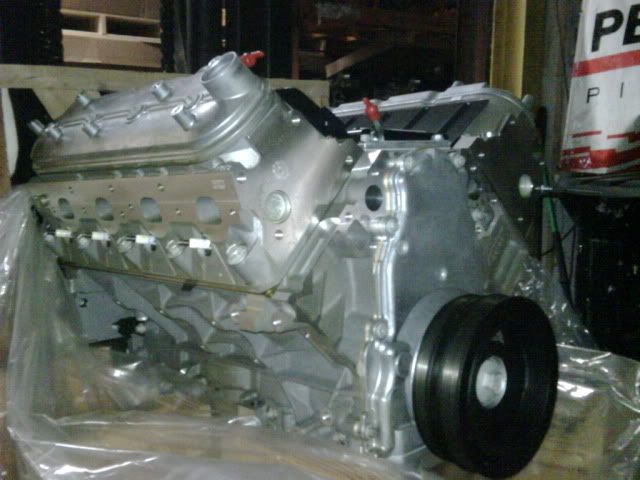
By "base long block" I mean a complete long block without the manifolds. Such as....
Corvette Stories
The Best of Corvette for Corvette Enthusiasts

5 Best & 5 Worst Corvette Daily Drivers
Joe Kucinski
The Headlights of Every Corvette Generation Explained
Joe Kucinski
5 Best & 5 Most Overrated Corvette Track Packages of All Time!
Joe Kucinski
Every 2027 Corvette Engine Explained
Joe Kucinski
Designer Imagines A Corvette That Looks More Like a Corvette Than the Corvette
Verdad Gallardo
10 Ugly Corvettes That We Still Kinda Love
Joe Kucinski
Top 10 Most Expensive Corvettes Ever Sold on Bring A Trailer
Brett Foote
10 Things Every Corvette Owner Needs (2026 Edition)
Michael S. Palmer
8 Most "Only Corvette Owners Understand" Quirks and Problems
Pouria Savadkouei
Melting Slicks
Joined: Mar 2002
Posts: 2,203
Likes: 63
From: Staten Island NY
Well, you kinda just made my point. They are both tested with the complete system from airbox to exhaust tips. However, the two years have DIFFERENT airboxes, exhaust manifolds, MAFs, MAF tuning, and fuel systems. Each year is tested with the "year correct" complete accessories. The cam, valves, and springs alone did not account for all of the 20 hp gain - some of it (perhaps a significant amount) was due to those external upgrades.
Melting Slicks
Joined: Mar 2002
Posts: 2,203
Likes: 63
From: Staten Island NY
That would include the cam and valvetrain, so If that was an LS6 longblock from 02 to 04, and you hooked it up to an 01 airbox and exhaust, it may be down a few hp.

Burning Brakes

Joined: Oct 2004
Posts: 931
Likes: 35
From: Rowlett, Texas
In the 2002 article "Ruthless Pursuit of Power, the Sequel" the Chevy engineer commented that the cam was about 10 HP, the other 10 came from the new cats and the intake mods.
From personal observation of numerous bone stock dyno runs, most of the '01's I saw produced about 335 RWHP, and the '02's were 355. So, back in '02 we all believed the 20 hp difference to be pretty accurate.
Do a Google on that article by Hib Halverson, very informative.
DG
From personal observation of numerous bone stock dyno runs, most of the '01's I saw produced about 335 RWHP, and the '02's were 355. So, back in '02 we all believed the 20 hp difference to be pretty accurate.
Do a Google on that article by Hib Halverson, very informative.
DG
Safety Car

Joined: Oct 2004
Posts: 4,816
Likes: 132
From: Plano TX
In the 2002 article "Ruthless Pursuit of Power, the Sequel" the Chevy engineer commented that the cam was about 10 HP, the other 10 came from the new cats and the intake mods.
From personal observation of numerous bone stock dyno runs, most of the '01's I saw produced about 335 RWHP, and the '02's were 355. So, back in '02 we all believed the 20 hp difference to be pretty accurate.
Do a Google on that article by Hib Halverson, very informative.
DG
From personal observation of numerous bone stock dyno runs, most of the '01's I saw produced about 335 RWHP, and the '02's were 355. So, back in '02 we all believed the 20 hp difference to be pretty accurate.
Do a Google on that article by Hib Halverson, very informative.
DG
http://www.gmhightechperformance.com...e/viewall.html
Thread Starter
Race Director
Joined: Apr 2005
Posts: 11,138
Likes: 11
From: Fremont CA
St. Jude Donor '06-'07-'08-'09-'10-'11-'12-'13-'14-'15-'16-'17-'18-'19-'20
NCM Sinkhole Donor
Here is a link to that article.. All the info you need is in it.. This includes the redesign of the ring pack for ALL 2002 year model LS6 motors.. This addressed the oil burning issues and piston slap of 2001 models
http://www.gmhightechperformance.com...e/viewall.html
http://www.gmhightechperformance.com...e/viewall.html
 ......
A bigger cam, lighter valves, stiffer springs-so goes the ruthless pursuit of power. And what's this new camshaft and valve train stuff worth by itself? Jim Hicks: "You can do a direct A/B comparison and there's an easy 8-10 hp there, whether you change the back pressure or not. There are other changes in the '02 package-exhaust system and induction system-which increase the power more. The overall power increased about 20 hp and the cam was half of it. Again, that's because it's a short-duration design with low overlap so it's not really affected that much by back pressure.
"In fact, we ran the ASA-spec cam back-to-back with this '02 LS6 cam. If you don't change the exhaust system, you only pick up 2 hp with the ASA cam, but if you drop the back-pressure to something near zero (i.e., a racing exhaust), then it's more like 20 hp. So, that's the back pressure effect I keep talking about."
What about that ASA cam? It's got only .525 inch lift but at fifty-up, it's got 226° intake duration and 5.5° overlap versus the LS6's 204° and no overlap. Clearly, it's designed for higher rpm and more power but it needs a very low restriction or open exhaust. Will it work in a hi-po street LS6? Well, kinda sorta. Once you get the cam and the right valvetrain pieces, the biggest problem comes if you have to remain emissions legal. Getting the engine to run with the ASA cam but without the OBD2 diagnostics, blowing codes would be a challenge you have to tackle, but only after you design a cat converter set-up and exhaust system that has low enough back pressure such that the ASA cam's potential can be realized.
What about updating '01 LS6s with the '02 cam? Don't do it, unless you add the '02 valves and springs. Why? According to Jim Hicks, "The biggest issue is without the lightweight, hollow-stem valves, you loose about 300-400 rpm in limiting speed. If you continue to run the LS6 calibration, where the fuel cutoff is 6600 rpm, you're gonna be running into some significant valvetrain distress at 6200-6300 rpm. I have no idea how durable that combination is going to be over time."
"In fact, we ran the ASA-spec cam back-to-back with this '02 LS6 cam. If you don't change the exhaust system, you only pick up 2 hp with the ASA cam, but if you drop the back-pressure to something near zero (i.e., a racing exhaust), then it's more like 20 hp. So, that's the back pressure effect I keep talking about."
What about that ASA cam? It's got only .525 inch lift but at fifty-up, it's got 226° intake duration and 5.5° overlap versus the LS6's 204° and no overlap. Clearly, it's designed for higher rpm and more power but it needs a very low restriction or open exhaust. Will it work in a hi-po street LS6? Well, kinda sorta. Once you get the cam and the right valvetrain pieces, the biggest problem comes if you have to remain emissions legal. Getting the engine to run with the ASA cam but without the OBD2 diagnostics, blowing codes would be a challenge you have to tackle, but only after you design a cat converter set-up and exhaust system that has low enough back pressure such that the ASA cam's potential can be realized.
What about updating '01 LS6s with the '02 cam? Don't do it, unless you add the '02 valves and springs. Why? According to Jim Hicks, "The biggest issue is without the lightweight, hollow-stem valves, you loose about 300-400 rpm in limiting speed. If you continue to run the LS6 calibration, where the fuel cutoff is 6600 rpm, you're gonna be running into some significant valvetrain distress at 6200-6300 rpm. I have no idea how durable that combination is going to be over time."
Drifting
Joined: Jan 2008
Posts: 1,722
Likes: 138
From: Florida
St. Jude Donor '09
Drifting
Joined: Mar 2010
Posts: 1,628
Likes: 15
From: Seattle WA
Posted in the Z06 section, but not getting a lot of response, so maybe here will do better....
Ok, I know that GM claimed a 20 HP gain on the LS6 in 2002. However, I also know that they do their engine Dyno with a complete intake, exhaust, and accessories on the engine. Lastly, I know that GM claims the following for 2002...
1. LS6 exhaust back pressure was reduced by 16%
2. Airflow over the LS6 MAF sensor was increased by removing grid work
3. MAF software was re calibrated
4. LS6 air cleaner housing had a larger intake.
5. 2004 introduced a new fuel system which carries over into the new C6.
So the big question is, what is the REAL HP difference between the two engines? Stated another way: If I used a 2001 engine, but made all the above listed changes, what would the true output be? A friend claims that there is really only a 7 HP real world difference in the base longblock - which seems about right to me.
I understand that. I was listing the external components that are part of the equation. I know that if I changed EVERYTHING the. They would be identical. I'm just asking if I'm dropping a stock '01 motor into an '02 and using all the accessories / manifolds / etc from the '02, what is the real world difference in power?
Ok, I know that GM claimed a 20 HP gain on the LS6 in 2002. However, I also know that they do their engine Dyno with a complete intake, exhaust, and accessories on the engine. Lastly, I know that GM claims the following for 2002...
1. LS6 exhaust back pressure was reduced by 16%
2. Airflow over the LS6 MAF sensor was increased by removing grid work
3. MAF software was re calibrated
4. LS6 air cleaner housing had a larger intake.
5. 2004 introduced a new fuel system which carries over into the new C6.
So the big question is, what is the REAL HP difference between the two engines? Stated another way: If I used a 2001 engine, but made all the above listed changes, what would the true output be? A friend claims that there is really only a 7 HP real world difference in the base longblock - which seems about right to me.
I understand that. I was listing the external components that are part of the equation. I know that if I changed EVERYTHING the. They would be identical. I'm just asking if I'm dropping a stock '01 motor into an '02 and using all the accessories / manifolds / etc from the '02, what is the real world difference in power?
The problem with your thinking is that a single change to a system as complicated as an LSX motor isn't going to give a static value for a horsepower increase. All other things being equal, if you change X, then perhaps X will give you a 10 HP increase. If you change X and Y, you might get 15 horsepower. That does NOT mean that changing Y gives you 5 horses; changing just Y, might give you 8 HP. Changing out Y and Z might give you 20 horses but just changing Z might give a performance DECREASE.
It's really difficult to gauge what just changing out this component or that component is going to give you in HP. GM made a number of changes and came up with 20 horses, but without doing so and running it on a crank dyno it's not really possible to tell what you'll get from just the cam, or just the...etc.

Le Mans Master

Joined: Sep 2003
Posts: 6,278
Likes: 227
From: Farmington CT
Cruise-In VII Veteran
You can find the 02 later Hpipe for about 200 or so........
The cam. It's that simple.
I made a post last month on the best bang for the buck, CAM is it
Or course it went into trash mode, fluid, n20, tuning, internet keyboard warrior banter, etc.
The cam. It's that simple.
I made a post last month on the best bang for the buck, CAM is it
Or course it went into trash mode, fluid, n20, tuning, internet keyboard warrior banter, etc.

Melting Slicks

Joined: Jun 2010
Posts: 2,169
Likes: 1
From: Buford Georgia
