






Another LT1-S dyno result!!

Thread Starter
Former Vendor
Joined: Jan 2009
Posts: 699
Likes: 18
From: Haslet Texas
 Another LT1-S dyno result!!
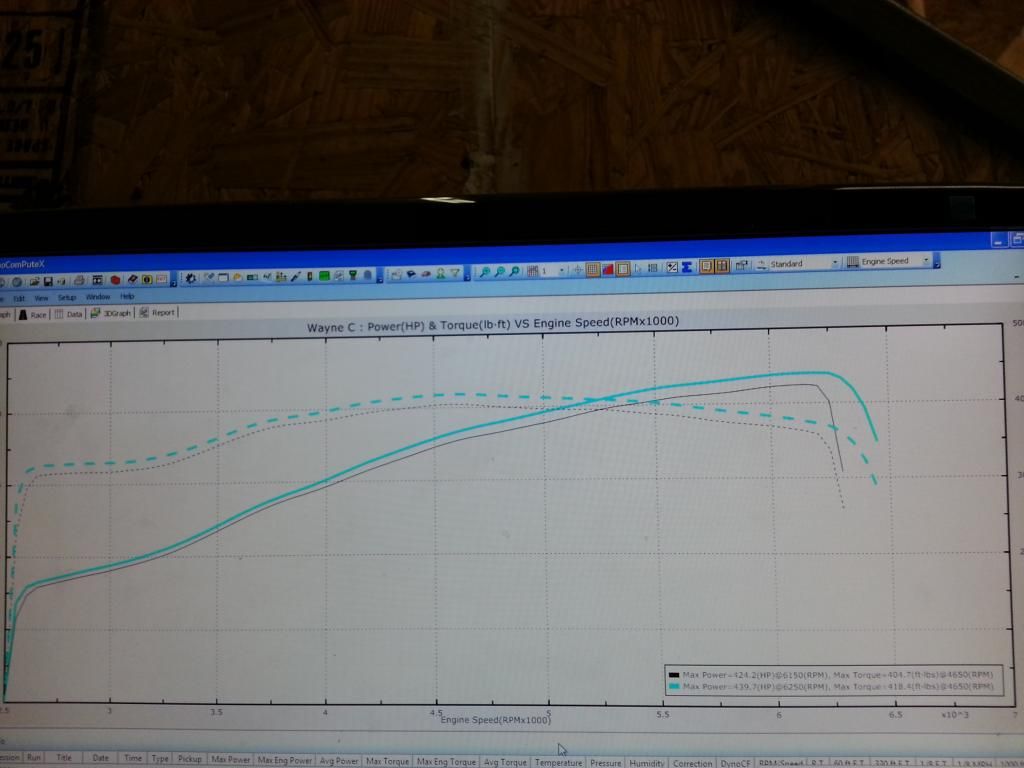
We had a C5 Z06 in the other day to get the old LS6 stock clutch out, and get a new LT1-S with a standard weight flywheel. Here is the dyno results, the only difference between the dyno runs was the clutch swap. It gained 15/RWHP and 13/RWTQ!! Not bad for just a clutch swap, that also drives like stock and can take 700WHP/TQ. Sorry for the poor quality of the photo, its the best that I can get right now.

Thread Starter
Former Vendor
Joined: Jan 2009
Posts: 699
Likes: 18
From: Haslet Texas
http://monsterclutches.com/c5-corvet...reet-c5-clutch
And here is a recent review of the LT1-S.
http://ls1tech.com/forums/manual-tra...installed.html
Feel free to give us a call, or shoot me a PM if you have any questions.
Thread Starter
Former Vendor
Joined: Jan 2009
Posts: 699
Likes: 18
From: Haslet Texas
To say what you did is to admit a lack of understanding of how physics applies to this.
Think of this in the same way you would an underdrive pulley... those pick up power as well, why? Reduced load on the engine = added power.


Pro

Joined: May 2014
Posts: 670
Likes: 46
From: Indiana
Anytime you reduce the rotating mass of an engine you will increase power. That said, anytime you do that on larger parts, IE the clutch, you will gain power on a larger scale.
To say what you did is to admit a lack of understanding of how physics applies to this.
Think of this in the same way you would an underdrive pulley... those pick up power as well, why? Reduced load on the engine = added power.
To say what you did is to admit a lack of understanding of how physics applies to this.
Think of this in the same way you would an underdrive pulley... those pick up power as well, why? Reduced load on the engine = added power.

Corvette Stories
The Best of Corvette for Corvette Enthusiasts

10 Most Common Corvette Problems of the Last 20 Years!
Joe Kucinski
5 MOST and 5 LEAST Popular Corvette Model Years in History!
Joe Kucinski
2027 Corvette Buyer's Guide: Everything You Need to Know!
Joe Kucinski
10 Things C8 Corvette Owners Hate (But Won't Tell You)
Joe Kucinski
10 Best Corvettes Coming to Barrett-Jackson Palm Beach 2026!
Brett Foote
Every Corvette Grand Sport Explained! (C2, C4, C6, C7, & C8)
Joe Kucinski
Grand Sport & Grand Sport X Launch Alongside All-New 535hp LS6 V8!
Michael S. Palmer
5 Reasons Bad Drivers Crash & 5 Ways to Avoid a Costly Mistake!
Joe Kucinski
7 Bolt-On Upgrades From Extreme Online Store to Level Up Your C6 Corvette
Pouria Savadkouei


Le Mans Master


Joined: Jun 2002
Posts: 8,352
Likes: 102
From: In the pit, trying to love someone.
The flywheel is easily the heaviest part of this equation and if standard weight = same weight as stock LS6 flywheel I do not see the clutch disc and pressure plate weighing less enough to make this type of difference in rwhp. Clutch slippage perhaps, if the old one was worn, but the difference would not be seen like this across the power band. Were the runs done on the same day on the same dyno?

Drifting


Joined: Aug 2012
Posts: 1,509
Likes: 61
The flywheel is easily the heaviest part of this equation and if standard weight = same weight as stock LS6 flywheel I do not see the clutch disc and pressure plate weighing less enough to make this type of difference in rwhp. Clutch slippage perhaps, if the old one was worn, but the difference would not be seen like this across the power band. Were the runs done on the same day on the same dyno?
 ...Looks like dyno trickery to me....

Melting Slicks

Joined: Jun 2013
Posts: 3,473
Likes: 691
From: West Virginia
Anytime you reduce the rotating mass of an engine you will increase power. That said, anytime you do that on larger parts, IE the clutch, you will gain power on a larger scale.
To say what you did is to admit a lack of understanding of how physics applies to this.
Think of this in the same way you would an underdrive pulley... those pick up power as well, why? Reduced load on the engine = added power.
To say what you did is to admit a lack of understanding of how physics applies to this.
Think of this in the same way you would an underdrive pulley... those pick up power as well, why? Reduced load on the engine = added power.
And it is nothing like using an underdrive pulley to reduce parasitic losses caused by the various driven accessories as they draw more power the faster they are spun. Even then, we are only talking a couple horsepower.

Instructor

Joined: Mar 2010
Posts: 185
Likes: 3
My old physics professors would disagree with you. The only time you get a beneficial effect from having a lower rotating mass is during periods of very rapid engine rpm acceleration - not steady state.
And it is nothing like using an underdrive pulley to reduce parasitic losses caused by the various driven accessories as they draw more power the faster they are spun. Even then, we are only talking a couple horsepower.
And it is nothing like using an underdrive pulley to reduce parasitic losses caused by the various driven accessories as they draw more power the faster they are spun. Even then, we are only talking a couple horsepower.
Thread Starter
Former Vendor
Joined: Jan 2009
Posts: 699
Likes: 18
From: Haslet Texas
No it can only be used with our custom flywheel and stands.
We like to post these results to help demonstrate the difference MOI (moment of inertia) makes vs the overall weight of a clutch (which is what a lot of people dwell on). The overall weight of this particular clutch, is close to that of the stock LS6, however, the MOI is dramatically lower on the LT1-S by design. The stock unit is 12" and the LT1-S is 9.5", because of that reduced diameter the MOI is lessened which in turn reduces the amount of energy needed to spin the engine. This is why there is an increase in power even though the clutches weigh pretty much the same.
That old trickery of Physics....Lol
Would you agree that the weight of the clutch assembly is a parasitic loss?
Exactly my point. At least someone here has the basic understanding of what we're trying to portray.
The flywheel is easily the heaviest part of this equation and if standard weight = same weight as stock LS6 flywheel I do not see the clutch disc and pressure plate weighing less enough to make this type of difference in rwhp. Clutch slippage perhaps, if the old one was worn, but the difference would not be seen like this across the power band. Were the runs done on the same day on the same dyno?
That old trickery of Physics....Lol
My old physics professors would disagree with you. The only time you get a beneficial effect from having a lower rotating mass is during periods of very rapid engine rpm acceleration - not steady state.
And it is nothing like using an underdrive pulley to reduce parasitic losses caused by the various driven accessories as they draw more power the faster they are spun. Even then, we are only talking a couple horsepower.
And it is nothing like using an underdrive pulley to reduce parasitic losses caused by the various driven accessories as they draw more power the faster they are spun. Even then, we are only talking a couple horsepower.
What do you think a 1/4 mile pass or road racing is? It's all acceleration being produced by the engine. The dyno is measuring power at the wheels. In between the wheels and the engine is a heavy a$$ clutch and flywheel that takes a certain amount of power to accelerate. If you reduce that weight you increase acceleration to the wheels. Horsepower is a product of torque and acceleration (rpm gain). If you increase either, HP goes up. The lighter clutch isn't giving the engine more power, it's giving the wheels more power as an end result, which is what matters in the real world. Our nascar modified motor uses a 5.5 inch clutch that as a whole weights 12lbs. It definitely makes the car faster than a heavy setup because it allows the transfer of power to wheels more efficiently, which would show more power on a chassis dyno, just as this monster twin disk did.

Race Director


Joined: Apr 2007
Posts: 11,150
Likes: 889
From: South Western Ontario
Interesting results. Thanks for doing a back to back test and posting real numbers.
An interesting result of lowering the clutch MOI is that the increase in power to wheels will vary based on the acceleration rate of the engine. In other words, you will gain more in a lower gear compared to a higher gear.
An interesting result of lowering the clutch MOI is that the increase in power to wheels will vary based on the acceleration rate of the engine. In other words, you will gain more in a lower gear compared to a higher gear.