Does water actively move through the coolant tank?
Thread Starter
Instructor

Joined: Jan 2016
Posts: 141
Likes: 21
From: md
 Does water actively move through the coolant tank?
The coolant tank on the passenger fender - does anyone know if it's a stagnant surplus/overflow or does the coolant actively circulate through there?
wondering if I add water wetter to that tank, will it circulate through the system or will it just sit in that tank waiting for a time that the real system needs surplus and draws from there.
wondering if I add water wetter to that tank, will it circulate through the system or will it just sit in that tank waiting for a time that the real system needs surplus and draws from there.

1/4 mile/AutoX


Joined: Jun 2014
Posts: 11,439
Likes: 2,183
From: Buffalo Texas
The coolant tank on the passenger fender - does anyone know if it's a stagnant surplus/overflow or does the coolant actively circulate through there?
wondering if I add water wetter to that tank, will it circulate through the system or will it just sit in that tank waiting for a time that the real system needs surplus and draws from there.
wondering if I add water wetter to that tank, will it circulate through the system or will it just sit in that tank waiting for a time that the real system needs surplus and draws from there.
Thread Starter
Instructor
Joined: Jan 2016
Posts: 141
Likes: 21
From: md
no heater. race car. no dash, no water in the passenger compartment.
I see some hoses entering the tank, but don't know if they are pressurized/flowing while motor is running or if they are only overflow when the motor get's too hot. my suspicion is that its a stagnant tank that takes overflow or gives excess coolant when needed. if that's the case, pouring water wetter in there will be useless because it won't really ever get out of there.
so the question will be, do I need to drain the radiator enough to empty this tank in order to get water wetter into the main part of the system?
I see some hoses entering the tank, but don't know if they are pressurized/flowing while motor is running or if they are only overflow when the motor get's too hot. my suspicion is that its a stagnant tank that takes overflow or gives excess coolant when needed. if that's the case, pouring water wetter in there will be useless because it won't really ever get out of there.
so the question will be, do I need to drain the radiator enough to empty this tank in order to get water wetter into the main part of the system?
Last edited by cre8fun; Sep 22, 2016 at 12:19 AM.

Le Mans Master

Joined: Sep 2014
Posts: 5,278
Likes: 539
From: Kelowna BC
I would have guessed not, and the picture reinforces my thought. Thinking the connection might passively draw and circulate, but that it's not part of the coolant path. Just throwing my thought out there... maybe way off.
Last edited by grantv; Sep 22, 2016 at 12:47 AM.

Team Owner


Joined: May 2001
Posts: 36,836
Likes: 244
From: Dear Karma, I have a list of people you missed.
St. Jude Donor '08-'09-'10-'11-'12-'13-'14-'15-'16
Le Mans Master
Joined: Sep 2014
Posts: 5,278
Likes: 539
From: Kelowna BC
Team Owner
Joined: May 2001
Posts: 36,836
Likes: 244
From: Dear Karma, I have a list of people you missed.
St. Jude Donor '08-'09-'10-'11-'12-'13-'14-'15-'16
I don't know when GM (or other companies) made the HVAC design transition to eliminate them. If I were to guess, I'd say somewhere in the 80s, maybe early 90s.
Corvette Stories
The Best of Corvette for Corvette Enthusiasts

Corvette ZR1X Will Be Pacing the Indy 500, And Could Probably Race, Too!
Verdad Gallardo
Top 10 Corvettes Coming to Mecum Indy 2026!
Brett Foote
Top 10 C9 Corvette MUST-HAVES to Fix These C8 Generation Flaws!
Michael S. Palmer
10 Revolutionary 'Corvette Firsts' Most People Don't Know
Joe Kucinski
5 Reasons to Upgrade to an LS6-Powered Corvette; 5 Reasons to Stay LT2
Michael S. Palmer
2027 Corvette vs The World: Every C8 vs Its Closest Competitor
Joe Kucinski
10 Most Common Corvette Problems of the Last 20 Years!
Joe Kucinski
5 MOST and 5 LEAST Popular Corvette Model Years in History!
Joe Kucinski
2027 Corvette Buyer's Guide: Everything You Need to Know!
Joe Kucinski
Melting Slicks


Joined: Jun 2002
Posts: 2,246
Likes: 66
From: Middletown CT
Based on absolutely no scientific evidence, I would tend to agree with this. I think that as the engine goes through hot and cold cycles that there would be a passive ebb and flow in and out of the tank. It might take a while but I think it would eventually mix with the circulating fluid.
Last edited by Greg_E; Sep 22, 2016 at 12:54 PM.

Team Owner


Joined: May 2001
Posts: 87,298
Likes: 1,579
From: Western NY
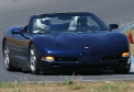
Just for the record, and in an effort to help the OP, since he stated his car does NOT have a heater, I've had the hood open on my fully warmed up C-5, with the engine running, and observer the movement of coolant in the tank.....
Instructor


Joined: May 2005
Posts: 146
Likes: 13
From: San Jose CA
It does not circulate, per se, but it does flow in and out with system temperature.
Long ago, (1950s?), the expansion tank was on the top of and integrated with the radiator. As the coolant expanded with heat, the air-space above the fluid would get compressed and with sufficient pressure the air and/or coolant would be vented to the outside, usually directed to the ground via a drain tube from under the cap down the side of the radiator. It was essentially an "open" system, once the temperature and pressure reached a steady state.
For the past 40ish years, an external expansion tank has been used to capture the overflow. As the coolant heats up, it expands, pushing coolant out of the radiator, and into the expansion tank. As the fluid cools, (like when you shut the motor down) it contracts, reducing the volume, drawing coolant back into the radiator from the reserve tank. As long as the reserve tank never runs dry, air will always be excluded from the system.
So essentially, when the coolant heats up, some fluid is pushed into the expansion tank. When it cools, some fluid is drawn back into the radiator. It's not really circulating, but the back and forth flow will mix whatever you add to the expansion tank into the full system, eventually. So yes, adding water wetter to the expansion tank will get it into the system - not immediately, but after a few cold starts it will be mixed throughout the system.
Long ago, (1950s?), the expansion tank was on the top of and integrated with the radiator. As the coolant expanded with heat, the air-space above the fluid would get compressed and with sufficient pressure the air and/or coolant would be vented to the outside, usually directed to the ground via a drain tube from under the cap down the side of the radiator. It was essentially an "open" system, once the temperature and pressure reached a steady state.
For the past 40ish years, an external expansion tank has been used to capture the overflow. As the coolant heats up, it expands, pushing coolant out of the radiator, and into the expansion tank. As the fluid cools, (like when you shut the motor down) it contracts, reducing the volume, drawing coolant back into the radiator from the reserve tank. As long as the reserve tank never runs dry, air will always be excluded from the system.
So essentially, when the coolant heats up, some fluid is pushed into the expansion tank. When it cools, some fluid is drawn back into the radiator. It's not really circulating, but the back and forth flow will mix whatever you add to the expansion tank into the full system, eventually. So yes, adding water wetter to the expansion tank will get it into the system - not immediately, but after a few cold starts it will be mixed throughout the system.
Thread Starter
Instructor
Joined: Jan 2016
Posts: 141
Likes: 21
From: md
Thanks for all the input. it's pretty clear that the tank on the passenger fender is not in the flow. coolant pushes in there when the car heats up and recoils back when it cools, but the tank is not in the flow path. so putting water wetter in there is pretty much waste.
looks like I will need to drain the radiator enough to empty the tank on the fender, then add the water wetter, refill the system and burp it. just was not looking for all those steps as I also need to drop my under tray to reach the radiator drain.
thanks for the help
looks like I will need to drain the radiator enough to empty the tank on the fender, then add the water wetter, refill the system and burp it. just was not looking for all those steps as I also need to drop my under tray to reach the radiator drain.
thanks for the help
Drifting

Joined: Feb 2010
Posts: 1,310
Likes: 99
From: Arlington Texas
If you put water wetter in the tank, it will circulate through the system. First from the expansion and contraction of the water as it warms and cools. Second its a balance thing. Kind of like osmosis or whatever. The concentrate will mix with the other water in the system.

Race Director

Joined: Apr 2007
Posts: 11,150
Likes: 890
From: South Western Ontario
If you looped the heater core feed hose directly to the tank, or in other words took out the heater core and connected the hoses together, then it will circulate the water wetter out of the tank no problem. Just put it in the tank and drive it and it will get to the whole system.

Team Owner
Joined: Mar 2002
Posts: 24,160
Likes: 78
If you put water wetter in the tank, it will circulate through the system. First from the expansion and contraction of the water as it warms and cools. Second its a balance thing. Kind of like osmosis or whatever. The concentrate will mix with the other water in the system.
 (but the word you were looking for is diffusion not osmosis)
All the coolant is "connected" per se, so any soluble addition to the overflow tank will form a homogeneous solution in time. Whether or not coolant is being actively pumped through the tank is irrelevant.
Try this thought experiment. You have 2 clear jugs. You connect the jugs with a 1/4" ID length of tubing at the base of each jug. Now fill the jugs with water. Now put a few drops of food coloring into just one of the jugs. By the next morning you'll have 2 jugs with the same color water in them. Why?
1/4 mile/AutoX
Joined: Jun 2014
Posts: 11,439
Likes: 2,183
From: Buffalo Texas
(but the word you were looking for is diffusion not osmosis)All the coolant is "connected" per se, so any soluble addition to the overflow tank will form a homogeneous solution in time. Whether or not coolant is being actively pumped through the tank is irrelevant.
Try this thought experiment. You have 2 clear jugs. You connect the jugs with a 1/4" ID length of tubing at the base of each jug. Now fill the jugs with water. Now put a few drops of food coloring into just one of the jugs. By the next morning you'll have 2 jugs with the same color water in them. Why?