When you click on links to various merchants on this site and make a purchase, this can result in this site earning a commission. Affiliate programs and affiliations include, but are not limited to, the eBay Partner Network.
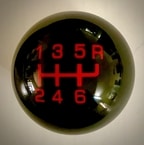
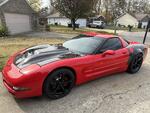
Hey guys (and girls?), I have what may sound like a stupid question: What is my rev limit at? M6. I am the 3rd owner of this '98 C5 and I don't have specifics beyond what I attached.
I want to take it to the strip, but I need to know how high in rpms I can safely go. Thanks in advance! I have not been able to reach the previous owner.
Id say not enough info to say for sure. However with that intake you probably wont see much benefit reving past 6600-6800. Which shouldn’t be a problem for you
edit: unless youre asking what your rev limit/fuel cutoff is set at, in which case you’d have to check your tune to find out. Or just rev it I guess actually
Id say not enough info to say for sure. However with that intake you probably wont see much benefit reving past 6600-6800. Which shouldn’t be a problem for you
edit: unless youre asking what your rev limit/fuel cutoff is set at, in which case you’d have to check your tune to find out. Or just rev it I guess actually
Hey guys (and girls?), I have what may sound like a stupid question: What is my rev limit at? M6. I am the 3rd owner of this '98 C5 and I don't have specifics beyond what I attached.
I want to take it to the strip, but I need to know how high in rpms I can safely go. Thanks in advance! I have not been able to reach the previous owner.
Looks like you have some good parts, but I don’t enough about the cam and springs. It’s a midrange looking lift, but there’s more to it. With the right cam/spring combo your engine can probably run 7,000 rpm safely. I suggest you contact the cam manufacturer and discuss the design of you cam with them, and get some idea of your spring’s capabilities.
It would be very helpful to know what type/brand rod bolts are in there. That plays a big role in holding up to higher rpm’s.
Last edited by vette4fl; Jul 10, 2022 at 02:32 AM.
If you aren't racing for money there is no reason to use a max rpm breakpoint.
I always set daily drivers and reliable fun cars around 5800rpm to 6200rpm max even if they spin 7500rpm. This is to avoid catastrophic failure. You can bang the limiter all day 5900rpm without any issue but all bets are off banging something naturally aspirated around at 6800-7200rpm that is a red zone no matter what kind of parts you are using the stresses going from 5800 to 7k is significantly higher than the difference would suggest.
That said if there is some competition and max performance is required for some reason the first thing I do is calculate piston speed and find the piston manufacturer's maximum piston velocity and stay the !@$%# away from that.
Looks like you have some good parts, but I don’t enough about the cam and springs. It’s a midrange looking lift, but there’s more to it. With the right cam/spring combo your engine can probably run 7,000 rpm safely. I suggest you contact the cam manufacturer and discuss the design of you cam with them, and get some idea of your spring’s capabilities.
It would be very helpful to know what type/brand rod bolts are in there. That plays a big role in holding up to higher rpm’s.
Thanks, I'll have to dig for my specifics. The info presented it all I know of. Maybe I'll find out more from Texas Speed. But for now, I'm gonna do 6200-6500. From previous experience, when I did heads/cam and springs for my Z28, the tuner bumped up the rev limiter 500 rpms.
If you aren't racing for money there is no reason to use a max rpm breakpoint.
I always set daily drivers and reliable fun cars around 5800rpm to 6200rpm max even if they spin 7500rpm. This is to avoid catastrophic failure. You can bang the limiter all day 5900rpm without any issue but all bets are off banging something naturally aspirated around at 6800-7200rpm that is a red zone no matter what kind of parts you are using the stresses going from 5800 to 7k is significantly higher than the difference would suggest.
That said if there is some competition and max performance is required for some reason the first thing I do is calculate piston speed and find the piston manufacturer's maximum piston velocity and stay the !@$%# away from that.
Yeah,'not racing for money, just bragging rights, lol. Thanks for an invaluable response, wow! I'm going to target 6500 max if I get more cam/springs info. The stock limiter is at 6200 according to my research. I got a Zex wet kit going in on 8/1. I can choose between 100-250 shot.
I have a 584 lift cam motion and they recommended pac1218, or 1218x if I was going to beat on it. Those are nice beehive springs. Your description sounds like you have more duration than mine, though.
I tried searching for Joe Overton, but other than an old article nothing.
A dyno graph would give you a good rough start but since you don’t have one I would install a shift light, raptor works good just 3 wire hookup, if your consistent on your runs I would start at 6500, make a few passes, keep track of mph then go up 1000rpm every few passes till you get your fastest mph and that will be your shift point, that cam looks a little small and with the 110lsa I don’t think you’ll need to shift past 7000 but won’t know till you try
Piston speed will determine redline. General rule of thumb is to not exceed 4000 FPM on a performance street engine. If your short block has stock stroke then your redline is about 6,600 RPM. This is my reply to another thread on a 383 stroker. You'll notice that the longer the stroke the lower the redline (6000 RPM) in order to keep piston speed from exceeding 4000 FPM.
A 383 stroker is a longer stroke motor that produces more torque in the low to midrange RPM range. Think low end grunt "Torque Monster". Now there is something called piston speed and it is measured in "feet per minute". When building a "performance street motor" as a rule of thumb FPM should be kept below 4000 and that becomes the redline of the motor. The further you push the motor past that speed the more likely it will come apart. For example your cams range going to 7200 RPM would put your motors piston speed at 4800 feet per minute. Well past 4000. Redline of a 383 with a 4 inch stroke is 6000 RPM @ 4000 feet per minute piston speed. In my opinion your best bet is to swap out that cam for one that'll match the engines midrange torque and take advantage of a better matched setup. You'll make more torque and horsepower while keeping it in the engine bay. Also if your heads don't flow marginally more at .600 lift than they do at .550 then a cam with .600 lift is only wasting energy/time lifting the valve higher than it should and is harder on the valve train.
Hope this helps!
Last edited by whatyacallit; Jul 24, 2022 at 09:31 AM.
If you aren't racing for money there is no reason to use a max rpm breakpoint.
I always set daily drivers and reliable fun cars around 5800rpm to 6200rpm max even if they spin 7500rpm. This is to avoid catastrophic failure. You can bang the limiter all day 5900rpm without any issue but all bets are off banging something naturally aspirated around at 6800-7200rpm that is a red zone no matter what kind of parts you are using the stresses going from 5800 to 7k is significantly higher than the difference would suggest.
That said if there is some competition and max performance is required for some reason the first thing I do is calculate piston speed and find the piston manufacturer's maximum piston velocity and stay the !@$%# away from that.
This is dumb. Why have 7500 RPM worth of motor only to hamstring it with such artificially low limit? If it can run to 7500, but won't survive there then that's just a terrible selection of parts. You'd have a torqueless motor that never even got to the good part of its powerband.
This is dumb. Why have 7500 RPM worth of motor only to hamstring it with such artificially low limit? If it can run to 7500, but won't survive there then that's just a terrible selection of parts. You'd have a torqueless motor that never even got to the good part of its powerband.
Why build a 7500rpm street engine in the first place? How often does a daily driver need to see 8k rpm shifts? Every stoplight you want to do that just to make the car move well? Nahhh no ty, For fun cars build 3000-6000rpm mid-range power. This preserves the engine, prevents failure due to daily mistakes.
No need to use such high RPM without some kind of competition, need top speed and top RPM for some critical aspect of gear ratio in final gear.
It isn't about power, its about top speed capability in 1:1 gear for some kinds of racing situations. In racing, we use electronic shifts, no mistakes. Nobody is drag racing the fastest vehicles 7 seconds with a manual transmission and missing gears, failure is the result.
Why stress an engine like that for no reason? The stress of 7k and 8k rpm is significantly more than 6k. And you smack a limiter at 7k 8k it doesn't matter what parts are in the engine, the risk is much higher than 5k or 6k. Exponentially higher.
Furthermore,
Any power you can make at 7500rpm I can make at 5000rpm with much less stress & wear using the proper forced induction.
Furthermore I can do so with increased economy, efficiency, and a smoother powerband.
Power is limitless. Its 2022 we are not power or torque limited. I have 3L engine 183cubic inches that can 600lbf-ft of torque by 3200rpm for street cars, very fun, reliable, great economy. Why use a much larger engine to make less torque where it counts, and increase risk, reduce economy, spend more money on parts, etc... that is what is dumb
Here is a stock 4.8L 2005 chevrolet engine with around 200,000 miles, + Blower & the red curve nitrous hit.
500lbf-ft by 3000rpm is extremely street friendly. No lack of peak power either. Best of both worlds thanks to force induction.
This is a corvette engine, pretty sure Z06 blower, I forget from where but check the torque curve-
No lack of low end or top end on these. No need to spin 7k+ If you select the correct parts, make far more power where it counts, 2k and 3k rpm,
conserve your economy, preserve your engine. Make smart decisions. No need to risk high RPM where the smallest detail can ruin your engine.
Okay one more. This my favorite of all- the cheapest possible in the world.
This is a stock 5.3L 2002 LM7 with 200,000 miles, Small cam & mild spring (TFS-30602001 & PAC1218)
With turbocharger of course to protect the bottom end and enable high mileage and reliability
Using the worst possible parts: LS1 intake manifold is the worst LS intake to use. Stock pushrods 200k. Stock lifters. Stock timing chain. Stock internals untouched.
Using the worst possible fuel: 93 octane gasoline is poor people fuel for saving money. If you use 93 octane, you cannot afford alcohol, real racing fuel.
So you cannot afford to risk your engine either. All parts and decisions need to match: Use gasoline = Use reliable engine parts = protect your investment at all costs.
What do we notice in this curve? very low boost, only 500rwhp.
But what do you REALLY notice?
How about this fact: No matter what the engine RPM is, the power is same. You can mash the pedal anytime and it makes a straight line.
That eliminates RPM as a factor in racing completely. 4000rpm = same power as 6000rpm = same power as 7000rpm. So why spin 7k when you can spin 5k for the same power? Power to the tires is what makes MPH rise at some rate, 500rwhp at 5000rpm is same acceleration as 500rwhp at 7000rpm.
Thus, RPM is unnecessary, Un-needed. Select correct parts, use the right combination, then the engine can last with no consequences, give superior economy, reliability, use very cheap parts make 500 to 800rwhp with most of these V8 modern engines. Some like the L33 can even produce 1000 to 1200rwhp using alcohol fuels with original untouched internals. With much less than 7k rpm I might add. Fuel choice is the first concern, you intent to use gasoline, then every other decision you make needs to be about reliability and saving money. That is not racing, that is daily drivers, economy. Fuel economy matters if you use gasoline. If fuel economy does NOT matter than you would use alcohol fuel. Now, everything changes. You can get wild and crazy and start blowing up engines racing with alcohol fuel because alcohol fuel is more expensive to run than the engine itself.
Okay one more. This my favorite of all- the cheapest possible in the world.
This is a stock 5.3L 2002 LM7 with 200,000 miles, Small cam & mild spring (TFS-30602001 & PAC1218)
With turbocharger of course to protect the bottom end and enable high mileage and reliability
Using the worst possible parts: LS1 intake manifold is the worst LS intake to use. Stock pushrods 200k. Stock lifters. Stock timing chain. Stock internals untouched.
Using the worst possible fuel: 93 octane gasoline is poor people fuel for saving money. If you use 93 octane, you cannot afford alcohol, real racing fuel.
So you cannot afford to risk your engine either. All parts and decisions need to match: Use gasoline = Use reliable engine parts = protect your investment at all costs.
What do we notice in this curve? very low boost, only 500rwhp.
But what do you REALLY notice?
How about this fact: No matter what the engine RPM is, the power is same. You can mash the pedal anytime and it makes a straight line.
That eliminates RPM as a factor in racing completely. 4000rpm = same power as 6000rpm = same power as 7000rpm. So why spin 7k when you can spin 5k for the same power? Power to the tires is what makes MPH rise at some rate, 500rwhp at 5000rpm is same acceleration as 500rwhp at 7000rpm.
Thus, RPM is unnecessary, Un-needed. Select correct parts, use the right combination, then the engine can last with no consequences, give superior economy, reliability, use very cheap parts make 500 to 800rwhp with most of these V8 modern engines. Some like the L33 can even produce 1000 to 1200rwhp using alcohol fuels with original untouched internals. With much less than 7k rpm I might add. Fuel choice is the first concern, you intent to use gasoline, then every other decision you make needs to be about reliability and saving money. That is not racing, that is daily drivers, economy. Fuel economy matters if you use gasoline. If fuel economy does NOT matter than you would use alcohol fuel. Now, everything changes. You can get wild and crazy and start blowing up engines racing with alcohol fuel because alcohol fuel is more expensive to run than the engine itself.
Based on the dynos you posted, you're agreeing with me? I can't tell. None of those motors would want to run out to 7000+ and doing so would be counter-productive, so I don't follow your need to call out such high rev limits as being bad in the first place.
Based on the dynos you posted, you're agreeing with me? I can't tell. None of those motors would want to run out to 7000+ and doing so would be counter-productive, so I don't follow your need to call out such high rev limits as being bad in the first place.
I do not understand that which you do me the honor to tell me
None of those engines would want to rev out to 7k by design, It is intentional because the stress going from 6k to 7k is exponentially insanely stressful and there is no reason to do so. It is furthermore useless to build the engine to rev to 7k when you can have all the power you wanted by 6k rpm. Use the lowest rpm possible to suite your goals = use the least engine stress = most safe engine build. Daily drivers = need safety.
There are situations in racing or when using very small displacements where revving out 9k 10k 20krpm is necessary. But that is not street car stuff for daily drivers territory. It is more for weekend toys which see very low mileage, or one time use and the engine gets rebuilt every race.
II always set daily drivers and reliable fun cars around 5800rpm to 6200rpm max even if they spin 7500rpm. This is to avoid catastrophic failure.
You said this.
Originally Posted by Kingtal0n
Why build a 7500rpm street engine in the first place? How often does a daily driver need to see 8k rpm shifts? Every stoplight you want to do that just to make the car move well? Nahhh no ty, For fun cars build 3000-6000rpm mid-range power. This preserves the engine, prevents failure due to daily mistakes.
No need to use such high RPM without some kind of competition, need top speed and top RPM for some critical aspect of gear ratio in final gear.
It isn't about power, its about top speed capability in 1:1 gear for some kinds of racing situations. In racing, we use electronic shifts, no mistakes. Nobody is drag racing the fastest vehicles 7 seconds with a manual transmission and missing gears, failure is the result.
Why stress an engine like that for no reason? The stress of 7k and 8k rpm is significantly more than 6k. And you smack a limiter at 7k 8k it doesn't matter what parts are in the engine, the risk is much higher than 5k or 6k. Exponentially higher.
Furthermore,
Any power you can make at 7500rpm I can make at 5000rpm with much less stress & wear using the proper forced induction.
Furthermore I can do so with increased economy, efficiency, and a smoother powerband.
Power is limitless. Its 2022 we are not power or torque limited. I have 3L engine 183cubic inches that can 600lbf-ft of torque by 3200rpm for street cars, very fun, reliable, great economy. Why use a much larger engine to make less torque where it counts, and increase risk, reduce economy, spend more money on parts, etc... that is what is dumb
Backed it up with this and a bunch of dynos where a motor doesn't want 7500 RPM.
Originally Posted by Kingtal0n
I do not understand that which you do me the honor to tell me
None of those engines would want to rev out to 7k by design, It is intentional because the stress going from 6k to 7k is exponentially insanely stressful and there is no reason to do so. It is furthermore useless to build the engine to rev to 7k when you can have all the power you wanted by 6k rpm. Use the lowest rpm possible to suite your goals = use the least engine stress = most safe engine build. Daily drivers = need safety.
There are situations in racing or when using very small displacements where revving out 9k 10k 20krpm is necessary. But that is not street car stuff for daily drivers territory. It is more for weekend toys which see very low mileage, or one time use and the engine gets rebuilt every race.
And continue to back it up with, "I can make more power with more displacement/boost/etc" and "race car this, street car that". That was never the point. The point is, if you have a motor that wants 7500 RPM and set the limit down in the 6000 range, you are a retard.
Oo name calling on the internet. Glad you are mad. Too bad you are still wrong.
You can turn anyone of these engines to 7k rpm and make the same power. The RPM is useful for top speed. Here is an example for you
Tuned this car friday, 2.5L Engine
It spins almost 8000rpm. But look at the MPH: 160MPH. When will he ever use 160mph on the street? Engine will be limiting the RPM to 6500rpm, perhaps 6300rpm for street use, because going over 135MPH on general highway is kind of wreckless IMO.
But you would have him spin to 7500 rpm 160MPH with his daily driver every day in traffic to avoid being an idiot? who is the idiot.







 Rev Limiter