


A/C question

Thread Starter
Intermediate

Joined: Apr 2017
Posts: 31
Likes: 0
 A/C question
3/9/24 Saturday,
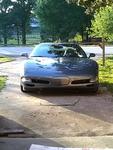
2004 C5 convertible. Base Automatic with 52K miles.
I looked for a thread about this without any luck. So here's my question.
I live in Hot Arizona and I have had my Vette since 2017. I don't drive it a lot, so it sits in my Hot garage a lot. I know that rubber products do not hold up well in the heat so I'm thinking that perhaps the "O" Rings on my A/C have dry rotted a bit.
It was working like new last year and then all of a sudden it was not. So it was not a slow reduction in cooling ability. It just stopped. Blew hot air out the vents. I took it to a guy to have the system recharged and it blew like a refrigerator for about a week. Then it was back to warm air. He recharged it for me again (no charge) and it was great for another week or so. He had added dye into the system and using a black light, we were able to see some yellow dye at the firewall where the lines connect to the evaporator that's mounted under the dash.
I watched the usual You Tube videos about pulling the evaporator core out and it looks like Corvettes are build around the evaporator. Wow ! Unbelieveable job getting it out.
I tried to repair it last week and using my new A/C tools and refrigerant, I pulled a -30 (minus 30) vacuum and stopped the pump and watched as the pressure crept up to just over zero again. So I decided to try a leak sealer called Leak Seal UV. It has great reviews. I added it according to directions and added about 8 oz of refrigerant (R134) and it was blowing cool air again. I let it run as directed for about 1 hour to circulate the sealant and then I tried to pull a vacuum again. It got back down to - 30 PSI but would not hold it - just like before.
Now I'm to the point of considering unbolting the lines that go to the evaporator at the engine side of the firewall to inspect and replace the "O" rings. The aluminum block has a single bolt into the firewall and getting to it is a major labor.
Has anyone done this before and are their any good tips of clues to getting to this bolt / block assembly to get to the "O" rings?
I really do not want to try removing the evaporator core.
I plan on selling this beautiful Triple Black Vette and getting a car that's easier getting in and out of. I'm getting too old to be climbing out of this car.
I'd sure appreciate any information or suggestions that any of you may have.
Thanks
Keats
Peoria, Az.
2004 C5 convertible. Base Automatic with 52K miles.
I looked for a thread about this without any luck. So here's my question.
I live in Hot Arizona and I have had my Vette since 2017. I don't drive it a lot, so it sits in my Hot garage a lot. I know that rubber products do not hold up well in the heat so I'm thinking that perhaps the "O" Rings on my A/C have dry rotted a bit.
It was working like new last year and then all of a sudden it was not. So it was not a slow reduction in cooling ability. It just stopped. Blew hot air out the vents. I took it to a guy to have the system recharged and it blew like a refrigerator for about a week. Then it was back to warm air. He recharged it for me again (no charge) and it was great for another week or so. He had added dye into the system and using a black light, we were able to see some yellow dye at the firewall where the lines connect to the evaporator that's mounted under the dash.
I watched the usual You Tube videos about pulling the evaporator core out and it looks like Corvettes are build around the evaporator. Wow ! Unbelieveable job getting it out.
I tried to repair it last week and using my new A/C tools and refrigerant, I pulled a -30 (minus 30) vacuum and stopped the pump and watched as the pressure crept up to just over zero again. So I decided to try a leak sealer called Leak Seal UV. It has great reviews. I added it according to directions and added about 8 oz of refrigerant (R134) and it was blowing cool air again. I let it run as directed for about 1 hour to circulate the sealant and then I tried to pull a vacuum again. It got back down to - 30 PSI but would not hold it - just like before.
Now I'm to the point of considering unbolting the lines that go to the evaporator at the engine side of the firewall to inspect and replace the "O" rings. The aluminum block has a single bolt into the firewall and getting to it is a major labor.
Has anyone done this before and are their any good tips of clues to getting to this bolt / block assembly to get to the "O" rings?
I really do not want to try removing the evaporator core.
I plan on selling this beautiful Triple Black Vette and getting a car that's easier getting in and out of. I'm getting too old to be climbing out of this car.
I'd sure appreciate any information or suggestions that any of you may have.
Thanks
Keats
Peoria, Az.

Melting Slicks


Joined: Nov 2014
Posts: 3,399
Likes: 1,339
From: Havre de Grace Maryland
I also have a 04 black Vert but with a M6. At 80 years old, I am not doing any mechanical or electrical repairs. Before buying the C5 ten years ago, I made sure there was a nearby competent repair shop to do what I will not. Since it appears you are hesitant to DIYS the repairs, is there a repair shop that would do the repairs for you? You indicate that you are having trouble entering and exiting the C5. Me to. I use this helper
I really enjoy the ride in all weather and will continue to do so as long as the car is reasonably trouble free and the repair shop is still in business. The C5 is a great looking car but unfortunately has many mechanical and electrical gremlins. When the gremlins outdo the happiness, like you, I will sell.
I really enjoy the ride in all weather and will continue to do so as long as the car is reasonably trouble free and the repair shop is still in business. The C5 is a great looking car but unfortunately has many mechanical and electrical gremlins. When the gremlins outdo the happiness, like you, I will sell.
Thread Starter
Intermediate
Joined: Apr 2017
Posts: 31
Likes: 0
I also have a 04 black Vert but with a M6. At 80 years old, I am not doing any mechanical or electrical repairs. Before buying the C5 ten years ago, I made sure there was a nearby competent repair shop to do what I will not. Since it appears you are hesitant to DIYS the repairs, is there a repair shop that would do the repairs for you? You indicate that you are having trouble entering and exiting the C5. Me to. I use this helper
Amazon.com: Gantok Versatility Auto Cane Vehicle Support Handle for Elderly and Handicapped Portable Automotive Door Assist Handles with LED Light, Seatbelt Cutter, and Window Breaker : Automotive
I really enjoy the ride in all weather and will continue to do so as long as the car is reasonably trouble free and the repair shop is still in business. The C5 is a great looking car but unfortunately has many mechanical and electrical gremlins. When the gremlins outdo the happiness, like you, I will sell.
Amazon.com: Gantok Versatility Auto Cane Vehicle Support Handle for Elderly and Handicapped Portable Automotive Door Assist Handles with LED Light, Seatbelt Cutter, and Window Breaker : Automotive
I really enjoy the ride in all weather and will continue to do so as long as the car is reasonably trouble free and the repair shop is still in business. The C5 is a great looking car but unfortunately has many mechanical and electrical gremlins. When the gremlins outdo the happiness, like you, I will sell.
Yea, I understand what your saying. I have a really good shop that I've used for a few things on my other car but this is not what I'm looking to do with the C5. I am in my mid 70's and I still get out and turn wrenches and I love doing it. I just don't want to do this big of a job without suggestions about how to minimize the labor involved. I'm sure that someone has done this before and may have a tip for me.
Thanks,
Keats

Drifting


Joined: Mar 2017
Posts: 1,483
Likes: 343
From: Long Island New York
Before you pull anything apart, you need to get some good dye and add it to the system.
then you will have to find the source of the leak.
the compressor case and the the low side line that attached to the rear of the compressor is common for leaks.
more common than that are the Schrader valves.
getting at that bolt you mentioned to the evap, this will require taking off the intake manifold.
*Do the dye first
then you will have to find the source of the leak.
the compressor case and the the low side line that attached to the rear of the compressor is common for leaks.
more common than that are the Schrader valves.
getting at that bolt you mentioned to the evap, this will require taking off the intake manifold.
*Do the dye first

Pro


Joined: Dec 2014
Posts: 681
Likes: 275
From: Cincinnati Ohio
If you only have one leak, and it is at the manifold connection to the evaporator, you do not have to remove the evaporator. The single bolt you described can be reached once you remove the intake manifold.
Losing your charge within a week is a pretty big leak. A bit more diagnosis should be helpful in fixing the first time. A leak detector (sniffer) will help confirm the leak at the evap manifold. You can also sniff around the compressor body and the compressor manifold. Both are areas that other Forum members have found leaks.
You may want to try the “old fashioned” soap bubble method. As long as you still have some refrigerant in the system, you will have about 80psi at 80 degrees (you said you are in Phoenix so it is warm, right?). An alternative would be to charge an empty system with air pressure.
Losing your charge within a week is a pretty big leak. A bit more diagnosis should be helpful in fixing the first time. A leak detector (sniffer) will help confirm the leak at the evap manifold. You can also sniff around the compressor body and the compressor manifold. Both are areas that other Forum members have found leaks.
You may want to try the “old fashioned” soap bubble method. As long as you still have some refrigerant in the system, you will have about 80psi at 80 degrees (you said you are in Phoenix so it is warm, right?). An alternative would be to charge an empty system with air pressure.
Thread Starter
Intermediate
Joined: Apr 2017
Posts: 31
Likes: 0
If you only have one leak, and it is at the manifold connection to the evaporator, you do not have to remove the evaporator. The single bolt you described can be reached once you remove the intake manifold.
Losing your charge within a week is a pretty big leak. A bit more diagnosis should be helpful in fixing the first time. A leak detector (sniffer) will help confirm the leak at the evap manifold. You can also sniff around the compressor body and the compressor manifold. Both are areas that other Forum members have found leaks.
You may want to try the “old fashioned” soap bubble method. As long as you still have some refrigerant in the system, you will have about 80psi at 80 degrees (you said you are in Phoenix so it is warm, right?). An alternative would be to charge an empty system with air pressure.
Losing your charge within a week is a pretty big leak. A bit more diagnosis should be helpful in fixing the first time. A leak detector (sniffer) will help confirm the leak at the evap manifold. You can also sniff around the compressor body and the compressor manifold. Both are areas that other Forum members have found leaks.
You may want to try the “old fashioned” soap bubble method. As long as you still have some refrigerant in the system, you will have about 80psi at 80 degrees (you said you are in Phoenix so it is warm, right?). An alternative would be to charge an empty system with air pressure.
I have a "Sniffer" and it shows a leak at the connection leading into the Evaporator on the engine side of the firewall. That's where the block (manifold) is with the Hi and Low pressure lines pass thru the firewall into the evaporator. I know it's there because we got a visual of the dye leak using the black light. My sniffer sounds off with rapid beeps and flashing lights when I get near that fitting. I should also mention that it beeped when I got to the crimp connection on the low pressure rubber hose where it is attached to the metal line that leads into the compressor. There is no dye present there - no indication using the black light. Just the beeping on the sniffer.
I have to get the sniffer into the center dash vent to see if there is any indication of a leak from the evaporator under the dash. It's a tight fit going thru the vent.
I ran the sniffer over all the lines including the shrader valves and they were good. If I were to open the system to replace any part, then I'd replace the shrader valves just to be sure they were good. I was hoping that there was an easier way to access the bolt at the evaporator fitting that would not require removing the intake manifold. This is not a task I'm looking forward to doing. I appreciate the imput from everyone and I'll see how this progresses and I'll make updates as conditions change.
Thanks again everyone..
Keats
Arizona
Corvette Stories
The Best of Corvette for Corvette Enthusiasts

8 Coolest Corvette Pace Cars (and Replicas) of All Time
Verdad Gallardo
Top 10 Corvette Engines RANKED by Peak Torque (70+ Years of Muscle!)
Joe Kucinski
Corvette ZR1X Will Be Pacing the Indy 500, And Could Probably Race, Too!
Verdad Gallardo
Top 10 Corvettes Coming to Mecum Indy 2026!
Brett Foote
Top 10 C9 Corvette MUST-HAVES to Fix These C8 Generation Flaws!
Michael S. Palmer
10 Revolutionary 'Corvette Firsts' Most People Don't Know
Joe Kucinski
5 Reasons to Upgrade to an LS6-Powered Corvette; 5 Reasons to Stay LT2
Michael S. Palmer
2027 Corvette vs The World: Every C8 vs Its Closest Competitor
Joe Kucinski
10 Most Common Corvette Problems of the Last 20 Years!
Joe Kucinski
Melting Slicks
Joined: Jun 2017
Posts: 2,568
Likes: 1,182
From: Conyers Georgia
You may want to try the “old fashioned” soap bubble method. As long as you still have some refrigerant in the system, you will have about 80psi at 80 degrees (you said you are in Phoenix so it is warm, right?). An alternative would be to charge an empty system with air pressure.
Thread Starter
Intermediate
Joined: Apr 2017
Posts: 31
Likes: 0
Keats
Arizona

Thread Starter
Intermediate
Joined: Apr 2017
Posts: 31
Likes: 0
I sure hope so.
O Rings, accumulator, in line filter, schrader valves too...
Thanks,
Keats
Arizona

Banned Scam/Spammer
Joined: Mar 2024
Posts: 147
Likes: 33
Pro
Joined: Dec 2014
Posts: 681
Likes: 275
From: Cincinnati Ohio
What you decide to replace is all about time and money. Perhaps one other thing too; are the aftermarket parts as good as the OEM? If you have never had a compressor failure and you really only have a single leak at the evaporator fitting to hose manifold, then the lowest effort and cost approach would be:
1. New seal washers at the evaporator fitting.
2. New orifice tube (you won't like what it looks like even without a compressor failure).
3. New accumulator/dehydrator. Not really required but the desiccant bag does absorb moisture over time. Pulling a vacuum for an extended period of time will pull moisture from the accumulator/dehydrator so you could get away without replacing it. If you do replace it, be sure to balance the oil charge because it does retain some oil. The rule of thumb is 2 ounces + what you drained.
.4. For the elastomeric hose where you think it may leak, is there any evidence of oil? If it is leaking refrigerant it should carry enough oil to make that area dirty.
1. New seal washers at the evaporator fitting.
2. New orifice tube (you won't like what it looks like even without a compressor failure).
3. New accumulator/dehydrator. Not really required but the desiccant bag does absorb moisture over time. Pulling a vacuum for an extended period of time will pull moisture from the accumulator/dehydrator so you could get away without replacing it. If you do replace it, be sure to balance the oil charge because it does retain some oil. The rule of thumb is 2 ounces + what you drained.
.4. For the elastomeric hose where you think it may leak, is there any evidence of oil? If it is leaking refrigerant it should carry enough oil to make that area dirty.
Thread Starter
Intermediate
Joined: Apr 2017
Posts: 31
Likes: 0
What you decide to replace is all about time and money. Perhaps one other thing too; are the aftermarket parts as good as the OEM? If you have never had a compressor failure and you really only have a single leak at the evaporator fitting to hose manifold, then the lowest effort and cost approach would be:
1. New seal washers at the evaporator fitting.
2. New orifice tube (you won't like what it looks like even without a compressor failure).
3. New accumulator/dehydrator. Not really required but the desiccant bag does absorb moisture over time. Pulling a vacuum for an extended period of time will pull moisture from the accumulator/dehydrator so you could get away without replacing it. If you do replace it, be sure to balance the oil charge because it does retain some oil. The rule of thumb is 2 ounces + what you drained.
.4. For the elastomeric hose where you think it may leak, is there any evidence of oil? If it is leaking refrigerant it should carry enough oil to make that area dirty.
1. New seal washers at the evaporator fitting.
2. New orifice tube (you won't like what it looks like even without a compressor failure).
3. New accumulator/dehydrator. Not really required but the desiccant bag does absorb moisture over time. Pulling a vacuum for an extended period of time will pull moisture from the accumulator/dehydrator so you could get away without replacing it. If you do replace it, be sure to balance the oil charge because it does retain some oil. The rule of thumb is 2 ounces + what you drained.
.4. For the elastomeric hose where you think it may leak, is there any evidence of oil? If it is leaking refrigerant it should carry enough oil to make that area dirty.
This is what
I've been talking about. I really don't want to dump a lot of $$ into it because I want to sell it. It's a really good car with low miles and lots of extras but without the A/C in Arizona, it's not desirable.
I can see the dye at the Evap line block at the firewall. The sniffer beeps there too.
I do not see any dye at the "Elastomeric" line. Just a beeping at the crimp.
I know that if I open the system, I'll replace the accumulator, Schrader valves and the Oriffice tube. I'll have to make an educated guess about the oil in the system.
What I'd really like is an easier way to get the lines loose at the block at the firewall. Removing the intake manifold is not something I want to do but I suppose it would be easier with the hood removed. Someone must have done this and knows a trick or two to make it a bit easier.
Thanks for your advise.
Keats
Arizona



Safety Car

Joined: Mar 2017
Posts: 3,762
Likes: 937
From: Orlando Florida
With the lack of a conclusion after several months, starting a new thread focused on your system issues is more likely to produce valuable insights. As you have seen, there have been many HVAC threads over time, with many every spring and into summer.
Perusal of many of these, particularly some older threads with significant input from Bill Curlee and C5 Diag, can shed a lot of understanding.

Burning Brakes


Joined: Sep 2014
Posts: 775
Likes: 98
From: carroll ohio
just installed a four seasons ac kit with compressor,dryer,and a million o'rings. took it to a competent a/c guy and had him recharge. you can pull I think fuse 27 in the foot well fuse box for about a half hour then reinstall for about another half hour to recalibrate the air doors. all this worked for me and the a/c works fantastic again. did the labor myself as I always do. I'll be 79 in October. p.s got a lot of help from this forum. Denny