When you click on links to various merchants on this site and make a purchase, this can result in this site earning a commission. Affiliate programs and affiliations include, but are not limited to, the eBay Partner Network.
I have a leak on my resivoir coolant connector line. There is also a small leak on the lower radiator main hose. I ordered a full set of ancillary hoses and also the 2 main Rad hoses. They are all MishiMoto 5x layered silicone and should hold up just fine as they back their product. While i am in there i decided i should get a new thermostat and thermostat housing. Does anyone know what i should get? I have a geniune GM product pulled up on AdvancedAutoParts but was not sure of a good one to get. I do not want the 160* thermostat as it is too soon to activate for daily driving and i dont track this car. The fans can turn on like normal with a new 180* and i will be content with such. This is the part i was looking at.
GM changed the water pump design slightly (I think after 2001) going to a separate outlet housing and thermostat instead of an all in one outlet housing and thermostat. If the water pump has been changed in the past (likely) your best bet is to pull the outlet housing and see what it is. The two are NOT interchangeable.
Make damn sure you do the FSM procedure to remove air from the heads.
I am for the OEM GM thermostat, not a lower temp one.
Based on 28 days on road course tracks, Buttonwillow Raceway, Mazda and Weathertech Laguna Seca and Arizona Motorsports Park. 10,000 upshifts at WOT on my C5 A4. I drive with my age as the car number-
I am pretty sure it has not been changed out. Mine is a 2000. Was curious to know before buying.
Also what is the FSM procedure?
I was planning to drain all existing coolant, R & R hoses + the thermostat, and then flush with water and then fill with 50/50. I have never done a coolant job. Pretty sure this is stock. I put the balancer in myself about a month ago.
I am pretty sure it has not been changed out. Mine is a 2000. Was curious to know before buying.
Also what is the FSM procedure?
I was planning to drain all existing coolant, R & R hoses + the thermostat, and then flush with water and then fill with 50/50. I have never done a coolant job. Pretty sure this is stock. I put the balancer in myself about a month ago.
You have a stock LS1 water pump, so you install the one piece thermostat and housing.
I always use distilled water, but GM testing may have proven that water with a little TDS may be less corrosive. Testing for electrolysis in cooling systems
A voltmeter capable of reading both AC and DC currents is required to test cooling systems. The meter needs to read zero to the maximum voltage of the system being tested in tenths of a volt. The meter leads must be long enough to reach between the coolant and the groundside of the battery. An ohm function of a voltmeter is very helpful to pinpoint areas of resistance in as electrical system that will cause an electrical current to ground through the coolant rather than the engineered electrical circuit.
Procedure
Attach the proper meter lead to the groundside of the battery, negative-to-negative or positive-to-positive.
Install the second lead in the coolant touching the coolant only.
Read the DC and AC voltage with all systems off. If a block heater is present, also take a reading with the heater turned on. If an automatic battery charger is present, as a standby system, also take a reading with this system running.
Read the DC and AC voltage with the electrical starter engaged.
Read the DC and the AC voltage with the engine running and all systems turned on: lights, coolers, fans, heaters, air conditioning, cell phone, two-way radio, including the phone and radio on both standby and transmit.
The above procedure will test a complete system except for an electrical current, which can be generated by the rear end transmission. This is particularly true with air bag suspensions, rubber pad suspensions and rubber-mounted transmissions. Any current generated will travel up to the drive shaft to ground through the engine coolant. Grounding rear ends and transmissions is strongly recommended.
Voltage of zero to .3 is normal in a coolant of cast iron engine. Such an engine will be destroyed with time by .5 volts, and engine manufactures are reporting .15 volts will destroy an aluminum engine.
The current will be AC if the problem is due to static electricity.
If the coolant shows an electrical problem with all the equipment turned on; turn off one system at a time until you finally turn off the system that stops the electrical current. When the current stops, this will indicate the electrical system causing the problem.
Be partially careful of starters. They can cause as much damage to a cooling system as a direct connection to an arc welder. This is due to the amperage present.
Always change the coolant if a current is detected. The electrical current will destroy the protecting chemicals in a properly inhibited coolant.
The following are failures that are not manufacturer defects and therefore not covered under warranty.
Improper Flush - Cooling systems require a through flush of the radiator, engine, overflow tank, hoses and heater core, failure to do so will lead to mixing coolants and contaminates and creating a deadly cocktail for the cooling system.
Corrosion – The correct coolant and distilled water mixture prescribed by the coolant manufacture of choice must be maintained. Water with high trace elements of minerals will create problems for aluminum radiators not normally seen in copper radiators.
Electrolysis – Electrolysis is the systematic removal of the protective layer on the inside of the radiator tubes due to improper grounding. Electrical grounding problems can stem from poor installation of aftermarket accessories or incorrect vehicle collision damages.
Questions Call 1-800-842-5166Duplication of this website in whole or in part is expressly forbidden
without prior written permission from Ron Davis Racing Products, Inc
Copyright 2011 Ron Davis Racing Products, Inc. All rights reserved.
I always use distilled water, but GM testing may have proven that water with a little TDS may be less corrosive. Testing for electrolysis in cooling systems
A voltmeter capable of reading both AC and DC currents is required to test cooling systems. The meter needs to read zero to the maximum voltage of the system being tested in tenths of a volt. The meter leads must be long enough to reach between the coolant and the groundside of the battery. An ohm function of a voltmeter is very helpful to pinpoint areas of resistance in as electrical system that will cause an electrical current to ground through the coolant rather than the engineered electrical circuit.
Procedure
Attach the proper meter lead to the groundside of the battery, negative-to-negative or positive-to-positive.
Install the second lead in the coolant touching the coolant only.
Read the DC and AC voltage with all systems off. If a block heater is present, also take a reading with the heater turned on. If an automatic battery charger is present, as a standby system, also take a reading with this system running.
Read the DC and AC voltage with the electrical starter engaged.
Read the DC and the AC voltage with the engine running and all systems turned on: lights, coolers, fans, heaters, air conditioning, cell phone, two-way radio, including the phone and radio on both standby and transmit.
The above procedure will test a complete system except for an electrical current, which can be generated by the rear end transmission. This is particularly true with air bag suspensions, rubber pad suspensions and rubber-mounted transmissions. Any current generated will travel up to the drive shaft to ground through the engine coolant. Grounding rear ends and transmissions is strongly recommended.
Voltage of zero to .3 is normal in a coolant of cast iron engine. Such an engine will be destroyed with time by .5 volts, and engine manufactures are reporting .15 volts will destroy an aluminum engine.
The current will be AC if the problem is due to static electricity.
If the coolant shows an electrical problem with all the equipment turned on; turn off one system at a time until you finally turn off the system that stops the electrical current. When the current stops, this will indicate the electrical system causing the problem.
Be partially careful of starters. They can cause as much damage to a cooling system as a direct connection to an arc welder. This is due to the amperage present.
Always change the coolant if a current is detected. The electrical current will destroy the protecting chemicals in a properly inhibited coolant.
The following are failures that are not manufacturer defects and therefore not covered under warranty.
Improper Flush - Cooling systems require a through flush of the radiator, engine, overflow tank, hoses and heater core, failure to do so will lead to mixing coolants and contaminates and creating a deadly cocktail for the cooling system.
Corrosion – The correct coolant and distilled water mixture prescribed by the coolant manufacture of choice must be maintained. Water with high trace elements of minerals will create problems for aluminum radiators not normally seen in copper radiators.
Electrolysis – Electrolysis is the systematic removal of the protective layer on the inside of the radiator tubes due to improper grounding. Electrical grounding problems can stem from poor installation of aftermarket accessories or incorrect vehicle collision damages.
Questions Call 1-800-842-5166Duplication of this website in whole or in part is expressly forbidden
without prior written permission from Ron Davis Racing Products, Inc
Copyright 2011 Ron Davis Racing Products, Inc. All rights reserved.






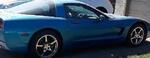





 Help with coolant stuff…