




Engine cleaning
Thread Starter
Racer

Joined: Apr 2008
Posts: 462
Likes: 0
From: Vancouver B.C
 Engine cleaning
I have a K N air intake and I’m worried about getting water in it when I clean out my Engine does anyone have tricks that they use or am I going to have to disconnect and remove it?

Pro


Joined: Aug 2007
Posts: 539
Likes: 1
From: Edmond, OK
This may or may not apply since you have a K & N air filter but the owner's manual cautions against spraying water on or around the air filters as "damage to the engine can result." In a similar post, I think the consensus was that cleaning inside the hood compartment and around the engine components is best (i.e., safest) when done by hand cleaning.
Burning Brakes

Joined: Nov 2007
Posts: 1,002
Likes: 0
From: Virginia Beach VA
This may or may not apply since you have a K & N air filter but the owner's manual cautions against spraying water on or around the air filters as "damage to the engine can result." In a similar post, I think the consensus was that cleaning inside the hood compartment and around the engine components is best (i.e., safest) when done by hand cleaning.

Drifting

Joined: Jun 2008
Posts: 1,746
Likes: 35
From: Jupiter Fl
If you have the exposed K&N aftermarket filter system, cover the filter with a plastic bag and spray away. If you have replacement type filters in the stock housing, dont worry, unless you spray up from underneath your car you wont get enough water near the elements to hurt anything.

Safety Car

Joined: Dec 2007
Posts: 4,070
Likes: 162
From: Coralville Iowa
Others have had considerable electronic issues develop after washing the engine area with water. Spraying detailing products and wiping off tends to work well and is much "safer" from an electronic problem standpoint.
Thread Starter
Racer
Joined: Apr 2008
Posts: 462
Likes: 0
From: Vancouver B.C

Safety Car
Joined: Oct 2007
Posts: 4,269
Likes: 4
From: Mililani HI
Please do not spray your engine with a power washer or even with a garden hose. Use damp towels to wipe the engine areas and the best thing is don't let the engine get dusty or dirty, I wipe my engine compartment and dress the hoses every other time I clean my car which is often.

Corvette Stories
The Best of Corvette for Corvette Enthusiasts

Top 10 Most Expensive Corvettes Ever Sold on Bring A Trailer
Brett Foote
10 Things Every Corvette Owner Needs (2026 Edition)
Michael S. Palmer
8 Most "Only Corvette Owners Understand" Quirks and Problems
Pouria Savadkouei
10 Reasons the C6 Z06 is Still A Performance Benchmark After 20 Years
Joe Kucinski
How Much Horsepower Every Corvette Engine "LOST" in 1972
Joe Kucinski
Top 10 DOs and DON'Ts for Protecting Your Convertible Top!
Michael S. Palmer
Top 10 Most Explosive Corvettes Ever Made: Power-to-Weight Ratio Ranked!
Joe Kucinski
150 hp to 1,250 hp: Every Corvette Generation Compared by the Specs That Matter
Joe Kucinski
8 Coolest Corvette Pace Cars (and Replicas) of All Time
Verdad Gallardo
Burning Brakes

Joined: Jan 2002
Posts: 781
Likes: 4
From: Reno Nevada
I have a small electric power washer.
I have sprayed the engine on every car (and motorcycle) I've ever owned. NEVER had a problem.
Several Corvettes, many other cars.
An engine is an engine, a Corvette engine is the same as any other in regards to electronic sensors, etc.
On the other hand, I have Corvette (and other car) friends that won't spray water on even the PAINT on their car.
My 2 ¢
I have sprayed the engine on every car (and motorcycle) I've ever owned. NEVER had a problem.
Several Corvettes, many other cars.
An engine is an engine, a Corvette engine is the same as any other in regards to electronic sensors, etc.
On the other hand, I have Corvette (and other car) friends that won't spray water on even the PAINT on their car.
My 2 ¢




Race Director


Joined: Apr 2007
Posts: 16,025
Likes: 1,656
From: Toronto, Canada
C7 of the Year - Unmodified Finalist 2021
Melting Slicks

Joined: Jun 2008
Posts: 2,228
Likes: 0
From: Scottsdale Az
I have a small electric power washer.
I have sprayed the engine on every car (and motorcycle) I've ever owned. NEVER had a problem.
Several Corvettes, many other cars.
An engine is an engine, a Corvette engine is the same as any other in regards to electronic sensors, etc.
On the other hand, I have Corvette (and other car) friends that won't spray water on even the PAINT on their car.
My 2 ¢
I have sprayed the engine on every car (and motorcycle) I've ever owned. NEVER had a problem.
Several Corvettes, many other cars.
An engine is an engine, a Corvette engine is the same as any other in regards to electronic sensors, etc.
On the other hand, I have Corvette (and other car) friends that won't spray water on even the PAINT on their car.
My 2 ¢

Team Owner

Joined: Mar 2008
Posts: 21,502
Likes: 462
From: Southern Utah
I think it would be bad to use a power washer and force water into places where it may cause problems, like electrical connectors. I use a hose and gently pour water on the engine with no problems. I wet it down first. Then spray with 409 to clean it....wait a couple of minutes and then wash off gently with the hose. There are too many small nooks and crannies that collect dirt to be doing the whole thing by hand. Do it when the engine is just a little warm (like 2 hours after being driven) to help it dry better.
PS, the air filter elements have metal screen behind them to keep things from getting into the intake, but I try to keep the water from excessively wetting the elements.
PS, the air filter elements have metal screen behind them to keep things from getting into the intake, but I try to keep the water from excessively wetting the elements.


Safety Car
Joined: Nov 2006
Posts: 3,860
Likes: 5
From: Tampa FL


Team Owner

Joined: Aug 2002
Posts: 35,617
Likes: 167
Tech Contributor
Cruise-In 11 Veteran
NCM Ambassador
St. Jude Donor '05-'06-'07-'10
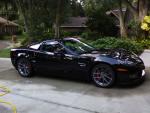
I find it easiest to give it a wipe down with a damp towel after I am done washing it. Staying on top of the dirt is a lot easier than trying to catch up to it. If I want to detail it I've found I like the Armour All cleaning wipes and detail wipes. It only takes a couple of minutes and keeps it looking like new. My car has over 19,000 miles and this photo is typical of my engine bay.

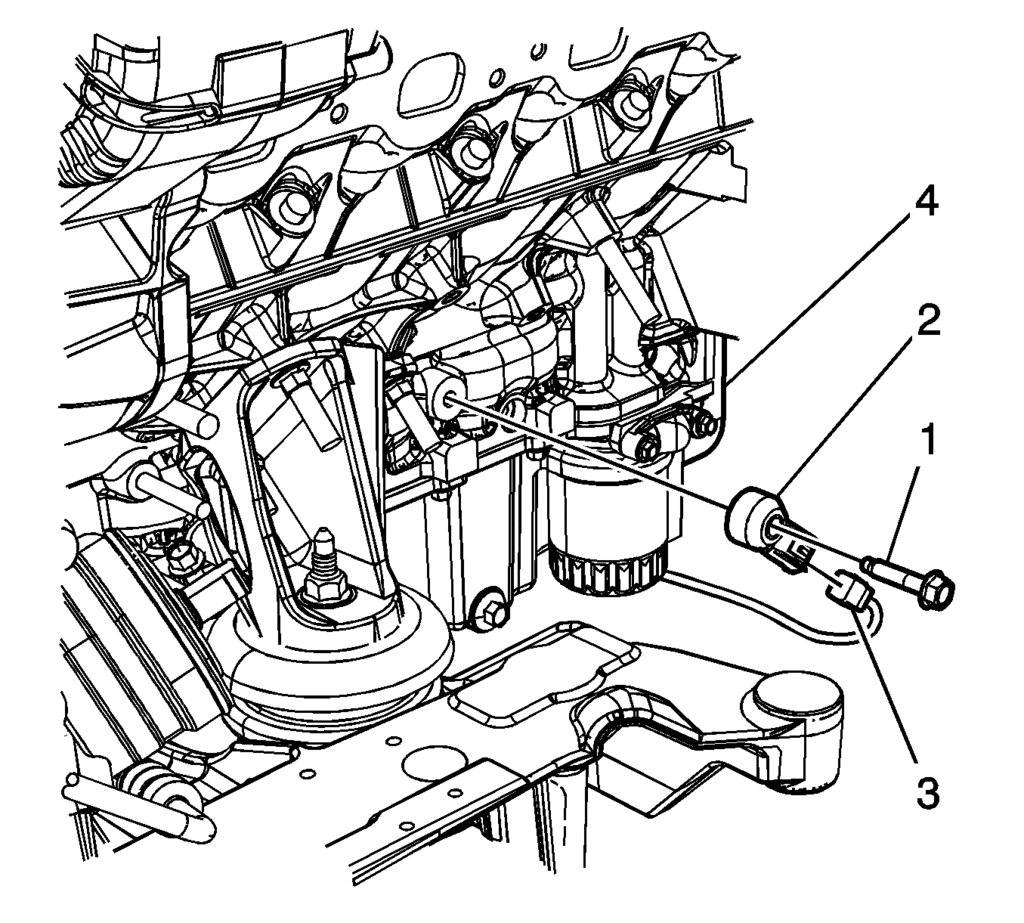
Just to take my point a little further. Previous generation owners with LS1 engines were in for a surprise later in life as they were greeted with the need to replace the knock sensors which ended up corroded and subsequently damaged due to water intrusion from engine washing. It became so frequent that the dealerships needed to put out a TSB to diagnose and warn against using running water in the engine compartment. I know that the knock sensors have been addressed in the LS2 engines but it just goes to show that what you think is harmless today can lead to issues later on. These cars are not 70’s muscle cars and have a lot more going on in terms of sensitive electronics that can be damaged.
Here is some info from that TSB that dates back to the LS1 in the C5. While not related to our particular cars be advised that other issues may present later in the life of the car. If you want the cliff notes, read the bold portion below.
While the knock sensors location were changed on the LS2 there are still several ways to damage a car with water. The sensor are now side mounted instead of horizontally mounted on the LS1 which allowed water to pool.
Just to take my point a little further. Previous generation owners with LS1 engines were in for a surprise later in life as they were greeted with the need to replace the knock sensors which ended up corroded and subsequently damaged due to water intrusion from engine washing. It became so frequent that the dealerships needed to put out a TSB to diagnose and warn against using running water in the engine compartment. I know that the knock sensors have been addressed in the LS2 engines but it just goes to show that what you think is harmless today can lead to issues later on. These cars are not 70’s muscle cars and have a lot more going on in terms of sensitive electronics that can be damaged.
Here is some info from that TSB that dates back to the LS1 in the C5. While not related to our particular cars be advised that other issues may present later in the life of the car. If you want the cliff notes, read the bold portion below.
1998-2002: Service Bulletin: Audible Spark Knock (Detonation), MIL Illuminated, DTC P0332 Set
Subject: Audible Spark Knock (Detonation), MIL Illuminated, DTC P0332 Set (Replace Rear Bank Knock Sensor and RTV Area Around Sensor)
Source: Chevrolet Dealer Technical Service Bulletin
Number: 02-06-04-023
Models: 1998-2002 Chevrolet Camaro, Corvette, 1998-2002 Pontiac Firebird
with 5.7L Engine (VIN G -- RPO LS1)
1999-2002 Chevrolet and GMC C/K Pickup and Utility Models (Avalanche, Silverado, Sierra, Tahoe, Suburban, Yukon, Yukon XL, Yukon Denali, Yukon Denali XL) with 4.8L, 5.3L or 6.0L Engine (VINs V, T, Z, N, U -- RPOs LR4, LM7, L59, LQ9, LQ4)
Condition:
Some customers may comment on a mild to severe engine ping (commonly referred to as spark knock), usually worse during acceleration and/or an illuminated MIL. Upon investigation, the technician may find DTC P0332 set.
Cause:
This condition may be the result of corrosion of the rear bank knock sensor due to water intrusion into the sensor cavity. This condition is more apparent on vehicles in which customers frequently wash the engine compartment.
Correction:
Replace the rear bank knock sensor and build a dam (wall) around the sensor using RTV to divert water away from the sensor. Use the procedure and part number listed below.
Remove the intake manifold. Refer to the Intake Manifold Replacement procedure in the Engine Controls sub-section of the appropriate Service Manual.
Remove the wiring harness assembly from the knock sensor.
Remove the rear bank knock sensor.
Install the new rear bank knock sensor. Tighten the knock sensor to 20 N•m(15 lb ft).
Install the wiring harness assembly to the knock sensor.
Apply a bead of RTV silicone sealant approximately 9 mm (3/8 in) wide and 6 mm (1/4 in) high along the outside edge of the ridge on the engine block valley cover around the rear bank knock sensor. DO NOT form a complete circle. Leave the rear section open as shown.
From the underside of the intake manifold, completely remove the rear intake manifold seal (foam material).
Install the intake manifold. Refer to the Intake Manifold Replacement procedure in the Engine Controls sub-section of the appropriate Service Manual.
Subject: Audible Spark Knock (Detonation), MIL Illuminated, DTC P0332 Set (Replace Rear Bank Knock Sensor and RTV Area Around Sensor)
Source: Chevrolet Dealer Technical Service Bulletin
Number: 02-06-04-023
Models: 1998-2002 Chevrolet Camaro, Corvette, 1998-2002 Pontiac Firebird
with 5.7L Engine (VIN G -- RPO LS1)
1999-2002 Chevrolet and GMC C/K Pickup and Utility Models (Avalanche, Silverado, Sierra, Tahoe, Suburban, Yukon, Yukon XL, Yukon Denali, Yukon Denali XL) with 4.8L, 5.3L or 6.0L Engine (VINs V, T, Z, N, U -- RPOs LR4, LM7, L59, LQ9, LQ4)
Condition:
Some customers may comment on a mild to severe engine ping (commonly referred to as spark knock), usually worse during acceleration and/or an illuminated MIL. Upon investigation, the technician may find DTC P0332 set.
Cause:
This condition may be the result of corrosion of the rear bank knock sensor due to water intrusion into the sensor cavity. This condition is more apparent on vehicles in which customers frequently wash the engine compartment.
Correction:
Replace the rear bank knock sensor and build a dam (wall) around the sensor using RTV to divert water away from the sensor. Use the procedure and part number listed below.
Remove the intake manifold. Refer to the Intake Manifold Replacement procedure in the Engine Controls sub-section of the appropriate Service Manual.
Remove the wiring harness assembly from the knock sensor.
Remove the rear bank knock sensor.
Install the new rear bank knock sensor. Tighten the knock sensor to 20 N•m(15 lb ft).
Install the wiring harness assembly to the knock sensor.
Apply a bead of RTV silicone sealant approximately 9 mm (3/8 in) wide and 6 mm (1/4 in) high along the outside edge of the ridge on the engine block valley cover around the rear bank knock sensor. DO NOT form a complete circle. Leave the rear section open as shown.
From the underside of the intake manifold, completely remove the rear intake manifold seal (foam material).
Install the intake manifold. Refer to the Intake Manifold Replacement procedure in the Engine Controls sub-section of the appropriate Service Manual.
