






tpsm false readings

Thread Starter
Heel & Toe

Joined: Jan 2009
Posts: 23
Likes: 0
From: parkland fl
 tpsm false readings
I just got new falken 452 to replace my gy runcraps . With the new tires came new valves and o rings for the tpms . The tires were filled with nitrogen and the sensors are all showing 4 lbs less pressure then the tire stores guage and my guage show.
Does anyone have any ideas what is causing this ?
ps. these falkens are a drastic improvement over the GYs
Thanks
.
Does anyone have any ideas what is causing this ?
ps. these falkens are a drastic improvement over the GYs
Thanks
.

Racer
Joined: Nov 2008
Posts: 296
Likes: 0
From: Colorado
Ummmmm..... That makes no sense..... True at elevation the ambient environmental pressure is less but that will not change the interior pressure. Tires are a closed system that are for all intents and purposes non-elastic. temperature will change pressure but not elevation. Sensors are probably out of calibration.... They "should" read exactly what a Tire pressure meter does at the valve stem. I have 1 out of 4 sensors like that. dont know how to fix it but doesnt really bother me since i know the TPS baseline...
Thread Starter
Heel & Toe
Joined: Jan 2009
Posts: 23
Likes: 0
From: parkland fl
thanks guys...I live in Florida which is 10 feet msl ( above sea level ). I have driven the car for a while at highway speeds . I am still at aloss for the tire pressure disparity . They are all exactly 4 lbs off with 3 different high quality tire gauges.

Safety Car


Joined: May 2000
Posts: 4,827
Likes: 352
From: Albuquerque NM
Ummmmm..... That makes no sense..... True at elevation the ambient environmental pressure is less but that will not change the interior pressure. Tires are a closed system that are for all intents and purposes non-elastic. temperature will change pressure but not elevation. Sensors are probably out of calibration.... They "should" read exactly what a Tire pressure meter does at the valve stem. I have 1 out of 4 sensors like that. dont know how to fix it but doesnt really bother me since i know the TPS baseline...
Corvette Stories
The Best of Corvette for Corvette Enthusiasts

Every 2027 Corvette Engine Explained
Joe Kucinski
Designer Imagines A Corvette That Looks More Like a Corvette Than the Corvette
Verdad Gallardo
10 Ugly Corvettes That We Still Kinda Love
Joe Kucinski
Top 10 Most Expensive Corvettes Ever Sold on Bring A Trailer
Brett Foote
10 Things Every Corvette Owner Needs (2026 Edition)
Michael S. Palmer
8 Most "Only Corvette Owners Understand" Quirks and Problems
Pouria Savadkouei
10 Reasons the C6 Z06 is Still A Performance Benchmark After 20 Years
Joe Kucinski
How Much Horsepower Every Corvette Engine "LOST" in 1972
Joe Kucinski
Top 10 DOs and DON'Ts for Protecting Your Convertible Top!
Michael S. Palmer
Thread Starter
Heel & Toe
Joined: Jan 2009
Posts: 23
Likes: 0
From: parkland fl
The tires are brand new and have not changed from showing 32psi on the tire stores gauge and both my digital and analog gauges ; while the car sensor shows 28 . The pressure has remained steady .

Le Mans Master


Joined: Dec 2004
Posts: 5,493
Likes: 809
From: West coast CA
If you deflate one tire by two pounds, drive around the block a few times to wake up the system, does the reading in the DIC update to reflect the lower pressure?
Thread Starter
Heel & Toe
Joined: Jan 2009
Posts: 23
Likes: 0
From: parkland fl
they installed a kit with new o rings and valves and put the old sensors back on . If I lower the pressure and drive around, the new pressure will show up ; only it will be 4psi lower then the gauges show.
Team Owner

Joined: Mar 2008
Posts: 21,502
Likes: 462
From: Southern Utah
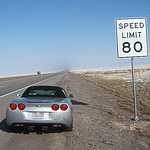
 This is true. The sensors would work like a tire gauge if they DID have access to ambient pressure...but they don't.....so they read low as elevation increases. I live at 6000 and they read low here, but accurate when I am in Ca. at the beach. Glad I didn't have this car when I lived at 10,150'

Race Director


Joined: Dec 2007
Posts: 19,574
Likes: 167
From: Frederick, MD
I have no idea about the OP's problem though. Maybe the nitrogen is screwing up the sensor's ready since it is not regular air. I considered nitrogen just because it is more stable but if it screws up the sensor readings forget it.
Safety Car
Joined: May 2000
Posts: 4,827
Likes: 352
From: Albuquerque NM
Somehow I knew this member was from about a mile high before I looked at his profile (Albuquerque, NM). My consistently read 10% (IE 3psi low compared to two manual gages (Digital and old school) that I have. It doesn't matter what temperature the tires are at, although temperature drops/increases will affect your tire pressure. Best to check them cold every morning while you are driving especially out west where 5-10k feet is nothing.
I have no idea about the OP's problem though. Maybe the nitrogen is screwing up the sensor's ready since it is not regular air. I considered nitrogen just because it is more stable but if it screws up the sensor readings forget it.
I have no idea about the OP's problem though. Maybe the nitrogen is screwing up the sensor's ready since it is not regular air. I considered nitrogen just because it is more stable but if it screws up the sensor readings forget it.

Drifting


Joined: Apr 2006
Posts: 1,276
Likes: 5
From: Ambler Pa.
Just for grins, dump the nitrogen, refill with air. Check your readings. Years ago I worked at an airport, on some of the aircraft we used nitrogen for tire fill. Pressure would remain more stable at different altitudes and temps. 

Safety Car
Joined: May 2007
Posts: 3,664
Likes: 49
From: Atlanta GA
The difference you see is the difference in the accuracy of measurement between the TPMS and a non-digital, or digital handheld guage. There will always be some disparity in the readings. In atlanta I always see about a 1-3psi difference in my measurements vs. the tpms. Especially if the temperature changes a lot during the day.