



 Amen
Amen

What is wrong about a 5.5L?
Thread Starter
Racer

Joined: Apr 2008
Posts: 462
Likes: 0
From: Vancouver B.C
 What is wrong about a 5.5L?
Why is going down .7L's that big a deal if it means we will continue to have our loved corvette  .GM should have no problem putting out more hp then the LS3 we have now. I was reading about the new Koenigsegg Agera that has a 4.7L and is putting out 898HP!! Even if we are able to get half the horsepower out of 5.5L making it 449hp then we are probably at the horsepower they would have gone within a bigger engine anyway.
"The Agera puts out - get ready - a deranged 898bhp from a 4.7-litre V8. Add in a not-immodest 811lb ft of torque and you're looking at a thing that can dispatch 62mph in 3.1 seconds and 124mph in under nine seconds before topping out at something very close to 250mph. Those are mad, mad numbers."

.GM should have no problem putting out more hp then the LS3 we have now. I was reading about the new Koenigsegg Agera that has a 4.7L and is putting out 898HP!! Even if we are able to get half the horsepower out of 5.5L making it 449hp then we are probably at the horsepower they would have gone within a bigger engine anyway."The Agera puts out - get ready - a deranged 898bhp from a 4.7-litre V8. Add in a not-immodest 811lb ft of torque and you're looking at a thing that can dispatch 62mph in 3.1 seconds and 124mph in under nine seconds before topping out at something very close to 250mph. Those are mad, mad numbers."
Racer


Joined: Jan 2006
Posts: 314
Likes: 0
From: Elk Grove Illinois

Pro

Joined: Jun 2009
Posts: 527
Likes: 2
From: Clemson South Carolina
Why is going down .7L's that big a deal if it means we will continue to have our loved corvette .GM should have no problem putting out more hp then the LS3 we have now. I was reading about the new Koenigsegg Agera that has a 4.7L and is putting out 898HP!! Even if we are able to get half the horsepower out of 5.5L making it 449hp then we are probably at the horsepower they would have gone within a bigger engine anyway.
"The Agera puts out - get ready - a deranged 898bhp from a 4.7-litre V8. Add in a not-immodest 811lb ft of torque and you're looking at a thing that can dispatch 62mph in 3.1 seconds and 124mph in under nine seconds before topping out at something very close to 250mph. Those are mad, mad numbers."
.GM should have no problem putting out more hp then the LS3 we have now. I was reading about the new Koenigsegg Agera that has a 4.7L and is putting out 898HP!! Even if we are able to get half the horsepower out of 5.5L making it 449hp then we are probably at the horsepower they would have gone within a bigger engine anyway."The Agera puts out - get ready - a deranged 898bhp from a 4.7-litre V8. Add in a not-immodest 811lb ft of torque and you're looking at a thing that can dispatch 62mph in 3.1 seconds and 124mph in under nine seconds before topping out at something very close to 250mph. Those are mad, mad numbers."
http://www.caranddriver.com/news/car...era-auto_shows

Drifting


Joined: Nov 2004
Posts: 1,645
Likes: 267
From: Cape Canaveral Florida
St. Jude Donor '07 thru '26
NCM Lifetime Member
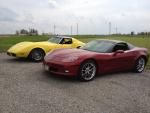
I don't get it .... we (Corvette) survived just fine for years with 327s and 350s ... both hover around 5.5L ... and they seemed to work fine....
Safety Car


Joined: Aug 2007
Posts: 4,836
Likes: 9
From: Rushsylvania Ohio
People fear change. Always have and always will.
The cost of the car above has nothing to do with what the OP is saying. His point is that big power can come out of a small package. That is the only point.
The cost of the car above has nothing to do with what the OP is saying. His point is that big power can come out of a small package. That is the only point.
Corvette Stories
The Best of Corvette for Corvette Enthusiasts

Corvette ZR1X Will Be Pacing the Indy 500, And Could Probably Race, Too!
Verdad Gallardo
Top 10 Corvettes Coming to Mecum Indy 2026!
Brett Foote
Top 10 C9 Corvette MUST-HAVES to Fix These C8 Generation Flaws!
Michael S. Palmer
10 Revolutionary 'Corvette Firsts' Most People Don't Know
Joe Kucinski
5 Reasons to Upgrade to an LS6-Powered Corvette; 5 Reasons to Stay LT2
Michael S. Palmer
2027 Corvette vs The World: Every C8 vs Its Closest Competitor
Joe Kucinski
10 Most Common Corvette Problems of the Last 20 Years!
Joe Kucinski
5 MOST and 5 LEAST Popular Corvette Model Years in History!
Joe Kucinski
2027 Corvette Buyer's Guide: Everything You Need to Know!
Joe Kucinski
Le Mans Master


Joined: Feb 2007
Posts: 8,514
Likes: 235
From: Currently somewhere in IL,IN,KY,TN,MO,AR,MS,AL, or FL
Just how are you going to meet the CAFE standard with even 300hp in a 3300 pound car? The accelerated law is on the books. It is 1969 again. Hope isn't going to fix that. Change doesn't have much of a chance either. Deal with it.
Melting Slicks

Joined: Sep 2004
Posts: 3,488
Likes: 27
From: Long Island NY
A large displacement, naturally aspirated engine will yield a certain degree of torque, torque curve and overall character / behavior that a smaller displacement, turbo or supercharged engine cannot match. I'm not even saying that one is better than the other, it's just a personal preference thing.
Sure, we had 327s in the old days, but they had to be cammed up to make good top-end power, which means they suffered in the low-end torque department (compared to a large displacement engine), so they ultimately behaved very differently. Some preferred the smaller engines anyway, less weight, better handling, less expensive, etc, it's all about what's important to you.
I personally prefer a large displacement, naturally aspirated, pushrod V8. I grew up driving 455s (7.5 liter), I always loved the ultra smooth, seamless, neck snapping torque from 1200 rpm and up. Power everywhere, and LOTS of it. Laying into the pedal at even 2500 rpm in 4th gear would sink your deeply back into the seat and give you a feeling that no small displacement engine could ever match.
But the downside of the huge cubic inch engines, they were heavy, sucked fuel like crazy (11 mpg would be considered really good), ran very hot at highway speeds, etc. There's pros and cons to everything.
I am totally in love with my 6.0 liter LS2 C6. I think it's a perfect compromise between serious naturally aspirated killer torque and a car that is very practical and economical for daily driving. 6.0 liters is just right for the size / weight of a C6.
Side note: I drove a 7.0 liter Z06 once, as far as I'm concerned, that is the absolute PINNACLE! But many could argue that it's a little "too much" for typical street use.
By comparison... let's take the Mustang GTs from recent years... naturally aspirated 4.6 liter... sorry, doesn't cut it. I own one. The degree of torque, even throughout the 2k - 4k rpm area, is simply inadequate in my opinion, this car doesn't really kick you in the pants until you've got it up close to redline. No good. I was very disappointed with this car in terms of it's degree of "usable" thrill factor on the street. The engine just ISN'T big enough.
The point is, dropping displacement on a Vette from 6.2 to 5.5 is going to reduce the "kick in the pants" in the lower rpm range... at least if the car stays the same weight and the engine remains naturally aspirated (and no other very favorable advancements in design). The horsepower and torque ratings (which are peak) mean nothing. What I'm concerned about is the degree of torque from 1200 rpm to say 4000 rpm... show me that curve.
Put a turbo or blower on a 5.5 though and things could get interesting if it's all implemented REALLY well.
I recently bought a MazdaSpeed3 as a grocery-getter / beater car... for going out in the snow, hauling junk, etc. Tiny little 2.0 liter with turbo. In sum, before the turbo kicks in, the engine makes no power (under 3k rpm). Then you get a sudden boost at that point, literately, and then there's some power. Unlike a 6.0 Vette, the power is not always there, and the transition is not smooth. It's a very different animal. It's surely a less refined type of behavior and I don't think I'd be too happy with such behavior in a $60k+ supercar. But I enjoy the smallness of the Mazda, the handing, and the fact that it's less than half the price of a C6. I'll deal with the quirky turbo behavior at that price.
With the ever advancing technology, perhaps they can tweak out the same degree of torque and torque curve from a N/A 5.5 that is currently being put out by a N/A 6.2. If so, then all is well. But if we lose torque in the low-range, I'd consider that a very bad thing. Or if the new car is considerably lighter etc, that may cancel out the small loss of low-end torque and be ok.
So... this is why a drop to 5.5 might be "wrong". It all depends. And we won't really know until we actually DRIVE the car.
But I certainly don't like the sound of going down in displacement, reminds me of 1975 when cars went from being amazing to being garbage. But, I'm hoping that modern technology will prevent any serious automotive crimes like that from ever happening again. But to be safe, I'm not going to be selling my 6.0 liter C6 any time soon! And if I had the loot, I'd probably be stocking up on 7.0 liter Z06s now.
Though I heard that electric motors can yield ridiculous torque even right off the line... hmmm... maybe there IS hope!!!
Sure, we had 327s in the old days, but they had to be cammed up to make good top-end power, which means they suffered in the low-end torque department (compared to a large displacement engine), so they ultimately behaved very differently. Some preferred the smaller engines anyway, less weight, better handling, less expensive, etc, it's all about what's important to you.
I personally prefer a large displacement, naturally aspirated, pushrod V8. I grew up driving 455s (7.5 liter), I always loved the ultra smooth, seamless, neck snapping torque from 1200 rpm and up. Power everywhere, and LOTS of it. Laying into the pedal at even 2500 rpm in 4th gear would sink your deeply back into the seat and give you a feeling that no small displacement engine could ever match.
But the downside of the huge cubic inch engines, they were heavy, sucked fuel like crazy (11 mpg would be considered really good), ran very hot at highway speeds, etc. There's pros and cons to everything.
I am totally in love with my 6.0 liter LS2 C6. I think it's a perfect compromise between serious naturally aspirated killer torque and a car that is very practical and economical for daily driving. 6.0 liters is just right for the size / weight of a C6.
Side note: I drove a 7.0 liter Z06 once, as far as I'm concerned, that is the absolute PINNACLE! But many could argue that it's a little "too much" for typical street use.
By comparison... let's take the Mustang GTs from recent years... naturally aspirated 4.6 liter... sorry, doesn't cut it. I own one. The degree of torque, even throughout the 2k - 4k rpm area, is simply inadequate in my opinion, this car doesn't really kick you in the pants until you've got it up close to redline. No good. I was very disappointed with this car in terms of it's degree of "usable" thrill factor on the street. The engine just ISN'T big enough.
The point is, dropping displacement on a Vette from 6.2 to 5.5 is going to reduce the "kick in the pants" in the lower rpm range... at least if the car stays the same weight and the engine remains naturally aspirated (and no other very favorable advancements in design). The horsepower and torque ratings (which are peak) mean nothing. What I'm concerned about is the degree of torque from 1200 rpm to say 4000 rpm... show me that curve.
Put a turbo or blower on a 5.5 though and things could get interesting if it's all implemented REALLY well.
I recently bought a MazdaSpeed3 as a grocery-getter / beater car... for going out in the snow, hauling junk, etc. Tiny little 2.0 liter with turbo. In sum, before the turbo kicks in, the engine makes no power (under 3k rpm). Then you get a sudden boost at that point, literately, and then there's some power. Unlike a 6.0 Vette, the power is not always there, and the transition is not smooth. It's a very different animal. It's surely a less refined type of behavior and I don't think I'd be too happy with such behavior in a $60k+ supercar. But I enjoy the smallness of the Mazda, the handing, and the fact that it's less than half the price of a C6. I'll deal with the quirky turbo behavior at that price.
With the ever advancing technology, perhaps they can tweak out the same degree of torque and torque curve from a N/A 5.5 that is currently being put out by a N/A 6.2. If so, then all is well. But if we lose torque in the low-range, I'd consider that a very bad thing. Or if the new car is considerably lighter etc, that may cancel out the small loss of low-end torque and be ok.
So... this is why a drop to 5.5 might be "wrong". It all depends. And we won't really know until we actually DRIVE the car.
But I certainly don't like the sound of going down in displacement, reminds me of 1975 when cars went from being amazing to being garbage. But, I'm hoping that modern technology will prevent any serious automotive crimes like that from ever happening again. But to be safe, I'm not going to be selling my 6.0 liter C6 any time soon! And if I had the loot, I'd probably be stocking up on 7.0 liter Z06s now.
Though I heard that electric motors can yield ridiculous torque even right off the line... hmmm... maybe there IS hope!!!

Le Mans Master
Joined: Sep 2004
Posts: 5,116
Likes: 5
From: Livonia MI
Strange how not many pay attention to the torque number, and more importantly where the peak occur's. My car's a ZO-6, and is a beast on the track at any rpm. The LS-2's and 3's aren't much behind, though. I also have an older Oldsmobile with a custom built 455, and this thing is a real street ripper. Not exactly emission's compliant though. I remember a 90's article on the C-4 Vette' vs Nissan Z turbo. Both had simillar hp/weight ratio's, but the Vette' waxed it. Some wondered why. Torque, that's why. Oh torque, what's that.
Melting Slicks

Joined: Feb 2006
Posts: 3,191
Likes: 43
From: Scottsdale Az
How easily everyone forgets that NA motors have been constantly underestimated. Back in the day the same crowd was telling us NA motors couldn't make 300hp, then they couldn't make 400hp and so on within a given displacement. Somehow the little 347 that could dubbed the LS1 trounced all 350s before it. Same displacement, but capable of mid 400s to the tires NA as well as more torque across the board. Nothing says a 5.5 can't make similar power as it's 6.0-7.0 counter parts. Our 6.0s out shine the 454s and 502s of yesteryear easily.
P.S. Yes we need these CAFE standards or nobody will change. Don't make me bring up the beloved EV1 off 10 years ago...
P.S. Yes we need these CAFE standards or nobody will change. Don't make me bring up the beloved EV1 off 10 years ago...

Le Mans Master
Joined: Mar 2009
Posts: 5,464
Likes: 1
From: Chicago
I think many fear the Green Police (great commercial) and, people also remember the 70's & part of the 80's with government regulations. Naturally smaller engines usually mean the auto company is fearing future regulation. There was a time in this country not all that long ago in which auto companies could not make verts & the speedometer only went to 85 MPH. With the current government many fear regulations like this could happen once again.
P.S. We do not need C.A.F.E or any government regulations telling Americans which cars they can or cannot buy. What we need is real reform starting with real nuclear power and, drilling of the incredible amount of oil America has off her shores & in Alaska.
P.S. We do not need C.A.F.E or any government regulations telling Americans which cars they can or cannot buy. What we need is real reform starting with real nuclear power and, drilling of the incredible amount of oil America has off her shores & in Alaska.
Last edited by Vette Suspension; Mar 3, 2010 at 12:53 PM.

Intermediate
Joined: Mar 2007
Posts: 49
Likes: 1
A 5.5 liter engine would be fine if it has the same amount or more as the ls-3. Mosler got 435 hp from the 5.7 liter ls-6 and gm could get more power out of the ls-3 with a different cam or direct injection. What would worry me more is if the next vette would become smaller like a soltice and have the interior room or they would use alot of weight reduceing material that would bring the price way up.

Tech Contributor


Joined: Oct 1999
Posts: 41,013
Likes: 9,773
From: Charlotte, NC (formerly Endicott, NY)
Bill


Burning Brakes


Joined: Jun 2004
Posts: 939
Likes: 38
From: Riva MD
They can easily get a NA 5.5L (or similar size) motor to exceed an LS3 in HP and torque. DI alone would probably be sufficient to equal one and any additional efficiencies in a new design, or even just a slightly more aggressive cam (a la LS6), would just be put it over the top.

Instructor
Joined: Sep 2006
Posts: 121
Likes: 1
A large displacement, naturally aspirated engine will yield a certain degree of torque, torque curve and overall character / behavior that a smaller displacement, turbo or supercharged engine cannot match. I'm not even saying that one is better than the other, it's just a personal preference thing.
Sure, we had 327s in the old days, but they had to be cammed up to make good top-end power, which means they suffered in the low-end torque department (compared to a large displacement engine), so they ultimately behaved very differently. Some preferred the smaller engines anyway, less weight, better handling, less expensive, etc, it's all about what's important to you.
I personally prefer a large displacement, naturally aspirated, pushrod V8. I grew up driving 455s (7.5 liter), I always loved the ultra smooth, seamless, neck snapping torque from 1200 rpm and up. Power everywhere, and LOTS of it. Laying into the pedal at even 2500 rpm in 4th gear would sink your deeply back into the seat and give you a feeling that no small displacement engine could ever match.
But the downside of the huge cubic inch engines, they were heavy, sucked fuel like crazy (11 mpg would be considered really good), ran very hot at highway speeds, etc. There's pros and cons to everything.
I am totally in love with my 6.0 liter LS2 C6. I think it's a perfect compromise between serious naturally aspirated killer torque and a car that is very practical and economical for daily driving. 6.0 liters is just right for the size / weight of a C6.
Side note: I drove a 7.0 liter Z06 once, as far as I'm concerned, that is the absolute PINNACLE! But many could argue that it's a little "too much" for typical street use.
By comparison... let's take the Mustang GTs from recent years... naturally aspirated 4.6 liter... sorry, doesn't cut it. I own one. The degree of torque, even throughout the 2k - 4k rpm area, is simply inadequate in my opinion, this car doesn't really kick you in the pants until you've got it up close to redline. No good. I was very disappointed with this car in terms of it's degree of "usable" thrill factor on the street. The engine just ISN'T big enough.
The point is, dropping displacement on a Vette from 6.2 to 5.5 is going to reduce the "kick in the pants" in the lower rpm range... at least if the car stays the same weight and the engine remains naturally aspirated (and no other very favorable advancements in design). The horsepower and torque ratings (which are peak) mean nothing. What I'm concerned about is the degree of torque from 1200 rpm to say 4000 rpm... show me that curve.
Put a turbo or blower on a 5.5 though and things could get interesting if it's all implemented REALLY well.
I recently bought a MazdaSpeed3 as a grocery-getter / beater car... for going out in the snow, hauling junk, etc. Tiny little 2.0 liter with turbo. In sum, before the turbo kicks in, the engine makes no power (under 3k rpm). Then you get a sudden boost at that point, literately, and then there's some power. Unlike a 6.0 Vette, the power is not always there, and the transition is not smooth. It's a very different animal. It's surely a less refined type of behavior and I don't think I'd be too happy with such behavior in a $60k+ supercar. But I enjoy the smallness of the Mazda, the handing, and the fact that it's less than half the price of a C6. I'll deal with the quirky turbo behavior at that price.
With the ever advancing technology, perhaps they can tweak out the same degree of torque and torque curve from a N/A 5.5 that is currently being put out by a N/A 6.2. If so, then all is well. But if we lose torque in the low-range, I'd consider that a very bad thing. Or if the new car is considerably lighter etc, that may cancel out the small loss of low-end torque and be ok.
So... this is why a drop to 5.5 might be "wrong". It all depends. And we won't really know until we actually DRIVE the car.
But I certainly don't like the sound of going down in displacement, reminds me of 1975 when cars went from being amazing to being garbage. But, I'm hoping that modern technology will prevent any serious automotive crimes like that from ever happening again. But to be safe, I'm not going to be selling my 6.0 liter C6 any time soon! And if I had the loot, I'd probably be stocking up on 7.0 liter Z06s now.
Though I heard that electric motors can yield ridiculous torque even right off the line... hmmm... maybe there IS hope!!!
Sure, we had 327s in the old days, but they had to be cammed up to make good top-end power, which means they suffered in the low-end torque department (compared to a large displacement engine), so they ultimately behaved very differently. Some preferred the smaller engines anyway, less weight, better handling, less expensive, etc, it's all about what's important to you.
I personally prefer a large displacement, naturally aspirated, pushrod V8. I grew up driving 455s (7.5 liter), I always loved the ultra smooth, seamless, neck snapping torque from 1200 rpm and up. Power everywhere, and LOTS of it. Laying into the pedal at even 2500 rpm in 4th gear would sink your deeply back into the seat and give you a feeling that no small displacement engine could ever match.
But the downside of the huge cubic inch engines, they were heavy, sucked fuel like crazy (11 mpg would be considered really good), ran very hot at highway speeds, etc. There's pros and cons to everything.
I am totally in love with my 6.0 liter LS2 C6. I think it's a perfect compromise between serious naturally aspirated killer torque and a car that is very practical and economical for daily driving. 6.0 liters is just right for the size / weight of a C6.
Side note: I drove a 7.0 liter Z06 once, as far as I'm concerned, that is the absolute PINNACLE! But many could argue that it's a little "too much" for typical street use.
By comparison... let's take the Mustang GTs from recent years... naturally aspirated 4.6 liter... sorry, doesn't cut it. I own one. The degree of torque, even throughout the 2k - 4k rpm area, is simply inadequate in my opinion, this car doesn't really kick you in the pants until you've got it up close to redline. No good. I was very disappointed with this car in terms of it's degree of "usable" thrill factor on the street. The engine just ISN'T big enough.
The point is, dropping displacement on a Vette from 6.2 to 5.5 is going to reduce the "kick in the pants" in the lower rpm range... at least if the car stays the same weight and the engine remains naturally aspirated (and no other very favorable advancements in design). The horsepower and torque ratings (which are peak) mean nothing. What I'm concerned about is the degree of torque from 1200 rpm to say 4000 rpm... show me that curve.
Put a turbo or blower on a 5.5 though and things could get interesting if it's all implemented REALLY well.
I recently bought a MazdaSpeed3 as a grocery-getter / beater car... for going out in the snow, hauling junk, etc. Tiny little 2.0 liter with turbo. In sum, before the turbo kicks in, the engine makes no power (under 3k rpm). Then you get a sudden boost at that point, literately, and then there's some power. Unlike a 6.0 Vette, the power is not always there, and the transition is not smooth. It's a very different animal. It's surely a less refined type of behavior and I don't think I'd be too happy with such behavior in a $60k+ supercar. But I enjoy the smallness of the Mazda, the handing, and the fact that it's less than half the price of a C6. I'll deal with the quirky turbo behavior at that price.
With the ever advancing technology, perhaps they can tweak out the same degree of torque and torque curve from a N/A 5.5 that is currently being put out by a N/A 6.2. If so, then all is well. But if we lose torque in the low-range, I'd consider that a very bad thing. Or if the new car is considerably lighter etc, that may cancel out the small loss of low-end torque and be ok.
So... this is why a drop to 5.5 might be "wrong". It all depends. And we won't really know until we actually DRIVE the car.
But I certainly don't like the sound of going down in displacement, reminds me of 1975 when cars went from being amazing to being garbage. But, I'm hoping that modern technology will prevent any serious automotive crimes like that from ever happening again. But to be safe, I'm not going to be selling my 6.0 liter C6 any time soon! And if I had the loot, I'd probably be stocking up on 7.0 liter Z06s now.
Though I heard that electric motors can yield ridiculous torque even right off the line... hmmm... maybe there IS hope!!!
Electric motors yield maximum torque at zero(0) RPM! Talk about power at initial throttle tip-in!
But any Vette will respond well because the power to weight ratio is superb, and low end torque is abundant!
Intermediate
Joined: Mar 2007
Posts: 49
Likes: 1
The 5.7 liter LS-6 put out 400ft-lb of torque. There is no reason to believe a 5.5 liter engine with direct injection could but out a least 430ft-lb, and with better gearing then the present 6 speeds give you a more kick in the pants feeling then the present cars. That said I think we need to wait for the new engine comes out before we judge it. After all if you do the same things to a 6.2 liter engine that you do to the 5.5 liter the 6.2 liter is going to have more power and torque. The advantage of going to a little smaller engine would be a increase in gas millage. Which I would not mind as long as there is no decrease in performance, interior volume or even a increase in performance over the existing car. If GM comes out with a 5.5l with 475hp and 450ft-lbs. I do not think any one would have a problem with it replacing the LS-3.
Last edited by LAKEMARY2000; Mar 3, 2010 at 02:44 PM.

Le Mans Master
Joined: Aug 2000
Posts: 5,529
Likes: 1,943
From: Austin Texas
A couple of points:
A 5.5 litre motor making 0.75-0.8 HP/litre would be a fine engine for a car weighing in at 2600-2700 pounds. That is, get rid of the excess weight, and the lack of displacement takes care of itself. In addition, the car would handle better and be more nimble.
Going from a 5-speed transmission plus overdrive (what manual Vettes have now) to a 6 speed transmission plus overdrive would allow higher ratios in the first 4 (or 5 gears) (to regain acceleration lost from the lack of displacement) and still improve the MPG department.
Do both and we approach nirvana.
A 5.5 litre motor making 0.75-0.8 HP/litre would be a fine engine for a car weighing in at 2600-2700 pounds. That is, get rid of the excess weight, and the lack of displacement takes care of itself. In addition, the car would handle better and be more nimble.
Going from a 5-speed transmission plus overdrive (what manual Vettes have now) to a 6 speed transmission plus overdrive would allow higher ratios in the first 4 (or 5 gears) (to regain acceleration lost from the lack of displacement) and still improve the MPG department.
Do both and we approach nirvana.