







Coolant issues

Thread Starter
2nd Gear

Joined: Dec 2011
Posts: 2
Likes: 0
 Coolant issues
Hello guys i need your help
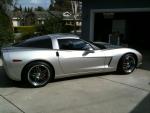
Im from Israel and i impurted my 09 6.2L Corvette from the U.S CA... so far so good , as a part of my first general oil changing i'v bean refered to unproffesinall mechanic
(GM dosnt import that car to here so they wont servise it)
anyhow this unproffecinal guy replaced the coolnet liquids as a part from the service and i guess he just did it worng
or there's very specific way to do it that riquiers specifics tools that he dosnt have
what he did is: draind the water from the radietor and the Condensate tank to replaced them saince then the car suffering from
extreme randoms heat problemes(without any special resone) which will take the heat meter to the red zone very fast (30 sec or soo) we tried to repalce it again and nothing helped
in one point we changed the thermostat which didnt help either i must say tho that by then the car functiend without those issiuse ...
Thx allot
Eddie
Im from Israel and i impurted my 09 6.2L Corvette from the U.S CA... so far so good , as a part of my first general oil changing i'v bean refered to unproffesinall mechanic
(GM dosnt import that car to here so they wont servise it)
anyhow this unproffecinal guy replaced the coolnet liquids as a part from the service and i guess he just did it worng
or there's very specific way to do it that riquiers specifics tools that he dosnt have
what he did is: draind the water from the radietor and the Condensate tank to replaced them saince then the car suffering from
extreme randoms heat problemes(without any special resone) which will take the heat meter to the red zone very fast (30 sec or soo) we tried to repalce it again and nothing helped
in one point we changed the thermostat which didnt help either i must say tho that by then the car functiend without those issiuse ...
Thx allot
Eddie

Le Mans Master


Joined: Jan 2005
Posts: 5,611
Likes: 5
From: Thousand Oaks California
Correct, there are no GM operations in Israel. I believe the problem is air in the engine cooling system. When the coolant was drained, the coolant volume was replaced with air. Also, when you had this problem and the thermostat was replaced, it is possible that some of the air was purged by removing the thermostat, helping to eliminate the problem.
The correct antifreeze-coolant mixture is 50% Dex-Cool extended life coolant (orange in color) and 50% (distilled) water. You really do not need any special tools. GM dealers do have tools to do this job, but you can do the job without the special tools. After the coolant overflow reservoir tank is filled to the correct level with a cold engine, allow the engine to idle with the coolant overflow reservoir cap off. Keep aware of the coolant temperature. If the engine does start to over heat, shut it off for a few minutes. As the engine warms up and the thermostat opens, the engine will start to purge the air in the engine cooling system. As the coolant level drops in the coolant reservoir, add more of the 50/50 coolant mixture as required. It helps to do this with the front of the car elevated a little. When you have most of the air out of the cooling system, replace the reservoir cap and drive the car at moderate speeds. For the next few days, check the coolant level in the reservoir frequently. With a cold engine, add more 50/50 coolant mixture as necessary. Repeat this process until all of the air is purged from the engine cooling system. You will know when the air is completely purged because the coolant level in the reservoir will no longer drop.
CAUTION: NEVER OPEN THE CAP ON THE COOLANT RESERVOIR WHEN THE ENGINE IS HOT. Only open when the engine is cool. Open slowly as there is pressure in the system.
Hopefully, this process will solve this issue.
The correct antifreeze-coolant mixture is 50% Dex-Cool extended life coolant (orange in color) and 50% (distilled) water. You really do not need any special tools. GM dealers do have tools to do this job, but you can do the job without the special tools. After the coolant overflow reservoir tank is filled to the correct level with a cold engine, allow the engine to idle with the coolant overflow reservoir cap off. Keep aware of the coolant temperature. If the engine does start to over heat, shut it off for a few minutes. As the engine warms up and the thermostat opens, the engine will start to purge the air in the engine cooling system. As the coolant level drops in the coolant reservoir, add more of the 50/50 coolant mixture as required. It helps to do this with the front of the car elevated a little. When you have most of the air out of the cooling system, replace the reservoir cap and drive the car at moderate speeds. For the next few days, check the coolant level in the reservoir frequently. With a cold engine, add more 50/50 coolant mixture as necessary. Repeat this process until all of the air is purged from the engine cooling system. You will know when the air is completely purged because the coolant level in the reservoir will no longer drop.
CAUTION: NEVER OPEN THE CAP ON THE COOLANT RESERVOIR WHEN THE ENGINE IS HOT. Only open when the engine is cool. Open slowly as there is pressure in the system.
Hopefully, this process will solve this issue.
Last edited by calemasters; Dec 24, 2011 at 04:02 AM.
Drifting


Joined: Feb 2007
Posts: 1,537
Likes: 1
From: Southlake Texas
If you want to do your own maintenance (so its done correctly), buy a Uview 5500 coolant flush tool (about $100 from Amazon). It takes only 5 minutes to pressure test the cooling system and replace the coolant. All air is removed from the system and you are good-to-go without any burping or refilling.
By comparison, Snap-on re-badges the Uview and sells it for $243 and the Vac-N-Fill tool used by GM is $700 to $1000.

By comparison, Snap-on re-badges the Uview and sells it for $243 and the Vac-N-Fill tool used by GM is $700 to $1000.

Safety Car


Joined: Oct 2003
Posts: 4,024
Likes: 13
From: Loveland CO to Central Coast CA
If you want to do your own maintenance (so its done correctly), buy a Uview 5500 coolant flush tool (about $100 from Amazon). It takes only 5 minutes to pressure test the cooling system and replace the coolant. All air is removed from the system and you are good-to-go without any burping or refilling...

http://www.amazon.com/UView-550000-A...4748021&sr=8-1

Pro

Joined: Jan 2008
Posts: 527
Likes: 8
Correct, there are no GM operations in Israel. I believe the problem is air in the engine cooling system. When the coolant was drained, the coolant volume was replaced with air. Also, when you had this problem and the thermostat was replaced, it is possible that some of the air was purged by removing the thermostat, helping to eliminate the problem.
The correct antifreeze-coolant mixture is 50% Dex-Cool extended life coolant (orange in color) and 50% (distilled) water. You really do not need any special tools. GM dealers do have tools to do this job, but you can do the job without the special tools. After the coolant overflow reservoir tank is filled to the correct level with a cold engine, allow the engine to idle with the coolant overflow reservoir cap off. Keep aware of the coolant temperature. If the engine does start to over heat, shut it off for a few minutes. As the engine warms up and the thermostat opens, the engine will start to purge the air in the engine cooling system. As the coolant level drops in the coolant reservoir, add more of the 50/50 coolant mixture as required. It helps to do this with the front of the car elevated a little. When you have most of the air out of the cooling system, replace the reservoir cap and drive the car at moderate speeds. For the next few days, check the coolant level in the reservoir frequently. With a cold engine, add more 50/50 coolant mixture as necessary. Repeat this process until all of the air is purged from the engine cooling system. You will know when the air is completely purged because the coolant level in the reservoir will no longer drop.
CAUTION: NEVER OPEN THE CAP ON THE COOLANT RESERVOIR WHEN THE ENGINE IS HOT. Only open when the engine is cool. Open slowly as there is pressure in the system.
Hopefully, this process will solve this issue.
The correct antifreeze-coolant mixture is 50% Dex-Cool extended life coolant (orange in color) and 50% (distilled) water. You really do not need any special tools. GM dealers do have tools to do this job, but you can do the job without the special tools. After the coolant overflow reservoir tank is filled to the correct level with a cold engine, allow the engine to idle with the coolant overflow reservoir cap off. Keep aware of the coolant temperature. If the engine does start to over heat, shut it off for a few minutes. As the engine warms up and the thermostat opens, the engine will start to purge the air in the engine cooling system. As the coolant level drops in the coolant reservoir, add more of the 50/50 coolant mixture as required. It helps to do this with the front of the car elevated a little. When you have most of the air out of the cooling system, replace the reservoir cap and drive the car at moderate speeds. For the next few days, check the coolant level in the reservoir frequently. With a cold engine, add more 50/50 coolant mixture as necessary. Repeat this process until all of the air is purged from the engine cooling system. You will know when the air is completely purged because the coolant level in the reservoir will no longer drop.
CAUTION: NEVER OPEN THE CAP ON THE COOLANT RESERVOIR WHEN THE ENGINE IS HOT. Only open when the engine is cool. Open slowly as there is pressure in the system.
Hopefully, this process will solve this issue.
Le Mans Master
Joined: Jan 2005
Posts: 5,611
Likes: 5
From: Thousand Oaks California
It helps the coolant to displace the air in the air pockets. Some engines (not the LS2 or LS3) have a brass bleeder valve near the top front of the engine, such as on the thermostat housing. The valve can be opened to help bleed out the air. Without the valve, it helps to elevate the front of the car. I just drive the front wheels up on to my Race Ramps and allow to idle.
Corvette Stories
The Best of Corvette for Corvette Enthusiasts

Every 2027 Corvette Engine Explained
Joe Kucinski
Designer Imagines A Corvette That Looks More Like a Corvette Than the Corvette
Verdad Gallardo
10 Ugly Corvettes That We Still Kinda Love
Joe Kucinski
Top 10 Most Expensive Corvettes Ever Sold on Bring A Trailer
Brett Foote
10 Things Every Corvette Owner Needs (2026 Edition)
Michael S. Palmer
8 Most "Only Corvette Owners Understand" Quirks and Problems
Pouria Savadkouei
10 Reasons the C6 Z06 is Still A Performance Benchmark After 20 Years
Joe Kucinski
How Much Horsepower Every Corvette Engine "LOST" in 1972
Joe Kucinski
Top 10 DOs and DON'Ts for Protecting Your Convertible Top!
Michael S. Palmer
Melting Slicks

Joined: Feb 2011
Posts: 2,840
Likes: 65
From: Tree City
The first thing I would do before anything else: fill the reservoir to the correct level and when the engine is cold, and before you start the engine, take the cap off of the top of the radiator and make sure the radiator has fluid in it. If it doesn't, fill the radiator completely to the top and THEN start the car and see what happens. If the radiator is half full (or empty), sometimes the water might not go into the radiator from the overflow bucket before the engine heats up. Plus a lot of times the water will go toward the engine through the upper radiator hose with the engine off and fill it up. So, if you fill up the radiator before you start, the engine won't heat up as much. (Considering everything else is OK.)
Last edited by Jimmy W1; Dec 25, 2011 at 03:14 PM.
