


Tire Pressue Gauge


Thread Starter
Racer

Joined: Feb 2017
Posts: 436
Likes: 79
From: Marana, AZ

Seriously, thanks everyone for the suggestions.
Thread Starter
Racer
Joined: Feb 2017
Posts: 436
Likes: 79
From: Marana, AZ
Received my new gauge yesterday. Checked the tires this morning with the most expensive of the units I already had and had 32/31 front and 32/33 rear. Used the new gauge and had 31/31 front and 31/32 rear. Adjusted the other rear to 31. DIC showed 31/31 fr and 31/28 rear. Tossed the old four in the trash. My OCD is a little better now. LOL
Looks like the one TPMS may be getting tired though and will need replacement soon. I am estimating out new rims, sensors, and tires around Mar/Apr so hopefully it hangs on until then.
Looks like the one TPMS may be getting tired though and will need replacement soon. I am estimating out new rims, sensors, and tires around Mar/Apr so hopefully it hangs on until then.

Thread Starter
Racer
Joined: Feb 2017
Posts: 436
Likes: 79
From: Marana, AZ
IMHO, TPMS should not be used as your only means of tire pressure monitoring. After all, it is only active while driving and of course will vary with tire temps. It is very useful though in letting you know a tire is going down so you can get pulled over before it becomes an emergency. Especially useful if you are not using run flats.

Safety Car


Joined: Feb 2016
Posts: 4,448
Likes: 1,386
From: SC
I like a gauge with a nice big analog dial with 1 psi markings and a bleed valve. That way you can slightly over inflate the tires and then bleed them down to the exact pressure you want. Being analog you can see exactly when the needle is centered over the pressure you want. Better than any digital gauge even with 0.5 psi accuracy.

Racer

Joined: Nov 2006
Posts: 357
Likes: 42
From: Beverly Hills Florida
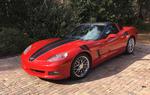
I use this air supply everyday, plus change my oil every 1000 miles, new battery every 6 months, Fob batteries are changed weekly, I color correct after every drive, it is covered nightly, washed only with distilled water, Michelin tires, and wheel wells are polished and waxed monthly.
And I drive the **** out of it.
Last edited by gordosoar; Jul 7, 2017 at 03:14 PM.
Thread Starter
Racer
Joined: Feb 2017
Posts: 436
Likes: 79
From: Marana, AZ
I like a gauge with a nice big analog dial with 1 psi markings and a bleed valve. That way you can slightly over inflate the tires and then bleed them down to the exact pressure you want. Being analog you can see exactly when the needle is centered over the pressure you want. Better than any digital gauge even with 0.5 psi accuracy.
One like this
One like this
Le Mans Master


Joined: May 2015
Posts: 5,187
Likes: 1,216
From: Las Vegas Nevada
For those folks who talk about how inflation pressure increases as the tires warm up...check this out.
I set on a drive around town last week at 2:30 in the afternoon. It was 113 degrees. The TPMS read pressures of 29/30 all around. I drove for an hour. Can't imagine what the road temps were. My speeds varied, but generally doing 75 on the freeway. After an hour, the temps were 30/31. When I got home, I checked with my pencil gauge, and they were the same.
So, maybe, unless you are racing in Nascar at 190MPH and above, the tires don't increase that much in pressure during a hot drive....
jus' sayin'
I set on a drive around town last week at 2:30 in the afternoon. It was 113 degrees. The TPMS read pressures of 29/30 all around. I drove for an hour. Can't imagine what the road temps were. My speeds varied, but generally doing 75 on the freeway. After an hour, the temps were 30/31. When I got home, I checked with my pencil gauge, and they were the same.
So, maybe, unless you are racing in Nascar at 190MPH and above, the tires don't increase that much in pressure during a hot drive....
jus' sayin'

Team Owner

Joined: Apr 2013
Posts: 26,232
Likes: 4,357
From: Chirper Island
I, personally have seen an eleven pound difference between when I started off in the morning in the rain in Kansas City in the rain, and Denver at a hundred degrees in the afternoon. And part of that was altitude change that affects the calibration of the TPMS.
Granted, that is an extreme example, but even driving locally, I regularly see a six to eight pound difference.
Granted, that is an extreme example, but even driving locally, I regularly see a six to eight pound difference.
Team Owner
Joined: Mar 2014
Posts: 21,631
Likes: 1,144
From: Below the bottom of Berby Hollow, NYS
I, personally have seen an eleven pound difference between when I started off in the morning in the rain in Kansas City in the rain, and Denver at a hundred degrees in the afternoon. And part of that was altitude change that affects the calibration of the TPMS.
Granted, that is an extreme example, but even driving locally, I regularly see a six to eight pound difference.
Granted, that is an extreme example, but even driving locally, I regularly see a six to eight pound difference.
And as I've noted before, I'm pretty sure the tire and auto manufacturers have all this figured out when they state what the cold pressure should be.
If a few pounds was really all that important, maybe they should have maps like the back of seed packets that tell you when to plant depending on what region you live in, only they would tell you what the pressure should be. Haha.
We really are bombarded by "too much information." The DIC is nice, but I find myself flipping through it even though I know it's a waste of time, not to mention distracting.

Pro


Joined: Jul 2016
Posts: 547
Likes: 27
If your gauges are all 15 years old that might be your issue.
Buy a 20 dollar brand new one, that one might be more accurate than all of yours, or alternatively buy an expensive new one.
I'd be pretty pissed if 4 of mine gave different readings, pissed enough to buy an expensive one. It's not even about tires not being exact, it's about your tools working properly, that's worth more than having all your tires right.
Oh, and I'd trust a gauge you bought before the tires sensors, sometimes mine take a day or even week to adjust in readings...
Buy a 20 dollar brand new one, that one might be more accurate than all of yours, or alternatively buy an expensive new one.
I'd be pretty pissed if 4 of mine gave different readings, pissed enough to buy an expensive one. It's not even about tires not being exact, it's about your tools working properly, that's worth more than having all your tires right.
Oh, and I'd trust a gauge you bought before the tires sensors, sometimes mine take a day or even week to adjust in readings...
Thread Starter
Racer
Joined: Feb 2017
Posts: 436
Likes: 79
From: Marana, AZ
Agree OWC6 and Bruze. My temps vary by as much as well from cold in the garage on Saturday morning to the end of a spirited drive in the afternoon heat. And there is a map of sorts for tire pressure selection. The Rim & Tire Association (RTA) is the governing body for tire pressure selection tires. They also work with manf. on determining the proper psi for a cars placard. I don't remember what the mean temp is that they use but think it is in the 70s. The recommendation is 1 psi for every 10 degree variance from that.
Yesterday when I got home it was 107. My DIC showed my previously set 31 pounds were now 36. For grins I checked again about 4 hours later and it still showed 34 on the DIC. I am consdering dropping my pressure to 28 or 29 cold during these hot summer months and adjusting accordingly in the winter.
Yesterday when I got home it was 107. My DIC showed my previously set 31 pounds were now 36. For grins I checked again about 4 hours later and it still showed 34 on the DIC. I am consdering dropping my pressure to 28 or 29 cold during these hot summer months and adjusting accordingly in the winter.

Safety Car

Joined: Jan 2011
Posts: 4,959
Likes: 526
Safety Car
Joined: Jan 2011
Posts: 4,959
Likes: 526
OK....i'll bite. So what does one do.....check each tire 4 times each time with a different gauge ? Or check each tire once with a different gauge ? Or check two tires with 2 different gauges ? Or check 3 tires with one different gauge....uh....oh heck.... Help me Mr. Wizard
Help me Mr. Wizard
Team Owner
Joined: Mar 2014
Posts: 21,631
Likes: 1,144
From: Below the bottom of Berby Hollow, NYS
OK....i'll bite. So what does one do.....check each tire 4 times each time with a different gauge ? Or check each tire once with a different gauge ? Or check two tires with 2 different gauges ? Or check 3 tires with one different gauge....uh....oh heck.... Help me Mr. Wizard
Help me Mr. Wizard If one tire comes, say, 3/4 of a pound short then blip a little air in and repeat the procedure until your average is 30.000. Repeat for each tire.
Obviously, you must do this each time you take your car out, even down to the corner for some milk/beer.
Some of the smarter engineers also recommend doing this even if you are going to sit in your car in the garage. Your weight will throw everything off if the tires aren't correct.
I'm sure Mrs. Ow will confirm all this.

Attachment 48336260


Thread Starter
Racer
Joined: Feb 2017
Posts: 436
Likes: 79
From: Marana, AZ
I doubt most folks have nitrogen available to them at home or even within a reasonable driving distance. It does have some advantages but none that would make it worth buying and storing it at home. Here are some notes for you to ponder.
https://www.tirebuyer.com/education/nitrogen-vs-air
On the other hand, for all the garage queens out there, nitrogen might make more sense.
https://www.tirebuyer.com/education/nitrogen-vs-air
On the other hand, for all the garage queens out there, nitrogen might make more sense.
Safety Car
Joined: Jan 2011
Posts: 4,959
Likes: 526
I doubt most folks have nitrogen available to them at home or even within a reasonable driving distance. It does have some advantages but none that would make it worth buying and storing it at home. Here are some notes for you to ponder.
https://www.tirebuyer.com/education/nitrogen-vs-air
On the other hand, for all the garage queens out there, nitrogen might make more sense.
https://www.tirebuyer.com/education/nitrogen-vs-air
On the other hand, for all the garage queens out there, nitrogen might make more sense.
