






High-octane fuel

Thread Starter
Navigator

Joined: Mar 2014
Posts: 9
Likes: 1
 High-octane fuel
High-octane fuel
Just want to ask a general question . Was at a gas station near my house and noticed high-octane fuel 95 octane and 100 octane . I have a unmodified 2007 ZO6. 1.. is it safe to use this fuel? 2.. is it a benefit as far as performance to use this fuel. Or is it simply a waste of money? questions comments welcome !
Thank you raukous 07
Thank you raukous 07
Safety Car


Joined: Aug 2017
Posts: 4,929
Likes: 2,340
From: Etobicoke (Toronto) Ontario
 I'm sure this next part won't be controversial at all, but the octane rating of a fuel relates only to it's ability to withstand pre-ignition caused by higher compression engines, not to it's energy content. Gasoline contains, on average, 32 MJ/L. Actual energy content varies, by up to 4%, from season to season and from batch to batch (copied this last part from appropedia.org.). As an example, the V6 in the caddy that I had a CR of 11.3:1 and ran (recommended) on 87 octane gas because it was direct-injected. Just as an experiment, on a long trip (to FL), I threw a few extra $$ into the tank by filling up with 93 octane, and I saw no difference in the reported instantaneous fuel economy as reported by the trip computer. I took care to use the cruise control at the same speed on long flat runs to see if there was any difference. Nada. In short, use the fuel recommended by the manufacturer, unless you've modified the engine.

Safety Car


Joined: Nov 2007
Posts: 4,436
Likes: 875
From: Bay Area CA
Yes, it is safe to use, but on a stock motor unnecessary.
GM recommends premium gas for the C6 corvette, 91 or preferably 93 octane (especially a Z06 with 11:1 compression ratio).
On an unmodified car, if you experience knock retard (KR), which means timing is being pulled, then using a higher octane may reduce or illuminate it. With that said, there are other reasons why timing is being pulled, air intake temps are 86F*+, coolant temps are 212F*+, etc. But these are in place to protect the engine.
You can't hear KR, but sometimes feel KR, depending on how much timing is being pulled. With my stock tune, I could feel timing being pulled and verified it by data logging KR. In CA, our premium is 91 octane, I only wish we had 93 octane.
However, if there is an audible knock, then you should absolutely use a better grade of fuel.
GM recommends premium gas for the C6 corvette, 91 or preferably 93 octane (especially a Z06 with 11:1 compression ratio).
On an unmodified car, if you experience knock retard (KR), which means timing is being pulled, then using a higher octane may reduce or illuminate it. With that said, there are other reasons why timing is being pulled, air intake temps are 86F*+, coolant temps are 212F*+, etc. But these are in place to protect the engine.
You can't hear KR, but sometimes feel KR, depending on how much timing is being pulled. With my stock tune, I could feel timing being pulled and verified it by data logging KR. In CA, our premium is 91 octane, I only wish we had 93 octane.
However, if there is an audible knock, then you should absolutely use a better grade of fuel.
Last edited by Mike's LS3; Jan 21, 2018 at 02:33 PM.

Race Director


Joined: Dec 2013
Posts: 12,502
Likes: 3,631
LS2 and LS-7 want 93 octane fuels. On the LS3, it's compression was lowered so it only needs 91 octane to run it best instead.
So on that note, if you can get 93 octane at the pumps, it's all that is needed for your best powder. If you can only get 91, then the 95 is the ticket isntead. The 100 octane (above 93) will be a waste on the stock LS-7 instead.
Also note, check the price of the 95 and 100, since you could do a quick ratio of it, and say the 91 if that is the highest octane they have at the stand pumps, to end up with a 93 octane rating (and not end up speeding a lot more for the octane rating over 93 that would be a waste isntead.
One last thing, and make sure that the higher octane fuel is not Avgas!!!!!
AVgas has lead in it, and it going to cause all kinds of problems with the cats if you try to run it in the car.
Hence Avgas 100, 130, 150 will have a green tint to it,
Avgas 100LL will have a blue tint to it,
Avgas 82 will have a purple tint to it, and if avgas 91/95 UL , will have an amber tint to it.
And again, all the above AVgas will be leaded fuels!!!!
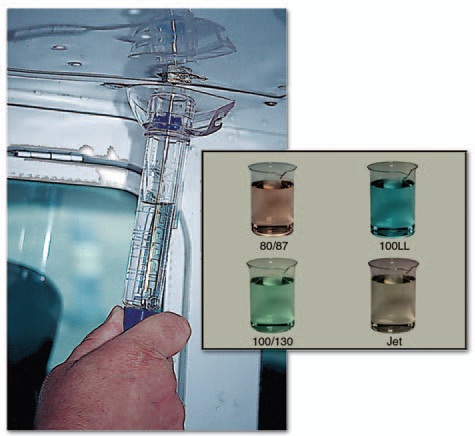
And no, the tint used in Avgas is not like the heavy staining pink die used in non taxed farming diesel fuel to stain the lines and tanks; so they can tell if you have used not taxed farming diesel in a car/truck that is being used on the roads isntead.
So on that note, if you can get 93 octane at the pumps, it's all that is needed for your best powder. If you can only get 91, then the 95 is the ticket isntead. The 100 octane (above 93) will be a waste on the stock LS-7 instead.
Also note, check the price of the 95 and 100, since you could do a quick ratio of it, and say the 91 if that is the highest octane they have at the stand pumps, to end up with a 93 octane rating (and not end up speeding a lot more for the octane rating over 93 that would be a waste isntead.
One last thing, and make sure that the higher octane fuel is not Avgas!!!!!
AVgas has lead in it, and it going to cause all kinds of problems with the cats if you try to run it in the car.
Hence Avgas 100, 130, 150 will have a green tint to it,
Avgas 100LL will have a blue tint to it,
Avgas 82 will have a purple tint to it, and if avgas 91/95 UL , will have an amber tint to it.
And again, all the above AVgas will be leaded fuels!!!!
And no, the tint used in Avgas is not like the heavy staining pink die used in non taxed farming diesel fuel to stain the lines and tanks; so they can tell if you have used not taxed farming diesel in a car/truck that is being used on the roads isntead.
Last edited by Dano523; Jan 21, 2018 at 02:57 PM.
Corvette Stories
The Best of Corvette for Corvette Enthusiasts

Top 10 Most Expensive Corvettes Ever Sold on Bring A Trailer
Brett Foote
10 Things Every Corvette Owner Needs (2026 Edition)
Michael S. Palmer
8 Most "Only Corvette Owners Understand" Quirks and Problems
Pouria Savadkouei
10 Reasons the C6 Z06 is Still A Performance Benchmark After 20 Years
Joe Kucinski
How Much Horsepower Every Corvette Engine "LOST" in 1972
Joe Kucinski
Top 10 DOs and DON'Ts for Protecting Your Convertible Top!
Michael S. Palmer
Top 10 Most Explosive Corvettes Ever Made: Power-to-Weight Ratio Ranked!
Joe Kucinski
150 hp to 1,250 hp: Every Corvette Generation Compared by the Specs That Matter
Joe Kucinski
8 Coolest Corvette Pace Cars (and Replicas) of All Time
Verdad Gallardo
Safety Car
Joined: Nov 2007
Posts: 4,436
Likes: 875
From: Bay Area CA
LS2 and LS-7 want 93 octane fuels. On the LS3, it's compression was lowered so it only needs 91 octane to run it best instead.
So on that note, if you can get 93 octane at the pumps, it's all that is needed for your best powder. If you can only get 91, then the 95 is the ticket isntead. The 100 octane (above 93) will be a waste on the stock LS-7 instead.
So on that note, if you can get 93 octane at the pumps, it's all that is needed for your best powder. If you can only get 91, then the 95 is the ticket isntead. The 100 octane (above 93) will be a waste on the stock LS-7 instead.
JFYI
Compression ratios:
LS-7 11:1
LS-2 10.9 (10.87)
LS-3 10.7
For the LS3, GM used L92's piston which yielded 10.5 compression. GM removed the valve relief and compression went to 10.7. GM met their performance goal and felt is was not worth the cost to increase compression by using domed pistons.
Thread Starter
Navigator
Joined: Mar 2014
Posts: 9
Likes: 1
First question to answer unfortunately I live in California we’re 91 octane is the highest I can purchase other than the 95 and 100 that I spoke of earlier . I currently drive my vehicle less than 100 miles a month however when I do drive it I experienced no knock no noises coming from the motor which for me would be a red flag in an immediate trip to the dealership . However if 93 is preferred over 91 I may do what one of the posters spoke of about mixing 91 with 95 or 100 octane fuel . The only other mention I have is the 95 octane fuel is 7.65 a gallon and the 100 octane is $8.65 a gallon . Extremely expensive!


Team Owner

Joined: Mar 2014
Posts: 21,631
Likes: 1,144
From: Below the bottom of Berby Hollow, NYS
Yup, I've made that point here before, but urban myths die hard. Also, higher octane is needed for poorly designed, inefficient combustion chambers (even low compression) which can also cause pre-ignition (higher octane burns faster). Although in modern times, there probably aren't many poorly-designed chambers.
Safety Car
Joined: Nov 2007
Posts: 4,436
Likes: 875
From: Bay Area CA
First question to answer unfortunately I live in California we’re 91 octane is the highest I can purchase other than the 95 and 100 that I spoke of earlier . I currently drive my vehicle less than 100 miles a month however when I do drive it I experienced no knock no noises coming from the motor which for me would be a red flag in an immediate trip to the dealership . However if 93 is preferred over 91 I may do what one of the posters spoke of about mixing 91 with 95 or 100 octane fuel . The only other mention I have is the 95 octane fuel is 7.65 a gallon and the 100 octane is $8.65 a gallon . Extremely expensive!
Last edited by Mike's LS3; Jan 21, 2018 at 05:39 PM.

Le Mans Master


Joined: Oct 2014
Posts: 8,673
Likes: 2,728
From: Atlanta GA
Yup, I've made that point here before, but urban myths die hard. Also, higher octane is needed for poorly designed, inefficient combustion chambers (even low compression) which can also cause pre-ignition (higher octane burns faster). Although in modern times, there probably aren't many poorly-designed chambers.
Sure it will run on 87 ... with a ton of knock retard .... but it will sure run better on 93 ( LS2 ) and 91 (LS3) which it was designed to run with .
I did up my timing on my LS3 so I run 93
To the OP ... 91 is fine buying 95 at that price is crazy ... lol
Dave

Safety Car
Joined: Oct 2007
Posts: 4,225
Likes: 1,080
From: South Florida
I've seen engines designed for 93 with carbon buildup and oil coking that needed 98 or 100 octane to run properly.
I've also seen an engine designed for 93 get too hot and start to knock, even with timing pulled.
So, there is a time and place for the higher octane fuel than what engine originally called for. If you are going to beat on the engine around a track I wouldn't be using 93 thats for sure. It just isn't worth the minute savings when the engine is so expensive and difficult to change.
I've also seen an engine designed for 93 get too hot and start to knock, even with timing pulled.
So, there is a time and place for the higher octane fuel than what engine originally called for. If you are going to beat on the engine around a track I wouldn't be using 93 thats for sure. It just isn't worth the minute savings when the engine is so expensive and difficult to change.
Racer
Joined: Jun 2017
Posts: 314
Likes: 93
From: A galaxy far far away.
I'm sure this next part won't be controversial at all, but the octane rating of a fuel relates only to it's ability to withstand pre-ignition caused by higher compression engines, not to it's energy content. Gasoline contains, on average, 32 MJ/L. Actual energy content varies, by up to 4%, from season to season and from batch to batch (copied this last part from appropedia.org.). As an example, the V6 in the caddy that I had a CR of 11.3:1 and ran (recommended) on 87 octane gas because it was direct-injected. Just as an experiment, on a long trip (to FL), I threw a few extra $$ into the tank by filling up with 93 octane, and I saw no difference in the reported instantaneous fuel economy as reported by the trip computer. I took care to use the cruise control at the same speed on long flat runs to see if there was any difference. Nada. In short, use the fuel recommended by the manufacturer, unless you've modified the engine. Couldn't have said it better.

Melting Slicks

Joined: Jul 2015
Posts: 2,800
Likes: 565
From: Mesquite NV
After listening to all the 'experts' on this topic on this and other forums over the years, as well as other sources, I've come to one conclusion ... I will follow GM's advice as outlined in the Owner's Manual. 
Team Owner
Joined: Mar 2014
Posts: 21,631
Likes: 1,144
From: Below the bottom of Berby Hollow, NYS
