When you click on links to various merchants on this site and make a purchase, this can result in this site earning a commission. Affiliate programs and affiliations include, but are not limited to, the eBay Partner Network.
Would anybody have any idea what would cause a lifter on my C6 Corvette to just rip off the roller? This happened 5 miles from my house all of the sudden a loud tap, tap, tap. I drove on the bad lifter for the 5 miles then started opening up my block to discover this...
Poster "Oh Boy" went through this a few months ago here, do a search.
Back in the day, roller lifters were for racing cams only, not sure why we even need them on street engines (rev higher?) -- it's just 16 more things that can go wrong. But who knows, I'm sure there's an answer.
The old non-roller lifters were nearly bullet proof.
So I went ahead and replaced the lifter, put her all back together and fired it up. It sounds fine and drives fine (minus scrap metal floating around in my engine somewhere...). The camshaft lobe look pretty banged up should this be something I should worry about? I am really not looking forward to doing a cam swap unless completely necessary. Will the oil pump be okay with the roller and pin inside the engine? Here's a pic of the cam lobe
That cam has to be replaced! Your asking for trouble. I just went thru the same thing, my cam was just scratched from the lifter and the re builder was adamant it had to be replaced. Why would you take this chance? And to boot you got a roller floating around in the motor? Yikes!
Is the roller metal stronger than the cam metal or is the cam metal stronger than the roller metal or are they both made out of the same material. If best case scenario (roller metal stronger than cam metal) then the roller would smooth out the roughed up cam lobe. I only drove 5 miles on the bad lifter so it could be much worse. Will the scrap metal from the broken lifter make its way up through the engine after dropping to the oil pan or is there an oil pump screen or some sort of blockage in place that would stop that from happening? I'm just trying to evaluate my situation from every possible angle. Looking for a professional LS builders opinion.
Is the roller metal stronger than the cam metal or is the cam metal stronger than the roller metal or are they both made out of the same material. If best case scenario (roller metal stronger than cam metal) then the roller would smooth out the roughed up cam lobe.
It doesn't work like that. They are precision-ground surfaces running at a relatively high RPM, and everything needs to be right; gouges or galls anywhere means it -- and its mating surface -- is shot.
I only drove 5 miles on the bad lifter so it could be much worse. Will the scrap metal from the broken lifter make its way up through the engine after dropping to the oil pan or is there an oil pump screen or some sort of blockage in place that would stop that from happening? I'm just trying to evaluate my situation from every possible angle. Looking for a professional LS builders opinion.
Whatever filters and screens there are, I'd be real nervous knowing there's pieces of metal, somewhere, in the lube system.
The cam is toast and needs to be replaced,otherwise you are just doing more damage to the engine, and driving it with metal floating around, the entire engine will need to be rebuilt sooner than later.
You need to replace the cam also. If you don't, the new lifter will be ground down very rapidly and put more metal particles in your engine. I would replace all the lifters also at the same time, maybe even got with an upgraded lifter if you don't have confidence anymore in the LS7 GM lifters.
As for why a lifter will go bad, there isn't really a way to tell. I think it is just the fact that GM has produced millions of LS engines and multiply that number by many, many more times for the number of lifters that are made. A certain percentage of those lifters will fail. It's just that you were unlucky to get an engine with a lifter from the low percentage of the failures.
How many miles would you all say I have before this new lifter failes? Im going to take it to some shops and get some quotes for a cam swap but keep the mileage off of it let's say less than 50 miles
How many miles would you all say I have before this new lifter failes? Im going to take it to some shops and get some quotes for a cam swap but keep the mileage off of it let's say less than 50 miles
Depending on how bad the cam lobe is, that lifter will go fast. Hard to say how many miles. But I would not drive it at all if possible. Right now, any time your engine is running, you have metal grinding on metal which is not good at all.
Assuming you changed out the lifter yourself, you are completely capable then of doing a cam swap yourself.
Depending on how bad the cam lobe is, that lifter will go fast. Hard to say how many miles. But I would not drive it at all if possible. Right now, any time your engine is running, you have metal grinding on metal which is not good at all.
Assuming you changed out the lifter yourself, you are completely capable then of doing a cam swap yourself.
I wouldn't drive it at all,there is metal pieces inside your engine man!!! Oil pan needs to be dropped and cleaned out,besides a cam, lifters,springs, also check for a bent valve.
Is the roller metal stronger than the cam metal or is the cam metal stronger than the roller metal or are they both made out of the same material. If best case scenario (roller metal stronger than cam metal) then the roller would smooth out the roughed up cam lobe. I only drove 5 miles on the bad lifter so it could be much worse. Will the scrap metal from the broken lifter make its way up through the engine after dropping to the oil pan or is there an oil pump screen or some sort of blockage in place that would stop that from happening? I'm just trying to evaluate my situation from every possible angle. Looking for a professional LS builders opinion.
All the warnings (which I agree with) aside, as to why would the lifter fail, I always like to fall back on some math to get an idea of what's going on.
Let's say the average RPM while driving those 65K miles was 2000 (I assume some variation in engine speed as you run through the gears).
Let's say the average speed was 45mph.
Then, the math says you've had 1444 hours of engine time @ 2000 rpm. With 60 minutes in each hour, and the cam running at 1/2 engine speed, the lifter has operated over 85 million cycles. And, you have 16 of them.
And, there's lots of LS2 and LS3 engines out there.
In another life, I spent considerable time in product engineering, and we were always interested in Mean Time Between Failures (MTBF). In other words, on average, how often does the product fail? We had strict MTBF targets to meet.
Now, just because we had an MTBF target of say 1 failure per 12 months didn't mean that if an instance of the product failed after 3 months we hadn't met our target, because we are talking about averages. If another instance of the product failed after 21 months, then on average we had a 1 failure per 12 months on average between the 2. And so on. If you look at enough samples, what usually emerges is some kind of bell curve, with relatively few early failures, relatively few late failures, and a more and more of the failures occurring as you get nearer the average. I won't go into the complexities of standard deviation, but once you have enough data, you can calculate the probability of failure within set time frames. The reason you get individual variations is because no engineering process is perfect. There are tolerances, and despite everything that you do, every machined part is slightly different in a production run. If you've gotten this far and your eyes haven't glazed over, I congratulate you.
In the case of car engines, there are other variables: operating temperatures, number of cold starts, lubrication quality, average and max rpms, maintenance frequency, and so on.
It's not that I'm unsympathetic to what's happened to your engine, because I am, but as I've tried to explain above, there's always a chance that a manufactured device will fail at any time. Probably in this case, you were simply unlucky.
BTW, if you don't like the assumed average speed and rpm numbers, it's easy to recalculate the lifter operating cycles.
I have built 20 or 30 street and race engines over the last 40 years. Here are my suggestions for a proper repair and a reliable motor.
Strip the engine down, including both cylinder heads.
Replace the camshaft and thoroughly inspect and clean or replace all lifters.
Check all the pushrods for straightness.
When the cam is out, have the cam bearings checked for scoring..
Remove the oil pan and clean out any debris.
Make sure you find the big chunks of the old lifter (pin and roller) if they are not in the oil pan.
Change the oil filter.
Use high ZDDP oil for camshaft break-in.
Start the engine and immediately take it to 3000 rpm and hold it there for a couple of minutes. Do not let the engine idle or exceed 3000 rpm for the first 20 minutes of operation.
The first 15-20 minutes of operation are critical to new cam break-in.
Change the oil and filter again.
Drive normally for 500 miles, and change the oil and filter again.







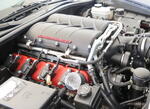




 C6 lifter failure





 But who knows, I'm sure there's an answer.