When you click on links to various merchants on this site and make a purchase, this can result in this site earning a commission. Affiliate programs and affiliations include, but are not limited to, the eBay Partner Network.
Not sure why domestic cars and many US owners have always been resistant to many fluid changes, not the least of which is brake fluid. I know it's not in most of the manuals, but all import and even most motorcycle manufacturers understand the need. Someone at FedEx lost (stole) one of my wheels so while waiting for the replacement I thought I'd change the brake fluid a bit earlier than I normally would. This fluid has only 25k of very easy service, and knowing new fluid is gin clear should make anyone a believer.
Last edited by like2lean; Dec 13, 2021 at 09:10 AM.
I started doing brake flushes about 20 years ago. I guess they are like most people view differential flushes, and to a large extent auto transmission pan drop/filter changes - unnecessary.
I like to change my brake fluid every year. Realistically, its not age that hurts to fluid it is the hygroscopic nature of the brake fluid. It absorbs water and lowers the boiling point.
So if you live in a climate that is very humid or there are a lot of temperature swings, you should be changing your fluid more frequently.
Service manual calls out for the brake fluid to be flushed every two years.
With how dirty the fluid is, that a lot of seal rubber, humidity, and god only knows what kind of humidity damage to the walls on the cylinders from not power flushing the fluid for a decade of more isntead.
Myself, if you are still waiting on rims, would take the time to remove the calipers, pull them apart, and do a clean up on the pistons and cylinders as well. If you use silicone to re-grease the seals and dust shields before they are reinstalled once cleaned up (or just go heavy on the clean brake fluid to keep them wet once cleaned up), can use the old rubber parts to put them back together (just keep the piston and it part back in the same channel,or just pick up a new set of seals and dust shields). Hence, even with the system power flushed, you still have a lot of crap in the calipers piston channels on the bottom that is just going to keep contaminating the fluid again.
Not my wife she doesn't no what it's used for, doesn't cook nothing, if she did I would probably be dead!
Lol, she gave it to me after I used it the first time!
Originally Posted by Dano523
Service manual calls out for the brake fluid to be flushed every two years. Myself, if you are still waiting on rims, would take the time to remove the calipers, pull them apart, and do a clean up on the pistons and cylinders as well. If you use silicone to re-grease the seals and dust shields before they are reinstalled once cleaned up (or just go heavy on the clean brake fluid to keep them wet once cleaned up), can use the old rubber parts to put them back together (just keep the piston and it part back in the same channel,or just pick up a new set of seals and dust shields). Hence, even with the system power flushed, you still have a lot of crap in the calipers piston channels on the bottom that is just going to keep contaminating the fluid again.
I couldn't find a recommendation in my 08 manual, where is it in yours?
You're so right about the sludge and hard deposits that form in calipers and wheel cylinders for that matter, most would never believe it unless they saw. It's crazy how much crap you find in them even on a perfectly functioning brake system.
You need to make some room.
Remove the air intake tube going into the throttle body.
Remove the upper radiator bracket that runs across the radiator.
Drain a little coolant.
Loosen the upper radiator hose at the engine. Remove the upper radiator hose at the radiator.
Rotate the radiator hose 90 degrees upwards.
Purchase a cheap 6" diameter tin funnel. Squish it to fit between the engine and the radiator underneath the power steering reservoir.
Run tubing from the funnel to a container on the floor.
Leave the reservoir cap on. Pull the lower reservoir hose off the PS reservoir. Immediately cap off the port with a vacuum cap. The lower return line goes into the funnel.
The rest of the job is running a few bottles of fluid through to purge the system.
Using the large funnel you won't spill a drop. The youtube guys pull the PS hose and let the fluid run everywhere.





 Brake Fluid Flush






 I also when have the fluids flushed add brake system so everything is clean for the next 5 years.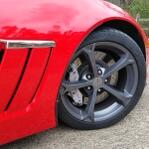








 lol
lol