


Pcv system help


Thread Starter
Instructor

Joined: Oct 2022
Posts: 124
Likes: 10
 Pcv system help
I took apart the emissions hose from the galley plug to the intake and it was completely dry surprisingly. The metal port with the office pulled out the galley and I checked it for air flow, also put an o ring on it where it presses into the galley. The long plastic tube from passenger valve cover I replaced and with the engine off I can blow air through the line into the valve cover so it's not clogged. My question is if I blow air into that line should pressure come back out the same line if the engine isn't running? I'm trying to figure out if the pcv system isn't venting the crankcase causing oil seal leaks. Thanks

Safety Car


Joined: Oct 2007
Posts: 4,236
Likes: 1,083
From: South Florida
Dry sump or wet sump? Sounds like wet sump maybe
You might post some pics. Your terminology isn't clear. Galley plug? There is no plug. You mean the valley breather hose?
Metal port with office? There is no office. Metal port can be anything. You mean some orifice somewhere? Are you referring to an orifice in the valley cover tube? That would be a dry sump config usually.
Long plastic tube from pass valve cover Leads to where, oil can or intake duct? Depends on dry or wet sump.
Pressure in and out of crankcase- sure. If the crankcase is sealed up properly and has a 1-way check valve PCV valve, it could almost hold air like a balloon if you blow through one side into the checked side, due to low rate of leaking through the free flowing check orifice. But dry sump doesn't have a pcv valve usually.
You might post some pics. Your terminology isn't clear. Galley plug? There is no plug. You mean the valley breather hose?
Metal port with office? There is no office. Metal port can be anything. You mean some orifice somewhere? Are you referring to an orifice in the valley cover tube? That would be a dry sump config usually.
Long plastic tube from pass valve cover Leads to where, oil can or intake duct? Depends on dry or wet sump.
Pressure in and out of crankcase- sure. If the crankcase is sealed up properly and has a 1-way check valve PCV valve, it could almost hold air like a balloon if you blow through one side into the checked side, due to low rate of leaking through the free flowing check orifice. But dry sump doesn't have a pcv valve usually.
Safety Car
Joined: Oct 2007
Posts: 4,236
Likes: 1,083
From: South Florida
Ok, wet sump is easy. Find the pcv valve between intake manifold and (valve cover or valley cover), if it has one. There may be one or two connections from intake manifold to crankcase, it might go ONLY valley cover or both valley and valve cover. That is suction for idle and cruise condition. You should be able blow through pcv valve one way, but not other way. Blow into the intake manifold, fine. But blow into valve cover or valley cover = no flow. Replace the pcv valve if it does not lock flow one direction properly. If the setup does not have a pcv valve it will include restrictor orifice wherever the intake suction is applied to crankcase.
Other side of crankcase is fresh air and WOT pcv side. During idle and cruise airflow from the air filter flows into the crankcase through this other tube. It should run from valve cover to the pre-throttle body area post air filter. You can blow easily into this side.
If you watch my pressure test video, it can give you some idea and hints for your setup. Although mine is turbo it is the same idea, wet sump with fresh air side and intake suction side.
Notice the pcv valve between intake manifold and valve cover, notice it can leak a little bit but not a lot.
Notice how I fill the intake with pressure made sure the crankcase does not leak while doing this test.
Notice the fresh air tube from air filter feeding the valve cover. Mine is from air filter to crankcase, so is yours. But instead of a turbo your tube runs to throttle body area. Pressure drop at the throttle valve drives WOT pcv action, it provides suction to the crankcase during Wide Open Throttle. During idle and cruise it provides fresh air to the crankcase from the air filter. I am teaching you how the system works and how to pressure test for validity. here is another pressure test video without turbocharger
Notice I pull dipstick tube and listen while pressurizing the intake manifold. This way you can ensure pressure is not leaking to or from crankcase improperly.
Here is another thread stating simply what I said, but how the factory should be. Yours may not be set this way, in other words, learning how the pcv system works allows you to connect it more effectively, for example both valley and valve cover to intake manifold, if you know how.
https://ls1tech.com/forums/generatio...ml#post7447738
Another one
https://www.corvetteforum.com/forums...post1592047198
more
https://ls1tech.com/forums/generatio...ml#post7453190
Other side of crankcase is fresh air and WOT pcv side. During idle and cruise airflow from the air filter flows into the crankcase through this other tube. It should run from valve cover to the pre-throttle body area post air filter. You can blow easily into this side.
If you watch my pressure test video, it can give you some idea and hints for your setup. Although mine is turbo it is the same idea, wet sump with fresh air side and intake suction side.
Notice the pcv valve between intake manifold and valve cover, notice it can leak a little bit but not a lot.
Notice how I fill the intake with pressure made sure the crankcase does not leak while doing this test.
Notice the fresh air tube from air filter feeding the valve cover. Mine is from air filter to crankcase, so is yours. But instead of a turbo your tube runs to throttle body area. Pressure drop at the throttle valve drives WOT pcv action, it provides suction to the crankcase during Wide Open Throttle. During idle and cruise it provides fresh air to the crankcase from the air filter. I am teaching you how the system works and how to pressure test for validity. here is another pressure test video without turbocharger
Notice I pull dipstick tube and listen while pressurizing the intake manifold. This way you can ensure pressure is not leaking to or from crankcase improperly.
Here is another thread stating simply what I said, but how the factory should be. Yours may not be set this way, in other words, learning how the pcv system works allows you to connect it more effectively, for example both valley and valve cover to intake manifold, if you know how.
https://ls1tech.com/forums/generatio...ml#post7447738
Another one
https://www.corvetteforum.com/forums...post1592047198
more
https://ls1tech.com/forums/generatio...ml#post7453190
Thread Starter
Instructor
Joined: Oct 2022
Posts: 124
Likes: 10
Thanks man for all the info. No pcv valve, just the restrictor. If it was a crankcase pressure issue I'm assuming if I drove it with the dipstick pulled out slightly the oil leak may stop due to less pressure. Still leaked after a short drive.
Safety Car
Joined: Oct 2007
Posts: 4,236
Likes: 1,083
From: South Florida
You can measure crankcase pressure to determine whether something is wrong. For example 1-bar map sensor apply 5v and measure using multi meter like this
Installed on C6 Dry sump
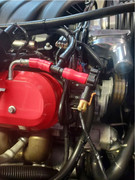
Engine off baseline atmospheric pressure voltage
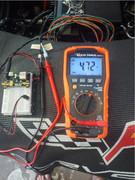
Engine running at idle

Dry sump pulls more vacuum than wetsump. Each tenth of a volt is around .325PSI. But same idea. You must have a slight vacuum at all times inside crankcase. It should be 1.5" to 3" Hg or roughly .3 to .6psi of vacuum, up to 1psi of vacuum is fine.
I measure WOT, Cruise, Idle, and make sure its always under negative pressure.
This protects the oil seals and protects oil quality. It will prevent deposits and accumulated carbon byproduct from circulating inside engine oil which clogs oil orifices over time and leads to eventual failure.
Negative pressure is also needed to maintain piston ring sealing function optimally. It will reduce blowby and prevent carbon from being introduced into the ring packs over time, causing stuck rings.
very important system, PCV.
Installed on C6 Dry sump
Engine off baseline atmospheric pressure voltage
Engine running at idle
Dry sump pulls more vacuum than wetsump. Each tenth of a volt is around .325PSI. But same idea. You must have a slight vacuum at all times inside crankcase. It should be 1.5" to 3" Hg or roughly .3 to .6psi of vacuum, up to 1psi of vacuum is fine.
I measure WOT, Cruise, Idle, and make sure its always under negative pressure.
This protects the oil seals and protects oil quality. It will prevent deposits and accumulated carbon byproduct from circulating inside engine oil which clogs oil orifices over time and leads to eventual failure.
Negative pressure is also needed to maintain piston ring sealing function optimally. It will reduce blowby and prevent carbon from being introduced into the ring packs over time, causing stuck rings.
very important system, PCV.



