When you click on links to various merchants on this site and make a purchase, this can result in this site earning a commission. Affiliate programs and affiliations include, but are not limited to, the eBay Partner Network.
I remember when gas hit hit 6.99 - 7.99 or more at Chevron in Southern California, that’s when I stopped looking at the price of super unleaded gas. Just tell me where it is and I’ll pay it off when the bill comes
Well....a little more convincing couldn't hurt right? So seriously, stop running 87 octane already, ok?!
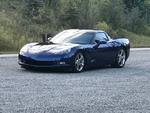
"So, if you run regular in your supercharged Vette, does it make a difference if it's with an M6 or A6 transmission?"
More likely to lug the engine with an M6 which is certainly not a good thing when pinging is an issue. An A6 with a really loose (high stalling) converter might help.
"For those that add octane booster...are you careful how much you put in and to which tank it goes into?"
I like to be pretty precise about most anything I do so yes, I use Boostane's handy dandy mixing chart. I err to the side of caution as too much is no problem but not enough spells KABOOOOOM!!!
I only have one gas cap so I don't have any means to fill the right side directly so I just do the convenient thing and assume that it'll be fine and somehow mix itself thoroughly before I can pull out of the gas station. So far so good. No KR at WOT.
"MMT is a manganese compound, which like lead, does not vaporize in the combustion chamber. It exits the engine as extremely small, but fully solid metal particles that plug the pores in cats."
LDB brings some very important info to the discussion. I probably wouldn't make a regular habit of octane boosters with cats and I can tell you from experience that leaded gas (AV gas is "low lead") is a serious no-nounless you enjoy changing O2 sensors. Back in the days before unleaded race gas was really a thing (late 90s, very early 2000s) I was running AV gas at the drag strip on the weekends and I had to keep a few spare sets of O2 sensors with me to swap out at the track. Sometimes I'd get a dozen passes, sometimes a few dozen passes out of a set. That gets expensive quick! And then they invented unleaded race gas which cured that problem. Ahh....those were the days.
"Back in my day we didn't have unleaded race gas or octane boosters that actually worked!"
"It exits the engine as extremely small, but fully solid metal particles"
Yep, I accidentally shot out a guy's front windshield and knocked a squirrel off of a mailbox just last week. Truly, this stuff can be dangerous!
I was aware of the unleaded avgas effort but had never looked into it in detail. The problem is that of the pure hydrocarbons (meaning carbon and hydrogen atoms only, with no oxygenates), only aromatics like toluene and xylene have octane ratings significantly over 100, and for various regulatory and performance issues, it’s nearly impossible to blend a reasonable fuel with more than about 40% aromatics. The best non-aromatics are isoparaffins, such as alkylate, but they are only about 94 octane. So a 60/40 blend of alkylate and aromatics is only going to make 97-99 octane, depending on the exact alkylate and aromatic composition. So where do they get the other 1-3 octane? With low lead avgas, that’s easy. The lead.
From my 20 minute search, I found a draft MSDS for the unleaded G100UL fuel, and it said 40-60% alkylate, other isoparaffins totaling 5-25%, and various aromatics (mostly xylene) totaling 20-50%. It did not mention MMT, so I was still scratching my head about where the octane came from. Then I noticed that one of the lines my eyes had originally read as toluene was actually 0-6% toluidine. Ooops, toluidine is not a refinery product like everything else mentioned on the MSDS. It is a chemical that is closely related to aniline (see aniline issues in post #59), with just one more methyl group hanging on the side of the aniline molecule. So that’s undoubtedly where the octane boost is coming from. I do not know anything of substance about the corrosivity of toluidine, but with molecular structure so close to aniline, I’d certainly be worried about it if I were a pilot considering such a fuel. One would hope they have done their homework, and it’s either surprisingly and substantially less corrosive than aniline or they have some other corrosion mitigating approach. But I’d want to know the facts in that area with certainty before putting it in my car, or if I owned one, airplane.
I found the website for the blower manufacturer and it details that premium gas only is to be used in this blower - no E85, no octane boost, nothing other than premium gas
Just to be clear to future readers of this page, E-85 is ONLY for fuel systems designed to use it. That starts with a flex fuel sensor and then the rest of the fuel system has to be up to the task....but that's a whole nother subject that has been covered many times.
I mentioned I use it but my car is fully set up for it (by Vengeance Racing). Pretty awesome stuff.
As I said before......my care has A & A S/C...10lbs boost with my LS7 engine......only have 91 available in AZ unless I drive many miles......so never had a problem with 91 and the car runs great! 87 octane? Are you kidding?
Two carbon chains, one is zero octane and one is 100 octane.
You can go anywhere from zero to 100 octane just by altering the carbon chaining of hydrocarbon molecules in a gasoline.
The difference is due to carbon chain packing and steric hindrance which limits accessibility of oxygen radicals to carbon electronic configurations.
Two carbon chains, one is zero octane and one is 100 octane.
You can go anywhere from zero to 100 octane just by altering the carbon chaining of hydrocarbon molecules in a gasoline.
The difference is due to carbon chain packing and steric hindrance which limits accessibility of oxygen radicals to carbon electronic configurations.
If I mix half 94 octane with half 91 I should have 92.5 octane. Is that correct?
That’s as good as you can do. But it probably will be off by a few tenths, or perhaps even as much as half an octane, and you won’t even be able to predict which direction. That’s because octane does not blend linearly. It’s a complex function of hydrocarbon types (paraffins, olefins, naphthenes, aromatics, and oxygenates), both of the starting gas and the component you are adding to it. Since you don’t have an analyzer to tell you those compositions, there’s no way for you to calculate it any more precisely than a simple weighted average calculation like you mentioned in your post. Refineries spend a lot of money for online analyzers that can supply the blenders with the necessary compositional details, and then do the complex calculations that allow precise blending.
That's not what I'm referring to...The C6s have (2) 9 gallon tanks If you just pour the booster in it will likely all go into one or the other but not both equally.
a lot of cars are like this. There is likely a sump or connection between them. They are not completely divided
I found the website for the blower manufacturer and it details that premium gas only is to be used in this blower - no E85, no octane boost, nothing other than premium gas
they nor you understand how any of this works. That statement could not be any more false
“This supercharger system requires the use of only premium gasoline fuel, 91 octane or better. It is NOT compatible with E85, Ethanol, or Flex fuels.
Magnuson Superchargers recommend that you run a minimum of one (1) tank of premium fuel through your vehicle prior to installation of the system to prevent any possible damage that may occur due to running the supercharged engine on lower octane fuel. Do not use any Octane Booster”















 "Back in my day we didn't have unleaded race gas or octane boosters that actually worked!"