












OIL Question

Thread Starter
2nd Gear

Joined: Aug 2017
Posts: 2
Likes: 0
 OIL Question
Hi
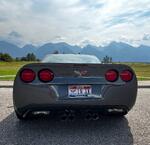
I have had my 07 base coupe for about 6 years. I have always used Mobil 1 per spec.
I moved and took it to a guy that builds LS motors and he put GM Dexos in it.
On M1 the car could sit for a few weeks and the valves would not make noise.
Now they flip out in less than 1 week. Is Dexos a bad move....
Any suggestions - Also is it bad to use the Cold Start often since I only run it on weekends
Thanks
I have had my 07 base coupe for about 6 years. I have always used Mobil 1 per spec.
I moved and took it to a guy that builds LS motors and he put GM Dexos in it.
On M1 the car could sit for a few weeks and the valves would not make noise.
Now they flip out in less than 1 week. Is Dexos a bad move....
Any suggestions - Also is it bad to use the Cold Start often since I only run it on weekends
Thanks

Drifting


Joined: Apr 2016
Posts: 1,286
Likes: 611
From: DFW Texas
Welcome to the forum.
Dexos isn't an oil it is a GM oil specification. GM has set this standard for oil to be used in GM vehicles. Your Mobil 1 should have the Dexos logo on the bottle, as it meets and/or exceeds this standard. Your issue might be more relevant to the oil viscosity used in your car. The original requirement was a 5w30. You did not provide any information on what viscosity the mechanic used, but since you now notice valve train noise and didn't with M1, you may consider just having the oil replaced with what you used before to see it that helps.
Good luck...GD
Dexos isn't an oil it is a GM oil specification. GM has set this standard for oil to be used in GM vehicles. Your Mobil 1 should have the Dexos logo on the bottle, as it meets and/or exceeds this standard. Your issue might be more relevant to the oil viscosity used in your car. The original requirement was a 5w30. You did not provide any information on what viscosity the mechanic used, but since you now notice valve train noise and didn't with M1, you may consider just having the oil replaced with what you used before to see it that helps.
Good luck...GD

Safety Car


Joined: Dec 2006
Posts: 4,592
Likes: 1,672
From: Pearland / Houston Tx
Back in 07 when my and your cars were built, the GM spec for oil was GM4718M. That is likely the spec you are used to seeing on the Mobil1 jug.
Dexos is the spec that GM created for 2011 and later cars. Dexos meets the old 4718 spec, which may have been dropped off the label on new oil jugs.
I wouldn't think either rating would make a difference on cold start noise. I live in a hot climate so I use a heavier weight than recommended. Might be worth a try for you.
Dexos is the spec that GM created for 2011 and later cars. Dexos meets the old 4718 spec, which may have been dropped off the label on new oil jugs.
I wouldn't think either rating would make a difference on cold start noise. I live in a hot climate so I use a heavier weight than recommended. Might be worth a try for you.

Drifting

Joined: Jan 2005
Posts: 1,946
Likes: 1,331
From: Houston Tx
As others have said, Dexos is both a spec, and in a few cases, is a lower quality synthetic/dino blend rather than a full synthetic. Without knowing exactly what the oil is, it’s impossible to comment beyond that. But as others have also said, why not just go back to what has worked for you in the past?
As to the cold start option, if the only reason you are doing it is to coat things with oil while not in use, you are doing more harm than good. A film of oil remains on exposed parts for months. The harm comes from the fact that the oil is way thicker when cold than when at running temperature. For a typical drive, due to the fact that the oil is too thick to lubricate properly when cold, there is way more wear and tear on the bearings, camshaft, and rings during the few minutes of warmup than on the entire rest of the trip. That’s why people say to take it easy until the engine (actually the oil) is up to running temperature. I’m not saying that using the cold start option is going to ruin your engine any more than your engine gets ruined when you actually start it from cold. But clearly, the cold start option does more harm than good when used for the unnecessary purpose of coating things with oil during idle periods. It’s only intended for situations where some repair or testing activity requires you to rotate the engine for some reason.
As to the cold start option, if the only reason you are doing it is to coat things with oil while not in use, you are doing more harm than good. A film of oil remains on exposed parts for months. The harm comes from the fact that the oil is way thicker when cold than when at running temperature. For a typical drive, due to the fact that the oil is too thick to lubricate properly when cold, there is way more wear and tear on the bearings, camshaft, and rings during the few minutes of warmup than on the entire rest of the trip. That’s why people say to take it easy until the engine (actually the oil) is up to running temperature. I’m not saying that using the cold start option is going to ruin your engine any more than your engine gets ruined when you actually start it from cold. But clearly, the cold start option does more harm than good when used for the unnecessary purpose of coating things with oil during idle periods. It’s only intended for situations where some repair or testing activity requires you to rotate the engine for some reason.

Drifting


Joined: Apr 2021
Posts: 1,935
Likes: 1,127
From: Peoria, AZ
2023 C6 of the Year Finalist - Modified
I change my own oil. I've used NAPA full synthetic 5W 30 oil (made by Valvoline). It has been flawless and is around $5 a quart in a gallon jug when it's on sale. Normal price is $24.99 for 1 gallon. Its specifications are identical to Mobile 1. Just for more info, my car has an LS7 with an A & A S/C (10 lbs boost) with no problems what-so-ever! This is a transplanted engine, and I do not have a dry sump, however, I do have an F4 oil pan with an LS3 oil pump. I live in Metro Phoenix with high temps for a couple of weeks in the summer of 113-117, and daily temps over 100 for about 3 months. The car has 74K miles, and uses no oil between changes and maintains great oil pressure (40 lbs when it's HOT outside). Just some added information for you. Good luck.
Corvette Stories
The Best of Corvette for Corvette Enthusiasts

Top 10 Most Expensive Corvettes Ever Sold on Bring A Trailer
Brett Foote
10 Things Every Corvette Owner Needs (2026 Edition)
Michael S. Palmer
8 Most "Only Corvette Owners Understand" Quirks and Problems
Pouria Savadkouei
10 Reasons the C6 Z06 is Still A Performance Benchmark After 20 Years
Joe Kucinski
How Much Horsepower Every Corvette Engine "LOST" in 1972
Joe Kucinski
Top 10 DOs and DON'Ts for Protecting Your Convertible Top!
Michael S. Palmer
Top 10 Most Explosive Corvettes Ever Made: Power-to-Weight Ratio Ranked!
Joe Kucinski
150 hp to 1,250 hp: Every Corvette Generation Compared by the Specs That Matter
Joe Kucinski
8 Coolest Corvette Pace Cars (and Replicas) of All Time
Verdad Gallardo

Burning Brakes

Joined: Feb 2021
Posts: 771
Likes: 399
2022 C6 of the Year Finalist - Unmodified
When I do the oil change in my Titan (everyday ride) I usually go with the cheapest big brand name. The prices fluctuate from change to change...... The last round in 11/22, My Vette fell close enough to do both on the same day. I went ahead and bought Castrol GTX Full Syn and poured into both vehicles. Fast forward to last weekend (time for Titan again) and Pennzoil was the cheapest (full syn). When I pulled the filter and the plug, I was awe struck on how the oil poured out...... This stuff came out at a steady stream for what felt like a solid minute (at the plug)!!! A good 30 seconds slower than all other oils. At the filter it took its time as well!!!! This is straight oil and no other additives. Is Castrol that good or do I need to pull it out of the Vette???? DEXOS 1 as well
Drifting
Joined: Jan 2005
Posts: 1,946
Likes: 1,331
From: Houston Tx
When I do the oil change in my Titan (everyday ride) I usually go with the cheapest big brand name. The prices fluctuate from change to change...... The last round in 11/22, My Vette fell close enough to do both on the same day. I went ahead and bought Castrol GTX Full Syn and poured into both vehicles. Fast forward to last weekend (time for Titan again) and Pennzoil was the cheapest (full syn). When I pulled the filter and the plug, I was awe struck on how the oil poured out...... This stuff came out at a steady stream for what felt like a solid minute (at the plug)!!! A good 30 seconds slower than all other oils. At the filter it took its time as well!!!! This is straight oil and no other additives. Is Castrol that good or do I need to pull it out of the Vette???? DEXOS 1 as well
If the question in the back of your mind was whether Castrol is more resistant to thinning out or degrading from shear than most oils, that issue could not have caused what you observed. When people talk about viscosity loss from shearing, it is in oil grades with VI improver additives, and what shears are the VI improver additives, not the base oil. The base oil never shears to any significant extent. VI improvers are subject to shear because on a molecular level, they look like an octopus. At room temperature, the octopus’s tentacles are coiled tightly around the octopus, but as the oil gets hot, the tentacles spread out and start resisting flow, thus counteracting the tendency of the oil to thin out as temperature increases. Trouble is, the tentacles can shear off, and if they do, then the thickening power of the additive wears out. But if you think about it, that makes the oil thinner at high temperature without affecting things at low temperature. That’s because at high temperature, the tentacles are gone, so there’s nothing to spread out, resist flow, and counteract the tendency of the oil to thin out when hot. But at low temperature, either the tentacles are wrapped tightly around the octopus, or they have sheared off, and either way, the VI improver does not affect viscosity at low temperature.
Burning Brakes
Joined: Feb 2021
Posts: 771
Likes: 399
2022 C6 of the Year Finalist - Unmodified
No obstruction in the drain (both filter mount and drain hole flowed the same)
5W30 is what it calls for (what I use)
I thought the same on this one... I usually crank it and back it into place (20-30 seconds of run time). Maybe I did it in 10 seconds.
This is a great read!!!! Appreciate you!!!!
5W30 is what it calls for (what I use)
I thought the same on this one... I usually crank it and back it into place (20-30 seconds of run time). Maybe I did it in 10 seconds.
This is a great read!!!! Appreciate you!!!!
The only three things I can think of that would cause your oil to drain slower than usual would be some sort of obstruction in the drain, or accidentally buying a heavier grade of oil than usual for your last oil change, or draining it when cooler than what is usual for you (either a cold day if the engine was fully cold, or if you drain the oil while warm from having run recently, draining when it’s closer to room temperature than usual).
If the question in the back of your mind was whether Castrol is more resistant to thinning out or degrading from shear than most oils, that issue could not have caused what you observed. When people talk about viscosity loss from shearing, it is in oil grades with VI improver additives, and what shears are the VI improver additives, not the base oil. The base oil never shears to any significant extent. VI improvers are subject to shear because on a molecular level, they look like an octopus. At room temperature, the octopus’s tentacles are coiled tightly around the octopus, but as the oil gets hot, the tentacles spread out and start resisting flow, thus counteracting the tendency of the oil to thin out as temperature increases. Trouble is, the tentacles can shear off, and if they do, then the thickening power of the additive wears out. But if you think about it, that makes the oil thinner at high temperature without affecting things at low temperature. That’s because at high temperature, the tentacles are gone, so there’s nothing to spread out, resist flow, and counteract the tendency of the oil to thin out when hot. But at low temperature, either the tentacles are wrapped tightly around the octopus, or they have sheared off, and either way, the VI improver does not affect viscosity at low temperature.
If the question in the back of your mind was whether Castrol is more resistant to thinning out or degrading from shear than most oils, that issue could not have caused what you observed. When people talk about viscosity loss from shearing, it is in oil grades with VI improver additives, and what shears are the VI improver additives, not the base oil. The base oil never shears to any significant extent. VI improvers are subject to shear because on a molecular level, they look like an octopus. At room temperature, the octopus’s tentacles are coiled tightly around the octopus, but as the oil gets hot, the tentacles spread out and start resisting flow, thus counteracting the tendency of the oil to thin out as temperature increases. Trouble is, the tentacles can shear off, and if they do, then the thickening power of the additive wears out. But if you think about it, that makes the oil thinner at high temperature without affecting things at low temperature. That’s because at high temperature, the tentacles are gone, so there’s nothing to spread out, resist flow, and counteract the tendency of the oil to thin out when hot. But at low temperature, either the tentacles are wrapped tightly around the octopus, or they have sheared off, and either way, the VI improver does not affect viscosity at low temperature.

Advanced
Joined: Feb 2023
Posts: 83
Likes: 22
I recently had mine changed with amsoil and I have to say the engine is a lot quieter than with Mobil 1 that was previously in it. In my Tacoma and 4Runner, I noticed more engine noise with Mobil 1 as well vs Toyota synthetic.

Instructor
Joined: May 2022
Posts: 156
Likes: 52
From: Illinois
I used m1 5w30syn when I first bought mine. After a week I would get lifter noise when starting it. I switched to royal purple 5w30 and now I have to go 2 weeks or more before that issue happens. So it seems that oil wants to stay in the lifters a little longer.
Since I had the cam package and higher volume oil pump put in, the shop recommended 15w40 Rotella non synthetic. I really wanted to stay synthetic and probably will switch to synthetic. Might do 10w40 amsoil or royal purple.
Anyone have experience with what they use with a cammed ls3?
Since I had the cam package and higher volume oil pump put in, the shop recommended 15w40 Rotella non synthetic. I really wanted to stay synthetic and probably will switch to synthetic. Might do 10w40 amsoil or royal purple.
Anyone have experience with what they use with a cammed ls3?



Safety Car
Joined: Aug 2017
Posts: 4,929
Likes: 2,340
From: Etobicoke (Toronto) Ontario
‘Back in the day’, sbc engines had looser tolerances than LS series, so you could run a heavier weight oil and the oil pump could squeeze that oil more easily into the journals. With the tight tolerances on an LS, you really don’t want to do anything that would impede the oil flow to the bearings. IMHO, oil flow is more important than oil pressure, but of course you need both.

Instructor
Joined: May 2022
Posts: 156
Likes: 52
From: Illinois
‘Back in the day’, sbc engines had looser tolerances than LS series, so you could run a heavier weight oil and the oil pump could squeeze that oil more easily into the journals. With the tight tolerances on an LS, you really don’t want to do anything that would impede the oil flow to the bearings. IMHO, oil flow is more important than oil pressure, but of course you need both.


Burning Brakes

Joined: Jun 2022
Posts: 752
Likes: 255
From: Florida
As others have said, Dexos is both a spec, and in a few cases, is a lower quality synthetic/dino blend rather than a full synthetic. Without knowing exactly what the oil is, it’s impossible to comment beyond that. But as others have also said, why not just go back to what has worked for you in the past?
As to the cold start option, if the only reason you are doing it is to coat things with oil while not in use, you are doing more harm than good. A film of oil remains on exposed parts for months. The harm comes from the fact that the oil is way thicker when cold than when at running temperature. For a typical drive, due to the fact that the oil is too thick to lubricate properly when cold, there is way more wear and tear on the bearings, camshaft, and rings during the few minutes of warmup than on the entire rest of the trip. That’s why people say to take it easy until the engine (actually the oil) is up to running temperature. I’m not saying that using the cold start option is going to ruin your engine any more than your engine gets ruined when you actually start it from cold. But clearly, the cold start option does more harm than good when used for the unnecessary purpose of coating things with oil during idle periods. It’s only intended for situations where some repair or testing activity requires you to rotate the engine for some reason.
As to the cold start option, if the only reason you are doing it is to coat things with oil while not in use, you are doing more harm than good. A film of oil remains on exposed parts for months. The harm comes from the fact that the oil is way thicker when cold than when at running temperature. For a typical drive, due to the fact that the oil is too thick to lubricate properly when cold, there is way more wear and tear on the bearings, camshaft, and rings during the few minutes of warmup than on the entire rest of the trip. That’s why people say to take it easy until the engine (actually the oil) is up to running temperature. I’m not saying that using the cold start option is going to ruin your engine any more than your engine gets ruined when you actually start it from cold. But clearly, the cold start option does more harm than good when used for the unnecessary purpose of coating things with oil during idle periods. It’s only intended for situations where some repair or testing activity requires you to rotate the engine for some reason.