When you click on links to various merchants on this site and make a purchase, this can result in this site earning a commission. Affiliate programs and affiliations include, but are not limited to, the eBay Partner Network.
Does anyone else gain 5 lbs of tire pressure in a day? I posted when I first got the car last year 2007 base..about thinking my suspension was jacked but ended up was tire pressure. I can set on 29 or 30 and be at 35 when I get home from work that day. And you can tell...like basketballs.
It's possible. Air expands when it gets hot to a degree dependent on the moisture content. That's why a lot of luxury cars use nitrogen - they don't expand and contract as much and are less prone to losing pressure over time. I have a Costco membership, so I'm actually considering having the air evacuated from my tires so I can fill them with nitrogen.
My wife's Mazda and her Jaguar came with nitrogen from the factory.
That is totally possible with heat and you'd be amazed how much can be gained at a track event. I wonder at your comment about tire bulge though, it sounds like they may be bad. Going from 10 to 35 yeah you can see a difference but I personally haven't seen tires change from 30 to 35.
On all my road trips, I always start at 30 cold, but at the end of a day of driving, it's up in the 35 range. Thus why one should always check tire pressure when the tires are cold.
It's possible. Air expands when it gets hot to a degree dependent on the moisture content. That's why a lot of luxury cars use nitrogen - they don't expand and contract as much and are less prone to losing pressure over time. I have a Costco membership, so I'm actually considering having the air evacuated from my tires so I can fill them with nitrogen.
My wife's Mazda and her Jaguar came with nitrogen from the factory.
Save your time and money.....plain old air is comprised of 78% nitrogen.
It's called the perfect gas law, PV=nRT. Volume stays essentially unchanged as does n & R so if T goes up on the right side P has to go up on the left side. Just watch the pressure on the DIC as you drive.
It's possible. Air expands when it gets hot to a degree dependent on the moisture content. That's why a lot of luxury cars use nitrogen - they don't expand and contract as much and are less prone to losing pressure over time. I have a Costco membership, so I'm actually considering having the air evacuated from my tires so I can fill them with nitrogen.
My wife's Mazda and her Jaguar came with nitrogen from the factory.
Boyle's law says all noble gases behave the same PV=nRT
Air mix:
N:78%
O:21%
other:1%
All noble gasses following Boyle's Law....
Can you explain why nitrogen doesn't respond to heat the same way as natural air mixture.
Does anyone else gain 5 lbs of tire pressure in a day? I posted when I first got the car last year 2007 base..about thinking my suspension was jacked but ended up was tire pressure. I can set on 29 or 30 and be at 35 when I get home from work that day. And you can tell...like basketballs.
In racing we consider a Pdelta over 4 psi to indicate under inflation. Try starting at 1 psi higher cold. Pfinal likely will be the same but the tire may not get as warm. This is when cold:80F and hot:170F
The only reason I've ever come up with is moisture content. Compressed air could have a lot of water which can condense to liquid at low temp and then vaporize at high temp. Good dry air will behave the same as nitrogen. The use of pure nitrogen started with heavy duty truckers because they run the same carcass for a long time and retread them. The pure nitrogen doesn't oxidize the internal layers of rubber in the carcass. But since our tires get replaced every 5 years it makes no difference.
The only reason I've ever come up with is moisture content. Compressed air could have a lot of water which can condense to liquid at low temp and then vaporize at high temp. Good dry air will behave the same as nitrogen. The use of pure nitrogen started with heavy duty truckers because they run the same carcass for a long time and retread them. The pure nitrogen doesn't oxidize the internal layers of rubber in the carcass. But since our tires get replaced every 5 years it makes no difference.
I'm confused....
On average, a semi-truck typically covers around 100,000 to 125,000 miles per year. However, this can vary based on factors like the type of freight, routes, and individual trucking company practices.
The lifespan of semi-truck tires can vary depending on factors such as the type of tire, road conditions, maintenance, and driving habits. On average, truck tires might last between 50,000 and 150,000 miles. Regular maintenance, proper inflation, and alignment can contribute to extending their lifespan.
can you explain how semi tire last longer? And, I noticed pilot truck stop has compressed air at the fuel pumps for semis
I'm confused....
On average, a semi-truck typically covers around 100,000 to 125,000 miles per year. However, this can vary based on factors like the type of freight, routes, and individual trucking company practices.
The lifespan of semi-truck tires can vary depending on factors such as the type of tire, road conditions, maintenance, and driving habits. On average, truck tires might last between 50,000 and 150,000 miles. Regular maintenance, proper inflation, and alignment can contribute to extending their lifespan.
can you explain how semi tire last longer? And, I noticed pilot truck stop has compressed air at the fuel pumps for semis
Fleets will retread semi tires for up to 8 years and independents will go much longer.
Does anyone else gain 5 lbs of tire pressure in a day? I posted when I first got the car last year 2007 base..about thinking my suspension was jacked but ended up was tire pressure. I can set on 29 or 30 and be at 35 when I get home from work that day. And you can tell...like basketballs.
The 5 psi gaining must have been by driving.
Then the deflecting and flexing back heats up tire-matetial, wich heats up tire inside gascompound.
Dont worry about the pressure rising, worry about the temperature of inside tire gascompound it represents.
When driving high speed with yust enaugh pressure for load and speed, in ambiënt temperature of 104 degr F/40 degr C, the tire inside rises to 167 degr F/ 75 degr C. so extreme circumstances. If higher temp, it must be by external factors or to low pressure.
I am now busy making a list of pressure rising for temperature in tire.
But now I will use your pressure of 30 psi, calculated with my made temperature/ tyrepressure calculator for dry and wet.
30 psi filled at 68 degr F/20 degr C going to 35 psi, means if perfectly dry gascompound in tire, like Nitrogen claims, a temperature in tire of 127 degr F. With enaugh water in tire 115 degr F, like normal air with all the humidity.
Wich is pretty normal after longer drive with speeds of about 60 to 70 mph.
And you see that with water in tire, pressure rises more, but temperature in tire stays lower, wich cools down better the tire material.
Not a big difference, but certainly no pro for Nitrogen filling.
If you want to play with my calculator, mail me at my hotmail. com adres with username jadatis, and I will send it in return.
Like this to prefent spamm, combine yourselfes.
We circle track race on dirt and constantly fight this battle. We go as far as purging the mounted tire completely with a electric vacuum pump and after doing that and filling with nitrogen we can slow the air pressure increase but cant stop it. On dirt the higher the air pressure the larger the circumference of the tire so it causes havoc on the rear stagger on the car. On dirt its tough because we have 850 hp, with a 15" wide tire sliding across the surface making lots of tire heat.
We circle track race on dirt and constantly fight this battle. We go as far as purging the mounted tire completely with a electric vacuum pump and after doing that and filling with nitrogen we can slow the air pressure increase but cant stop it. On dirt the higher the air pressure the larger the circumference of the tire so it causes havoc on the rear stagger on the car. On dirt its tough because we have 850 hp, with a 15" wide tire sliding across the surface making lots of tire heat.
If you have a physical sciences background, you are likely familiar with the ideal gas equation of PV=nRT. P = pressure of gas, V = volume of gas, n = moles of gas, R = ideal gas constant, T = pressure. In the case of tire pressure, using this equation, the volume, gas constant, and number of moles (amount of gas) are all staying the same in the tire (volume will actually increase a little as a tire does have some flex). If you start off with 30 PSI on a cold morning, say 40 F and then it warms up into the 70's, is a sunny day, and you do a good bit of driving, 5 psi or more increase is easy to happen.
And the opposite is true. Many people get a low air pressure light on their cars in the winter when a strong cold front comes through.
It would be cool to see cars come out that have active air pressure systems integrated into the car to maintain an ideal pressure at all times. Would just be an air pump with air lines going to each wheel and a through hub. Would add complexity and weight to a vehicle. But cost would likely work out better with maximized tire wear over the life of the vehicle. I would rather have that than the garbage "features" they keep adding to modern cars.
Moisture content in the air is what causes it to expand when it is heated. Nitrogen is drier and that is why it isn't affected by heat as much. If you put a desicant snake like painters use on your air compressor when you fill your tires you can remove most of the moisture and this will help. Having a good compressor with a dryer element on it will also help.






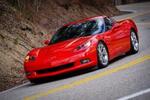







 Gaining tire pressure