




Oil temps

Drifting


Joined: Apr 2020
Posts: 1,789
Likes: 675

Keeping the oil temps cooler also helps cool the piston with oil splash. A cooler pistons is less prone to contribute to detonation.
If tracking a car, an oil cooler is mandatory. GM figured this out and added oil coolers in the C8 as standard and of course dry sumps rule over wet sumps when it comes to tracking.
Summer driving, not beating on the car, I would see oil temps at 230F +. After adding an oil cooler, I now see 205F oil temps, even after highway driving and some accelerated runs.

Drifting


Joined: Oct 2009
Posts: 1,537
Likes: 165
From: Lombard, IL (Chicago suburbs)
i don't worry about oil until it gets over 270 on track... pressures go down over 250 but keep the RPMs up and don't worry about it. The ls is a truck motor after all it's fine
i actually think (like the video said) it's critical to get your oil up over 212 degrees to burn off any excess water. My car is a "drive it to the track, run laps, have fun" and it has a thermostat from improved racing to make sure the oil cooler isn't over cooling the oil on the street so that its burning off that water and enabling the car to be at temp when I enter the race track.
i actually think (like the video said) it's critical to get your oil up over 212 degrees to burn off any excess water. My car is a "drive it to the track, run laps, have fun" and it has a thermostat from improved racing to make sure the oil cooler isn't over cooling the oil on the street so that its burning off that water and enabling the car to be at temp when I enter the race track.

Thread Starter
Advanced


Joined: Jul 2015
Posts: 90
Likes: 25
Getting oil temps over 212F to burn off moisture was probably my biggest takeaway from the video as well. I've seen a lot of owners post questions about this over the years. Like my myself this is probably the first car many have owned with an oil temp gauge.
Last edited by dadsbadhabit; Jan 23, 2026 at 12:08 PM. Reason: more info
Drifting
Joined: Apr 2020
Posts: 1,789
Likes: 675
The bearing temperatures are usually 50F degrees HOTTER than the actual recorded oil temps. So if your oil temps are 250, your bearings are around 300F. So if the DIC shows 200F on oil temps, the bearing temperatures are at 250F. You won't have any "moisture" burn off issues.
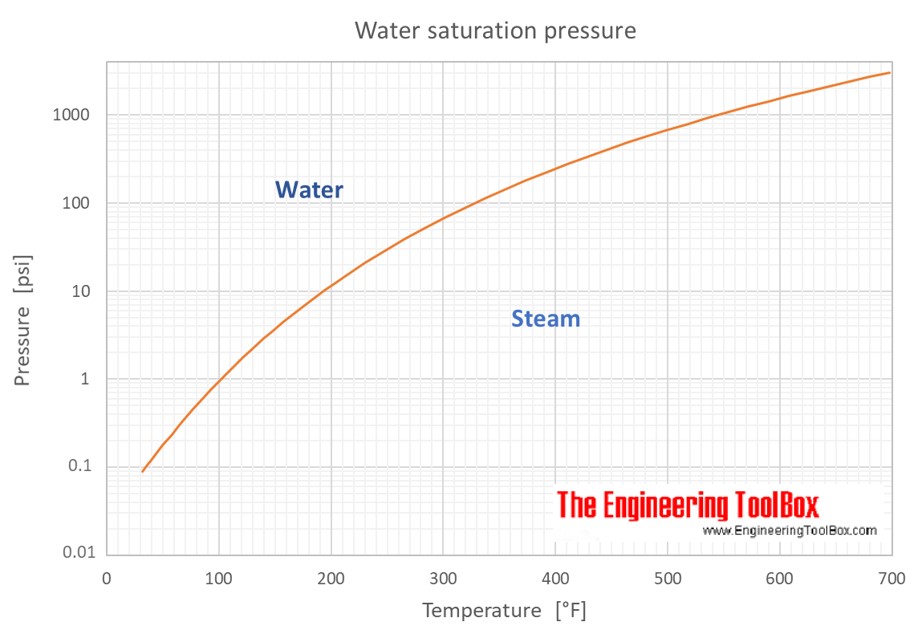
Elevation also plays a role. Water starts to boil earlier at higher elevations, around 200F at 5,000 feet elevation.
Once the oil hits 180F, the oil is fully warmed up and ready for high RPMs.The new C8s with the dry sump and oil coolers, rarely see above 200F unless driven in hot summer and aggressive track driving. Most see 160-180F oil temps when just driving around.
Naturally aspirated LS3 vs boosted requires different oil temp parameters. Those cast pistons and detonation is what you have to watch for. Oil splash is what cools them on LS3s. While the LS9 and later LTs have oil squirtters which squirt oil onto the bottom of the pistons to help cool and lubricate them. I would not go over 230F oil temps on a cast piston with boost unless you had water meth to help cool that piston. A forged piston would not be an issue with higher oil temps.
Elevation also plays a role. Water starts to boil earlier at higher elevations, around 200F at 5,000 feet elevation.
Once the oil hits 180F, the oil is fully warmed up and ready for high RPMs.The new C8s with the dry sump and oil coolers, rarely see above 200F unless driven in hot summer and aggressive track driving. Most see 160-180F oil temps when just driving around.
Naturally aspirated LS3 vs boosted requires different oil temp parameters. Those cast pistons and detonation is what you have to watch for. Oil splash is what cools them on LS3s. While the LS9 and later LTs have oil squirtters which squirt oil onto the bottom of the pistons to help cool and lubricate them. I would not go over 230F oil temps on a cast piston with boost unless you had water meth to help cool that piston. A forged piston would not be an issue with higher oil temps.
Last edited by Pettrix; Jan 23, 2026 at 03:09 PM.

Safety Car


Joined: Feb 2016
Posts: 4,464
Likes: 1,395
From: SC
I don't track my GS 6M dry sump and with the stock oil cooler it would eventually get up to about 160 most of the time even on a long drive in the summer. A good hard blast in the mountains would get it higher but it seemed a poor setup to me for purely street driving. I know GM set it up more as a intro track car but they should have at least put a thermostat in the oil cooler plumbing. I know a lot of people block off the cooler in the winter but that always seemed a real shade tree mechanic fix. I replaced the radiator with a Dewitts with the oil cooler integrated into the tank. Now it runs 180 on the same long summer drive and I can get it over 200 in the mountains. You don't really need to get to the boiling point to drive water out, as mentioned, the oil is a lot hotter in various parts of the engine.

Melting Slicks


Joined: Dec 2017
Posts: 2,011
Likes: 918
From: Baie-D'Urfe, Quebec
2023 Corvette of the Year Finalist - Unmodified
2022 C6 of the Year Winner - Unmodified
keep in mind the oil temp sender is in the bottom of the dry sump tank, which I presume to be somewhat cooler than the engine.
I was going to try and relocate my temp sender to the unused port on the IR oil temp thermostat, but then never bothered. Not long after this, I noticed a NASCAR dry sump with the temp sender at the bottom of the tank, and asked the crew chief about the 'why' for using that location; He said that at high rpm any temperature difference between that, and an other location is kinda mitigated anyway. Moreover, one can then split hairs anyway regarding where that other location should be...so they just use that existing port. Because "race car".
To go back however, it would be interesting to see how much temp difference there is at normal low rpm temps. I suspect an engine location for the sender would read somewhat higher
I was going to try and relocate my temp sender to the unused port on the IR oil temp thermostat, but then never bothered. Not long after this, I noticed a NASCAR dry sump with the temp sender at the bottom of the tank, and asked the crew chief about the 'why' for using that location; He said that at high rpm any temperature difference between that, and an other location is kinda mitigated anyway. Moreover, one can then split hairs anyway regarding where that other location should be...so they just use that existing port. Because "race car".
To go back however, it would be interesting to see how much temp difference there is at normal low rpm temps. I suspect an engine location for the sender would read somewhat higher
Corvette Stories
The Best of Corvette for Corvette Enthusiasts

Every 2027 Corvette Engine Explained
Joe Kucinski
Designer Imagines A Corvette That Looks More Like a Corvette Than the Corvette
Verdad Gallardo
10 Ugly Corvettes That We Still Kinda Love
Joe Kucinski
Top 10 Most Expensive Corvettes Ever Sold on Bring A Trailer
Brett Foote
10 Things Every Corvette Owner Needs (2026 Edition)
Michael S. Palmer
8 Most "Only Corvette Owners Understand" Quirks and Problems
Pouria Savadkouei
10 Reasons the C6 Z06 is Still A Performance Benchmark After 20 Years
Joe Kucinski
How Much Horsepower Every Corvette Engine "LOST" in 1972
Joe Kucinski
Top 10 DOs and DON'Ts for Protecting Your Convertible Top!
Michael S. Palmer
Drifting
Joined: Apr 2020
Posts: 1,789
Likes: 675
keep in mind the oil temp sender is in the bottom of the dry sump tank, which I presume to be somewhat cooler than the engine.
I was going to try and relocate my temp sender to the unused port on the IR oil temp thermostat, but then never bothered. Not long after this, I noticed a NASCAR dry sump with the temp sender at the bottom of the tank, and asked the crew chief about the 'why' for using that location; He said that at high rpm any temperature difference between that, and an other location is kinda mitigated anyway. Moreover, one can then split hairs anyway regarding where that other location should be...so they just use that existing port. Because "race car".
To go back however, it would be interesting to see how much temp difference there is at normal low rpm temps. I suspect an engine location for the sender would read somewhat higher
I was going to try and relocate my temp sender to the unused port on the IR oil temp thermostat, but then never bothered. Not long after this, I noticed a NASCAR dry sump with the temp sender at the bottom of the tank, and asked the crew chief about the 'why' for using that location; He said that at high rpm any temperature difference between that, and an other location is kinda mitigated anyway. Moreover, one can then split hairs anyway regarding where that other location should be...so they just use that existing port. Because "race car".
To go back however, it would be interesting to see how much temp difference there is at normal low rpm temps. I suspect an engine location for the sender would read somewhat higher
Oil temps vs bearing temps are load dependent, RPM dependent and clearance dependent. NASCAR engine at Daytona. The sump temp at 280°F and oil temp at main bearing exit was 360°F, an 80°F temp rise across the bearing. The LS3 street/highway driving will typically see 30-50F temp difference between DIC oil temp vs bearing temps. That will increase with tracking and higher engine loads.
So if your DIC is showing 200F oil temps while highway cruise, the bearing temps inside the engine are at 230-250F. Nothing concerning.
Oil cooler thermostats are best. Improved Racing oil cooler t-stat on my wet sump starts to open at 180F and is fully open by 200F. My oil temps are 205F at highway cruise. Without t-stat, it would probably be 160F oil temps

Burning Brakes


Joined: Jan 2021
Posts: 891
Likes: 754
From: SW Desert
I find it interesting that the additives in oil don't really start working until the 220 to 240 degree range as mentioned about 2 mins into vid.

Drifting


Joined: Aug 2017
Posts: 1,941
Likes: 364
From: Dayton, OH
The number I have seen for E85 is 70 deg C = 158 deg F.
My new engine has forged pistons so this is a question of curiosity. Perhaps it will help someone else.
Drifting
Joined: Apr 2020
Posts: 1,789
Likes: 675
https://www.holley.com/blog/post/the...059eac1cbf670d
While 100% methanol will give you the most HP, the 50/50 mix will give you the best cooling effect for IAT and a better steam cleaning of the intake. Plus, 100% meth is really flammable and it carries a flame that is not visible in daylight so if it ignites outside of the engine, you will not be able to see the flames in the daytime. Although, 100% meth is the best for max HP. The safer option is always 50/50
A catch can also is a good idea as oil vapors have an octane rating of around 48 octane. So without the catch can, your PCV system introduces oil vapors into the intake and this then goes into your combustion chamber and drops your octane level. For a daily driver, it's fine, but on an boosted engine with higher compression, it's a good idea TO run a catch can.
Drifting
Joined: Apr 2020
Posts: 1,789
Likes: 675
 240F is not an issue when cruising but if you were in a climate like Arizona or similar, it would probably need an oil cooler, especially if you started driving hard.
The weak links are those cast pistons and tight piston ring clearances. GM ran it tight on the LS3 as they were building for NA and not a supercharger. The LS9 has looser piston ring clearances and forged pistons.
The hot oil temps don't help the cast pistons and tight ring clearances. Heat = expansion. One can hurt the piston or ring land on a stock LS3 pistons if things get too hot

Pro

Joined: Oct 2024
Posts: 736
Likes: 401
From: WI
240F is not an issue when cruising but if you were in a climate like Arizona or similar, it would probably need an oil cooler, especially if you started driving hard.The weak links are those cast pistons and tight piston ring clearances. GM ran it tight on the LS3 as they were building for NA and not a supercharger. The LS9 has looser piston ring clearances and forged pistons.
The hot oil temps don't help the cast pistons and tight ring clearances.
Drifting
Joined: Apr 2020
Posts: 1,789
Likes: 675
I want to play it safe as I don't want to be rebuilding engines $$$.
 So I stay conservative on power/boost and keep the oil temps cool to protect the cast pistons.

Race Director


Joined: Dec 2005
Posts: 11,369
Likes: 975
From: Carlsbad Ca
But, I can tell you that the additive package in engine oils are "working" for initial start-up. Regardless of temperature.
The "rule of thumb" for engine oils is...for every 10 degrees above 280F, the oil life is cut in half. Is doesn't matter if the base stock is natural OR synthetic. It's the additive package that gets "cooked" at higher temps. (Above 300F sustained, and ur oil is ready to be changed.)
This, coming from a Tribologist...
EDIT: Just reviewed the youtube link. The oil guy has it mostly correct. (I've heard worse from automotive class instructors.)
Last edited by NORTY; Jan 27, 2026 at 09:46 PM.
Drifting
Joined: Apr 2020
Posts: 1,789
Likes: 675
I haven't clicked on the video, yet.
But, I can tell you that the additive package in engine oils are "working" for initial start-up. Regardless of temperature.
The "rule of thumb" for engine oils is...for every 10 degrees above 280F, the oil life is cut in half. Is doesn't matter if the base stock is natural OR synthetic. It's the additive package that gets "cooked" at higher temps. (Above 300F sustained, and ur oil is ready to be changed.)
This, coming from a Tribologist...
But, I can tell you that the additive package in engine oils are "working" for initial start-up. Regardless of temperature.
The "rule of thumb" for engine oils is...for every 10 degrees above 280F, the oil life is cut in half. Is doesn't matter if the base stock is natural OR synthetic. It's the additive package that gets "cooked" at higher temps. (Above 300F sustained, and ur oil is ready to be changed.)
This, coming from a Tribologist...

Instructor
Joined: Jan 2023
Posts: 185
Likes: 88
From: Upper Arlington, OH