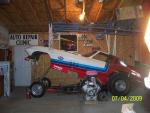


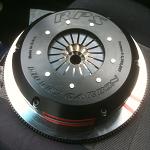




My 91mm C6 Build thread!

Former Vendor
Joined: Jun 2006
Posts: 1,622
Likes: 3
From: Dallas TX

I can appreciate the time it takes to build something like this and so I don't want to take anything away from your build. However MIG welding with ER70 wire on stainless steel tubing is a sure way to develop cracks after some heat cycles.
Also you should really invest in a good back purging setup when building headers like you did, it will greatly help with your weld quality. Although it looks like you may have been using the wrong type of filler metal (ER70 as well?). Or just was clean, too much heat, or many other possible causes of that result.
I hate to see you put this much time and money into something and then start chasing cracks every week.
Cool project and thanks for sharing the pictures! Love the JSB valve covers and intake!
Also you should really invest in a good back purging setup when building headers like you did, it will greatly help with your weld quality. Although it looks like you may have been using the wrong type of filler metal (ER70 as well?). Or just was clean, too much heat, or many other possible causes of that result.
I hate to see you put this much time and money into something and then start chasing cracks every week.
Cool project and thanks for sharing the pictures! Love the JSB valve covers and intake!

Advanced

Joined: Apr 2007
Posts: 87
Likes: 0
I used 304ss tig rods to do everything and i had arh do the merge at the t6 flange because i cjut a little too much for the pipes to meet and i.couldnt fill the gap with my tig... And i know that back purging is the best way to do headers but i have heard from many that its not necessarily mandatory, so i guess im guilty of skipping that step lol... However i did make sure to isolate the turbo with its own mount and install flex's in the crossover so there is really no weight on the headers or crossover accept during engine movement which shouldnt be too much...
And like i stated before i am not using a footpedal control for my tig so the welds arent gonna look as nice esp. Since this is my first time tig welding..and i thankyou for giving some insight and if theres any.tips u can give a junior welder/fabricator i appreciate it
And like i stated before i am not using a footpedal control for my tig so the welds arent gonna look as nice esp. Since this is my first time tig welding..and i thankyou for giving some insight and if theres any.tips u can give a junior welder/fabricator i appreciate it
Former Vendor
Joined: Jun 2006
Posts: 1,622
Likes: 3
From: Dallas TX
I used 304ss tig rods to do everything and i had arh do the merge at the t6 flange because i cjut a little too much for the pipes to meet and i.couldnt fill the gap with my tig... And i know that back purging is the best way to do headers but i have heard from many that its not necessarily mandatory, so i guess im guilty of skipping that step lol... However i did make sure to isolate the turbo with its own mount and install flex's in the crossover so there is really no weight on the headers or crossover accept during engine movement which shouldnt be too much...
And like i stated before i am not using a footpedal control for my tig so the welds arent gonna look as nice esp. Since this is my first time tig welding..and i thankyou for giving some insight and if theres any.tips u can give a junior welder/fabricator i appreciate it
And like i stated before i am not using a footpedal control for my tig so the welds arent gonna look as nice esp. Since this is my first time tig welding..and i thankyou for giving some insight and if theres any.tips u can give a junior welder/fabricator i appreciate it
First let me say again that I understand the time it takes to tackle something like this and I am in no way trying to derail that. In fact I think you did a nice job on the layout and the only real part to be addressed is just in the weld quality. So props to you for the hard work!
Back purge is mandatory IMO on a turbo hot side. It will also help you with heat control as the gas flowing on the inside of the tubing can help to cool the part down. If you were using the correct filler material as mentioned, you need to cut your heat in half at least. Something like that only needs about 45 amps for full pen.
Back purging will also help when you are trying to fill a gap. That is when it becomes more challenging. Learning how to weld properly a gap is most difficult for people. Fitment is of the upmost priority. I have a lot of local customers that fabricate tubing or other parts and want me to weld it up. I have no problem doing that for people but usually the fitment is not up to par and will make the weld look inconsistant.
When I do tubing work I don't start welding until there are virtually zero gaps. Meaning that if you can slip a piece of paper between the joints that is not prep'd properly IMO.
This becomes very important especially when building turbo parts because even if you have a real turbo support like you do (very important) your physical part will actually have stress and pressure built into it. For instance when welding up a turbo header, if you have small gaps in the tubing, as it cools it actully pulls the material together. If there is no gap to start, this is minimized and can be almost eliminated by process of welding order.
This picture shows a welded X joint and two normal parts ready for welding after another fitment check, notice zero gaps:
Advanced
Joined: Apr 2007
Posts: 87
Likes: 0
Well i have the miller d165 which has the weldcraft torch with the adjustable heat control on the torch but its hard to use, and ive actually gotten pretty decent with dropping a nice bead without pulsingg, i did try my buddies foot pedal and the welds came out amazing lol, btw when im welding the tubing i set my amperage to 40, i think my problem earlier on was that i wasnt using enough heat and it was taking too long to get a puddle and the pipe got heatsoaked....
And wut are u using to make ur cuts, cause i find it extremely difficult to get them perfect using a chop saw or an angle grinder, i was thinking maybe a vertical band saw. ..
And wut are u using to make ur cuts, cause i find it extremely difficult to get them perfect using a chop saw or an angle grinder, i was thinking maybe a vertical band saw. ..
Corvette Stories
The Best of Corvette for Corvette Enthusiasts

10 Most Common Corvette Problems of the Last 20 Years!
Joe Kucinski
5 MOST and 5 LEAST Popular Corvette Model Years in History!
Joe Kucinski
2027 Corvette Buyer's Guide: Everything You Need to Know!
Joe Kucinski
10 Things C8 Corvette Owners Hate (But Won't Tell You)
Joe Kucinski
10 Best Corvettes Coming to Barrett-Jackson Palm Beach 2026!
Brett Foote
Every Corvette Grand Sport Explained! (C2, C4, C6, C7, & C8)
Joe Kucinski
Grand Sport & Grand Sport X Launch Alongside All-New 535hp LS6 V8!
Michael S. Palmer
5 Reasons Bad Drivers Crash & 5 Ways to Avoid a Costly Mistake!
Joe Kucinski
7 Bolt-On Upgrades From Extreme Online Store to Level Up Your C6 Corvette
Pouria Savadkouei
Former Vendor
Joined: Jun 2006
Posts: 1,622
Likes: 3
From: Dallas TX
Well i have the miller d165 which has the weldcraft torch with the adjustable heat control on the torch but its hard to use, and ive actually gotten pretty decent with dropping a nice bead without pulsingg, i did try my buddies foot pedal and the welds came out amazing lol, btw when im welding the tubing i set my amperage to 40, i think my problem earlier on was that i wasnt using enough heat and it was taking too long to get a puddle and the pipe got heatsoaked....
And wut are u using to make ur cuts, cause i find it extremely difficult to get them perfect using a chop saw or an angle grinder, i was thinking maybe a vertical band saw. ..
And wut are u using to make ur cuts, cause i find it extremely difficult to get them perfect using a chop saw or an angle grinder, i was thinking maybe a vertical band saw. ..
If you were only using 40 amps then possibly you just had dirty parts or bad gas coverge? Heat soaking the piping won't cause the welds to come out contminated and black like I saw.
Ohh well, keep the pictures coming, when are you guys expecting to have it finished?


Pro


Joined: Sep 2005
Posts: 593
Likes: 5
From: Murphy TX
Well i have the miller d165 which has the weldcraft torch with the adjustable heat control on the torch but its hard to use, and ive actually gotten pretty decent with dropping a nice bead without pulsingg, i did try my buddies foot pedal and the welds came out amazing lol, btw when im welding the tubing i set my amperage to 40, i think my problem earlier on was that i wasnt using enough heat and it was taking too long to get a puddle and the pipe got heatsoaked....
And wut are u using to make ur cuts, cause i find it extremely difficult to get them perfect using a chop saw or an angle grinder, i was thinking maybe a vertical band saw. ..
And wut are u using to make ur cuts, cause i find it extremely difficult to get them perfect using a chop saw or an angle grinder, i was thinking maybe a vertical band saw. ..
I use a bandsaw as a rough cut and a beltsander to finish to fit up like Taylor was mentioning. I aim for zero gap, certainly no more of a gap than the filler size I use.
Pro
Joined: Sep 2005
Posts: 593
Likes: 5
From: Murphy TX
Thanks bro!
All the money you are spending on the car, spend a $150 and pick up a foot or hand control! Try Welding Direct for great prices on TIG consumables and electronics.
First let me say again that I understand the time it takes to tackle something like this and I am in no way trying to derail that. In fact I think you did a nice job on the layout and the only real part to be addressed is just in the weld quality. So props to you for the hard work!
Back purge is mandatory IMO on a turbo hot side. It will also help you with heat control as the gas flowing on the inside of the tubing can help to cool the part down. If you were using the correct filler material as mentioned, you need to cut your heat in half at least. Something like that only needs about 45 amps for full pen.
Back purging will also help when you are trying to fill a gap. That is when it becomes more challenging. Learning how to weld properly a gap is most difficult for people. Fitment is of the upmost priority. I have a lot of local customers that fabricate tubing or other parts and want me to weld it up. I have no problem doing that for people but usually the fitment is not up to par and will make the weld look inconsistant.
When I do tubing work I don't start welding until there are virtually zero gaps. Meaning that if you can slip a piece of paper between the joints that is not prep'd properly IMO.
This becomes very important especially when building turbo parts because even if you have a real turbo support like you do (very important) your physical part will actually have stress and pressure built into it. For instance when welding up a turbo header, if you have small gaps in the tubing, as it cools it actully pulls the material together. If there is no gap to start, this is minimized and can be almost eliminated by process of welding order.
This picture shows a welded X joint and two normal parts ready for welding after another fitment check, notice zero gaps:
All the money you are spending on the car, spend a $150 and pick up a foot or hand control! Try Welding Direct for great prices on TIG consumables and electronics.
First let me say again that I understand the time it takes to tackle something like this and I am in no way trying to derail that. In fact I think you did a nice job on the layout and the only real part to be addressed is just in the weld quality. So props to you for the hard work!
Back purge is mandatory IMO on a turbo hot side. It will also help you with heat control as the gas flowing on the inside of the tubing can help to cool the part down. If you were using the correct filler material as mentioned, you need to cut your heat in half at least. Something like that only needs about 45 amps for full pen.
Back purging will also help when you are trying to fill a gap. That is when it becomes more challenging. Learning how to weld properly a gap is most difficult for people. Fitment is of the upmost priority. I have a lot of local customers that fabricate tubing or other parts and want me to weld it up. I have no problem doing that for people but usually the fitment is not up to par and will make the weld look inconsistant.
When I do tubing work I don't start welding until there are virtually zero gaps. Meaning that if you can slip a piece of paper between the joints that is not prep'd properly IMO.
This becomes very important especially when building turbo parts because even if you have a real turbo support like you do (very important) your physical part will actually have stress and pressure built into it. For instance when welding up a turbo header, if you have small gaps in the tubing, as it cools it actully pulls the material together. If there is no gap to start, this is minimized and can be almost eliminated by process of welding order.
This picture shows a welded X joint and two normal parts ready for welding after another fitment check, notice zero gaps:
Taylor,
Do you use 308L for 304 stainless welding?
What size filler do you usewith a ~zero gap fitup? Do you use a dip-pause-dip sort of welding procedure or do you go for more of a fusion welding approach with the occasional filler dip when necessary or if the metal gets too hot?
Do you use any heat sink clamps (aluminum, copper, etc) on either side of the weld?
Do you use pulsing?
How fast do you think your torch travel rate generally is?
Thanks!
Andrew
Advanced
Joined: Apr 2007
Posts: 87
Likes: 0
Those are some good questions lol, i know that fusion welding is not the best way because then the weld becomes a weak spot, and i had one of the guys at arh help me weld the primaries to the flanges so i can learn technique and he uses a foot pedal but didnt really pulse and held it around 100amps, and the best ways to not over heat and warp is to shoot with the higher amp setting and move very fast this way there is less tim for the heat to travel through the rest of the flange..... Its actually amazing to me to watch those guys make al those headers by hand and get everything so perfect lol..
Btw what kinda belt sander are you using because i would.think that the stainless would tear the belt up rather quik
Btw what kinda belt sander are you using because i would.think that the stainless would tear the belt up rather quik
Former Vendor
Joined: Jun 2006
Posts: 1,622
Likes: 3
From: Dallas TX
Taylor,
Do you use 308L for 304 stainless welding?
What size filler do you usewith a ~zero gap fitup? Do you use a dip-pause-dip sort of welding procedure or do you go for more of a fusion welding approach with the occasional filler dip when necessary or if the metal gets too hot?
Do you use any heat sink clamps (aluminum, copper, etc) on either side of the weld?
Do you use pulsing?
How fast do you think your torch travel rate generally is?
Thanks!
Andrew
Do you use 308L for 304 stainless welding?
What size filler do you usewith a ~zero gap fitup? Do you use a dip-pause-dip sort of welding procedure or do you go for more of a fusion welding approach with the occasional filler dip when necessary or if the metal gets too hot?
Do you use any heat sink clamps (aluminum, copper, etc) on either side of the weld?
Do you use pulsing?
How fast do you think your torch travel rate generally is?
Thanks!
Andrew
I use 308l on 304SS and 321l on 316SS. I always use filler and usually end up liking something a little thicker than half my base metal. For .065" tubing I like .045" filler. Mainly just want to look inside the tubing and see full pen and the exterior of the weld should look slightly convex. Concave weld means too little filler and you now have a weaker than surrounding base metal joint (also the case with fusion welding). Under no circumstances should you use a fusion welding technique on aluminum IMO.
I have a Dynasty 200DX with the pulser but I've only really found it to help make a nice visual weld with a fusion weld. When I am welding piping and such I just carry a constant amperage (amperage should decrease as base metal heats up) and dip filler to give a beaded appearance. If you feed filler in a fluid motion it produces a less common appearance but is just as strong and looks very neat. When I use to do production headers and such I would use this method just from a speed standpoint.
I don't use any sort of heat sink on the other side of the part but I do generally clamp the part to my welding table which is a 7/8" thick aluminum slab. It does a good job of pulling heat out of a flange or something like this and keeping it flat. It also makes a huge difference on fitup and physical welding order according to primaries and other factors.
I like to use less amperage and a slower torch rate on stainless and titanium. This allows the material that has just been welded to cool enough while still showering the area with a gas lense. Trailing cups are cool but very impractical on most welding applications. If you move fast with a higher heat you will always end up with a contaminated weld unless it is being done in a gas chamber. I've had plenty of people argue with me on some of these ideas but this is what I have found to work for me!
Hope that helps.
Advanced
Joined: Apr 2007
Posts: 87
Likes: 0
i am using .032 308lss rod for all my welding and i have tried both the big and small gas lenses but i was told the big gas lense with a #12 cup is a good stainless setup, and if im running the tungsten a 3/16" past the cup i leave my argon at 15 and i jack it to 25 if i pull it out an inch. and yes i usually hit it with full aperage at first and then back it down a little once i get the puddle goin..
what type of tungsten and gas mix are u using..
what type of tungsten and gas mix are u using..

Pro
Joined: Aug 2010
Posts: 502
Likes: 3
i am using .032 308lss rod for all my welding and i have tried both the big and small gas lenses but i was told the big gas lense with a #12 cup is a good stainless setup, and if im running the tungsten a 3/16" past the cup i leave my argon at 15 and i jack it to 25 if i pull it out an inch. and yes i usually hit it with full aperage at first and then back it down a little once i get the puddle goin..
what type of tungsten and gas mix are u using..
what type of tungsten and gas mix are u using..
Pro
Joined: Sep 2005
Posts: 593
Likes: 5
From: Murphy TX
I use 308l on 304SS and 321l on 316SS. I always use filler and usually end up liking something a little thicker than half my base metal. For .065" tubing I like .045" filler. Mainly just want to look inside the tubing and see full pen and the exterior of the weld should look slightly convex. Concave weld means too little filler and you now have a weaker than surrounding base metal joint (also the case with fusion welding). Under no circumstances should you use a fusion welding technique on aluminum IMO.
I have a Dynasty 200DX with the pulser but I've only really found it to help make a nice visual weld with a fusion weld. When I am welding piping and such I just carry a constant amperage (amperage should decrease as base metal heats up) and dip filler to give a beaded appearance. If you feed filler in a fluid motion it produces a less common appearance but is just as strong and looks very neat. When I use to do production headers and such I would use this method just from a speed standpoint.
I don't use any sort of heat sink on the other side of the part but I do generally clamp the part to my welding table which is a 7/8" thick aluminum slab. It does a good job of pulling heat out of a flange or something like this and keeping it flat. It also makes a huge difference on fitup and physical welding order according to primaries and other factors.
I like to use less amperage and a slower torch rate on stainless and titanium. This allows the material that has just been welded to cool enough while still showering the area with a gas lense. Trailing cups are cool but very impractical on most welding applications. If you move fast with a higher heat you will always end up with a contaminated weld unless it is being done in a gas chamber. I've had plenty of people argue with me on some of these ideas but this is what I have found to work for me!
Hope that helps.
I have a Dynasty 200DX with the pulser but I've only really found it to help make a nice visual weld with a fusion weld. When I am welding piping and such I just carry a constant amperage (amperage should decrease as base metal heats up) and dip filler to give a beaded appearance. If you feed filler in a fluid motion it produces a less common appearance but is just as strong and looks very neat. When I use to do production headers and such I would use this method just from a speed standpoint.
I don't use any sort of heat sink on the other side of the part but I do generally clamp the part to my welding table which is a 7/8" thick aluminum slab. It does a good job of pulling heat out of a flange or something like this and keeping it flat. It also makes a huge difference on fitup and physical welding order according to primaries and other factors.
I like to use less amperage and a slower torch rate on stainless and titanium. This allows the material that has just been welded to cool enough while still showering the area with a gas lense. Trailing cups are cool but very impractical on most welding applications. If you move fast with a higher heat you will always end up with a contaminated weld unless it is being done in a gas chamber. I've had plenty of people argue with me on some of these ideas but this is what I have found to work for me!
Hope that helps.
This is what I hoped to see, a bit of insight from someone with a LOT of helmet hours and some natural talent. Thanks for the advice!
How would your approach change if you were welding mild steel instead?
Lastly have you tried the pyrex style transparent cups? Are they worth getting?
Thanks!
Andrew