



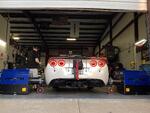








The ultimate IAT temp cooling solution:

Thread Starter
Pro

Joined: Jan 2011
Posts: 633
Likes: 6

what are you guys doing to catch or eliminate condensation from dripping onto the track? some collection that dumps it into intercooler tank or overflow?
when i had this idea some years ago the best i could come up with was to drip it into a vented can bolted to the engine for it to evaporate.
provided you have something similar, and can be allowed to actually use it at drag strips, its a heck of an innovation!
when i had this idea some years ago the best i could come up with was to drip it into a vented can bolted to the engine for it to evaporate.
provided you have something similar, and can be allowed to actually use it at drag strips, its a heck of an innovation!
The RX Super Chiller has a competition mode switch that shuts the cabin AC off so there is no moisture to drip. The chillers heat exchanger is coated and insulated to prevent any stray condensation forming, but even if it wasn't the drip or so every few minutes would not be visable. So, in competition mode there is no water to drip. Were drag racers and that is what this was first designed for, but it also works in road racing as well.
Vince is correct. It was a 2010 camaro with 700 hp top mount maggie.


Melting Slicks


Joined: Sep 2004
Posts: 3,153
Likes: 114
http://www.youtube.com/watch?v=AaQRw...ature=youtu.be
Yes it does, but instructions are always being updated and improved.
Yes it does, but instructions are always being updated and improved.
I still think this product is only of real use for drag guys or street work. if you REALLY want to drive your car hard there is just no way of removing heat constantly at anywhere near the speed required. For that you need a WELL sized heat exchange. The GT500 guys have these and have been tested to keep IATs in check even on road curses!
Again not trying to put the product down.
Thanks,
Chris.

Melting Slicks

Joined: Jan 2009
Posts: 2,420
Likes: 6
From: Miami FL
Anyone with feedback on this product that has it on there vette please PM me.
Looking to add this to my ZR1 for street, strip & mile events use.
Looking to add this to my ZR1 for street, strip & mile events use.
Last edited by GIO-305; Jan 17, 2012 at 09:09 AM.
Thread Starter
Pro
Joined: Jan 2011
Posts: 633
Likes: 6
Thanks for posting the vid. It would be nice to see how many through ear pulls are required to get the system heat soaked. Then what the recovery time is from totally heat soaked. This may answer some people questions. Also what sized water res was used on that setup? be intresting to see just how fast it can pull heat out of XXX volume of water. This will then let the more powerfull guys better understand the cool down periods and how much water they need to carry.
I still think this product is only of real use for drag guys or street work. if you REALLY want to drive your car hard there is just no way of removing heat constantly at anywhere near the speed required. For that you need a WELL sized heat exchange. The GT500 guys have these and have been tested to keep IATs in check even on road curses!
Again not trying to put the product down.
Thanks,
Chris.
I still think this product is only of real use for drag guys or street work. if you REALLY want to drive your car hard there is just no way of removing heat constantly at anywhere near the speed required. For that you need a WELL sized heat exchange. The GT500 guys have these and have been tested to keep IATs in check even on road curses!
Again not trying to put the product down.
Thanks,
Chris.
Am interested to hear more though if were missing someting.
Melting Slicks
Joined: Sep 2004
Posts: 3,153
Likes: 114
Hmmm....we have been using them on the street for hard driving for the last 2 years and constantly keep IAT's 50-100* F below what they were without it. This is with Maggie, Whipple, and KB blowers. Can you be more specific? I can't imagine where it would not do what it has been and this is on dozens of cars & light trucks to date with the same results.
Am interested to hear more though if were missing someting.
Am interested to hear more though if were missing someting.
With the about number (lets assume the unit can shift 50degrees/min/gallon of water) then people can understand how long it will take to cool their system down.
Thanks,
Chris.
Corvette Stories
The Best of Corvette for Corvette Enthusiasts

Top 10 Most Expensive Corvettes Ever Sold on Bring A Trailer
Brett Foote
10 Things Every Corvette Owner Needs (2026 Edition)
Michael S. Palmer
8 Most "Only Corvette Owners Understand" Quirks and Problems
Pouria Savadkouei
10 Reasons the C6 Z06 is Still A Performance Benchmark After 20 Years
Joe Kucinski
How Much Horsepower Every Corvette Engine "LOST" in 1972
Joe Kucinski
Top 10 DOs and DON'Ts for Protecting Your Convertible Top!
Michael S. Palmer
Top 10 Most Explosive Corvettes Ever Made: Power-to-Weight Ratio Ranked!
Joe Kucinski
150 hp to 1,250 hp: Every Corvette Generation Compared by the Specs That Matter
Joe Kucinski
8 Coolest Corvette Pace Cars (and Replicas) of All Time
Verdad Gallardo
Melting Slicks

Joined: Oct 2009
Posts: 2,259
Likes: 1
From: Las Vegas NV
St. Jude Donor '10
Nice setup. I've been trying to figure out a way to do this since last summer.
I used to use a similar type of setup in a world record, water-cooled PC, albeit on a much smaller scale. I used a thermoelectric (TEC) plate to get coolant temps down to sub-zero temperatures for short, high Ghz runs...same principle applies to using the A/C to cool the water in an intercooler.
I'd LOVE to have this type of setup instead of having to refill meth all the time.
Pm me a price?
I used to use a similar type of setup in a world record, water-cooled PC, albeit on a much smaller scale. I used a thermoelectric (TEC) plate to get coolant temps down to sub-zero temperatures for short, high Ghz runs...same principle applies to using the A/C to cool the water in an intercooler.
I'd LOVE to have this type of setup instead of having to refill meth all the time.
Pm me a price?
Melting Slicks
Joined: Sep 2004
Posts: 3,153
Likes: 114
Nice setup. I've been trying to figure out a way to do this since last summer.
I used to use a similar type of setup in a world record, water-cooled PC, albeit on a much smaller scale. I used a thermoelectric (TEC) plate to get coolant temps down to sub-zero temperatures for short, high Ghz runs...same principle applies to using the A/C to cool the water in an intercooler.
I'd LOVE to have this type of setup instead of having to refill meth all the time.
Pm me a price?
I used to use a similar type of setup in a world record, water-cooled PC, albeit on a much smaller scale. I used a thermoelectric (TEC) plate to get coolant temps down to sub-zero temperatures for short, high Ghz runs...same principle applies to using the A/C to cool the water in an intercooler.
I'd LOVE to have this type of setup instead of having to refill meth all the time.
Pm me a price?
Melting Slicks
Joined: Oct 2009
Posts: 2,259
Likes: 1
From: Las Vegas NV
St. Jude Donor '10
When current is applied, one side of the plate heats up, while the opposite side chills...the larger plates can get in the neighborhood of -30* on the cold side, while the hot side can boil water easliy. The cold side chilled water, while the hot side was cooled by a heatsink/fan or sometimes a small watercooling setup.
My only experience with them is within a PC environment. I can't give statements and figures on the thermodynamic efficiency.
I would think it would be quite feasible for a couple of reasons...they're 12v, and with a simple voltage regulator, could receive power from the cars charging system. The hot side could be easily cooled with a simple heatsink in the airstream of a moving vehicle.
The kicker, as in any air->water system is the fluid capacity and the heat exchangers' efficiency...I used a 99.9% pure silver waterblock as it has the highest dynamic efficiency of any metal before getting into exotic alloys or even pure gold. A large aluminum air->water IC would be plenty efficient...and could be further improved with copper fins, tubing, or even housing...trouble is that copper is soft and oxidizes easily. Fine for a sealed system inside a big box inside a climate controlled environment....not so awesome for being out in the weather.
Also, since water can only absorb heat at a fixed rate, the reservoir must be large enough to allow the water to dissipate the accumulated heat not exchanged through the system. I think a TEC plate would work well in this capacity on the reservoir, provided the entire system and capacity is balanced
Melting Slicks
Joined: Sep 2004
Posts: 3,153
Likes: 114
Yes and no. Their reputation for inefficiency stems from their required power usage...i used to run a separate dedicated power unit just for the TEC.
When current is applied, one side of the plate heats up, while the opposite side chills...the larger plates can get in the neighborhood of -30* on the cold side, while the hot side can boil water easliy. The cold side chilled water, while the hot side was cooled by a heatsink/fan or sometimes a small watercooling setup.
My only experience with them is within a PC environment. I can't give statements and figures on the thermodynamic efficiency.
I would think it would be quite feasible for a couple of reasons...they're 12v, and with a simple voltage regulator, could receive power from the cars charging system. The hot side could be easily cooled with a simple heatsink in the airstream of a moving vehicle.
The kicker, as in any air->water system is the fluid capacity and the heat exchangers' efficiency...I used a 99.9% pure silver waterblock as it has the highest dynamic efficiency of any metal before getting into exotic alloys or even pure gold. A large aluminum air->water IC would be plenty efficient...and could be further improved with copper fins, tubing, or even housing...trouble is that copper is soft and oxidizes easily. Fine for a sealed system inside a big box inside a climate controlled environment....not so awesome for being out in the weather.
Also, since water can only absorb heat at a fixed rate, the reservoir must be large enough to allow the water to dissipate the accumulated heat not exchanged through the system. I think a TEC plate would work well in this capacity on the reservoir, provided the entire system and capacity is balanced
When current is applied, one side of the plate heats up, while the opposite side chills...the larger plates can get in the neighborhood of -30* on the cold side, while the hot side can boil water easliy. The cold side chilled water, while the hot side was cooled by a heatsink/fan or sometimes a small watercooling setup.
My only experience with them is within a PC environment. I can't give statements and figures on the thermodynamic efficiency.
I would think it would be quite feasible for a couple of reasons...they're 12v, and with a simple voltage regulator, could receive power from the cars charging system. The hot side could be easily cooled with a simple heatsink in the airstream of a moving vehicle.
The kicker, as in any air->water system is the fluid capacity and the heat exchangers' efficiency...I used a 99.9% pure silver waterblock as it has the highest dynamic efficiency of any metal before getting into exotic alloys or even pure gold. A large aluminum air->water IC would be plenty efficient...and could be further improved with copper fins, tubing, or even housing...trouble is that copper is soft and oxidizes easily. Fine for a sealed system inside a big box inside a climate controlled environment....not so awesome for being out in the weather.
Also, since water can only absorb heat at a fixed rate, the reservoir must be large enough to allow the water to dissipate the accumulated heat not exchanged through the system. I think a TEC plate would work well in this capacity on the reservoir, provided the entire system and capacity is balanced
Even for a drag race situation, whats the load on the charging system for the added cooling? Unlike a PC at home you dont have a limitless power supply as you ahve to generate it using the engine.
The best way i can see to keep a W2A chargecooler system temps down is a properly sized Heat Exchange. Obviously this in is self can cause problems but its by far the BEST solution IMO.
Thread Starter
Pro
Joined: Jan 2011
Posts: 633
Likes: 6
Filmjay.....I'll PM you.
The rest, we have the videos showing a 700 hp LS3 running several runs that duplicate 1/4 mile runs and the max rise is app 15-20* f with no compressor running. End of run is app 100 to as high as 120 (when it was 98* and 90% hummidity) VS 170-210 w/out the chiller active.
The standard resivoir capacity and system on the maggie, lysholm, whipple, & KB are the ones we have used (the KB Mammoth was the most heat generating and stressed the system the most).
On a road course, we have customers reporting great results as well, but we personally have not looged and documented just how ell it recovers but compared to any other option available I would say there is nothing coming close. Meth, CO2, ice, etc. all add substantial wheight slowing lap times or 1/4 mile ET's and then there is the mess & constant refilling and reacurring costs associated with those options. Meth still is very effective....its just refilling constantly and the costs.
As far as effeciency, the welded plate HE used seems to be doing an awesome job as within 3-4 minutes we take a heat soaked system and cool the coolant to 22-32* f and we see the actual IAT's app 10-15* above that. We have driven 5 hour road trips with IAT's never exceeding 70* F on the interstate and averaging 55-60*.
The rest, we have the videos showing a 700 hp LS3 running several runs that duplicate 1/4 mile runs and the max rise is app 15-20* f with no compressor running. End of run is app 100 to as high as 120 (when it was 98* and 90% hummidity) VS 170-210 w/out the chiller active.
The standard resivoir capacity and system on the maggie, lysholm, whipple, & KB are the ones we have used (the KB Mammoth was the most heat generating and stressed the system the most).
On a road course, we have customers reporting great results as well, but we personally have not looged and documented just how ell it recovers but compared to any other option available I would say there is nothing coming close. Meth, CO2, ice, etc. all add substantial wheight slowing lap times or 1/4 mile ET's and then there is the mess & constant refilling and reacurring costs associated with those options. Meth still is very effective....its just refilling constantly and the costs.
As far as effeciency, the welded plate HE used seems to be doing an awesome job as within 3-4 minutes we take a heat soaked system and cool the coolant to 22-32* f and we see the actual IAT's app 10-15* above that. We have driven 5 hour road trips with IAT's never exceeding 70* F on the interstate and averaging 55-60*.
Melting Slicks
Joined: Jan 2009
Posts: 2,420
Likes: 6
From: Miami FL
Filmjay.....I'll PM you.
The rest, we have the videos showing a 700 hp LS3 running several runs that duplicate 1/4 mile runs and the max rise is app 15-20* f with no compressor running. End of run is app 100 to as high as 120 (when it was 98* and 90% hummidity) VS 170-210 w/out the chiller active.
The standard resivoir capacity and system on the maggie, lysholm, whipple, & KB are the ones we have used (the KB Mammoth was the most heat generating and stressed the system the most).
On a road course, we have customers reporting great results as well, but we personally have not looged and documented just how ell it recovers but compared to any other option available I would say there is nothing coming close. Meth, CO2, ice, etc. all add substantial wheight slowing lap times or 1/4 mile ET's and then there is the mess & constant refilling and reacurring costs associated with those options. Meth still is very effective....its just refilling constantly and the costs.
As far as effeciency, the welded plate HE used seems to be doing an awesome job as within 3-4 minutes we take a heat soaked system and cool the coolant to 22-32* f and we see the actual IAT's app 10-15* above that. We have driven 5 hour road trips with IAT's never exceeding 70* F on the interstate and averaging 55-60*.
The rest, we have the videos showing a 700 hp LS3 running several runs that duplicate 1/4 mile runs and the max rise is app 15-20* f with no compressor running. End of run is app 100 to as high as 120 (when it was 98* and 90% hummidity) VS 170-210 w/out the chiller active.
The standard resivoir capacity and system on the maggie, lysholm, whipple, & KB are the ones we have used (the KB Mammoth was the most heat generating and stressed the system the most).
On a road course, we have customers reporting great results as well, but we personally have not looged and documented just how ell it recovers but compared to any other option available I would say there is nothing coming close. Meth, CO2, ice, etc. all add substantial wheight slowing lap times or 1/4 mile ET's and then there is the mess & constant refilling and reacurring costs associated with those options. Meth still is very effective....its just refilling constantly and the costs.
As far as effeciency, the welded plate HE used seems to be doing an awesome job as within 3-4 minutes we take a heat soaked system and cool the coolant to 22-32* f and we see the actual IAT's app 10-15* above that. We have driven 5 hour road trips with IAT's never exceeding 70* F on the interstate and averaging 55-60*.
Melting Slicks
Joined: Sep 2004
Posts: 3,153
Likes: 114
Filmjay.....I'll PM you.
The rest, we have the videos showing a 700 hp LS3 running several runs that duplicate 1/4 mile runs and the max rise is app 15-20* f with no compressor running. End of run is app 100 to as high as 120 (when it was 98* and 90% hummidity) VS 170-210 w/out the chiller active.
The standard resivoir capacity and system on the maggie, lysholm, whipple, & KB are the ones we have used (the KB Mammoth was the most heat generating and stressed the system the most).
On a road course, we have customers reporting great results as well, but we personally have not looged and documented just how ell it recovers but compared to any other option available I would say there is nothing coming close. Meth, CO2, ice, etc. all add substantial wheight slowing lap times or 1/4 mile ET's and then there is the mess & constant refilling and reacurring costs associated with those options. Meth still is very effective....its just refilling constantly and the costs.
As far as effeciency, the welded plate HE used seems to be doing an awesome job as within 3-4 minutes we take a heat soaked system and cool the coolant to 22-32* f and we see the actual IAT's app 10-15* above that. We have driven 5 hour road trips with IAT's never exceeding 70* F on the interstate and averaging 55-60*.
The rest, we have the videos showing a 700 hp LS3 running several runs that duplicate 1/4 mile runs and the max rise is app 15-20* f with no compressor running. End of run is app 100 to as high as 120 (when it was 98* and 90% hummidity) VS 170-210 w/out the chiller active.
The standard resivoir capacity and system on the maggie, lysholm, whipple, & KB are the ones we have used (the KB Mammoth was the most heat generating and stressed the system the most).
On a road course, we have customers reporting great results as well, but we personally have not looged and documented just how ell it recovers but compared to any other option available I would say there is nothing coming close. Meth, CO2, ice, etc. all add substantial wheight slowing lap times or 1/4 mile ET's and then there is the mess & constant refilling and reacurring costs associated with those options. Meth still is very effective....its just refilling constantly and the costs.
As far as effeciency, the welded plate HE used seems to be doing an awesome job as within 3-4 minutes we take a heat soaked system and cool the coolant to 22-32* f and we see the actual IAT's app 10-15* above that. We have driven 5 hour road trips with IAT's never exceeding 70* F on the interstate and averaging 55-60*.
Chris.

Melting Slicks<br><img src="/forums/images/ranks/3k-4k.gif" border="0">

Joined: Jul 2002
Posts: 3,055
Likes: 276
From: Enterprise AL
The Bat Car - Thanks for the pictures. It appears that there are two supplemental reservoirs installed behind the wheelhouse lining (one on the drivers side and another on the passenger side). Mounting the reservoirs requires cutting through composite panels at the front of the vehicle, behind the wheelhouse linings. I now understand where the additional room required for the reservoirs is coming from. However, the picture showing Kit piece parts includes one reservoir and not two. I am the only person to work on my 06-C6-Vert. I like doing my own work. Do you have install instructions for the LS2 or is the installer supposed to wing-it? If I can't install this unit, it won't be on my Vette.
The RX Killer Chiller looks very promising. My Corvette is currently down for the winter. I use the winter months to plan Mods for the coming year and usually install in the spring (April). This past April I installed the 1593 E-Force and spent the summer changing pulleys and tuning for optimum performance.
I am anxious to learn more about the RX Killer Chiller.
The RX Killer Chiller looks very promising. My Corvette is currently down for the winter. I use the winter months to plan Mods for the coming year and usually install in the spring (April). This past April I installed the 1593 E-Force and spent the summer changing pulleys and tuning for optimum performance.
I am anxious to learn more about the RX Killer Chiller.

You might not need to cut panels, just juse some stock ZR1 parts. The ZR1 air-to-water system has a reservoir tank on the driver side just behind the fascia. Some of the brackets and parts for the stock or aftermarket intercooler and plumbing may make conversion for air-to-air easier for people considering this system.


