






Nitrous with flycut pistons?

Thread Starter
Melting Slicks


Joined: Nov 2010
Posts: 2,626
Likes: 195
From: On the east coast we drive until we die
 Nitrous with flycut pistons?
I've been thinking about adding a small nitrous kit to my H/C LS2. I was thinking something in the 50-75hp range, nothing crazy. My car has ported stock heads, ported FAST 90mm, and a small cam (don't know the specs off hand). My tuner flycut the pistons because of the milled heads with higher CR. Someone had made the following statement and it had me wondering what my concerns should be.
Also, a recommendation for an easy install kit would help too. Dry? Wet? I'm almost completely ignorant when it comes to nitrous kits for our cars and the majority of the info in this sections has to do with FI.
Any insight would be appreciated.
Thanks
as long as the fly cut edges were rounded nitrous will be fine with the correct tune
Any insight would be appreciated.
Thanks

Race Director


Joined: Mar 2005
Posts: 11,549
Likes: 27
From: Southampton NJ


Melting Slicks
Joined: Nov 2009
Posts: 2,536
Likes: 15
Op......I run massaged 243's with a small shot on a flycut SBE also. And have yet to hurt a piston, its all about fuel and time management.....and staying humble..lol.
Not sure how much "tech/detail" your looking for but . The larger the cutter used on the intake side, the closer to the edge of the piston the valve relief becomes. Thus weakening the already thin ring land. And as most know, ring land size plays a big role in power adder piston strength.
A factory LS1-6 piston typically has a 0.250" thick crown, some guys have worried about the depth of the flycut but I have yet to see anyone hurt the piston via lack of "crown thickness".
Like Dennis was saying, the sharp edges of a flycut piston that where not blended can lead to trouble. The sharp edges can hold heat, thus helping a condition called per-ignition.
Pre-ignition happens when fuel begins to burn before spark ignition. Interestingly this often correlates to relative cylinder pressure. Just as an increase in octane improves the RESISTANCE of combustion so does cylinder pressure prior to ignition. IOW, just after the intake valve(s) close and the piston is relatively near BDC the in cylinder pressure is relatively low and EASIEST to ignite by say a hot spot on a piston or spark plug electrode. Once a burn has begun the pressure rises quickly, coupled to the crankshaft compressing things further the temperature rise is huge and piston melting/breaking can occur.
IMO, a wet shot is easier and safer than a dry shot for a beginner for multiple reasons. We can go into those if wanted.
Also keep in mind a tight quench combined with a large radius flycut adds "pressure" to the ringland and narrows your tune window.
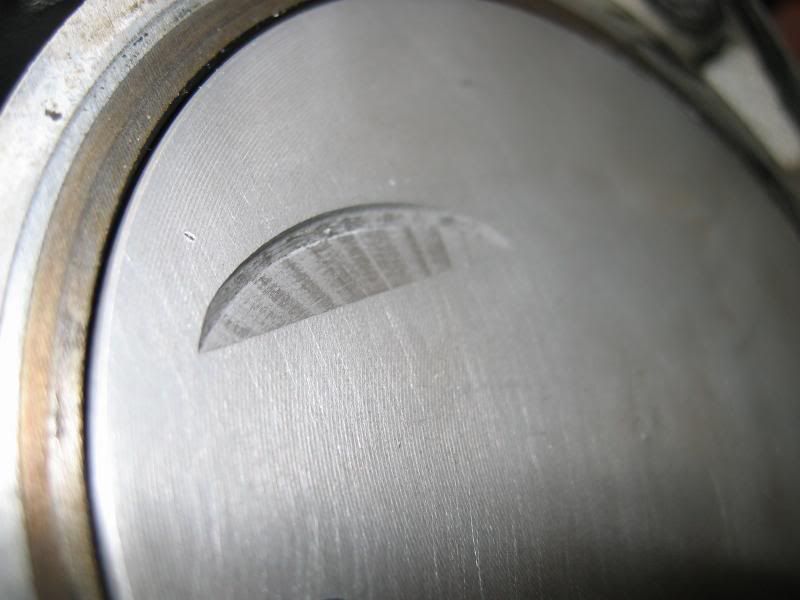
Here is a shallow flycut with NO blending or radiusing.
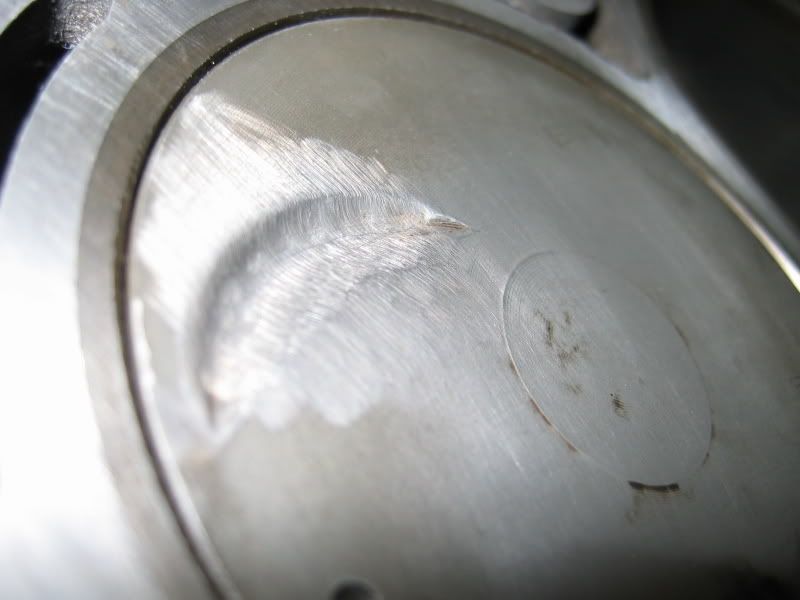
Here is a flycut blended.
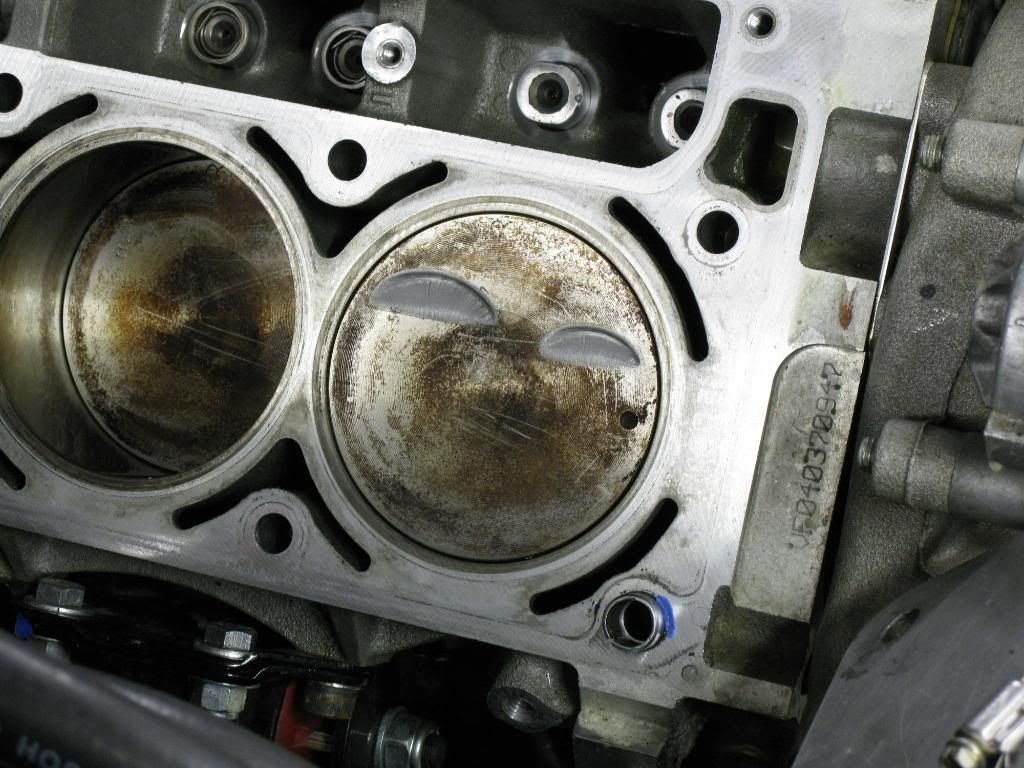
Here is a typical sized intake flycut blended, notice (on the intake side) how the distance from the edge of the piston to the end of the arc of the flycut is thin.
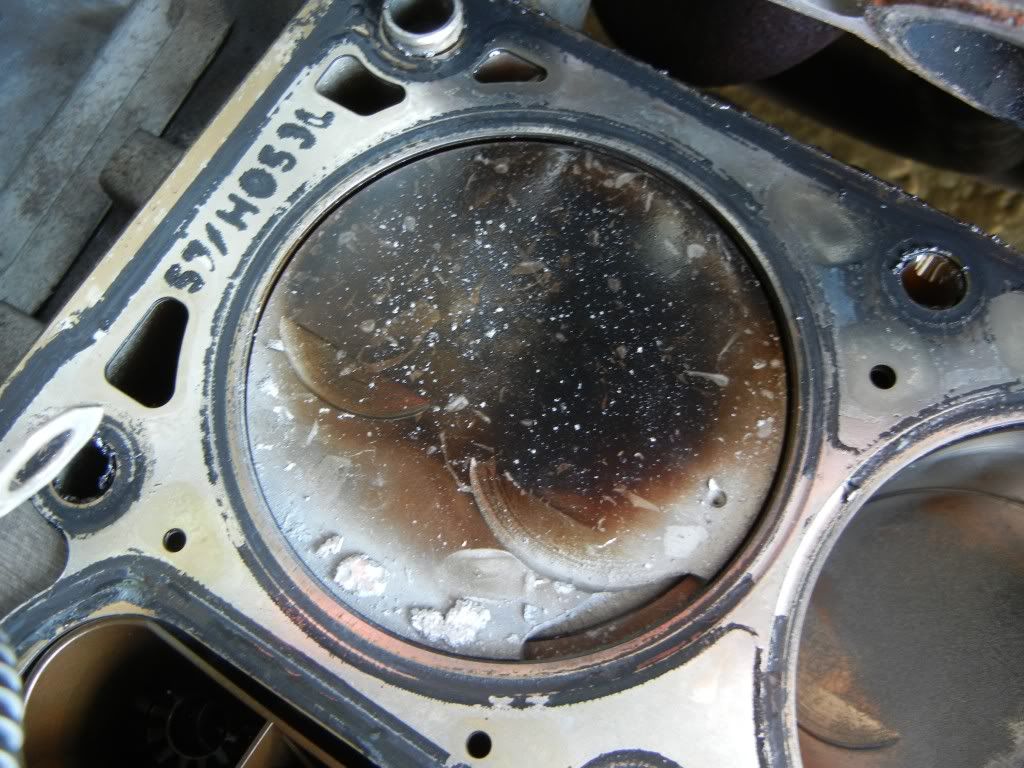
Here is a flycut piston that was sprayed and the thin ringland combined with the large flycut finally cost it. Hyper pistons will typically break up like this versus melt. But you can see how thin the factory ringland is in this picture real well. See (in the broke area) how thin it is from the exposed top ring to the top of the piston, very crappy ringland for a power adder piston but it is what it is.
Good luck on you combo.....
Not sure how much "tech/detail" your looking for but . The larger the cutter used on the intake side, the closer to the edge of the piston the valve relief becomes. Thus weakening the already thin ring land. And as most know, ring land size plays a big role in power adder piston strength.
A factory LS1-6 piston typically has a 0.250" thick crown, some guys have worried about the depth of the flycut but I have yet to see anyone hurt the piston via lack of "crown thickness".
Like Dennis was saying, the sharp edges of a flycut piston that where not blended can lead to trouble. The sharp edges can hold heat, thus helping a condition called per-ignition.
Pre-ignition happens when fuel begins to burn before spark ignition. Interestingly this often correlates to relative cylinder pressure. Just as an increase in octane improves the RESISTANCE of combustion so does cylinder pressure prior to ignition. IOW, just after the intake valve(s) close and the piston is relatively near BDC the in cylinder pressure is relatively low and EASIEST to ignite by say a hot spot on a piston or spark plug electrode. Once a burn has begun the pressure rises quickly, coupled to the crankshaft compressing things further the temperature rise is huge and piston melting/breaking can occur.
IMO, a wet shot is easier and safer than a dry shot for a beginner for multiple reasons. We can go into those if wanted.
Also keep in mind a tight quench combined with a large radius flycut adds "pressure" to the ringland and narrows your tune window.
Here is a shallow flycut with NO blending or radiusing.

Here is a flycut blended.

Here is a typical sized intake flycut blended, notice (on the intake side) how the distance from the edge of the piston to the end of the arc of the flycut is thin.

Here is a flycut piston that was sprayed and the thin ringland combined with the large flycut finally cost it. Hyper pistons will typically break up like this versus melt. But you can see how thin the factory ringland is in this picture real well. See (in the broke area) how thin it is from the exposed top ring to the top of the piston, very crappy ringland for a power adder piston but it is what it is.

Good luck on you combo.....
Thread Starter
Melting Slicks
Joined: Nov 2010
Posts: 2,626
Likes: 195
From: On the east coast we drive until we die
Op......I run massaged 243's with a small shot on a flycut SBE also. And have yet to hurt a piston, its all about fuel and time management.....and staying humble..lol.
Not sure how much "tech/detail" your looking for but . The larger the cutter used on the intake side, the closer to the edge of the piston the valve relief becomes. Thus weakening the already thin ring land. And as most know, ring land size plays a big role in power adder piston strength.
A factory LS1-6 piston typically has a 0.250" thick crown, some guys have worried about the depth of the flycut but I have yet to see anyone hurt the piston via lack of "crown thickness".
Like Dennis was saying, the sharp edges of a flycut piston that where not blended can lead to trouble. The sharp edges can hold heat, thus helping a condition called per-ignition.
Pre-ignition happens when fuel begins to burn before spark ignition. Interestingly this often correlates to relative cylinder pressure. Just as an increase in octane improves the RESISTANCE of combustion so does cylinder pressure prior to ignition. IOW, just after the intake valve(s) close and the piston is relatively near BDC the in cylinder pressure is relatively low and EASIEST to ignite by say a hot spot on a piston or spark plug electrode. Once a burn has begun the pressure rises quickly, coupled to the crankshaft compressing things further the temperature rise is huge and piston melting/breaking can occur.
IMO, a wet shot is easier and safer than a dry shot for a beginner for multiple reasons. We can go into those if wanted.
Also keep in mind a tight quench combined with a large radius flycut adds "pressure" to the ringland and narrows your tune window.
Not sure how much "tech/detail" your looking for but . The larger the cutter used on the intake side, the closer to the edge of the piston the valve relief becomes. Thus weakening the already thin ring land. And as most know, ring land size plays a big role in power adder piston strength.
A factory LS1-6 piston typically has a 0.250" thick crown, some guys have worried about the depth of the flycut but I have yet to see anyone hurt the piston via lack of "crown thickness".
Like Dennis was saying, the sharp edges of a flycut piston that where not blended can lead to trouble. The sharp edges can hold heat, thus helping a condition called per-ignition.
Pre-ignition happens when fuel begins to burn before spark ignition. Interestingly this often correlates to relative cylinder pressure. Just as an increase in octane improves the RESISTANCE of combustion so does cylinder pressure prior to ignition. IOW, just after the intake valve(s) close and the piston is relatively near BDC the in cylinder pressure is relatively low and EASIEST to ignite by say a hot spot on a piston or spark plug electrode. Once a burn has begun the pressure rises quickly, coupled to the crankshaft compressing things further the temperature rise is huge and piston melting/breaking can occur.
IMO, a wet shot is easier and safer than a dry shot for a beginner for multiple reasons. We can go into those if wanted.
Also keep in mind a tight quench combined with a large radius flycut adds "pressure" to the ringland and narrows your tune window.
Race Director
Joined: Mar 2005
Posts: 11,549
Likes: 27
From: Southampton NJ
Melting Slicks
Joined: Nov 2009
Posts: 2,536
Likes: 15
LOL Dennis.........the old fashioned way, you mean the correct way. Plugs are the only way to know whats happening in the chamber !! Never been a fan of trusting afr's as the benchmark....but only as a reference to what the plug tells me. TR6 on motor and B8EFS on spray.
Mine is similar to yours, my NA tune is set. And I have a timing twister to "manually" pull time out, without messing with the NA tune.
I use to run a stand alone with C16 but I have now switched to E85 on the motor and now use E85 in the stand alone.
Mine is similar to yours, my NA tune is set. And I have a timing twister to "manually" pull time out, without messing with the NA tune.
I use to run a stand alone with C16 but I have now switched to E85 on the motor and now use E85 in the stand alone.
Corvette Stories
The Best of Corvette for Corvette Enthusiasts

Every 2027 Corvette Engine Explained
Joe Kucinski
Designer Imagines A Corvette That Looks More Like a Corvette Than the Corvette
Verdad Gallardo
10 Ugly Corvettes That We Still Kinda Love
Joe Kucinski
Top 10 Most Expensive Corvettes Ever Sold on Bring A Trailer
Brett Foote
10 Things Every Corvette Owner Needs (2026 Edition)
Michael S. Palmer
8 Most "Only Corvette Owners Understand" Quirks and Problems
Pouria Savadkouei
10 Reasons the C6 Z06 is Still A Performance Benchmark After 20 Years
Joe Kucinski
How Much Horsepower Every Corvette Engine "LOST" in 1972
Joe Kucinski
Top 10 DOs and DON'Ts for Protecting Your Convertible Top!
Michael S. Palmer
Race Director
Joined: Mar 2005
Posts: 11,549
Likes: 27
From: Southampton NJ
LOL Dennis.........the old fashioned way, you mean the correct way. Plugs are the only way to know whats happening in the chamber !! Never been a fan of trusting afr's as the benchmark....but only as a reference to what the plug tells me. TR6 on motor and B8EFS on spray.
Mine is similar to yours, my NA tune is set. And I have a timing twister to "manually" pull time out, without messing with the NA tune.
I use to run a stand alone with C16 but I have now switched to E85 on the motor and now use E85 in the stand alone.
Mine is similar to yours, my NA tune is set. And I have a timing twister to "manually" pull time out, without messing with the NA tune.
I use to run a stand alone with C16 but I have now switched to E85 on the motor and now use E85 in the stand alone.
to 106,000 miles before cracking a cylinder wall
