



help om wheel mounting

Thread Starter
Intermediate

Joined: Jul 2008
Posts: 28
Likes: 0
 help with tire mounting
Hey Guys, I have purchased I forged wheels from guy off forum, 18s and 19s stock zo6 sizes and took to dealer to mount on my brand new run flats dealer cant mount due to must be certified I am told. well they took to other tire place and all mount up fine except 1 frt one first he says maybe oblong tire then maybe somthing wrong with rim! anybody had issues or have any ideas for me to give these guys?thanks ED
Last edited by tmbullet; Nov 20, 2008 at 10:01 PM.

Melting Slicks


Joined: Feb 2004
Posts: 3,307
Likes: 110
From: Tucson AZ
We use Discount Tire out here. All of their shops have someone certified to mount runflats. They also will fix flat free.
Extended mobility tires (runflats) are difficult to work with. The run flat sidewalls are extremely stiff so that they can support the weight of the car without air and then you couple that with the very short sidewall in a 35 series tire and it is major pain!
I would recommend you find a shop experienced in mounting them with the proper machine and trained people.
Try Discount Tire first. If there are none in your area, I would check the Tire Rack list of certified installers and you may also check the Goodyear dealer in your area.
Extended mobility tires (runflats) are difficult to work with. The run flat sidewalls are extremely stiff so that they can support the weight of the car without air and then you couple that with the very short sidewall in a 35 series tire and it is major pain!
I would recommend you find a shop experienced in mounting them with the proper machine and trained people.
Try Discount Tire first. If there are none in your area, I would check the Tire Rack list of certified installers and you may also check the Goodyear dealer in your area.
Race Director


Joined: Jan 2005
Posts: 10,924
Likes: 853
From: Daytona Beach FL
Butt.....many aftermarket wheels, including most models of iForged (like the OP is dealing with) require the sensors to be mounted inside the wheel with bands or brackets. Here's a picture of a bracket in an aftermarket wheel:

Bob


Race Director

Joined: Oct 1999
Posts: 13,298
Likes: 14
From: Somers NY
Yes, in OE and some other wheels that are manufactured to accept the sensors in the OE mounting style.
Butt.....many aftermarket wheels, including most models of iForged (like the OP is dealing with) require the sensors to be mounted inside the wheel with bands or brackets. Here's a picture of a bracket in an aftermarket wheel:
Bob
Butt.....many aftermarket wheels, including most models of iForged (like the OP is dealing with) require the sensors to be mounted inside the wheel with bands or brackets. Here's a picture of a bracket in an aftermarket wheel:
Bob
Wow I would think that would cause a problem in balancing the wheel ?? do they just add weight to the other side to get it balanced ?
Race Director
Joined: Jan 2005
Posts: 10,924
Likes: 853
From: Daytona Beach FL
The OE wheels mount the sensors like this:
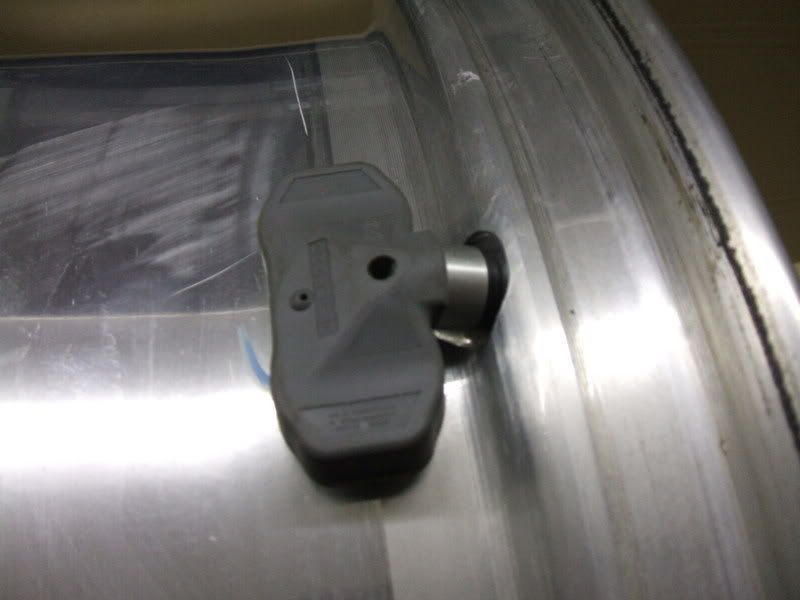
I guess there's a little wheel material removed to make the valve stem hole, and that might compensate for the weight of the sensor.
The aftermarket iForged, Forgeline, HRE, etc. don't have any valve stem holes on the outside of the wheel for cosmetic purposes, so there's no place to mount the sensor in the OE manner. But I don't think there's a problem balancing up these wheels.
The big problem is that the sensors are deep inside the wheel. It's difficult to trigger them with a TPMS tool when trying to program them during a relearn procedure. The antenna of the tool needs to be within a couple of inches of the sensor for its signal to properly trigger the sensor to send its data. When mounted in the OE manner you can put the tool's antenna on the rubber sidewall right next to the valve stem and it will easily trigger the sensor.
You can see in that picture of the sensor mounted with a bracket that it is way inside the tire and will be hard for the tool to trigger it. They may have better luck shooting through the tread area than the sidewall. Another problem would be that you have to know exactly where the sensor is so you can get the tool as close as possible. Especially with sensors mounted with straps/bands inside the wheel, you need to know exactly where they are.
Also, the radio transmission from the sensor to the TPMS computer in the car can be attenuated by being deep inside the wheel, and you may get intermittent indications on the DIC of "xx psi" when the signal isn't received properly.
Butt.....the wheels look good!!!

Bob

Race Director

Joined: Oct 2005
Posts: 14,555
Likes: 1,255
From: Saint Albans, WV
You can see in that picture of the sensor mounted with a bracket that it is way inside the tire and will be hard for the tool to trigger it. They may have better luck shooting through the tread area than the sidewall. Another problem would be that you have to know exactly where the sensor is so you can get the tool as close as possible. Especially with sensors mounted with straps/bands inside the wheel, you need to know exactly where they are.
Also, the radio transmission from the sensor to the TPMS computer in the car can be attenuated by being deep inside the wheel, and you may get intermittent indications on the DIC of "xx psi" when the signal isn't received properly.
:
Also, the radio transmission from the sensor to the TPMS computer in the car can be attenuated by being deep inside the wheel, and you may get intermittent indications on the DIC of "xx psi" when the signal isn't received properly.
:
 )
)
Corvette Stories
The Best of Corvette for Corvette Enthusiasts

150 hp to 1,250 hp: Every Corvette Generation Compared by the Specs That Matter
Joe Kucinski
8 Coolest Corvette Pace Cars (and Replicas) of All Time
Verdad Gallardo
Top 10 Corvette Engines RANKED by Peak Torque (70+ Years of Muscle!)
Joe Kucinski
Corvette ZR1X Will Be Pacing the Indy 500, And Could Probably Race, Too!
Verdad Gallardo
Top 10 Corvettes Coming to Mecum Indy 2026!
Brett Foote
Top 10 C9 Corvette MUST-HAVES to Fix These C8 Generation Flaws!
Michael S. Palmer
10 Revolutionary 'Corvette Firsts' Most People Don't Know
Joe Kucinski
5 Reasons to Upgrade to an LS6-Powered Corvette; 5 Reasons to Stay LT2
Michael S. Palmer