









 --
-- Seems unnecessary to do all that...

Help - First engine start after winter storage

Le Mans Master


Joined: Feb 2006
Posts: 5,762
Likes: 4
From: Chandler Arizona

Hey, I did a search and found a great start-up procedure:
Equipment needed:
1. starter cart The engine has no starter of its own.
2. battery chargers For the starter cart and any onboard batteries.
3. fire extinguisher(s) You don't think you're safe, do you?
4. pressure pre-oiler or hot oiler If the engine is a fresh rebuild.
5. Champion N8 warmup spark plugs These are street plugs, not race.
6. antiseize You must put this on the spark plug threads or they'll get stuck.
7. spark plug wrench Preferably a custom long T-handle wrench.
8. hot gloves To keep from burning your hands & arms on the hot engine
9. engine turning socket & wrench For manual engine turning.
10. fogging oil For storing the engine after you're all done.
11. utility oil such as 3-in-1 oil For priming the fuel pump.
12. Welch-Allyn transilluminator or equivalent For inspecting injection parts.
13. beardsaver If the exhaust pipe points at the guy operating the starter motor.
14. rags The linen supply guy protests these are "SHOP TOWELS."
Things to check first:
1. See that the fire extinguishers are full and ready to use. Remember that you can't see a methanol fire in broad daylight. Methyl alcohol flames are dominated by the combustion of hydrogen, which has a faint blue color. NASA has been doing research on exotic fire sensors that can see the blue/ultraviolet flames of liquid hydrogen leaks and fires around the space shuttle. Gasoline flame color is dominated by carbon soot, which glows orange and is readily visible in sunlight. What you'll see in a methanol fire is the rippling refraction of images through the hot gasses.
2. If the car has sat for weeks or months with methanol in it, you're going to need to inspect the fuel cells and the fuel system. Watch for yellowish discoloration and white gel in the cells, plus corrosion in the rest of the system. You may have to pump out and clean everything. Methanol is somewhat corrosive, especially to unanodized aluminum, and it hungrily absorbs atmospheric water, which makes things worse.
It's better for the fuel cells when the car is stored for a few weeks or months if the cells are completely full than partially full or empty.
3. Check the oil and water. If the engine is ultra-authentic, it will have 5 gallons of Valvoline straight 50 weight oil in it and its oil tank, one of the reasons for heating the oil before starting. The coolant should be plain water plus an anti-corrosion and water pump carbon face seal lube additive such as Bar's Leak. Filter the solids out of the Bar's Leak so you don't plug up the little holes in the spraybars that cool the exhaust valve seat area.
Don't use antifreeze. Yes, it lowers the freezing temperature and raises the boiling point, but it also reduces the specific heat, which is more important. Plain water has a specific heat bested only by liquid Helium. Just remember to drain the water before the engine sees freezing temperatures. I know of one team that did $25,000 damage to a 4-cam Ford when its plain water froze while the car was being transported to its next race over the Rocky Mountains.
4. Unscrew the flex lines to the 8 fuel injectors (there are two per cylinder, one per bifurcated intake port). Unscrew the injectors and inspect the internal screens for any kind of dirt or obstruction. The Welch-Allyn Transilluminator is a very handy tool for this. It's normally a medical tool for examining the insides of your ears, nose, and throat. Reinstall the injectors and their hoses.
Procedure: (long form)
1. I said plug in the oil and water heaters at the top of the page because it can take as long as 2 hours for everything to warm up. At the racetrack, the first person in the garage in the morning always plugs them in, even before turning on the coffee pot. They often consist of 115 volt Watlow heating pads glued to the oil tank and the bottom tanks of the radiators.
2. If the engine is freshly rebuilt, you will have also plugged in the heater on a separate pressure pre-oiler, often called a hot oiler. Don't confuse the hot oiler with the coffee pot. Hot oil will taste to you like garage coffee, but the engine won't like java in its veins.
3. If you're in doubt about the state of charge of the batteries in the starter cart, put the charger on it.
4. If the fuel pump has sat a long time, take off the output hose and pour some 3-in-1 oil into the pump to prime it.
5. Remove the spark plugs.
6. Make sure the car is out of gear and the ignition is off.
7. If the engine is a fresh rebuild, attach the hot oiler. Look for a dash 2 or so fitting installed in one of the main bearing oil galleys in the bottom side of the crankcase. Open the valve on the hot oiler and watch for pressure on the oil pressure gauge on the car's dashboard. Turn the engine over by hand 2 or 3 revolutions with the engine turning tool to distribute the oil better. Turn off and disconnect the hot oiler, and be sure to put the plug back into the hot oiler line and the cap back on the engine's oil galley fitting.
8. Disconnect the fuel line at the barrel valve on the injection and put the line into a miscellaneous container.
9. As a general rule before cranking with the powerful starter motor, to keep from hydraulicking the engine, put the engine turning tool in the back of the transaxle and turn the engine over several revolutions by hand. If it won't turn over, a cylinder is probably full of fuel. The Hilborn toilet bowl injection can leak a lot of fuel into the engine. Lots of people have hydraulicked Offys.
10. Bump the engine over with the starter. "Bump" means crank in short bursts, letting the engine stop briefly each time. When the oil pressure gauge starts moving up, crank continuously. Look for 150-200 PSI oil pressure and fuel coming out the fuel line. Check that the fuel in the container is clean.
11. Release any fuel cell pressure by pushing down the manual fill dry break.
12. If the engine is a fresh rebuild, let it sit a while longer with the heaters still plugged in, as much as an hour, then crank again to circulate the warm oil from the oil tank through the engine.
13. Release fuel cell pressure again.
14. Check the container again to see that the fuel is clean. Reconnect the fuel line.
15. Crank the engine until a fuel fog is shooting up evenly into the air out of all four spark plug holes. If it's not even, an injector(s) is plugged.
16. Install the warmup spark plugs, with antiseize on the threads. Tighten them *very* lightly, or they will jam when the engine heats up. Getting them back out has a good chance of stripping out the aluminum threads in the cylinder block.
17. If the exhaust pipe points at the mechanic holding the starter motor, the hot exhaust will remove the arm and facial hair of the mechanic. Such a car should have with it a tool consisting of a tight radius 90 degree bend of 4 inch tubing on a stick that is held over the exhaust pipe to direct the flames (these engines run very rich) off to the side. The tool is called a beard saver. The mechanic holding the beard saver should be aware that if the engine backfires, he needs to keep the beard saver from hitting the face of the guy with the starter motor. Hold it tightly against the exhaust pipe.
18. Crank the engine with the ignition off. When you see oil pressure, turn on the ignition. It's OK to play with the throttle a bit to get it started, but don't let it do a hard start with a lot of throttle opening, you want it to start at an idle. Often, the engine will start then quit, and if you've already pulled the starter out, you'll have to wait for the starter to wind down before reinserting it. Since the engine is to start at idle speed, keep the starter in and on until the engine is running continuously. I know of one driver who winged an Offy when it started, and it broke two fingers on the hand of the mechanic when the starter, which was a ground reaction leg type, spun around violently.
19. If the engine backfires loudly through the exhaust repeatedly, the mag might be installed 180 degrees out of phase, an easy mistake to make. I had this happen to me once, and it was VERY loud.
20. When the engine starts, everyone should be looking for leaks. Someone should be assigned to look under the car for leaks. The solid-mounted engine shakes so badly, you can look over the whole car while it's running, looking for loose hardware. Loose bolts and nuts will be spinning from the vibration. Rookie Janet Guthrie told Dick Simon the engine shook so bad when she was driving there were 4 or 5 images of the other cars around her. She asked, "How do you tell which one is the real car?" Dick said, "You'll learn which one is real."
21. As soon as it starts, if the engine is missing, feel the individual exhaust pipes to see which one isn't warming up like the others.
22. Feel the cam covers. If there's a hot spot, you have a bad cam bearing.
23. Don't let the oil pressure go over 200 PSI, or you'll balloon the oil cooler.
24. Do not rev the engine for show like some lowbuck lowlife. It doesn't serve any purpose on this expensive engine that's worth more than your life. If you wing the engine to impress your girlfriend, the chief mechanic will throw a wrench at your head (he won't miss) and the owner will fire you (he won't miss you). Using the linkage on the injection setup, repeatedly raise the RPM slowly from idle to about 4,000 RPM then lower it quickly.
25. If the engine is a fresh rebuild and the oil pressure isn't right, adjust the pressure. The adjustment is a screw and locknut among the four engine mount bolts at the lower front.
26. If the engine is a fresh rebuild or the mag has just been installed, check the ignition timing. The timing marks are on the clutch.
27. Run the engine till the coolant temperature is 80 to 100 degrees centigrade.
28. Each time you back off the throttle in the manner recommended, there will be a mild backfire and about a foot and a half of flame out the exhaust. At night, the spectators love this. Since the exhaust of a methanol burning engine stings the eyes, it's usual to back the car partly out of the garage. At Indianapolis, Hal Sperb used to back his car all the way out and up against the chain link fence so he could roast the fans who would try to get as close as possible. (These folks were called "fence hangers", and they were considered ripe when their knuckles turned white. Then a chief mechanic who shall remain nameless would help the prettiest girl over the fence by climbing up on the 500-gallon refueling tank parked alongside the fence.)
29. Turn the ignition off. Then watch out. On one of the cars I worked on that had a low-mounted turbocharger and a long tailpipe, there would be a 3-second delay after the engine came to a stop, during which the spectators would gather closer, then there'd be a moderately loud backfire and a 3 or 4-foot flame that would incinerate the spectators. Hey, you have to give them something to tell their two-headed grandkids!
30. Install the race plugs, again with antiseize and very light tightening. If you leave the warmup plugs in, they'll overheat under boost and cause preignition, which will burn a piston.
31. It's about time to give the car to the driver. If it's a cold day, you may need to put tape over the radiators or their inlets, otherwise the engine may never get fully warmed up. Fancy cars and later cars will have different bodywork pieces to restrict the inlet(s) or outlet(s).
32. Let the driver have the car. Believe it or not, the warmup is not complete; the driver has to follow his own procedure in the first few laps before he can stand on the gas. Driver and author Patrick Bedard described the process well:
Throttles open; throttles closed.
eeerrrrraaaaAAAAAAHHHHHUUuuuu, BOOM.
eeerrrrraaaaAAAAAAHHHHHUUuuuu, BOOM.
eeerrrrraaaaAAAAAAHHHHHUUuuuu, BOOM.
Each time he shuts down, the rich mixture detonates in the exhaust like cannonfire. There is a terrible tension in the sound, palpable conflict, the Offy's bark being restrained by the turbocharger's muzzle. Spectators hang on the fence outside, riveted in place.
eeerrrrraaaaAAAAAAHHHHHUUuuuu, BOOM.
eeerrrrraaaaAAAAAAHHHHHUUuuuu, BOOM.
The garage is filling with methanol fumes that sear the eyes. Everyone backs away. Only Gene Thrall stays with the car, leaning over the Offy, working the throttles. He is alone, like the man stoking the blast furnace, somehow able to stand in its pink glow when others cannot. Emotionless. Only sweating.
eeerrrrraaaaAAAAAAHHHHHUUuuuu, BOOM.
A handful of wrenches laid on the monocoque are now visibly dancing, high-stepping to the tune of the Offy, marching to its vibrations. I notice they are backing away, just as everyone in the shop has done. The black car is sinister, forbidding; part rapid oxidation, part voodoo. ...
... The Offy is an irascible old lump. Its oil has to be heated before starting. Then, once it's running, it sounds like a Maytag working out on a bucket of lock washers. I keep thinking it is on its last legs. But Marvin, one of the engine builders, says no, Offys have been sounding like that for 40 years.
The warmup process is an ordeal. Can't idle it at constant speed: rattles the cam gears. Can't drive it at constant speed: might be in a lean spot in the fuel injection. Can't turn any revs: oil pressure will go to full murder. So I ease out of the pits in first gear, straight into the Seismic Zone - a ferocious vibration period at about 2600 RPM ...
... The plan was to creep around in first gear until the water came up to 70 degrees centigrade. That would take about three-quarters of a lap if there was plenty of tape on the radiators. Then shift to second and work the engine against the brake. Working the engine is the only way to thin the oil so the pressure will come down. It has to be down to 160 PSI before I can leg it. Getting it there requires, finally, running some boost in the higher gears - say, 40 inches on the manifold pressure gauge. but higher gears mean more speed, and therefore more air through the radiators, making the water cool off. This cajolement never takes less than five laps, and when it drags out longer the temptation is just to throw the boost to it, give it the full statutory 60 inches, the way you'd give a mule a two-by-four.
Copyright Car and Driver Magazine September 1981
33. The running oil pressure should be about 125 PSI, and the running water temperature should be 80 degrees centigrade.
34. If you are restarting the engine after it is warmed up and it vapor locks, blow vigorously into the fuel cell vent tube that's usually wrapped around the rollover bar. That will force some fuel through the system. After the engine starts, release the fuel cell pressure. If it still doesn't want to start, put some 3-in-1 oil into the fuel pump. Don't use shop air to pressurize the cells, that's too much. I've heard of one car that was split at the seams this way. The crew was up all night putting a thousand rivets back in the tub, and Goodyear and Firestone were up all night patching the cells.
35. If you are restarting the engine after it is warmed up, you don't have to put in warmup plugs if you can feel any warmth in the cylinder block.
36. If the engine isn't going to be rebuilt right away like it would after a full race, and is going to go into storage for a while, spray fogging oil into the air intake before shutting the engine off for the last time. Run the engine at a fast idle and spray lots of oil in. The goal (not always attainable) is to foul the plugs and kill the engine, that means there's plenty of preservative oil in the areas most likely to corrode.
Equipment needed:
1. starter cart The engine has no starter of its own.
2. battery chargers For the starter cart and any onboard batteries.
3. fire extinguisher(s) You don't think you're safe, do you?
4. pressure pre-oiler or hot oiler If the engine is a fresh rebuild.
5. Champion N8 warmup spark plugs These are street plugs, not race.
6. antiseize You must put this on the spark plug threads or they'll get stuck.
7. spark plug wrench Preferably a custom long T-handle wrench.
8. hot gloves To keep from burning your hands & arms on the hot engine
9. engine turning socket & wrench For manual engine turning.
10. fogging oil For storing the engine after you're all done.
11. utility oil such as 3-in-1 oil For priming the fuel pump.
12. Welch-Allyn transilluminator or equivalent For inspecting injection parts.
13. beardsaver If the exhaust pipe points at the guy operating the starter motor.
14. rags The linen supply guy protests these are "SHOP TOWELS."
Things to check first:
1. See that the fire extinguishers are full and ready to use. Remember that you can't see a methanol fire in broad daylight. Methyl alcohol flames are dominated by the combustion of hydrogen, which has a faint blue color. NASA has been doing research on exotic fire sensors that can see the blue/ultraviolet flames of liquid hydrogen leaks and fires around the space shuttle. Gasoline flame color is dominated by carbon soot, which glows orange and is readily visible in sunlight. What you'll see in a methanol fire is the rippling refraction of images through the hot gasses.
2. If the car has sat for weeks or months with methanol in it, you're going to need to inspect the fuel cells and the fuel system. Watch for yellowish discoloration and white gel in the cells, plus corrosion in the rest of the system. You may have to pump out and clean everything. Methanol is somewhat corrosive, especially to unanodized aluminum, and it hungrily absorbs atmospheric water, which makes things worse.
It's better for the fuel cells when the car is stored for a few weeks or months if the cells are completely full than partially full or empty.
3. Check the oil and water. If the engine is ultra-authentic, it will have 5 gallons of Valvoline straight 50 weight oil in it and its oil tank, one of the reasons for heating the oil before starting. The coolant should be plain water plus an anti-corrosion and water pump carbon face seal lube additive such as Bar's Leak. Filter the solids out of the Bar's Leak so you don't plug up the little holes in the spraybars that cool the exhaust valve seat area.
Don't use antifreeze. Yes, it lowers the freezing temperature and raises the boiling point, but it also reduces the specific heat, which is more important. Plain water has a specific heat bested only by liquid Helium. Just remember to drain the water before the engine sees freezing temperatures. I know of one team that did $25,000 damage to a 4-cam Ford when its plain water froze while the car was being transported to its next race over the Rocky Mountains.
4. Unscrew the flex lines to the 8 fuel injectors (there are two per cylinder, one per bifurcated intake port). Unscrew the injectors and inspect the internal screens for any kind of dirt or obstruction. The Welch-Allyn Transilluminator is a very handy tool for this. It's normally a medical tool for examining the insides of your ears, nose, and throat. Reinstall the injectors and their hoses.
Procedure: (long form)
1. I said plug in the oil and water heaters at the top of the page because it can take as long as 2 hours for everything to warm up. At the racetrack, the first person in the garage in the morning always plugs them in, even before turning on the coffee pot. They often consist of 115 volt Watlow heating pads glued to the oil tank and the bottom tanks of the radiators.
2. If the engine is freshly rebuilt, you will have also plugged in the heater on a separate pressure pre-oiler, often called a hot oiler. Don't confuse the hot oiler with the coffee pot. Hot oil will taste to you like garage coffee, but the engine won't like java in its veins.
3. If you're in doubt about the state of charge of the batteries in the starter cart, put the charger on it.
4. If the fuel pump has sat a long time, take off the output hose and pour some 3-in-1 oil into the pump to prime it.
5. Remove the spark plugs.
6. Make sure the car is out of gear and the ignition is off.
7. If the engine is a fresh rebuild, attach the hot oiler. Look for a dash 2 or so fitting installed in one of the main bearing oil galleys in the bottom side of the crankcase. Open the valve on the hot oiler and watch for pressure on the oil pressure gauge on the car's dashboard. Turn the engine over by hand 2 or 3 revolutions with the engine turning tool to distribute the oil better. Turn off and disconnect the hot oiler, and be sure to put the plug back into the hot oiler line and the cap back on the engine's oil galley fitting.
8. Disconnect the fuel line at the barrel valve on the injection and put the line into a miscellaneous container.
9. As a general rule before cranking with the powerful starter motor, to keep from hydraulicking the engine, put the engine turning tool in the back of the transaxle and turn the engine over several revolutions by hand. If it won't turn over, a cylinder is probably full of fuel. The Hilborn toilet bowl injection can leak a lot of fuel into the engine. Lots of people have hydraulicked Offys.
10. Bump the engine over with the starter. "Bump" means crank in short bursts, letting the engine stop briefly each time. When the oil pressure gauge starts moving up, crank continuously. Look for 150-200 PSI oil pressure and fuel coming out the fuel line. Check that the fuel in the container is clean.
11. Release any fuel cell pressure by pushing down the manual fill dry break.
12. If the engine is a fresh rebuild, let it sit a while longer with the heaters still plugged in, as much as an hour, then crank again to circulate the warm oil from the oil tank through the engine.
13. Release fuel cell pressure again.
14. Check the container again to see that the fuel is clean. Reconnect the fuel line.
15. Crank the engine until a fuel fog is shooting up evenly into the air out of all four spark plug holes. If it's not even, an injector(s) is plugged.
16. Install the warmup spark plugs, with antiseize on the threads. Tighten them *very* lightly, or they will jam when the engine heats up. Getting them back out has a good chance of stripping out the aluminum threads in the cylinder block.
17. If the exhaust pipe points at the mechanic holding the starter motor, the hot exhaust will remove the arm and facial hair of the mechanic. Such a car should have with it a tool consisting of a tight radius 90 degree bend of 4 inch tubing on a stick that is held over the exhaust pipe to direct the flames (these engines run very rich) off to the side. The tool is called a beard saver. The mechanic holding the beard saver should be aware that if the engine backfires, he needs to keep the beard saver from hitting the face of the guy with the starter motor. Hold it tightly against the exhaust pipe.
18. Crank the engine with the ignition off. When you see oil pressure, turn on the ignition. It's OK to play with the throttle a bit to get it started, but don't let it do a hard start with a lot of throttle opening, you want it to start at an idle. Often, the engine will start then quit, and if you've already pulled the starter out, you'll have to wait for the starter to wind down before reinserting it. Since the engine is to start at idle speed, keep the starter in and on until the engine is running continuously. I know of one driver who winged an Offy when it started, and it broke two fingers on the hand of the mechanic when the starter, which was a ground reaction leg type, spun around violently.
19. If the engine backfires loudly through the exhaust repeatedly, the mag might be installed 180 degrees out of phase, an easy mistake to make. I had this happen to me once, and it was VERY loud.
20. When the engine starts, everyone should be looking for leaks. Someone should be assigned to look under the car for leaks. The solid-mounted engine shakes so badly, you can look over the whole car while it's running, looking for loose hardware. Loose bolts and nuts will be spinning from the vibration. Rookie Janet Guthrie told Dick Simon the engine shook so bad when she was driving there were 4 or 5 images of the other cars around her. She asked, "How do you tell which one is the real car?" Dick said, "You'll learn which one is real."
21. As soon as it starts, if the engine is missing, feel the individual exhaust pipes to see which one isn't warming up like the others.
22. Feel the cam covers. If there's a hot spot, you have a bad cam bearing.
23. Don't let the oil pressure go over 200 PSI, or you'll balloon the oil cooler.
24. Do not rev the engine for show like some lowbuck lowlife. It doesn't serve any purpose on this expensive engine that's worth more than your life. If you wing the engine to impress your girlfriend, the chief mechanic will throw a wrench at your head (he won't miss) and the owner will fire you (he won't miss you). Using the linkage on the injection setup, repeatedly raise the RPM slowly from idle to about 4,000 RPM then lower it quickly.
25. If the engine is a fresh rebuild and the oil pressure isn't right, adjust the pressure. The adjustment is a screw and locknut among the four engine mount bolts at the lower front.
26. If the engine is a fresh rebuild or the mag has just been installed, check the ignition timing. The timing marks are on the clutch.
27. Run the engine till the coolant temperature is 80 to 100 degrees centigrade.
28. Each time you back off the throttle in the manner recommended, there will be a mild backfire and about a foot and a half of flame out the exhaust. At night, the spectators love this. Since the exhaust of a methanol burning engine stings the eyes, it's usual to back the car partly out of the garage. At Indianapolis, Hal Sperb used to back his car all the way out and up against the chain link fence so he could roast the fans who would try to get as close as possible. (These folks were called "fence hangers", and they were considered ripe when their knuckles turned white. Then a chief mechanic who shall remain nameless would help the prettiest girl over the fence by climbing up on the 500-gallon refueling tank parked alongside the fence.)
29. Turn the ignition off. Then watch out. On one of the cars I worked on that had a low-mounted turbocharger and a long tailpipe, there would be a 3-second delay after the engine came to a stop, during which the spectators would gather closer, then there'd be a moderately loud backfire and a 3 or 4-foot flame that would incinerate the spectators. Hey, you have to give them something to tell their two-headed grandkids!
30. Install the race plugs, again with antiseize and very light tightening. If you leave the warmup plugs in, they'll overheat under boost and cause preignition, which will burn a piston.
31. It's about time to give the car to the driver. If it's a cold day, you may need to put tape over the radiators or their inlets, otherwise the engine may never get fully warmed up. Fancy cars and later cars will have different bodywork pieces to restrict the inlet(s) or outlet(s).
32. Let the driver have the car. Believe it or not, the warmup is not complete; the driver has to follow his own procedure in the first few laps before he can stand on the gas. Driver and author Patrick Bedard described the process well:
Throttles open; throttles closed.
eeerrrrraaaaAAAAAAHHHHHUUuuuu, BOOM.
eeerrrrraaaaAAAAAAHHHHHUUuuuu, BOOM.
eeerrrrraaaaAAAAAAHHHHHUUuuuu, BOOM.
Each time he shuts down, the rich mixture detonates in the exhaust like cannonfire. There is a terrible tension in the sound, palpable conflict, the Offy's bark being restrained by the turbocharger's muzzle. Spectators hang on the fence outside, riveted in place.
eeerrrrraaaaAAAAAAHHHHHUUuuuu, BOOM.
eeerrrrraaaaAAAAAAHHHHHUUuuuu, BOOM.
The garage is filling with methanol fumes that sear the eyes. Everyone backs away. Only Gene Thrall stays with the car, leaning over the Offy, working the throttles. He is alone, like the man stoking the blast furnace, somehow able to stand in its pink glow when others cannot. Emotionless. Only sweating.
eeerrrrraaaaAAAAAAHHHHHUUuuuu, BOOM.
A handful of wrenches laid on the monocoque are now visibly dancing, high-stepping to the tune of the Offy, marching to its vibrations. I notice they are backing away, just as everyone in the shop has done. The black car is sinister, forbidding; part rapid oxidation, part voodoo. ...
... The Offy is an irascible old lump. Its oil has to be heated before starting. Then, once it's running, it sounds like a Maytag working out on a bucket of lock washers. I keep thinking it is on its last legs. But Marvin, one of the engine builders, says no, Offys have been sounding like that for 40 years.
The warmup process is an ordeal. Can't idle it at constant speed: rattles the cam gears. Can't drive it at constant speed: might be in a lean spot in the fuel injection. Can't turn any revs: oil pressure will go to full murder. So I ease out of the pits in first gear, straight into the Seismic Zone - a ferocious vibration period at about 2600 RPM ...
... The plan was to creep around in first gear until the water came up to 70 degrees centigrade. That would take about three-quarters of a lap if there was plenty of tape on the radiators. Then shift to second and work the engine against the brake. Working the engine is the only way to thin the oil so the pressure will come down. It has to be down to 160 PSI before I can leg it. Getting it there requires, finally, running some boost in the higher gears - say, 40 inches on the manifold pressure gauge. but higher gears mean more speed, and therefore more air through the radiators, making the water cool off. This cajolement never takes less than five laps, and when it drags out longer the temptation is just to throw the boost to it, give it the full statutory 60 inches, the way you'd give a mule a two-by-four.
Copyright Car and Driver Magazine September 1981
33. The running oil pressure should be about 125 PSI, and the running water temperature should be 80 degrees centigrade.
34. If you are restarting the engine after it is warmed up and it vapor locks, blow vigorously into the fuel cell vent tube that's usually wrapped around the rollover bar. That will force some fuel through the system. After the engine starts, release the fuel cell pressure. If it still doesn't want to start, put some 3-in-1 oil into the fuel pump. Don't use shop air to pressurize the cells, that's too much. I've heard of one car that was split at the seams this way. The crew was up all night putting a thousand rivets back in the tub, and Goodyear and Firestone were up all night patching the cells.
35. If you are restarting the engine after it is warmed up, you don't have to put in warmup plugs if you can feel any warmth in the cylinder block.
36. If the engine isn't going to be rebuilt right away like it would after a full race, and is going to go into storage for a while, spray fogging oil into the air intake before shutting the engine off for the last time. Run the engine at a fast idle and spray lots of oil in. The goal (not always attainable) is to foul the plugs and kill the engine, that means there's plenty of preservative oil in the areas most likely to corrode.
Thread Starter
Melting Slicks

Joined: Oct 2008
Posts: 3,355
Likes: 11
From: Beverly Hills, MI
Hey, I did a search and found a great start-up procedure:
Equipment needed:
1. starter cart The engine has no starter of its own.
2. battery chargers For the starter cart and any onboard batteries.
3. fire extinguisher(s) You don't think you're safe, do you?
4. pressure pre-oiler or hot oiler If the engine is a fresh rebuild.
5. Champion N8 warmup spark plugs These are street plugs, not race.
6. antiseize You must put this on the spark plug threads or they'll get stuck.
7. spark plug wrench Preferably a custom long T-handle wrench.
8. hot gloves To keep from burning your hands & arms on the hot engine
9. engine turning socket & wrench For manual engine turning.
10. fogging oil For storing the engine after you're all done.
11. utility oil such as 3-in-1 oil For priming the fuel pump.
12. Welch-Allyn transilluminator or equivalent For inspecting injection parts.
13. beardsaver If the exhaust pipe points at the guy operating the starter motor.
14. rags The linen supply guy protests these are "SHOP TOWELS."
Things to check first:
1. See that the fire extinguishers are full and ready to use. Remember that you can't see a methanol fire in broad daylight. Methyl alcohol flames are dominated by the combustion of hydrogen, which has a faint blue color. NASA has been doing research on exotic fire sensors that can see the blue/ultraviolet flames of liquid hydrogen leaks and fires around the space shuttle. Gasoline flame color is dominated by carbon soot, which glows orange and is readily visible in sunlight. What you'll see in a methanol fire is the rippling refraction of images through the hot gasses.
2. If the car has sat for weeks or months with methanol in it, you're going to need to inspect the fuel cells and the fuel system. Watch for yellowish discoloration and white gel in the cells, plus corrosion in the rest of the system. You may have to pump out and clean everything. Methanol is somewhat corrosive, especially to unanodized aluminum, and it hungrily absorbs atmospheric water, which makes things worse.
It's better for the fuel cells when the car is stored for a few weeks or months if the cells are completely full than partially full or empty.
3. Check the oil and water. If the engine is ultra-authentic, it will have 5 gallons of Valvoline straight 50 weight oil in it and its oil tank, one of the reasons for heating the oil before starting. The coolant should be plain water plus an anti-corrosion and water pump carbon face seal lube additive such as Bar's Leak. Filter the solids out of the Bar's Leak so you don't plug up the little holes in the spraybars that cool the exhaust valve seat area.
Don't use antifreeze. Yes, it lowers the freezing temperature and raises the boiling point, but it also reduces the specific heat, which is more important. Plain water has a specific heat bested only by liquid Helium. Just remember to drain the water before the engine sees freezing temperatures. I know of one team that did $25,000 damage to a 4-cam Ford when its plain water froze while the car was being transported to its next race over the Rocky Mountains.
4. Unscrew the flex lines to the 8 fuel injectors (there are two per cylinder, one per bifurcated intake port). Unscrew the injectors and inspect the internal screens for any kind of dirt or obstruction. The Welch-Allyn Transilluminator is a very handy tool for this. It's normally a medical tool for examining the insides of your ears, nose, and throat. Reinstall the injectors and their hoses.
Procedure: (long form)
1. I said plug in the oil and water heaters at the top of the page because it can take as long as 2 hours for everything to warm up. At the racetrack, the first person in the garage in the morning always plugs them in, even before turning on the coffee pot. They often consist of 115 volt Watlow heating pads glued to the oil tank and the bottom tanks of the radiators.
2. If the engine is freshly rebuilt, you will have also plugged in the heater on a separate pressure pre-oiler, often called a hot oiler. Don't confuse the hot oiler with the coffee pot. Hot oil will taste to you like garage coffee, but the engine won't like java in its veins.
3. If you're in doubt about the state of charge of the batteries in the starter cart, put the charger on it.
4. If the fuel pump has sat a long time, take off the output hose and pour some 3-in-1 oil into the pump to prime it.
5. Remove the spark plugs.
6. Make sure the car is out of gear and the ignition is off.
7. If the engine is a fresh rebuild, attach the hot oiler. Look for a dash 2 or so fitting installed in one of the main bearing oil galleys in the bottom side of the crankcase. Open the valve on the hot oiler and watch for pressure on the oil pressure gauge on the car's dashboard. Turn the engine over by hand 2 or 3 revolutions with the engine turning tool to distribute the oil better. Turn off and disconnect the hot oiler, and be sure to put the plug back into the hot oiler line and the cap back on the engine's oil galley fitting.
8. Disconnect the fuel line at the barrel valve on the injection and put the line into a miscellaneous container.
9. As a general rule before cranking with the powerful starter motor, to keep from hydraulicking the engine, put the engine turning tool in the back of the transaxle and turn the engine over several revolutions by hand. If it won't turn over, a cylinder is probably full of fuel. The Hilborn toilet bowl injection can leak a lot of fuel into the engine. Lots of people have hydraulicked Offys.
10. Bump the engine over with the starter. "Bump" means crank in short bursts, letting the engine stop briefly each time. When the oil pressure gauge starts moving up, crank continuously. Look for 150-200 PSI oil pressure and fuel coming out the fuel line. Check that the fuel in the container is clean.
11. Release any fuel cell pressure by pushing down the manual fill dry break.
12. If the engine is a fresh rebuild, let it sit a while longer with the heaters still plugged in, as much as an hour, then crank again to circulate the warm oil from the oil tank through the engine.
13. Release fuel cell pressure again.
14. Check the container again to see that the fuel is clean. Reconnect the fuel line.
15. Crank the engine until a fuel fog is shooting up evenly into the air out of all four spark plug holes. If it's not even, an injector(s) is plugged.
16. Install the warmup spark plugs, with antiseize on the threads. Tighten them *very* lightly, or they will jam when the engine heats up. Getting them back out has a good chance of stripping out the aluminum threads in the cylinder block.
17. If the exhaust pipe points at the mechanic holding the starter motor, the hot exhaust will remove the arm and facial hair of the mechanic. Such a car should have with it a tool consisting of a tight radius 90 degree bend of 4 inch tubing on a stick that is held over the exhaust pipe to direct the flames (these engines run very rich) off to the side. The tool is called a beard saver. The mechanic holding the beard saver should be aware that if the engine backfires, he needs to keep the beard saver from hitting the face of the guy with the starter motor. Hold it tightly against the exhaust pipe.
18. Crank the engine with the ignition off. When you see oil pressure, turn on the ignition. It's OK to play with the throttle a bit to get it started, but don't let it do a hard start with a lot of throttle opening, you want it to start at an idle. Often, the engine will start then quit, and if you've already pulled the starter out, you'll have to wait for the starter to wind down before reinserting it. Since the engine is to start at idle speed, keep the starter in and on until the engine is running continuously. I know of one driver who winged an Offy when it started, and it broke two fingers on the hand of the mechanic when the starter, which was a ground reaction leg type, spun around violently.
19. If the engine backfires loudly through the exhaust repeatedly, the mag might be installed 180 degrees out of phase, an easy mistake to make. I had this happen to me once, and it was VERY loud.
20. When the engine starts, everyone should be looking for leaks. Someone should be assigned to look under the car for leaks. The solid-mounted engine shakes so badly, you can look over the whole car while it's running, looking for loose hardware. Loose bolts and nuts will be spinning from the vibration. Rookie Janet Guthrie told Dick Simon the engine shook so bad when she was driving there were 4 or 5 images of the other cars around her. She asked, "How do you tell which one is the real car?" Dick said, "You'll learn which one is real."
21. As soon as it starts, if the engine is missing, feel the individual exhaust pipes to see which one isn't warming up like the others.
22. Feel the cam covers. If there's a hot spot, you have a bad cam bearing.
23. Don't let the oil pressure go over 200 PSI, or you'll balloon the oil cooler.
24. Do not rev the engine for show like some lowbuck lowlife. It doesn't serve any purpose on this expensive engine that's worth more than your life. If you wing the engine to impress your girlfriend, the chief mechanic will throw a wrench at your head (he won't miss) and the owner will fire you (he won't miss you). Using the linkage on the injection setup, repeatedly raise the RPM slowly from idle to about 4,000 RPM then lower it quickly.
25. If the engine is a fresh rebuild and the oil pressure isn't right, adjust the pressure. The adjustment is a screw and locknut among the four engine mount bolts at the lower front.
26. If the engine is a fresh rebuild or the mag has just been installed, check the ignition timing. The timing marks are on the clutch.
27. Run the engine till the coolant temperature is 80 to 100 degrees centigrade.
28. Each time you back off the throttle in the manner recommended, there will be a mild backfire and about a foot and a half of flame out the exhaust. At night, the spectators love this. Since the exhaust of a methanol burning engine stings the eyes, it's usual to back the car partly out of the garage. At Indianapolis, Hal Sperb used to back his car all the way out and up against the chain link fence so he could roast the fans who would try to get as close as possible. (These folks were called "fence hangers", and they were considered ripe when their knuckles turned white. Then a chief mechanic who shall remain nameless would help the prettiest girl over the fence by climbing up on the 500-gallon refueling tank parked alongside the fence.)
29. Turn the ignition off. Then watch out. On one of the cars I worked on that had a low-mounted turbocharger and a long tailpipe, there would be a 3-second delay after the engine came to a stop, during which the spectators would gather closer, then there'd be a moderately loud backfire and a 3 or 4-foot flame that would incinerate the spectators. Hey, you have to give them something to tell their two-headed grandkids!
30. Install the race plugs, again with antiseize and very light tightening. If you leave the warmup plugs in, they'll overheat under boost and cause preignition, which will burn a piston.
31. It's about time to give the car to the driver. If it's a cold day, you may need to put tape over the radiators or their inlets, otherwise the engine may never get fully warmed up. Fancy cars and later cars will have different bodywork pieces to restrict the inlet(s) or outlet(s).
32. Let the driver have the car. Believe it or not, the warmup is not complete; the driver has to follow his own procedure in the first few laps before he can stand on the gas. Driver and author Patrick Bedard described the process well:
Throttles open; throttles closed.
eeerrrrraaaaAAAAAAHHHHHUUuuuu, BOOM.
eeerrrrraaaaAAAAAAHHHHHUUuuuu, BOOM.
eeerrrrraaaaAAAAAAHHHHHUUuuuu, BOOM.
Each time he shuts down, the rich mixture detonates in the exhaust like cannonfire. There is a terrible tension in the sound, palpable conflict, the Offy's bark being restrained by the turbocharger's muzzle. Spectators hang on the fence outside, riveted in place.
eeerrrrraaaaAAAAAAHHHHHUUuuuu, BOOM.
eeerrrrraaaaAAAAAAHHHHHUUuuuu, BOOM.
The garage is filling with methanol fumes that sear the eyes. Everyone backs away. Only Gene Thrall stays with the car, leaning over the Offy, working the throttles. He is alone, like the man stoking the blast furnace, somehow able to stand in its pink glow when others cannot. Emotionless. Only sweating.
eeerrrrraaaaAAAAAAHHHHHUUuuuu, BOOM.
A handful of wrenches laid on the monocoque are now visibly dancing, high-stepping to the tune of the Offy, marching to its vibrations. I notice they are backing away, just as everyone in the shop has done. The black car is sinister, forbidding; part rapid oxidation, part voodoo. ...
... The Offy is an irascible old lump. Its oil has to be heated before starting. Then, once it's running, it sounds like a Maytag working out on a bucket of lock washers. I keep thinking it is on its last legs. But Marvin, one of the engine builders, says no, Offys have been sounding like that for 40 years.
The warmup process is an ordeal. Can't idle it at constant speed: rattles the cam gears. Can't drive it at constant speed: might be in a lean spot in the fuel injection. Can't turn any revs: oil pressure will go to full murder. So I ease out of the pits in first gear, straight into the Seismic Zone - a ferocious vibration period at about 2600 RPM ...
... The plan was to creep around in first gear until the water came up to 70 degrees centigrade. That would take about three-quarters of a lap if there was plenty of tape on the radiators. Then shift to second and work the engine against the brake. Working the engine is the only way to thin the oil so the pressure will come down. It has to be down to 160 PSI before I can leg it. Getting it there requires, finally, running some boost in the higher gears - say, 40 inches on the manifold pressure gauge. but higher gears mean more speed, and therefore more air through the radiators, making the water cool off. This cajolement never takes less than five laps, and when it drags out longer the temptation is just to throw the boost to it, give it the full statutory 60 inches, the way you'd give a mule a two-by-four.
Copyright Car and Driver Magazine September 1981
33. The running oil pressure should be about 125 PSI, and the running water temperature should be 80 degrees centigrade.
34. If you are restarting the engine after it is warmed up and it vapor locks, blow vigorously into the fuel cell vent tube that's usually wrapped around the rollover bar. That will force some fuel through the system. After the engine starts, release the fuel cell pressure. If it still doesn't want to start, put some 3-in-1 oil into the fuel pump. Don't use shop air to pressurize the cells, that's too much. I've heard of one car that was split at the seams this way. The crew was up all night putting a thousand rivets back in the tub, and Goodyear and Firestone were up all night patching the cells.
35. If you are restarting the engine after it is warmed up, you don't have to put in warmup plugs if you can feel any warmth in the cylinder block.
36. If the engine isn't going to be rebuilt right away like it would after a full race, and is going to go into storage for a while, spray fogging oil into the air intake before shutting the engine off for the last time. Run the engine at a fast idle and spray lots of oil in. The goal (not always attainable) is to foul the plugs and kill the engine, that means there's plenty of preservative oil in the areas most likely to corrode.
Equipment needed:
1. starter cart The engine has no starter of its own.
2. battery chargers For the starter cart and any onboard batteries.
3. fire extinguisher(s) You don't think you're safe, do you?
4. pressure pre-oiler or hot oiler If the engine is a fresh rebuild.
5. Champion N8 warmup spark plugs These are street plugs, not race.
6. antiseize You must put this on the spark plug threads or they'll get stuck.
7. spark plug wrench Preferably a custom long T-handle wrench.
8. hot gloves To keep from burning your hands & arms on the hot engine
9. engine turning socket & wrench For manual engine turning.
10. fogging oil For storing the engine after you're all done.
11. utility oil such as 3-in-1 oil For priming the fuel pump.
12. Welch-Allyn transilluminator or equivalent For inspecting injection parts.
13. beardsaver If the exhaust pipe points at the guy operating the starter motor.
14. rags The linen supply guy protests these are "SHOP TOWELS."
Things to check first:
1. See that the fire extinguishers are full and ready to use. Remember that you can't see a methanol fire in broad daylight. Methyl alcohol flames are dominated by the combustion of hydrogen, which has a faint blue color. NASA has been doing research on exotic fire sensors that can see the blue/ultraviolet flames of liquid hydrogen leaks and fires around the space shuttle. Gasoline flame color is dominated by carbon soot, which glows orange and is readily visible in sunlight. What you'll see in a methanol fire is the rippling refraction of images through the hot gasses.
2. If the car has sat for weeks or months with methanol in it, you're going to need to inspect the fuel cells and the fuel system. Watch for yellowish discoloration and white gel in the cells, plus corrosion in the rest of the system. You may have to pump out and clean everything. Methanol is somewhat corrosive, especially to unanodized aluminum, and it hungrily absorbs atmospheric water, which makes things worse.
It's better for the fuel cells when the car is stored for a few weeks or months if the cells are completely full than partially full or empty.
3. Check the oil and water. If the engine is ultra-authentic, it will have 5 gallons of Valvoline straight 50 weight oil in it and its oil tank, one of the reasons for heating the oil before starting. The coolant should be plain water plus an anti-corrosion and water pump carbon face seal lube additive such as Bar's Leak. Filter the solids out of the Bar's Leak so you don't plug up the little holes in the spraybars that cool the exhaust valve seat area.
Don't use antifreeze. Yes, it lowers the freezing temperature and raises the boiling point, but it also reduces the specific heat, which is more important. Plain water has a specific heat bested only by liquid Helium. Just remember to drain the water before the engine sees freezing temperatures. I know of one team that did $25,000 damage to a 4-cam Ford when its plain water froze while the car was being transported to its next race over the Rocky Mountains.
4. Unscrew the flex lines to the 8 fuel injectors (there are two per cylinder, one per bifurcated intake port). Unscrew the injectors and inspect the internal screens for any kind of dirt or obstruction. The Welch-Allyn Transilluminator is a very handy tool for this. It's normally a medical tool for examining the insides of your ears, nose, and throat. Reinstall the injectors and their hoses.
Procedure: (long form)
1. I said plug in the oil and water heaters at the top of the page because it can take as long as 2 hours for everything to warm up. At the racetrack, the first person in the garage in the morning always plugs them in, even before turning on the coffee pot. They often consist of 115 volt Watlow heating pads glued to the oil tank and the bottom tanks of the radiators.
2. If the engine is freshly rebuilt, you will have also plugged in the heater on a separate pressure pre-oiler, often called a hot oiler. Don't confuse the hot oiler with the coffee pot. Hot oil will taste to you like garage coffee, but the engine won't like java in its veins.
3. If you're in doubt about the state of charge of the batteries in the starter cart, put the charger on it.
4. If the fuel pump has sat a long time, take off the output hose and pour some 3-in-1 oil into the pump to prime it.
5. Remove the spark plugs.
6. Make sure the car is out of gear and the ignition is off.
7. If the engine is a fresh rebuild, attach the hot oiler. Look for a dash 2 or so fitting installed in one of the main bearing oil galleys in the bottom side of the crankcase. Open the valve on the hot oiler and watch for pressure on the oil pressure gauge on the car's dashboard. Turn the engine over by hand 2 or 3 revolutions with the engine turning tool to distribute the oil better. Turn off and disconnect the hot oiler, and be sure to put the plug back into the hot oiler line and the cap back on the engine's oil galley fitting.
8. Disconnect the fuel line at the barrel valve on the injection and put the line into a miscellaneous container.
9. As a general rule before cranking with the powerful starter motor, to keep from hydraulicking the engine, put the engine turning tool in the back of the transaxle and turn the engine over several revolutions by hand. If it won't turn over, a cylinder is probably full of fuel. The Hilborn toilet bowl injection can leak a lot of fuel into the engine. Lots of people have hydraulicked Offys.
10. Bump the engine over with the starter. "Bump" means crank in short bursts, letting the engine stop briefly each time. When the oil pressure gauge starts moving up, crank continuously. Look for 150-200 PSI oil pressure and fuel coming out the fuel line. Check that the fuel in the container is clean.
11. Release any fuel cell pressure by pushing down the manual fill dry break.
12. If the engine is a fresh rebuild, let it sit a while longer with the heaters still plugged in, as much as an hour, then crank again to circulate the warm oil from the oil tank through the engine.
13. Release fuel cell pressure again.
14. Check the container again to see that the fuel is clean. Reconnect the fuel line.
15. Crank the engine until a fuel fog is shooting up evenly into the air out of all four spark plug holes. If it's not even, an injector(s) is plugged.
16. Install the warmup spark plugs, with antiseize on the threads. Tighten them *very* lightly, or they will jam when the engine heats up. Getting them back out has a good chance of stripping out the aluminum threads in the cylinder block.
17. If the exhaust pipe points at the mechanic holding the starter motor, the hot exhaust will remove the arm and facial hair of the mechanic. Such a car should have with it a tool consisting of a tight radius 90 degree bend of 4 inch tubing on a stick that is held over the exhaust pipe to direct the flames (these engines run very rich) off to the side. The tool is called a beard saver. The mechanic holding the beard saver should be aware that if the engine backfires, he needs to keep the beard saver from hitting the face of the guy with the starter motor. Hold it tightly against the exhaust pipe.
18. Crank the engine with the ignition off. When you see oil pressure, turn on the ignition. It's OK to play with the throttle a bit to get it started, but don't let it do a hard start with a lot of throttle opening, you want it to start at an idle. Often, the engine will start then quit, and if you've already pulled the starter out, you'll have to wait for the starter to wind down before reinserting it. Since the engine is to start at idle speed, keep the starter in and on until the engine is running continuously. I know of one driver who winged an Offy when it started, and it broke two fingers on the hand of the mechanic when the starter, which was a ground reaction leg type, spun around violently.
19. If the engine backfires loudly through the exhaust repeatedly, the mag might be installed 180 degrees out of phase, an easy mistake to make. I had this happen to me once, and it was VERY loud.
20. When the engine starts, everyone should be looking for leaks. Someone should be assigned to look under the car for leaks. The solid-mounted engine shakes so badly, you can look over the whole car while it's running, looking for loose hardware. Loose bolts and nuts will be spinning from the vibration. Rookie Janet Guthrie told Dick Simon the engine shook so bad when she was driving there were 4 or 5 images of the other cars around her. She asked, "How do you tell which one is the real car?" Dick said, "You'll learn which one is real."
21. As soon as it starts, if the engine is missing, feel the individual exhaust pipes to see which one isn't warming up like the others.
22. Feel the cam covers. If there's a hot spot, you have a bad cam bearing.
23. Don't let the oil pressure go over 200 PSI, or you'll balloon the oil cooler.
24. Do not rev the engine for show like some lowbuck lowlife. It doesn't serve any purpose on this expensive engine that's worth more than your life. If you wing the engine to impress your girlfriend, the chief mechanic will throw a wrench at your head (he won't miss) and the owner will fire you (he won't miss you). Using the linkage on the injection setup, repeatedly raise the RPM slowly from idle to about 4,000 RPM then lower it quickly.
25. If the engine is a fresh rebuild and the oil pressure isn't right, adjust the pressure. The adjustment is a screw and locknut among the four engine mount bolts at the lower front.
26. If the engine is a fresh rebuild or the mag has just been installed, check the ignition timing. The timing marks are on the clutch.
27. Run the engine till the coolant temperature is 80 to 100 degrees centigrade.
28. Each time you back off the throttle in the manner recommended, there will be a mild backfire and about a foot and a half of flame out the exhaust. At night, the spectators love this. Since the exhaust of a methanol burning engine stings the eyes, it's usual to back the car partly out of the garage. At Indianapolis, Hal Sperb used to back his car all the way out and up against the chain link fence so he could roast the fans who would try to get as close as possible. (These folks were called "fence hangers", and they were considered ripe when their knuckles turned white. Then a chief mechanic who shall remain nameless would help the prettiest girl over the fence by climbing up on the 500-gallon refueling tank parked alongside the fence.)
29. Turn the ignition off. Then watch out. On one of the cars I worked on that had a low-mounted turbocharger and a long tailpipe, there would be a 3-second delay after the engine came to a stop, during which the spectators would gather closer, then there'd be a moderately loud backfire and a 3 or 4-foot flame that would incinerate the spectators. Hey, you have to give them something to tell their two-headed grandkids!
30. Install the race plugs, again with antiseize and very light tightening. If you leave the warmup plugs in, they'll overheat under boost and cause preignition, which will burn a piston.
31. It's about time to give the car to the driver. If it's a cold day, you may need to put tape over the radiators or their inlets, otherwise the engine may never get fully warmed up. Fancy cars and later cars will have different bodywork pieces to restrict the inlet(s) or outlet(s).
32. Let the driver have the car. Believe it or not, the warmup is not complete; the driver has to follow his own procedure in the first few laps before he can stand on the gas. Driver and author Patrick Bedard described the process well:
Throttles open; throttles closed.
eeerrrrraaaaAAAAAAHHHHHUUuuuu, BOOM.
eeerrrrraaaaAAAAAAHHHHHUUuuuu, BOOM.
eeerrrrraaaaAAAAAAHHHHHUUuuuu, BOOM.
Each time he shuts down, the rich mixture detonates in the exhaust like cannonfire. There is a terrible tension in the sound, palpable conflict, the Offy's bark being restrained by the turbocharger's muzzle. Spectators hang on the fence outside, riveted in place.
eeerrrrraaaaAAAAAAHHHHHUUuuuu, BOOM.
eeerrrrraaaaAAAAAAHHHHHUUuuuu, BOOM.
The garage is filling with methanol fumes that sear the eyes. Everyone backs away. Only Gene Thrall stays with the car, leaning over the Offy, working the throttles. He is alone, like the man stoking the blast furnace, somehow able to stand in its pink glow when others cannot. Emotionless. Only sweating.
eeerrrrraaaaAAAAAAHHHHHUUuuuu, BOOM.
A handful of wrenches laid on the monocoque are now visibly dancing, high-stepping to the tune of the Offy, marching to its vibrations. I notice they are backing away, just as everyone in the shop has done. The black car is sinister, forbidding; part rapid oxidation, part voodoo. ...
... The Offy is an irascible old lump. Its oil has to be heated before starting. Then, once it's running, it sounds like a Maytag working out on a bucket of lock washers. I keep thinking it is on its last legs. But Marvin, one of the engine builders, says no, Offys have been sounding like that for 40 years.
The warmup process is an ordeal. Can't idle it at constant speed: rattles the cam gears. Can't drive it at constant speed: might be in a lean spot in the fuel injection. Can't turn any revs: oil pressure will go to full murder. So I ease out of the pits in first gear, straight into the Seismic Zone - a ferocious vibration period at about 2600 RPM ...
... The plan was to creep around in first gear until the water came up to 70 degrees centigrade. That would take about three-quarters of a lap if there was plenty of tape on the radiators. Then shift to second and work the engine against the brake. Working the engine is the only way to thin the oil so the pressure will come down. It has to be down to 160 PSI before I can leg it. Getting it there requires, finally, running some boost in the higher gears - say, 40 inches on the manifold pressure gauge. but higher gears mean more speed, and therefore more air through the radiators, making the water cool off. This cajolement never takes less than five laps, and when it drags out longer the temptation is just to throw the boost to it, give it the full statutory 60 inches, the way you'd give a mule a two-by-four.
Copyright Car and Driver Magazine September 1981
33. The running oil pressure should be about 125 PSI, and the running water temperature should be 80 degrees centigrade.
34. If you are restarting the engine after it is warmed up and it vapor locks, blow vigorously into the fuel cell vent tube that's usually wrapped around the rollover bar. That will force some fuel through the system. After the engine starts, release the fuel cell pressure. If it still doesn't want to start, put some 3-in-1 oil into the fuel pump. Don't use shop air to pressurize the cells, that's too much. I've heard of one car that was split at the seams this way. The crew was up all night putting a thousand rivets back in the tub, and Goodyear and Firestone were up all night patching the cells.
35. If you are restarting the engine after it is warmed up, you don't have to put in warmup plugs if you can feel any warmth in the cylinder block.
36. If the engine isn't going to be rebuilt right away like it would after a full race, and is going to go into storage for a while, spray fogging oil into the air intake before shutting the engine off for the last time. Run the engine at a fast idle and spray lots of oil in. The goal (not always attainable) is to foul the plugs and kill the engine, that means there's plenty of preservative oil in the areas most likely to corrode.
No need to "ice" the motor with this method.... unless you're running NASCAR...
I think the joke would have been better if it weren't 3 pages long...
Last edited by inthehunt2; Mar 6, 2009 at 11:36 PM.
Le Mans Master
Joined: Feb 2006
Posts: 5,762
Likes: 4
From: Chandler Arizona
You forgot about the four fuel injectors just upstream of the turbo but downstream from the turbo inlet butterfly valves that are used for cooling the intake charge going into the turbo to skirt around the "no intercooler" rule. Remember, methanol has a high heat of vaporization which lends itself very well to being a good refrigerant to cool charge temperature.
No need to "ice" the motor with this method.... unless you're running NASCAR...
Yes, I've read my Indy manuals too. I used to design and travel with Indy and NASCAR teams...
I think the joke would have been better if it weren't 3 pages long...
No need to "ice" the motor with this method.... unless you're running NASCAR...
Yes, I've read my Indy manuals too. I used to design and travel with Indy and NASCAR teams...
I think the joke would have been better if it weren't 3 pages long...
As far as the 3 pages, all I did was cut and paste from a link that I had seen earlier on Trackforum.com. You have to love those turbo Offies.
Your association with the Indycar and Nascar teams probably explains why you are so worried about starting a simple Chevy!
Last edited by glennhl; Mar 6, 2009 at 11:37 PM.
Thread Starter
Melting Slicks
Joined: Oct 2008
Posts: 3,355
Likes: 11
From: Beverly Hills, MI
Yea, I ran a calculation a while ago that showed the inlet charge was well below ambient if you got all the methanol to vaporize prior to the inlet valves. Not only from the much higher latent heat of vaporization but also because you have to run twice as much methanol than gasoline for a stoichiometric mixture.
As far as the 3 pages, all I did was cut and paste from a link that I had seen earlier on Trackforum.com. You have to love those turbo Offies.
Your association with the Indycar and Nascar teams probably explains why you are so worried about starting a simple Chevy!
As far as the 3 pages, all I did was cut and paste from a link that I had seen earlier on Trackforum.com. You have to love those turbo Offies.
Your association with the Indycar and Nascar teams probably explains why you are so worried about starting a simple Chevy!
Methanol Stoic: 6.34
Ratio: 2.31 (you were pretty close with your calculator

Seriously, I was worried about dry lifters as this is a law of nature (gravity pulls oil down to the bottom of the engine). Depending on where the engine stops in rotation after last running, some lifters can leak down and I wanted to see what people in the technical forum have done in the past to minimize dry lifter chatter during a startup after 6 months of dormancy.
Le Mans Master
Joined: Feb 2006
Posts: 5,762
Likes: 4
From: Chandler Arizona
Gas Stoic: 14.65
Methanol Stoic: 6.34
Ratio: 2.31 (you were pretty close with your calculator
Seriously, I was worried about dry lifters as this is a law of nature (gravity pulls oil down to the bottom of the engine). Depending on where the engine stops in rotation after last running, some lifters can leak down and I wanted to see what people in the technical forum have done in the past to minimize dry lifter chatter during a startup after 6 months of dormancy.
Methanol Stoic: 6.34
Ratio: 2.31 (you were pretty close with your calculator
Seriously, I was worried about dry lifters as this is a law of nature (gravity pulls oil down to the bottom of the engine). Depending on where the engine stops in rotation after last running, some lifters can leak down and I wanted to see what people in the technical forum have done in the past to minimize dry lifter chatter during a startup after 6 months of dormancy.
Enjoy your car.


Le Mans Master
Joined: Aug 1999
Posts: 5,411
Likes: 2
From: N Carolina 08 Z51 Coupe
Corvette Stories
The Best of Corvette for Corvette Enthusiasts

Top 10 Most Expensive Corvettes Ever Sold on Bring A Trailer
Brett Foote
10 Things Every Corvette Owner Needs (2026 Edition)
Michael S. Palmer
8 Most "Only Corvette Owners Understand" Quirks and Problems
Pouria Savadkouei
10 Reasons the C6 Z06 is Still A Performance Benchmark After 20 Years
Joe Kucinski
How Much Horsepower Every Corvette Engine "LOST" in 1972
Joe Kucinski
Top 10 DOs and DON'Ts for Protecting Your Convertible Top!
Michael S. Palmer
Top 10 Most Explosive Corvettes Ever Made: Power-to-Weight Ratio Ranked!
Joe Kucinski
150 hp to 1,250 hp: Every Corvette Generation Compared by the Specs That Matter
Joe Kucinski
8 Coolest Corvette Pace Cars (and Replicas) of All Time
Verdad Gallardo
Race Director


Joined: Jul 2004
Posts: 16,795
Likes: 62
From: Lake Havasu City, AZ
There is a trick for building some oil pressure before starting the engine. This will eliminate almost all the clatter at startup, after sitting for more than a few days. Best of all it is super easy
There is a "clear flood mode" in the pcm that will disable the fuel injectors and let the engine crank without starting. To enable this feature the accelerator (throttle position) must be 80% or higher when the start button is pushed.
So here's how you do it:
1 Before pressing the start button, floor the gas padal
2 Press Start, the engine will crank but won't even try to start
3 After it cranks about 5 seconds take foot off gas pedal, the engine will start like normal, without all the clatter
There is a "clear flood mode" in the pcm that will disable the fuel injectors and let the engine crank without starting. To enable this feature the accelerator (throttle position) must be 80% or higher when the start button is pushed.
So here's how you do it:
1 Before pressing the start button, floor the gas padal
2 Press Start, the engine will crank but won't even try to start
3 After it cranks about 5 seconds take foot off gas pedal, the engine will start like normal, without all the clatter
thanks
Thread Starter
Melting Slicks
Joined: Oct 2008
Posts: 3,355
Likes: 11
From: Beverly Hills, MI
rws, did you hear about the May cruise the MCRTA is setting up for Frankenmuth? Check the association's group on this forum.


Thread Starter
Melting Slicks
Joined: Oct 2008
Posts: 3,355
Likes: 11
From: Beverly Hills, MI
Thread Starter
Melting Slicks
Joined: Oct 2008
Posts: 3,355
Likes: 11
From: Beverly Hills, MI
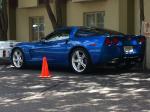
Well, she came out of hibernation today! She was put to sleep on 15-Oct-08. Today, 15-Mar-09 (5 months later) it finally broke 50 degrees and I decided to get her ready for the road. I brought her back to life at 5:30pm and I couldn't be more happy! There was absolutely no lifter clatter upon startup. She cranked a few revolutions and she was purring. Thanks to all on the forum whyo contributed their input.
Here's a few pics.
First, her in storage all asleep.
Next, three pics of her alive and well! The third pic is of the front brake rotor. After being stored in a polyethelyne bag and sealed with desicant for 5 months, absolutely no oxidation on the rotors!
In hibernation...

Resusitated and back to life!


And a pic of the front rotor..

I like the valve stem caps I bought with the C6 logo. Small yet tasteful (in my opinion)
Here's to spring!!!
Here's a few pics.
First, her in storage all asleep.
Next, three pics of her alive and well! The third pic is of the front brake rotor. After being stored in a polyethelyne bag and sealed with desicant for 5 months, absolutely no oxidation on the rotors!
In hibernation...
Resusitated and back to life!
And a pic of the front rotor..
I like the valve stem caps I bought with the C6 logo. Small yet tasteful (in my opinion)
Here's to spring!!!

Instructor


Joined: Oct 2013
Posts: 208
Likes: 4
I drive my vette every 2 months. I have been pulling the pump relay to crank without starting as a pre-lube to avoid dry starts, between drives. The LS3 has 15K miles/dry sump and gets Penzoil Pure Platinum 5W-30 w/Fram Ultra filter annually.
reply:
No need to pull any relays to crank the motor without starting. On the C6, or at least on mine, if you hold the accelerator to the floor before pushing the start button it will crank for 10 seconds without starting, or until you release the clutch. I do this before starting when taking the car out of winter storage.
reply:
No need to pull any relays to crank the motor without starting. On the C6, or at least on mine, if you hold the accelerator to the floor before pushing the start button it will crank for 10 seconds without starting, or until you release the clutch. I do this before starting when taking the car out of winter storage.
