

2008 C6 TPMS calibration procedure

Thread Starter
Burning Brakes


Joined: Apr 2009
Posts: 899
Likes: 209
From: Louisville KY
 2008 C6 TPMS calibration procedure
I need the calibration procedure for the tire press monitors on my 2008 C6. I know it is different (requires a special tool which I have on order) than the C5 procedure.
Race Director


Joined: Jan 2005
Posts: 10,924
Likes: 854
From: Daytona Beach FL
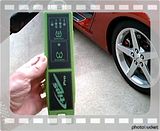
Just make sure you get a honk when the car goes into the learn mode, and a honk at each wheel (double honk at left rear) - no honkee, no workee!! The honk is confirmation that the tool triggered the sensor, the sensor sent out its data, and the data was received by the TPMS computer in the car and the ID# of the sensor was logged into the TPMS memory.
The tools need strong/fresh batteries, and alkaline generally works better than rechargeable ones.
The tools don't transmit a very strong signal, so you need to get it as close to the sensor as possible - i.e., put it on the rubber sidewall of the tire right next to the valve stem, as you see in the video above.
BTW, once the car is in the learn mode, you need to trigger the first sensor within one minute or the learn mode times out and you'll need to put in learn mode again.
Good luck!!
Bob

Last edited by BEZ06; Jun 14, 2010 at 10:17 PM. Reason: Added BTW
Pro


Joined: Jul 2007
Posts: 593
Likes: 1
From: Perris California
Press the bottom part of the start button until the car goes into "Acc" mode, but doesn't start.
Then hold down the lock and unlock buttons on the key fob until the horn beeps, it is in learn mode.
Start at the driver side front wheel, then passenger front, passenger rear, driver rear.
Once the last wheel is done the horn will beep twice. Turn off the car and you are done.

Then hold down the lock and unlock buttons on the key fob until the horn beeps, it is in learn mode.
Start at the driver side front wheel, then passenger front, passenger rear, driver rear.
Once the last wheel is done the horn will beep twice. Turn off the car and you are done.
Thread Starter
Burning Brakes
Joined: Apr 2009
Posts: 899
Likes: 209
From: Louisville KY
thanks for the procedure and video guys. The TIPS tool I ordered should be in in a couple of days. Better alternative than having to depend on the dealer when I switch from street to race rubber.
Race Director
Joined: Jan 2005
Posts: 10,924
Likes: 854
From: Daytona Beach FL
Here's a real cheap TIPS tool ($71.57). It's the same one I'm using in the video in the post above:
http://www.ntxtools.com/network-tool...-TIPS003A.html
And Tire Rack has an ATEQ VT-10 for $105:
http://www.tirerack.com/accessories/detail.jsp?ID=111
Bob
http://www.ntxtools.com/network-tool...-TIPS003A.html
And Tire Rack has an ATEQ VT-10 for $105:
http://www.tirerack.com/accessories/detail.jsp?ID=111
Bob
Corvette Stories
The Best of Corvette for Corvette Enthusiasts

Top 10 Most Expensive Corvettes Ever Sold on Bring A Trailer
Brett Foote
10 Things Every Corvette Owner Needs (2026 Edition)
Michael S. Palmer
8 Most "Only Corvette Owners Understand" Quirks and Problems
Pouria Savadkouei
10 Reasons the C6 Z06 is Still A Performance Benchmark After 20 Years
Joe Kucinski
How Much Horsepower Every Corvette Engine "LOST" in 1972
Joe Kucinski
Top 10 DOs and DON'Ts for Protecting Your Convertible Top!
Michael S. Palmer
Top 10 Most Explosive Corvettes Ever Made: Power-to-Weight Ratio Ranked!
Joe Kucinski
150 hp to 1,250 hp: Every Corvette Generation Compared by the Specs That Matter
Joe Kucinski
8 Coolest Corvette Pace Cars (and Replicas) of All Time
Verdad Gallardo
Race Director
Joined: Jan 2005
Posts: 10,924
Likes: 854
From: Daytona Beach FL
The TPMS computer in the car is actually a section of the RCDLR module.
The TPMS computer is programmed by the factory (or whoever produces them for GM), and none of the parameters can be adjusted/calibrated. The pressures that will give high/low pressure alerts can't be changed.
Likewise, the tire pressure sensors in the wheels/tires can't be adjusted/calibrated. The sensors are essentially like your hand-held digital tire pressure gauge, but they also have a radio transmitter that sends the pressure to the TPMS computer radio receiver in the car.
What we call a "TPMS tool" is really nothing but a "tire pressure sensor tool". The GM J-46079 can do some very limited TPMS diagnostics, but in general you need a Tech 2 to do any real in-depth diagnostics of any system on the car.
So......to finally answer your question - the tool just simply triggers or excites the sensor to send out its data. It transmits on a VLF (Very Low Frequency) of 125 kHz.
Except for the real low-end tools, most of them also have a receiver in them that will pick up the transmission from the sensor after it is triggered. Tire pressure sensors for U.S. cars mostly transmit on a UHF (Ultra High Frequency) of 315 mHz. Most Euro spec cars have a TPMS receiver that requires sensors that transmit on 434 mHz.
Here's a video where I'm doing some diagnostics on sensors just to make sure they are working - I'm not programming them to the car:
You can see that lower-end tools may blink and beep when they pick up the transmission from the sensor, but higher-end tools with a screen will have even more info such as sensor ID#, pressure, the sensor's internal battery strength (usually based on the signal strength transmitted by the sensor), the mode the sensor is transmitting in, the frequency it's transmitting on, some vehicles the temperature in the tire (our C6 sensors don't do that).
The TPMS tools just simply excite/trigger/wake up/force the sensor to transmit its data.
No adjustment or calibration of the tire pressure sensor in the tire, or the TPMS computer in the car can be made.
BTW, you need to set your tire pressures with a good hand-held tire pressure gauge. The DIC should only be used as a reference for pressures and a tool that will alert you of loss of pressure in a tire. With runflats you just don't get the handling feedback when a tire goes flat that you get when a normal soft-sidewall tire loses pressure.
Bob
Last edited by BEZ06; Jun 15, 2010 at 11:50 AM. Reason: Added BTW