









Cathedral Port vs Rectangle Port

Thread Starter
Burning Brakes

Joined: Sep 2009
Posts: 959
Likes: 3
From: Hartford CT
 Cathedral Port vs Rectangle Port
How much of the power gain a LS3 has over a LS2 is due to intake port design? Now we all know the rectangle port flows more, but was it necessary considering the factory power level of the LS3?
NPP aside the LS3 has a 30hp advantage obviously. We know the factory LS2 intake manifold is garbage and that even the later LS1/LS6 intake manifold flowed more.
So my question is: If you take an LS2, added a decent manifold say an LS6 with a 90mm opening, add the LS3 cam shaft specs and another 200cc of displacement would you make up the 30hp?
Obviously the rectangle ports offer greater potential, which is nice. But are they even necessary at the factory port level of 430hp?
NPP aside the LS3 has a 30hp advantage obviously. We know the factory LS2 intake manifold is garbage and that even the later LS1/LS6 intake manifold flowed more.
So my question is: If you take an LS2, added a decent manifold say an LS6 with a 90mm opening, add the LS3 cam shaft specs and another 200cc of displacement would you make up the 30hp?
Obviously the rectangle ports offer greater potential, which is nice. But are they even necessary at the factory port level of 430hp?

Drifting


Joined: Oct 2004
Posts: 1,790
Likes: 29
From: STL MO
St. Jude Donor '09-'10
I thought about this recently, if you have an LS2 and you changed out the air intake to an LS3 air intake, MAF to an LS3 MAF and housing, and intake manifold to a 102 Fast I'm pretty sure you would be at or above 430 HP
Total cost after selling your parts you took off really wouldn't be bad for the gains IMO.
Total cost after selling your parts you took off really wouldn't be bad for the gains IMO.
Thread Starter
Burning Brakes
Joined: Sep 2009
Posts: 959
Likes: 3
From: Hartford CT
good point
I thought about this recently, if you have an LS2 and you changed out the air intake to an LS3 air intake, MAF to an LS3 MAF and housing, and intake manifold to a 102 Fast I'm pretty sure you would be at or above 430 HP
Total cost after selling your parts you took off really wouldn't be bad for the gains IMO.
Total cost after selling your parts you took off really wouldn't be bad for the gains IMO.
The GM engineers would of had that at their disposal. It just seems when the order came down to bump the HP of the LS2, they could have hit the target without going to rectangle port heads.
Displacment bump
LS3 cam specs
Better cathedral port intake manifold (LS6)
LS7 intake system
I would think that would get you 30hp, using all GM spec parts.

Race Director


Joined: Sep 2007
Posts: 16,557
Likes: 2,106
From: Peoria/Phoenix AZ
C6 of Year Finalist (performance mods) 2019
Just because the LS2 and LS3 engines were tested to be SAE certified, doesn't mean they weren't able to produce MORE horsepower than advertised. It's just that they did produce that power at that RPM.
LS2 400 HP @ 6000 RPM
LS3 430 HP @ 5900 RPM
So unless you have the dyno charts that were used for the tests, you have no real starting point for comparison.
LS2 400 HP @ 6000 RPM
LS3 430 HP @ 5900 RPM
So unless you have the dyno charts that were used for the tests, you have no real starting point for comparison.
Race Director

Joined: Aug 2005
Posts: 13,592
Likes: 187
From: Hudson WI
NCM Sinkhole Donor
Corvette Stories
The Best of Corvette for Corvette Enthusiasts

Top 10 Most Explosive Corvettes Ever Made: Power-to-Weight Ratio Ranked!
Joe Kucinski
150 hp to 1,250 hp: Every Corvette Generation Compared by the Specs That Matter
Joe Kucinski
8 Coolest Corvette Pace Cars (and Replicas) of All Time
Verdad Gallardo
Top 10 Corvette Engines RANKED by Peak Torque (70+ Years of Muscle!)
Joe Kucinski
Corvette ZR1X Will Be Pacing the Indy 500, And Could Probably Race, Too!
Verdad Gallardo
Top 10 Corvettes Coming to Mecum Indy 2026!
Brett Foote
Top 10 C9 Corvette MUST-HAVES to Fix These C8 Generation Flaws!
Michael S. Palmer
10 Revolutionary 'Corvette Firsts' Most People Don't Know
Joe Kucinski
5 Reasons to Upgrade to an LS6-Powered Corvette; 5 Reasons to Stay LT2
Michael S. Palmer

Thread Starter
Burning Brakes
Joined: Sep 2009
Posts: 959
Likes: 3
From: Hartford CT
Just because the LS2 and LS3 engines were tested to be SAE certified, doesn't mean they weren't able to produce MORE horsepower than advertised. It's just that they did produce that power at that RPM.
LS2 400 HP @ 6000 RPM
LS3 430 HP @ 5900 RPM
So unless you have the dyno charts that were used for the tests, you have no real starting point for comparison.
LS2 400 HP @ 6000 RPM
LS3 430 HP @ 5900 RPM
So unless you have the dyno charts that were used for the tests, you have no real starting point for comparison.
Race Director
Joined: Sep 2007
Posts: 16,557
Likes: 2,106
From: Peoria/Phoenix AZ
C6 of Year Finalist (performance mods) 2019
Did it ever seem strange to you that the LS3 had exactly 430 HP and not 429 or 432? According to the testing and truth in advertising, GM could not advertise HP in excess of the test and claim it as certified. However, that doesn't mean they can't advertise less than the test results.
In the case of the LS2, that HP number was created before the certified testing was established. So it could really have been 394 or any other number, but advertised as 400.
Now the LS3 test may have produced 437 HP @ 6400 RPM and another 4 HP with the NPP, but the advertising dept. chose 430 and 436, because it met the requirements at 5900 RPM and allowed the pricy NPP option to appear as a reasonable power increase. I found no advertised reference to the RPM that the 436 HP was attained, so it could still fit the SAE rules.
The HP numbers are all about perception of power. Odd numbers can be useful if they tie into something else that's special. The 1958 283 HP FI 283 CI Vette engine is a good example of advertising.
Now using my above examples the HP difference would be 43, but without the dyno sheets you'll never know for sure.
Thread Starter
Burning Brakes
Joined: Sep 2009
Posts: 959
Likes: 3
From: Hartford CT
Possibly close to 30 HP, but not necessarily.
Did it ever seem strange to you that the LS3 had exactly 430 HP and not 429 or 432? According to the testing and truth in advertising, GM could not advertise HP in excess of the test and claim it as certified. However, that doesn't mean they can't advertise less than the test results.
In the case of the LS2, that HP number was created before the certified testing was established. So it could really have been 394 or any other number, but advertised as 400.
Now the LS3 test may have produced 437 HP @ 6400 RPM and another 4 HP with the NPP, but the advertising dept. chose 430 and 436, because it met the requirements at 5900 RPM and allowed the pricy NPP option to appear as a reasonable power increase. I found no advertised reference to the RPM that the 436 HP was attained, so it could still fit the SAE rules.
The HP numbers are all about perception of power. Odd numbers can be useful if they tie into something else that's special. The 1958 283 HP FI 283 CI Vette engine is a good example of advertising.
Now using my above examples the HP difference would be 43, but without the dyno sheets you'll never know for sure.
Did it ever seem strange to you that the LS3 had exactly 430 HP and not 429 or 432? According to the testing and truth in advertising, GM could not advertise HP in excess of the test and claim it as certified. However, that doesn't mean they can't advertise less than the test results.
In the case of the LS2, that HP number was created before the certified testing was established. So it could really have been 394 or any other number, but advertised as 400.
Now the LS3 test may have produced 437 HP @ 6400 RPM and another 4 HP with the NPP, but the advertising dept. chose 430 and 436, because it met the requirements at 5900 RPM and allowed the pricy NPP option to appear as a reasonable power increase. I found no advertised reference to the RPM that the 436 HP was attained, so it could still fit the SAE rules.
The HP numbers are all about perception of power. Odd numbers can be useful if they tie into something else that's special. The 1958 283 HP FI 283 CI Vette engine is a good example of advertising.
Now using my above examples the HP difference would be 43, but without the dyno sheets you'll never know for sure.
This is just a thought, but I think it may have to do with the inherent inefficiency of the rectangle port design at the factory power level. This would explain why a CAI and FAST102 can get a LS2 into LS3 power territory. It may also explain why ls3s respond so well to mods. The port design reaches optimal operating range once the airflow is adequate for LS7 like power levels. I have no evidence mindo you, just a theory.
I don't think too many LS3 owners yanked their motors to flog them on an engine dyno, so we will have to go off of chassis dynos. I know there are a lot of variables, so we will have to go with averages.
My thoughts are factory LS2 engines chassis dyno 340-360rwhp, with the median around 349(?). What do bone stock LS3s dyno?
Race Director
Joined: Aug 2005
Posts: 13,592
Likes: 187
From: Hudson WI
NCM Sinkhole Donor
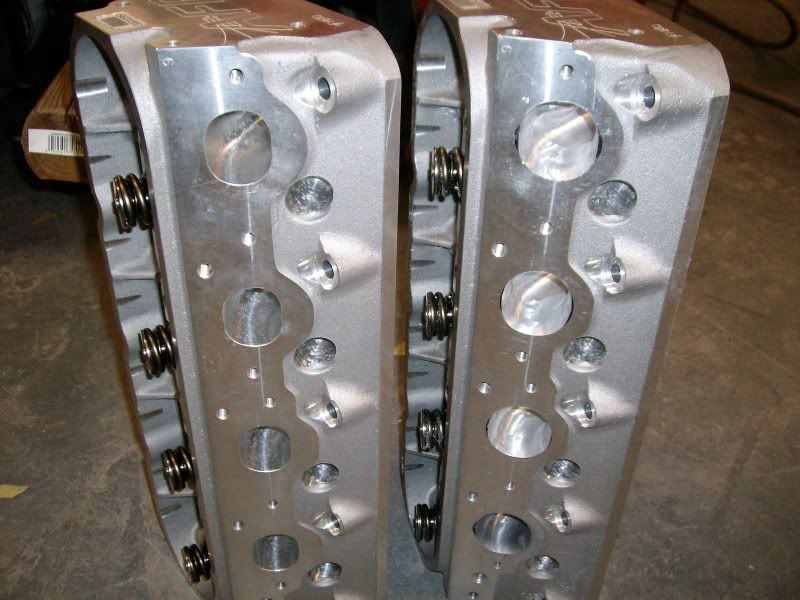
I believe that at the end of the day, stock LS3 heads will make more power than stock LS2 heads. I also believe that if you plan to get a FAST intake, get LS3 heads to go with them.
I am sure that 100's of people will say other wise, but this is my opinion.
I am sure that 100's of people will say other wise, but this is my opinion.


Race Director
Joined: Sep 2007
Posts: 16,557
Likes: 2,106
From: Peoria/Phoenix AZ
C6 of Year Finalist (performance mods) 2019

SAE certified means it cannot be over-rated for advertising, but under-rated is perfectly acceptable. So no matter what the maximum dyno output was, anything less is fair game. It's entirely possible that 436 was the max with both the standard exhaust and the NPP, but the NPP wouldn't sell unless the advertising for the standard was substantially less, yet believable.
Nice round and easy to remember numbers are what the public is used to seeing. It means that most all certified HP numbers are under-rated by 1 to 9 HP for advertising purposes. The wattage of the stereo or the number of cupholders is more important than 2 or 3 HP to a SUV buyer.

Melting Slicks


Joined: Nov 2010
Posts: 2,626
Likes: 195
From: On the east coast we drive until we die
I always thought they had to advertise it within a certain percentage, (+/-1%)? regardless of whether it's lower or higher. I've read no actual oficial data backing this up though.
Thread Starter
Burning Brakes
Joined: Sep 2009
Posts: 959
Likes: 3
From: Hartford CT
I'm sticking to my theory. The 30hp difference between a LS2 and LS3 can be made up easily when you are already adding 200cc of displacement a bigger cam and a LS7 air intake. Throw in a LS6 type intake manifold an I got to believe you are there.
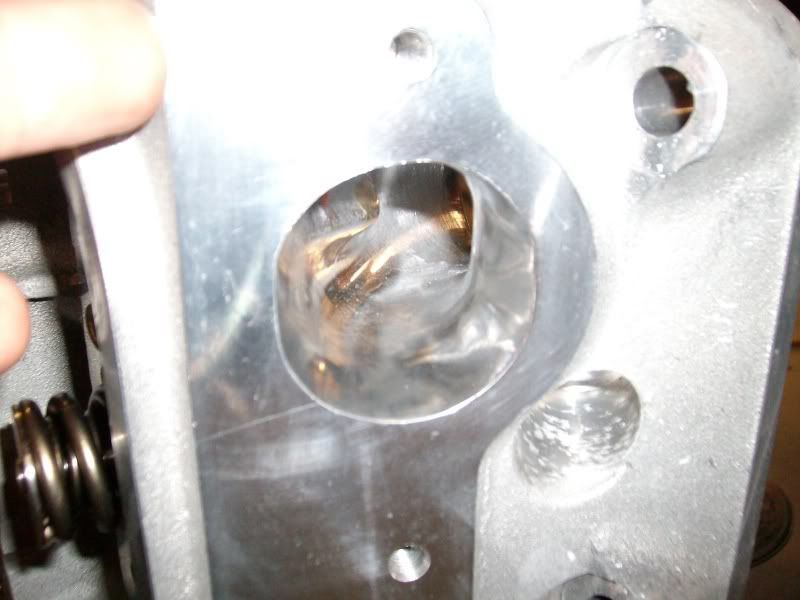
Maybe the LS3 is underated but I actually think the LS3 heads are just a touch too big for the factory power level. The airflow is below the optimal flow and velocity the heads were designed for. This would explain why the LS3 is so ripe for mods. Some of the gains from exhaust to basic cam mods are quite impressive.
The factory cathedral(243) heads seem to promote good power efficancy up to about 400-450rwhp. After that gains from big cams have diminishing returns. The rectangle port heads are probobly better from 425-500rwhp. Displacement and other factors affect these statements, as it difficult to isolate the effect of the heads alone. Again, no facts just theories...
Maybe the LS3 is underated but I actually think the LS3 heads are just a touch too big for the factory power level. The airflow is below the optimal flow and velocity the heads were designed for. This would explain why the LS3 is so ripe for mods. Some of the gains from exhaust to basic cam mods are quite impressive.
The factory cathedral(243) heads seem to promote good power efficancy up to about 400-450rwhp. After that gains from big cams have diminishing returns. The rectangle port heads are probobly better from 425-500rwhp. Displacement and other factors affect these statements, as it difficult to isolate the effect of the heads alone. Again, no facts just theories...
