




Checking for coolant leaks

Thread Starter
Le Mans Master


Joined: Apr 2002
Posts: 5,726
Likes: 46
From: Waukesha WI
St. Jude Donor '15
 Checking for coolant leaks
Car: 2006 Z06, no engine mods (that I know of, bought used), 30k miles.
Hi folks,
I just got my last engine oil analysis back form Blackstone and they found an increasing level of sodium in the oil (over the last few analyses) which points to coolant getting into the oil. They are recommending I drop to 2500 mile oil changes for a bit to gather some data and take a close look at my coolant level.
The question I have is, what would be a good way to check for coolant leaks into the oil? The oil is not milky and I have not seen a significant change in coolant levels since I bought the car (15k miles ago).
On my older cars I used a rental pressure checker to hunt leaks but none of the rentals around here have the right adapter for our setup, only the older radiator cap style. I might be able to find (or make) an adapter but I haven't gotten that far.
Any ideas would be appreciated. This problem (if it exists) is not a bad one, yet, but I'd like to catch it as early as I can.
Thanks!
Hi folks,
I just got my last engine oil analysis back form Blackstone and they found an increasing level of sodium in the oil (over the last few analyses) which points to coolant getting into the oil. They are recommending I drop to 2500 mile oil changes for a bit to gather some data and take a close look at my coolant level.
The question I have is, what would be a good way to check for coolant leaks into the oil? The oil is not milky and I have not seen a significant change in coolant levels since I bought the car (15k miles ago).
On my older cars I used a rental pressure checker to hunt leaks but none of the rentals around here have the right adapter for our setup, only the older radiator cap style. I might be able to find (or make) an adapter but I haven't gotten that far.
Any ideas would be appreciated. This problem (if it exists) is not a bad one, yet, but I'd like to catch it as early as I can.
Thanks!
Tech Contributor


Joined: Jul 2002
Posts: 14,950
Likes: 264
From: St. Louis, MO
St. Jude Donor '08
Car: 2006 Z06, no engine mods (that I know of, bought used), 30k miles.
Hi folks,
I just got my last engine oil analysis back form Blackstone and they found an increasing level of sodium in the oil (over the last few analyses) which points to coolant getting into the oil. They are recommending I drop to 2500 mile oil changes for a bit to gather some data and take a close look at my coolant level.
The question I have is, what would be a good way to check for coolant leaks into the oil? The oil is not milky and I have not seen a significant change in coolant levels since I bought the car (15k miles ago).
On my older cars I used a rental pressure checker to hunt leaks but none of the rentals around here have the right adapter for our setup, only the older radiator cap style. I might be able to find (or make) an adapter but I haven't gotten that far.
Any ideas would be appreciated. This problem (if it exists) is not a bad one, yet, but I'd like to catch it as early as I can.
Thanks!
Hi folks,
I just got my last engine oil analysis back form Blackstone and they found an increasing level of sodium in the oil (over the last few analyses) which points to coolant getting into the oil. They are recommending I drop to 2500 mile oil changes for a bit to gather some data and take a close look at my coolant level.
The question I have is, what would be a good way to check for coolant leaks into the oil? The oil is not milky and I have not seen a significant change in coolant levels since I bought the car (15k miles ago).
On my older cars I used a rental pressure checker to hunt leaks but none of the rentals around here have the right adapter for our setup, only the older radiator cap style. I might be able to find (or make) an adapter but I haven't gotten that far.
Any ideas would be appreciated. This problem (if it exists) is not a bad one, yet, but I'd like to catch it as early as I can.
Thanks!
Personally, if the oil's not milky, I'd a) tighten my axle nuts b) stop getting oil analysis, c) not worry about dropping a valve and most importantly,
D) stop worrying and enjoy the car!

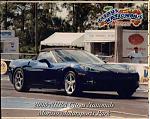
Look what I put my poor car through and it dutifully carries me back and forth to work every day! These cars are amazingly durable.


Team Owner


Joined: Feb 2001
Posts: 27,254
Likes: 136
From: Short Hills, NJ
These cars aren't known for blowing head gaskets. They are known for dropping valves once in a while and having loose axle nuts.
Personally, if the oil's not milky, I'd a) tighten my axle nuts b) stop getting oil analysis, c) not worry about dropping a valve and most importantly,
D) stop worrying and enjoy the car!
Look what I put my poor car through and it dutifully carries me back and forth to work every day! These cars are amazingly durable.
Personally, if the oil's not milky, I'd a) tighten my axle nuts b) stop getting oil analysis, c) not worry about dropping a valve and most importantly,
D) stop worrying and enjoy the car!
Look what I put my poor car through and it dutifully carries me back and forth to work every day! These cars are amazingly durable.


Thread Starter
Le Mans Master
Joined: Apr 2002
Posts: 5,726
Likes: 46
From: Waukesha WI
St. Jude Donor '15
I still DD the car and intend to hit a few HPDEs this summer - I am not going to garage the car over a blip on an oil report.
But, I believe in doing a little investigation if there are signs something might be amiss.
So, any ideas on checking for coolant leaks?
And, I do need to fix the right side axle nut, again.
But, I believe in doing a little investigation if there are signs something might be amiss.
So, any ideas on checking for coolant leaks?
And, I do need to fix the right side axle nut, again.
Tech Contributor
Joined: Jul 2002
Posts: 14,950
Likes: 264
From: St. Louis, MO
St. Jude Donor '08
Only place coolant can get into the oil in our cars (absent a hole in the block or head of course) would be the head gaskets. No coolant gets into the intake. Well, there is a crossover on the front of the heads but if it leaks you'll see it on the front of the head and they don't tend to leak.
You could do a leak down test if you've nothing better to do.
lol I'm just ribbing you.
You could also look for air bubbles in the reservoir I guess, but if you had those you'd have problems that I would think you'd notice like white smoke coming out of the exhaust.
I guess to answer your question after all that, I'd just plumb an compressor fitting into a replacement radiator cap and if you wanted to get fancy put a gauge on it. I just bought the fitting for $.50 or so to make my kid a compressed air gun like he saw on myth busters...in a much smaller scale!
You could do a leak down test if you've nothing better to do.
lol I'm just ribbing you.
You could also look for air bubbles in the reservoir I guess, but if you had those you'd have problems that I would think you'd notice like white smoke coming out of the exhaust.
I guess to answer your question after all that, I'd just plumb an compressor fitting into a replacement radiator cap and if you wanted to get fancy put a gauge on it. I just bought the fitting for $.50 or so to make my kid a compressed air gun like he saw on myth busters...in a much smaller scale!
Last edited by Joe_G; Apr 2, 2012 at 02:09 PM.
Team Owner
Joined: Feb 2001
Posts: 27,254
Likes: 136
From: Short Hills, NJ
Not to state the obvious or anything but...keep an eye on the ground when the car is parked for extended periods and also a close check of the overflow tank's level over a set period of time (three weeks/1000 miles etc.).
No puddles of pink/orange fluids on the ground + no change in tank level = no leaks.
No puddles of pink/orange fluids on the ground + no change in tank level = no leaks.
Thread Starter
Le Mans Master
Joined: Apr 2002
Posts: 5,726
Likes: 46
From: Waukesha WI
St. Jude Donor '15
I could do a cylinder leak-down for fun. I have the tester but never used it. At least I can get to the plugs on this car vs my others. Now that the weather is warmer, it might make an interesting Saturday project.
I was thinking about modding a regular cap but I was hoping I could find (rent) something, first. I'll look into it - between harbor freight and some surplus places I should be able to make something. Another fun little Sat. project.
There are no obvious signs of coolant leaking on the ground or any place I've looked on the exterior of the engine. No oil leaks either which I find amazing after living with two C4s. I may make a discrete mark on the reservoir when parked in the garage to get a baseline level.
As to the ribbing, no worries. After almost 10 years here, my skin is a mile thick. I'm not really concerned about it. I'm mainly just curious. If I see a cloud of white smoke (been there) or an oil milkshake (there too) I might get a little worried.
Thanks!
I was thinking about modding a regular cap but I was hoping I could find (rent) something, first. I'll look into it - between harbor freight and some surplus places I should be able to make something. Another fun little Sat. project.
There are no obvious signs of coolant leaking on the ground or any place I've looked on the exterior of the engine. No oil leaks either which I find amazing after living with two C4s.
I may make a discrete mark on the reservoir when parked in the garage to get a baseline level.As to the ribbing, no worries. After almost 10 years here, my skin is a mile thick.
I'm not really concerned about it. I'm mainly just curious. If I see a cloud of white smoke (been there) or an oil milkshake (there too) I might get a little worried.Thanks!
Last edited by Dale1990; Apr 2, 2012 at 02:36 PM.
Tech Contributor
Joined: Jul 2002
Posts: 14,950
Likes: 264
From: St. Louis, MO
St. Jude Donor '08
Keep in mind that if they say coolant is getting into the oil, leaking on the ground won't' get it into the oil. Only head gaskets or a hole in the head or block would do that! I wasn't kidding about that part.
Corvette Stories
The Best of Corvette for Corvette Enthusiasts

Top 10 Most Expensive Corvettes Ever Sold on Bring A Trailer
Brett Foote
10 Things Every Corvette Owner Needs (2026 Edition)
Michael S. Palmer
8 Most "Only Corvette Owners Understand" Quirks and Problems
Pouria Savadkouei
10 Reasons the C6 Z06 is Still A Performance Benchmark After 20 Years
Joe Kucinski
How Much Horsepower Every Corvette Engine "LOST" in 1972
Joe Kucinski
Top 10 DOs and DON'Ts for Protecting Your Convertible Top!
Michael S. Palmer
Top 10 Most Explosive Corvettes Ever Made: Power-to-Weight Ratio Ranked!
Joe Kucinski
150 hp to 1,250 hp: Every Corvette Generation Compared by the Specs That Matter
Joe Kucinski
8 Coolest Corvette Pace Cars (and Replicas) of All Time
Verdad Gallardo
Thread Starter
Le Mans Master
Joined: Apr 2002
Posts: 5,726
Likes: 46
From: Waukesha WI
St. Jude Donor '15


Melting Slicks


Joined: Nov 2007
Posts: 2,281
Likes: 552
From: Pittsburgh PA
St. Jude Donor '10-'11-'12-'13-'14
I sure don't claim to know anything about this, but it seems like every post I've seen about oil analysis on the Corvette Forum C6 section ends up with no definitive conclusion, no strong recommendation as to what action to take, and often not even a consensus on what the results mean. So I've always wondered - if the analysis doesn't result in doing something, why bother with it?
Tech Contributor
Joined: Jul 2002
Posts: 14,950
Likes: 264
From: St. Louis, MO
St. Jude Donor '08
I sure don't claim to know anything about this, but it seems like every post I've seen about oil analysis on the Corvette Forum C6 section ends up with no definitive conclusion, no strong recommendation as to what action to take, and often not even a consensus on what the results mean. So I've always wondered - if the analysis doesn't result in doing something, why bother with it?
I understand it for mission critical industrial motors, or airplanes, but not cars.
But now I want to see what the OP finds in his analysis!
Thread Starter
Le Mans Master
Joined: Apr 2002
Posts: 5,726
Likes: 46
From: Waukesha WI
St. Jude Donor '15
I sure don't claim to know anything about this, but it seems like every post I've seen about oil analysis on the Corvette Forum C6 section ends up with no definitive conclusion, no strong recommendation as to what action to take, and often not even a consensus on what the results mean. So I've always wondered - if the analysis doesn't result in doing something, why bother with it?

Racer

Joined: Apr 2006
Posts: 486
Likes: 2
From: The Villages FL
Dale, If you are not seeing a loss of coolant in the surge tank when cold then I should think there is not an internal leak. I also do not think that sodium is a componant of Dexcool. To check, Google Dexcool MSDS and make some phone calls before you get too involved. Good luck Bill S.

Race Director


Joined: Sep 2009
Posts: 11,349
Likes: 2,443
From: Eastern
Car: 2006 Z06, no engine mods (that I know of, bought used), 30k miles.
Hi folks,
I just got my last engine oil analysis back form Blackstone and they found an increasing level of sodium in the oil (over the last few analyses) which points to coolant getting into the oil. They are recommending I drop to 2500 mile oil changes for a bit to gather some data and take a close look at my coolant level.
The question I have is, what would be a good way to check for coolant leaks into the oil? The oil is not milky and I have not seen a significant change in coolant levels since I bought the car (15k miles ago).
On my older cars I used a rental pressure checker to hunt leaks but none of the rentals around here have the right adapter for our setup, only the older radiator cap style. I might be able to find (or make) an adapter but I haven't gotten that far.
Any ideas would be appreciated. This problem (if it exists) is not a bad one, yet, but I'd like to catch it as early as I can.
Thanks!
Hi folks,
I just got my last engine oil analysis back form Blackstone and they found an increasing level of sodium in the oil (over the last few analyses) which points to coolant getting into the oil. They are recommending I drop to 2500 mile oil changes for a bit to gather some data and take a close look at my coolant level.
The question I have is, what would be a good way to check for coolant leaks into the oil? The oil is not milky and I have not seen a significant change in coolant levels since I bought the car (15k miles ago).
On my older cars I used a rental pressure checker to hunt leaks but none of the rentals around here have the right adapter for our setup, only the older radiator cap style. I might be able to find (or make) an adapter but I haven't gotten that far.
Any ideas would be appreciated. This problem (if it exists) is not a bad one, yet, but I'd like to catch it as early as I can.
Thanks!
Thread Starter
Le Mans Master
Joined: Apr 2002
Posts: 5,726
Likes: 46
From: Waukesha WI
St. Jude Donor '15
 Thanks! I managed to get a pump from AutoZone with an adapter to fit the threaded reservoir but it doesn't block the overflow so it can't build pressure. That bladder design should work much better. I'll have to check around to see if I can source one inexpensively. If not, I'll just drop $10-$15 and mod a cap.

Melting Slicks
Joined: Sep 2005
Posts: 2,670
Likes: 134
From: merritt island fl
C1 of Year Finalist (stock) 2019
2016 C1 of the Year Finalist
2015 C2 of the Year Finalist
Thanks! I managed to get a pump from AutoZone with an adapter to fit the threaded reservoir but it doesn't block the overflow so it can't build pressure. That bladder design should work much better. I'll have to check around to see if I can source one inexpensively. If not, I'll just drop $10-$15 and mod a cap.
Melting Slicks
Joined: Nov 2007
Posts: 2,281
Likes: 552
From: Pittsburgh PA
St. Jude Donor '10-'11-'12-'13-'14
I can't speak for anyone else but I do it largely for entertainment value. I'm an engineering geek and enjoy mulling over data. Since this car is relatively new (to me, at least) I figure it would be interesting to see show the data changes as the engine wears. At best, the analysis is merely a data point to be considered as part of a whole - hence my wanting to do a bit more research.

Instructor
Joined: Aug 2010
Posts: 220
Likes: 1
From: TORONTO
:but which axle nut exactly?????
These cars aren't known for blowing head gaskets. They are known for dropping valves once in a while and having loose axle nuts.
Personally, if the oil's not milky, I'd a) tighten my axle nuts b) stop getting oil analysis, c) not worry about dropping a valve and most importantly,
D) stop worrying and enjoy the car!
Look what I put my poor car through and it dutifully carries me back and forth to work every day! These cars are amazingly durable.
Personally, if the oil's not milky, I'd a) tighten my axle nuts b) stop getting oil analysis, c) not worry about dropping a valve and most importantly,
D) stop worrying and enjoy the car!
Look what I put my poor car through and it dutifully carries me back and forth to work every day! These cars are amazingly durable.
Instructor
Joined: Aug 2010
Posts: 220
Likes: 1
From: TORONTO
I sure don't claim to know anything about this, but it seems like every post I've seen about oil analysis on the Corvette Forum C6 section ends up with no definitive conclusion, no strong recommendation as to what action to take, and often not even a consensus on what the results mean. So I've always wondered - if the analysis doesn't result in doing something, why bother with it?