




Cooling question

Thread Starter
Race Director

Joined: Jan 2006
Posts: 18,396
Likes: 169
 Cooling question
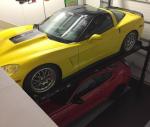
Almost 6 years ago I installed a ProCharger system on my 2005 C6. At the time, there had been a few issues with the system throwing belts, so I also went with the Meziere EWP, thinking if I did lose a belt, I could still get home with the cooling system in tact.
Now, 35k miles later, the Meziere has stopped working, and my question is:
Since I've never thrown a belt, will I lose any cooling capacity if I return to using a stock water pump? The Meziere pushed a constant 55 gph, and, I think, the stock pump's capacity is only 22 gph @ 5500 rpm.
Also, the radiator is a Ron Davis unit with internal oil cooler.
Thanks
Now, 35k miles later, the Meziere has stopped working, and my question is:
Since I've never thrown a belt, will I lose any cooling capacity if I return to using a stock water pump? The Meziere pushed a constant 55 gph, and, I think, the stock pump's capacity is only 22 gph @ 5500 rpm.
Also, the radiator is a Ron Davis unit with internal oil cooler.
Thanks

Le Mans Master


Joined: Aug 2007
Posts: 6,473
Likes: 297
From: Orange Park FL
Almost 6 years ago I installed a ProCharger system on my 2005 C6. At the time, there had been a few issues with the system throwing belts, so I also went with the Meziere EWP, thinking if I did lose a belt, I could still get home with the cooling system in tact.
Now, 35k miles later, the Meziere has stopped working, and my question is:
Since I've never thrown a belt, will I lose any cooling capacity if I return to using a stock water pump? The Meziere pushed a constant 55 gph, and, I think, the stock pump's capacity is only 22 gph @ 5500 rpm.
Also, the radiator is a Ron Davis unit with internal oil cooler.
Thanks
Now, 35k miles later, the Meziere has stopped working, and my question is:
Since I've never thrown a belt, will I lose any cooling capacity if I return to using a stock water pump? The Meziere pushed a constant 55 gph, and, I think, the stock pump's capacity is only 22 gph @ 5500 rpm.
Also, the radiator is a Ron Davis unit with internal oil cooler.
Thanks
Race Director


Joined: Aug 2005
Posts: 13,592
Likes: 187
From: Hudson WI
NCM Sinkhole Donor
Don't laugh, but it may run cooler because water going through the motor at a fast rate doesn't transfer the heat well.
If you are old and followed the Can Am in the late 60's, there was a Shadow car that had all kinds of over heating problems because it flowed to much coolant.
Just a thought.
If you are old and followed the Can Am in the late 60's, there was a Shadow car that had all kinds of over heating problems because it flowed to much coolant.
Just a thought.

Le Mans Master
Joined: Oct 2006
Posts: 5,078
Likes: 19
From: Cumming, GA
I've seen plenty of SC cars running fine on the stock pump and upgraded radiators like a RD or DeWitts. I think you'll be fine but heavy stop-n-go you would see more benefits with the EWP but constant high rpm the stock pump will be better.
Thread Starter
Race Director
Joined: Jan 2006
Posts: 18,396
Likes: 169
You said you were throwing belts with the stock water pump, is how I read the above. Isn't that going to cause you the same problem if you don't go back to an EWP ? You probably will run a little hotter. My buddy is running around 217 degrees with the stock pump/pro charger
Thread Starter
Race Director
Joined: Jan 2006
Posts: 18,396
Likes: 169
Don't laugh, but it may run cooler because water going through the motor at a fast rate doesn't transfer the heat well.
If you are old and followed the Can Am in the late 60's, there was a Shadow car that had all kinds of over heating problems because it flowed to much coolant.
Just a thought.
If you are old and followed the Can Am in the late 60's, there was a Shadow car that had all kinds of over heating problems because it flowed to much coolant.
Just a thought.
Thread Starter
Race Director
Joined: Jan 2006
Posts: 18,396
Likes: 169
Since I still have the stock pump, I'm leaning toward reinstalling it. If it keeps the car cool, fine. If it doesn't, then all I'm out is my time.
Race Director
Joined: Aug 2005
Posts: 13,592
Likes: 187
From: Hudson WI
NCM Sinkhole Donor
Corvette Stories
The Best of Corvette for Corvette Enthusiasts

Top 10 Most Expensive Corvettes Ever Sold on Bring A Trailer
Brett Foote
10 Things Every Corvette Owner Needs (2026 Edition)
Michael S. Palmer
8 Most "Only Corvette Owners Understand" Quirks and Problems
Pouria Savadkouei
10 Reasons the C6 Z06 is Still A Performance Benchmark After 20 Years
Joe Kucinski
How Much Horsepower Every Corvette Engine "LOST" in 1972
Joe Kucinski
Top 10 DOs and DON'Ts for Protecting Your Convertible Top!
Michael S. Palmer
Top 10 Most Explosive Corvettes Ever Made: Power-to-Weight Ratio Ranked!
Joe Kucinski
150 hp to 1,250 hp: Every Corvette Generation Compared by the Specs That Matter
Joe Kucinski
8 Coolest Corvette Pace Cars (and Replicas) of All Time
Verdad Gallardo

Supporting Vendor
Joined: Nov 2011
Posts: 124
Likes: 0
The ewp should have two fuses both are 20amp mini fuses. One will be the 12v lead going to the relay and the other is the 12v supply lead going to the ewp.
Just had a car here last week with an ewp on it and both fuses where blown.
Just had a car here last week with an ewp on it and both fuses where blown.
Thread Starter
Race Director
Joined: Jan 2006
Posts: 18,396
Likes: 169
Yes, the fuse was blown, but the pump sounds like the bearings are shot. Makes more rackett than the ProCharger. I figured that the bearings were dragging, and causing the fuse to blow.

Cruising

Joined: Jul 2011
Posts: 13
Likes: 0
You could install the stock pump while you send your EPW in for a rebuild at Meziere. The rebuild cost about $250 and takes about 2 days. Your stock pump will flow more than 22gpm at 5500 rpm; it might even flow more than the Meziere pump at that RPM. The EWP will flow way more at idle and cruse speeds then the stock pump.
Sorry guys flowing the water to fast will not cause the water to get hotter, It’s a internet myth.
http://www.stewartcomponents.com/tec...ech_Tips_3.htm
Sorry guys flowing the water to fast will not cause the water to get hotter, It’s a internet myth.
http://www.stewartcomponents.com/tec...ech_Tips_3.htm

Team Owner


Joined: Oct 2004
Posts: 27,420
Likes: 64
From: San Clemente CA
You could install the stock pump while you send your EPW in for a rebuild at Meziere. The rebuild cost about $250 and takes about 2 days. Your stock pump will flow more than 22gpm at 5500 rpm; it might even flow more than the Meziere pump at that RPM. The EWP will flow way more at idle and cruse speeds then the stock pump.
Sorry guys flowing the water to fast will not cause the water to get hotter, It’s a internet myth.
http://www.stewartcomponents.com/tec...ech_Tips_3.htm
Sorry guys flowing the water to fast will not cause the water to get hotter, It’s a internet myth.
http://www.stewartcomponents.com/tec...ech_Tips_3.htm
http://community.discovery.com/eve/f...6/m/3301906669
Thread Starter
Race Director
Joined: Jan 2006
Posts: 18,396
Likes: 169
You could install the stock pump while you send your EPW in for a rebuild at Meziere. The rebuild cost about $250 and takes about 2 days. Your stock pump will flow more than 22gpm at 5500 rpm; it might even flow more than the Meziere pump at that RPM. The EWP will flow way more at idle and cruse speeds then the stock pump.
Sorry guys flowing the water to fast will not cause the water to get hotter, It’s a internet myth.
http://www.stewartcomponents.com/tec...ech_Tips_3.htm
Sorry guys flowing the water to fast will not cause the water to get hotter, It’s a internet myth.
http://www.stewartcomponents.com/tec...ech_Tips_3.htm

Melting Slicks

Joined: Nov 2007
Posts: 2,282
Likes: 552
From: Pittsburgh PA
St. Jude Donor '10-'11-'12-'13-'14
I see this from time to time on Corvette Forum, and you are correct - it's a myth. Other things being equal, heat transfer via conduction is dependent only on the temperature difference between the two conductors. The faster the water flow, the greater the temperature difference and thus the more cooling you get. It's not a matter of opinion, or logic, or whatever somebody thinks they saw - its physics (Fourier's Law of Thermal Conduction). If somebody really has seen otherwise then something else has happened, like a change from laminar to turbulent flow, water pump cavitation, etc.
Race Director
Joined: Aug 2005
Posts: 13,592
Likes: 187
From: Hudson WI
NCM Sinkhole Donor
I see this from time to time on Corvette Forum, and you are correct - it's a myth. Other things being equal, heat transfer via conduction is dependent only on the temperature difference between the two conductors. The faster the water flow, the greater the temperature difference and thus the more cooling you get. It's not a matter of opinion, or logic, or whatever somebody thinks they saw - its physics (Fourier's Law of Thermal Conduction). If somebody really has seen otherwise then something else has happened, like a change from laminar to turbulent flow, water pump cavitation, etc.
I do not claim to be an expert or claim to know anything about cooling systems, but this guy designed Can-Am and Formula 1 cars, so I respect what he has to say.
Thanks!
Cruising
Joined: Jul 2011
Posts: 13
Likes: 0
My understanding on the slowing the pump down was that the pumps back in the day had impellors that would cause cavitation at high RPM. By slowing the pump down they actually made the pumps flow more water. Which worked great for these cars because they idled at around 2000 to 3000 rpm, these cars didn't suffer from the slow speed over heating that the typical roundly round guys had when they slowed their pumps down. Now you have much better designed impellors and water pumps that can handle the higher RPM.
Supporting Vendor
Joined: Nov 2011
Posts: 124
Likes: 0
My understanding on the slowing the pump down was that the pumps back in the day had impellors that would cause cavitation at high RPM. By slowing the pump down they actually made the pumps flow more water. Which worked great for these cars because they idled at around 2000 to 3000 rpm, these cars didn't suffer from the slow speed over heating that the typical roundly round guys had when they slowed their pumps down. Now you have much better designed impellors and water pumps that can handle the higher RPM.
