When you click on links to various merchants on this site and make a purchase, this can result in this site earning a commission. Affiliate programs and affiliations include, but are not limited to, the eBay Partner Network.
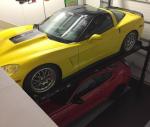
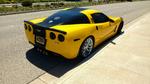
I have been looking, reading etc. since November figuring out which vette to get. I finally bought one yesterday - an '07 Z with 17,000 miles.
Test drive was great. The 120 mile drive home was great - until I got into my neighborhood. I live on the down slope of a small mountain with a 25 mph limit. You have to ride the brakes a bit here and there for about a mile to keep the speed within reason. On the last mile home I noticed the brakes getting progressively softer.
Today I played around when stopped on slopes and noticed the same thing. Firm at first then fade under steady pressure. It seems the master is failing.
Is this a common issue? How big a job is it for DIY? Or, cost for someone else to do it?
I am a little frustrated with this, never had a master go out. And, at 17k miles...
Other than the stopping concerns, the car is bada$$ - LOVE IT.
Masters can fail of course but I'd bet more on air in the lines.
If you don't know detailed history on the car I suggest changing out the brake fluid anyway and that would also offer the opportunity to do a good bleeding of the lines to make sure there is no air in them.
Masters can fail of course but I'd bet more on air in the lines.
If you don't know detailed history on the car I suggest changing out the brake fluid anyway and that would also offer the opportunity to do a good bleeding of the lines to make sure there is no air in them.
Thanks Rick. I'm going to try bleeding before doing anything and emailed the prior owner to find out exactly which fluid he used. I hope it just needs a bleed, but initial feel is great, hard braking is great, so I really doubt it is air. There's no spongy feeling. Steady light pressure = steady slow fade.
I bled the brakes today. Felt great until fluid heated up, then issue was back. Fluid was black in the reservoir and black out of the bleeders. Ordering some good stuff. Prior owner offered a new master if new fluid doesn't take care of it. All is good,
The fluid was darkish out of all four. The RR was the only one I tried using a vac on. It was a PITA to get any flow. My helper was tight on time so, no vac on the other three.
I got an email on a stuck caliper possibly boiling the oil. That could be spot on. The RR was a struggle to get any fluid going from the bleeder and the disk wear is a bit off. RR and LF pic posted. 2nd pic is RR .
I was thinking the same. A stuck caliper will cause that, but the fluid should not be dark on all four corners. If you have temp gun, I would drive until the issue shows up and take the temp of the rotors and see if one has a lot higher temp by side.Both fronts should be about the same and the both rears should be about the same.
I just went out and lit it up for a few miles. Hard braking, trail braking, repeat etc. Then checked disks with a tire pyrometer as quick as I could. Fronts were both at about 400, rears were both around 250. Not hot, but had to be hotter than what I've done with normal driving when issue occurred.
I don't know. New to me car.... I try the fluid swap. If still an issue, I'll replace rotors, pads and rebuild calipers. Still and issue, then the master. Fresh brakes, peace of mind...
Forget the shop vac,
Power bleed with pressure on the tank side instead.
Also keep in mind, to bleed/flush the ABS, it has to be cycled with a Tech II .
So without a Tech II, keep pushing fluid through the tank power bleeding as you working through the calipers to get them running clean fluid out for the first power flush.
Take the car out to a gravel/ dirt type area that you can slam on the brakes a few time for the ABS to kick in to cycle the system, then do another power bleed.
As for the clutch fluid, can only imagine what color it is if the brake fluid was black.
I use a Motive pressure bleeder and bleed my brakes after every track day and have never used a TechII.
Thats the trick, hence keep the fluid in the lines clean, and when the BPMV shoves fluid out of the pump during active handling, it's clean fluid that it's exchanging.
Hence, the Tech II is used to cycle the BPMV to push the contaminated fluid out of the pump, and pull clean fluid back into it. Or in the case of the system run dry, to cycle the pump to pull fluid back into/push the air out of the pump.
On the ebcm valve side, the restriction valves themselves are wide open when you power bleed and the car off, so no need for a tech II for that part of the math.
Abs consists of the EBCM, with is the restriction valve part that restricts fluid to the calipers to stop a wheel from being locked as the car is still moving (pedal doing that jitter when it activates), and then the BPMV that pushes fluid to the calipers if the active handling wants to brake one of the wheels or more to get the car straightened out (what kicks on accidentally by a bad wiring harness connector in the steering column, and cause the car to swerve into a ditch all by itself for not reason).
Having all the cracks, crevice, twist and turns within a brake system. Using Tech II does not guaranteed system fluid is 100% cleaned out from within the system's cavity. It is certainly a convenient tool for a reasonable fluid change out, while the car is sitting still for the technician.
In short. Aside the fact, racers/enthusiasts frequently change their fluids. Contaminates/previous fluid within system will migrate and intermixed with fresh fluid when brake system is activated during hard use.
Having all the cracks, crevice, twist and turns within a brake system. Using Tech II does not guaranteed system fluid is 100% cleaned out from within the system's cavity. It is certainly a convenient tool for a reasonable fluid change out, while the car is sitting still for the technician.
In short. Aside the fact, racers/enthusiasts frequently change their fluids. Contaminates/previous fluid within system will migrate and intermixed with fresh fluid when brake system is activated during hard use.
I'm sure you'll get to the solution from the above posts. I assume you've measured the rotors for thickness even before going the route of replacement. How do they stack up re each other? A groove or two shouldn't be a big worry unless very deep.








 Master Cylinder?