


Thermostat Labor Time

Racer

Joined: Mar 2015
Posts: 285
Likes: 6

It's about a hour, plus dexcool.
You need to let the motor cool, drain the Dexcool, change the T stat, then fill the fluid back up and allow it to run for a while to burp the trapped air out of the system.
As for T stat, make sure that it has the air weep channel on the T stat, and when you install the t stat, make sure that the air weep channel (small brass T piece mounted loose in a through channel on T stat flange) is mounted TDC. This allows the trapped air in the system to be able to get past the T stat before the engine warms up; hence before the T stat opens normally to allow the trapped air in the system behind the T state to get past it then instead.
As for a rude awakening, the 160 t stat will only lower the temps of the motor at idle/low RPMs about 10 degrees (will drop the temp down to 185/190). Once you get on the motor, the temps are going to climb back up to normal ranges instead. As for turning fan on sooner to try to drop and hold the temps that way instead, lost cause, since the fan and its wiring was never designed for such. So what happens by trying to use the OEM fan on the OEM radiator to try to hold the temps downs lower, you end up first by burning up the wiring connector, then long term, burning up the controller and fan motor next.
So to drop the working temps of the motor correctly, better cooling radiator is first needed, then fans with new controller as well.
Here is the stock settings for the fan and the percentage that turns on per engine temp. You can tweak then somewhat, but not that much or your going to run into problems instead.

And yes, during a dyno tune of just short burst runs, the dyno will show more HP since the motor is dyno run with the lower temps from basic idle instead. As soon as the motor goes back up to normal temps when being run hard instead, then the ECM will makes the needed changes for the motor temp and your going to lose some Hp instead.
Bluntly, the 160 T stat is mostly Dyno snake oil to make a higher number on the dyno alone. To do it correctly and hold the engine temp down full time instead, then a better cooling system is needed instead.
Hence all the 160 t stat is doing, is allowing the stat to open slightly lower in temps. The motor still wants to run at around 200*, and unless the cooling system is improved to hold the temps down instead (and not trying to burn up the OEM fan/controler instead), then your back at just running a stock T stat instead.
Lastly, and this is huge one, you have an aluminum block and head motor. If the T stat open wide open below 160 in colder temps, you can "Cold Shock" the motor, and end up wearing out load bearing parts very, very quickly instead. With the LS motors, you do not get on them/rev them up until you have at least 170 oil temps, since at these oil temps, the aluminum metals have expanded to their normal tolerances. When the aluminum parts gets cold shocked, the areas cold shock on the aluminum parts will constrict back to there cold dimensions instead.
So bluntly, run a 180 T stat, and upgrade the cooling system instead. Your target temp is around a 190 hold for the motor full time, and will not run into the pit falls of trying to over work the OEM cooling system and burning it up quickly instead.
You need to let the motor cool, drain the Dexcool, change the T stat, then fill the fluid back up and allow it to run for a while to burp the trapped air out of the system.
As for T stat, make sure that it has the air weep channel on the T stat, and when you install the t stat, make sure that the air weep channel (small brass T piece mounted loose in a through channel on T stat flange) is mounted TDC. This allows the trapped air in the system to be able to get past the T stat before the engine warms up; hence before the T stat opens normally to allow the trapped air in the system behind the T state to get past it then instead.
As for a rude awakening, the 160 t stat will only lower the temps of the motor at idle/low RPMs about 10 degrees (will drop the temp down to 185/190). Once you get on the motor, the temps are going to climb back up to normal ranges instead. As for turning fan on sooner to try to drop and hold the temps that way instead, lost cause, since the fan and its wiring was never designed for such. So what happens by trying to use the OEM fan on the OEM radiator to try to hold the temps downs lower, you end up first by burning up the wiring connector, then long term, burning up the controller and fan motor next.
So to drop the working temps of the motor correctly, better cooling radiator is first needed, then fans with new controller as well.
Here is the stock settings for the fan and the percentage that turns on per engine temp. You can tweak then somewhat, but not that much or your going to run into problems instead.
And yes, during a dyno tune of just short burst runs, the dyno will show more HP since the motor is dyno run with the lower temps from basic idle instead. As soon as the motor goes back up to normal temps when being run hard instead, then the ECM will makes the needed changes for the motor temp and your going to lose some Hp instead.
Bluntly, the 160 T stat is mostly Dyno snake oil to make a higher number on the dyno alone. To do it correctly and hold the engine temp down full time instead, then a better cooling system is needed instead.
Hence all the 160 t stat is doing, is allowing the stat to open slightly lower in temps. The motor still wants to run at around 200*, and unless the cooling system is improved to hold the temps down instead (and not trying to burn up the OEM fan/controler instead), then your back at just running a stock T stat instead.
Lastly, and this is huge one, you have an aluminum block and head motor. If the T stat open wide open below 160 in colder temps, you can "Cold Shock" the motor, and end up wearing out load bearing parts very, very quickly instead. With the LS motors, you do not get on them/rev them up until you have at least 170 oil temps, since at these oil temps, the aluminum metals have expanded to their normal tolerances. When the aluminum parts gets cold shocked, the areas cold shock on the aluminum parts will constrict back to there cold dimensions instead.
So bluntly, run a 180 T stat, and upgrade the cooling system instead. Your target temp is around a 190 hold for the motor full time, and will not run into the pit falls of trying to over work the OEM cooling system and burning it up quickly instead.

Racer
Joined: Mar 2015
Posts: 285
Likes: 6
Dano. Hello sir, nice illustration.
I retract my earlier statement of calling BS on your post. I will however I'll try to be politically correct and say, I disagree with your statements. Being an auto technician for 25 yrs. A GM master tech for several of those and having built many 9 sec cars, I can say that the regurgitated internet misinformation in your post is is incorrect.
Your statement "Bluntly, the 160 T stat is mostly Dyno snake oil to make a higher number on the dyno alone." is completely wrong.
At highway speeds regardless if the fan is on or not, air flow at 55 mph through the radiator. If the thermostat opens at 160 degrees, will not more heat be removed from the engine as opposed to 180 degrees?
As far as the thermal shock issue, lets look at that. The thermostat opens two ways, the first from water pump dynamic pressure. Under hard acceleration water pressure pushes the back part of the thermostat open so circulation occurs and prevent localized hot spots that can cause air pockets. This is a rapid event, much faster than the thermostat opening from wax expansion due to heat. Which event is most likely to result in thermal shock? Thermostats open incrementaly way before it's marked tempreture and only fully open when there is limited air flow through the radiator. Usually when the vehicle is idling at a standstill. What thermal shock???
By the way in an all aluminum engine where all parts expand and contract the same amount at the same time thermal shock is less significant if it existed as opposed to an iron block motor with an aluminum head. An engine with dissimilar metals that expand at different rates can rip head gaskets apart. Here thermal shock is an issue.
By the way the radiator fan does not burn connectors depending on duty cycle, it burns connectors during initial turn on when it draws maximum current. Once at speed current draw is at its minimum especially on the highway where air flowing in assists the motor turn the fan blades.
Does anyone disagree?
Welcome to my world.
I retract my earlier statement of calling BS on your post. I will however I'll try to be politically correct and say, I disagree with your statements. Being an auto technician for 25 yrs. A GM master tech for several of those and having built many 9 sec cars, I can say that the regurgitated internet misinformation in your post is is incorrect.
Your statement "Bluntly, the 160 T stat is mostly Dyno snake oil to make a higher number on the dyno alone." is completely wrong.
At highway speeds regardless if the fan is on or not, air flow at 55 mph through the radiator. If the thermostat opens at 160 degrees, will not more heat be removed from the engine as opposed to 180 degrees?
As far as the thermal shock issue, lets look at that. The thermostat opens two ways, the first from water pump dynamic pressure. Under hard acceleration water pressure pushes the back part of the thermostat open so circulation occurs and prevent localized hot spots that can cause air pockets. This is a rapid event, much faster than the thermostat opening from wax expansion due to heat. Which event is most likely to result in thermal shock? Thermostats open incrementaly way before it's marked tempreture and only fully open when there is limited air flow through the radiator. Usually when the vehicle is idling at a standstill. What thermal shock???
By the way in an all aluminum engine where all parts expand and contract the same amount at the same time thermal shock is less significant if it existed as opposed to an iron block motor with an aluminum head. An engine with dissimilar metals that expand at different rates can rip head gaskets apart. Here thermal shock is an issue.
By the way the radiator fan does not burn connectors depending on duty cycle, it burns connectors during initial turn on when it draws maximum current. Once at speed current draw is at its minimum especially on the highway where air flowing in assists the motor turn the fan blades.
Does anyone disagree?
Welcome to my world.

Race Director


Joined: Dec 2013
Posts: 12,502
Likes: 3,631
I don't see a lot of guys wondering what HP they have at less than 2K rpms (idle and highway speeds). Hell most aftermarket cams will not even start to come on power until the 2.5K range anyways.
So with the motor kept at low revs, then yes the engine temps will stay lower with the lower temp T stat, as I posted to begin with.
Now get on the motor and use all the power it has for more than 15 second at a time on say a high speed road course (it does handle at high speed, so has more purpose then just rolling racing/trip down a drag strip) , and now engine temps are 200-210 instead, even with the 160 t stat.
So this is where the tuners get the wild hair to try to pull the motor back down to 180 with the stock radiator and fan/with the fan on max instead.
Hence where the problems comes in, since GM did not design the fan system to run at max full time instead. So the first thing to scream uncle is the connector plug at it melts,
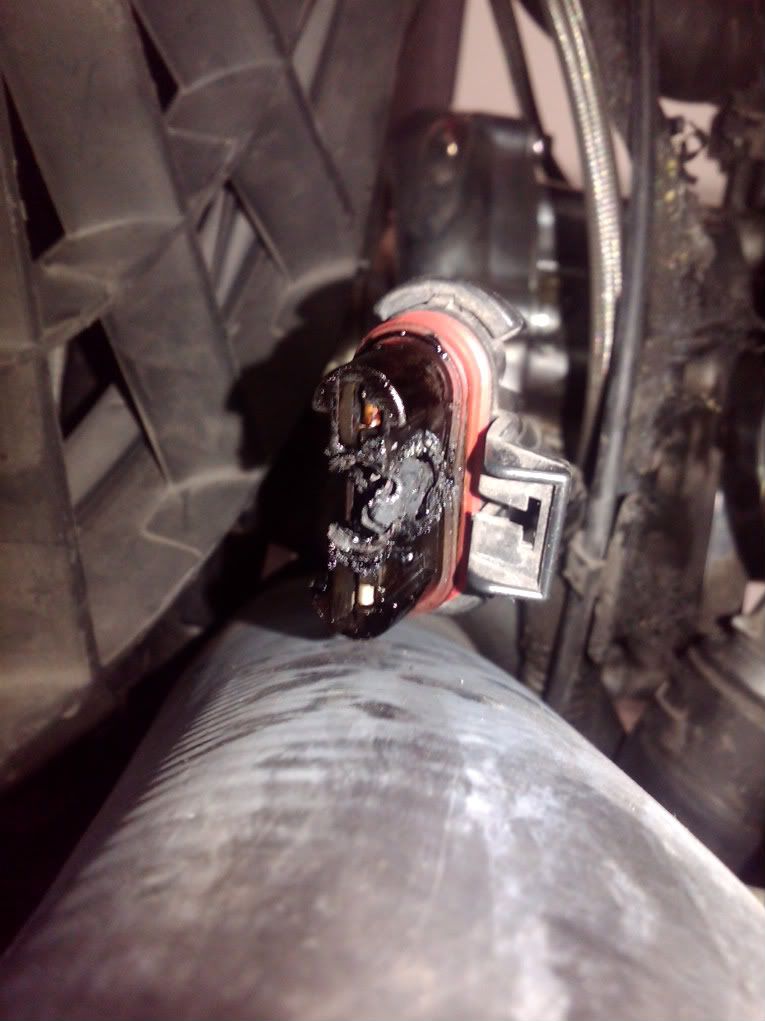
So this get direct connected instead to fix the melted connector, and now the problem just moves to the under size wiring and other connectors that over heat instead. Also the cooling fan controller module is being over worked, so put a short life on it as well.
As for T stats, lets just say that they are not perfect in their temp open range they state that they are, and may end up opening up much lower in temp instead.
Lets face it, the reason for a T stat in the first place is cold weather,
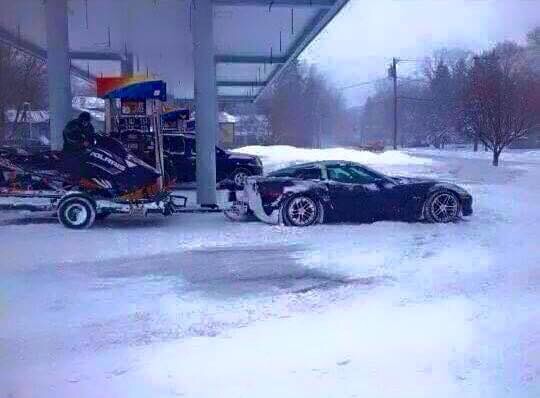
And the last thing this lad needs is a 160 t stat that is deciding that it's a 130* t stat instead. So motor at 210, and outside temp at close to 100, no worries of bad cold shock to the motor: But in the above lad's car, cold shock to the motor becomes a issue instead (as well as having a working heater too).
So with the motor kept at low revs, then yes the engine temps will stay lower with the lower temp T stat, as I posted to begin with.
Now get on the motor and use all the power it has for more than 15 second at a time on say a high speed road course (it does handle at high speed, so has more purpose then just rolling racing/trip down a drag strip) , and now engine temps are 200-210 instead, even with the 160 t stat.
So this is where the tuners get the wild hair to try to pull the motor back down to 180 with the stock radiator and fan/with the fan on max instead.
Hence where the problems comes in, since GM did not design the fan system to run at max full time instead. So the first thing to scream uncle is the connector plug at it melts,
So this get direct connected instead to fix the melted connector, and now the problem just moves to the under size wiring and other connectors that over heat instead. Also the cooling fan controller module is being over worked, so put a short life on it as well.
As for T stats, lets just say that they are not perfect in their temp open range they state that they are, and may end up opening up much lower in temp instead.
Lets face it, the reason for a T stat in the first place is cold weather,
And the last thing this lad needs is a 160 t stat that is deciding that it's a 130* t stat instead. So motor at 210, and outside temp at close to 100, no worries of bad cold shock to the motor: But in the above lad's car, cold shock to the motor becomes a issue instead (as well as having a working heater too).
Last edited by Dano523; Jun 26, 2015 at 04:15 AM.
Race Director
Joined: Dec 2013
Posts: 12,502
Likes: 3,631
Car has a 160 T stat in it, being dyno tuned for the motor around 180 for a few dyno runs, and in order to have the same power that the car was tuned at on the dyno for the few short bursts then, tuners are trying to pull the motor temps back down from 200-215 of where it wants to run (with any T stat wide open at that point) when the motor is pushed hard for longer periods, to the 180 with the stock fan and radiator instead.
Hell, on some aftermarket street tunes, the fan is already starting to coming on at 185, and even before the motor gets up to 200, fan is already ramped to max speed instead.
So again, if the intent is to hold to motor at 185 when being used hard for longer periods to hold that Dyno number (lose power the hotter the motor gets), then it will take more than just a 160 t stat and over pushing the fan for what is was OEM intended for instead.
Tech Contributor


Joined: Jul 2002
Posts: 14,950
Likes: 264
From: St. Louis, MO
St. Jude Donor '08
Dano God bless you but are you making this up?
My NA car in MIAMI runs 180 on the highway and 185-190 in city traffic. Has done so for 10 years with no problem. At Sebring it runs 190-200 and oil runs 210-220, transmission 220-230 with factory radiator and coolers. Only thing that gets hot is the differential which will get up to 260-280 after 20-30 minutes and that's what gets me off track. There is no diff cooler on a z51 car but I've installed trans and diff temp gauges.
The 160 thermostat is a very common mod and works great with a fan table modification so long as you don't try to run the fan more than the factory max of 90%. The cars are super reliable and run cool.
When you block the radiator with an inter cooler on a forced induction setup then you need to invest in a larger radiator.
My NA car in MIAMI runs 180 on the highway and 185-190 in city traffic. Has done so for 10 years with no problem. At Sebring it runs 190-200 and oil runs 210-220, transmission 220-230 with factory radiator and coolers. Only thing that gets hot is the differential which will get up to 260-280 after 20-30 minutes and that's what gets me off track. There is no diff cooler on a z51 car but I've installed trans and diff temp gauges.
The 160 thermostat is a very common mod and works great with a fan table modification so long as you don't try to run the fan more than the factory max of 90%. The cars are super reliable and run cool.
When you block the radiator with an inter cooler on a forced induction setup then you need to invest in a larger radiator.








