







Brakes Suggestions?
Thread Starter
Advanced

Joined: Sep 2014
Posts: 98
Likes: 1
From: Clermont Florida
 Brakes Suggestions?
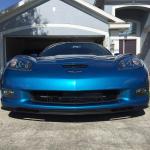
So I need to get front rotors and pads on my 2010 GS. I have been looking, but I'm not really sure what to get or where to get it. Does anyone have suggestions on these and where I can get the best deal? Thanks!

Le Mans Master


Joined: Dec 2003
Posts: 5,047
Likes: 252
From: San Diego
Look on Partsgeek at the Stoptech rotors. I prefer their slotted rotors with some hawk pads.

Supporting Vendor
Joined: Oct 2002
Posts: 50,281
Likes: 518
From: Cleveland OH
St. Jude Donor '11,'13
OEM rotor with Carbotech 1521 pad.
Carbotech™ Bobcat 1521™ The Carbotech Bobcat 1521™ is our high performance street compound that is our most successful compound. The Bobcat compound is known for its awesome release and modulation, along with unmatched rotor friendliness. Like our AX™ & XP™ line of compounds, Bobcat 1521™ is a Ceramic based friction material offering minimal rotor damage and non-corrosive dust. Bobcat 1521™ offers outstanding performance, even when cold, low dusting and low noise with an excellent initial bite. This compound’s virtually perfect linear torque production provides incredible braking force without ABS intervention. Bobcat 1521™ operating range starts out at ambient and goes up to 900°F. Bobcat 1521™ is suitable for ALL street cars, perfect for your tow vehicle, police cruiser. The Bobcat 1521™ compound has been found to last two-three times longer than OE pads you can purchase at a dealership or national retailer. That’s one of the beauties of Carbotech Ceramic brake compounds. Bobcat 1521™ is NOT recommended for any track use.
Carbotech™ Bobcat 1521™ The Carbotech Bobcat 1521™ is our high performance street compound that is our most successful compound. The Bobcat compound is known for its awesome release and modulation, along with unmatched rotor friendliness. Like our AX™ & XP™ line of compounds, Bobcat 1521™ is a Ceramic based friction material offering minimal rotor damage and non-corrosive dust. Bobcat 1521™ offers outstanding performance, even when cold, low dusting and low noise with an excellent initial bite. This compound’s virtually perfect linear torque production provides incredible braking force without ABS intervention. Bobcat 1521™ operating range starts out at ambient and goes up to 900°F. Bobcat 1521™ is suitable for ALL street cars, perfect for your tow vehicle, police cruiser. The Bobcat 1521™ compound has been found to last two-three times longer than OE pads you can purchase at a dealership or national retailer. That’s one of the beauties of Carbotech Ceramic brake compounds. Bobcat 1521™ is NOT recommended for any track use.

Instructor

Joined: Mar 2009
Posts: 186
Likes: 0
From: Haltom city Texas
Pads and rotors
I got the headlight mod and a courtesy inspection. They said my front pads are in the yellow and they are squeaking when hot. 1'st vette and with my other cars, they always say your rotors need to be turned or replaced. The pads are consumable where the rotors are built to last. Is turning really necessary? I saw the post for break pads. Normal Vette driving is like track driving on other cars. Are both recommendations good for occasional hard street driving?
Tx
Tx

Melting Slicks


Joined: Jul 2005
Posts: 2,649
Likes: 863
What type of brake pads you choose depends on how you use or intend to use the car. If you use the car on the street, there is absolutely nothing wrong with buying a set of OE type brake pads, and just calling it a day.
If you do track days and really pound the brakes - then a aftermarket brake pad that is designed to live under that kind of use is a far better choice.
The engineers that develop brake pads have to trade off a lot of different (and sometimes competing) concerns. There are probably more compromises made in brake pad formulation than in tire design. Things like brake noise, low temp performance and dusting are utterly unimportant to the people who race, whereas things like very high temp performance the initial "bite" characteristics and keeping a linear coefficient of friction across a wide temp range are not important for "daily driver" applications.
You say you have a GS - the OEM brakes the car comes with are truly amazing - there is very very little out there on the street that can out stop a Z06 C6. I've felt what a bone stock Z06 Brake system can do at the track - and unless you are a pretty accomplished driver - I don't think you're going to fade that system very easily. So - Did the old brake pads perform acceptably as far as you were concerned ??? If so - you probably have your answer...
If you want something a bit more aggressive - there are lots and lots of choices out there - Carbo-Tech, EBC, Hawk, Performance Friction and many many others, all make pads with that will deal with hard use better than the OEM formulation will, albeit with some compromises in other areas.
If the rotors are in good shape - meaning not worn and no problems with run-out (read that a pedal pulsation), AND if you're not changing the brake pad compound - there is no NEED to turn the rotors. If you are changing pad compound - then a light sanding and a fair amount of brake clean is probably enough to allow the new pads to bed in properly. If you have pedal pulsation - you can try turning the rotors - but the odds are the problem will return - new rotors are the normal "solution" to pedal pulsation problems. Significant wear on the rotors or cracking means you get to buy new rotors !!!
One last word of advice - if you think you can re-use the old rotors - make sure to get the pads changed before they wear out completely, and you get to metal on metal - if that happens then you definitely need to get new rotors, and while the rotors themselves aren't that brutally expensive, it does take about twice as long to do brake pads and rotors as it does to change brake pads alone......
If you do track days and really pound the brakes - then a aftermarket brake pad that is designed to live under that kind of use is a far better choice.
The engineers that develop brake pads have to trade off a lot of different (and sometimes competing) concerns. There are probably more compromises made in brake pad formulation than in tire design. Things like brake noise, low temp performance and dusting are utterly unimportant to the people who race, whereas things like very high temp performance the initial "bite" characteristics and keeping a linear coefficient of friction across a wide temp range are not important for "daily driver" applications.
You say you have a GS - the OEM brakes the car comes with are truly amazing - there is very very little out there on the street that can out stop a Z06 C6. I've felt what a bone stock Z06 Brake system can do at the track - and unless you are a pretty accomplished driver - I don't think you're going to fade that system very easily. So - Did the old brake pads perform acceptably as far as you were concerned ??? If so - you probably have your answer...
If you want something a bit more aggressive - there are lots and lots of choices out there - Carbo-Tech, EBC, Hawk, Performance Friction and many many others, all make pads with that will deal with hard use better than the OEM formulation will, albeit with some compromises in other areas.
If the rotors are in good shape - meaning not worn and no problems with run-out (read that a pedal pulsation), AND if you're not changing the brake pad compound - there is no NEED to turn the rotors. If you are changing pad compound - then a light sanding and a fair amount of brake clean is probably enough to allow the new pads to bed in properly. If you have pedal pulsation - you can try turning the rotors - but the odds are the problem will return - new rotors are the normal "solution" to pedal pulsation problems. Significant wear on the rotors or cracking means you get to buy new rotors !!!
One last word of advice - if you think you can re-use the old rotors - make sure to get the pads changed before they wear out completely, and you get to metal on metal - if that happens then you definitely need to get new rotors, and while the rotors themselves aren't that brutally expensive, it does take about twice as long to do brake pads and rotors as it does to change brake pads alone......
Instructor
Joined: Mar 2009
Posts: 186
Likes: 0
From: Haltom city Texas
What type of brake pads you choose depends on how you use or intend to use the car. If you use the car on the street, there is absolutely nothing wrong with buying a set of OE type brake pads, and just calling it a day.
If you do track days and really pound the brakes - then a aftermarket brake pad that is designed to live under that kind of use is a far better choice.
The engineers that develop brake pads have to trade off a lot of different (and sometimes competing) concerns. There are probably more compromises made in brake pad formulation than in tire design. Things like brake noise, low temp performance and dusting are utterly unimportant to the people who race, whereas things like very high temp performance the initial "bite" characteristics and keeping a linear coefficient of friction across a wide temp range are not important for "daily driver" applications.
You say you have a GS - the OEM brakes the car comes with are truly amazing - there is very very little out there on the street that can out stop a Z06 C6. I've felt what a bone stock Z06 Brake system can do at the track - and unless you are a pretty accomplished driver - I don't think you're going to fade that system very easily. So - Did the old brake pads perform acceptably as far as you were concerned ??? If so - you probably have your answer...
If you want something a bit more aggressive - there are lots and lots of choices out there - Carbo-Tech, EBC, Hawk, Performance Friction and many many others, all make pads with that will deal with hard use better than the OEM formulation will, albeit with some compromises in other areas.
If the rotors are in good shape - meaning not worn and no problems with run-out (read that a pedal pulsation), AND if you're not changing the brake pad compound - there is no NEED to turn the rotors. If you are changing pad compound - then a light sanding and a fair amount of brake clean is probably enough to allow the new pads to bed in properly. If you have pedal pulsation - you can try turning the rotors - but the odds are the problem will return - new rotors are the normal "solution" to pedal pulsation problems. Significant wear on the rotors or cracking means you get to buy new rotors !!!
One last word of advice - if you think you can re-use the old rotors - make sure to get the pads changed before they wear out completely, and you get to metal on metal - if that happens then you definitely need to get new rotors, and while the rotors themselves aren't that brutally expensive, it does take about twice as long to do brake pads and rotors as it does to change brake pads alone......
If you do track days and really pound the brakes - then a aftermarket brake pad that is designed to live under that kind of use is a far better choice.
The engineers that develop brake pads have to trade off a lot of different (and sometimes competing) concerns. There are probably more compromises made in brake pad formulation than in tire design. Things like brake noise, low temp performance and dusting are utterly unimportant to the people who race, whereas things like very high temp performance the initial "bite" characteristics and keeping a linear coefficient of friction across a wide temp range are not important for "daily driver" applications.
You say you have a GS - the OEM brakes the car comes with are truly amazing - there is very very little out there on the street that can out stop a Z06 C6. I've felt what a bone stock Z06 Brake system can do at the track - and unless you are a pretty accomplished driver - I don't think you're going to fade that system very easily. So - Did the old brake pads perform acceptably as far as you were concerned ??? If so - you probably have your answer...
If you want something a bit more aggressive - there are lots and lots of choices out there - Carbo-Tech, EBC, Hawk, Performance Friction and many many others, all make pads with that will deal with hard use better than the OEM formulation will, albeit with some compromises in other areas.
If the rotors are in good shape - meaning not worn and no problems with run-out (read that a pedal pulsation), AND if you're not changing the brake pad compound - there is no NEED to turn the rotors. If you are changing pad compound - then a light sanding and a fair amount of brake clean is probably enough to allow the new pads to bed in properly. If you have pedal pulsation - you can try turning the rotors - but the odds are the problem will return - new rotors are the normal "solution" to pedal pulsation problems. Significant wear on the rotors or cracking means you get to buy new rotors !!!
One last word of advice - if you think you can re-use the old rotors - make sure to get the pads changed before they wear out completely, and you get to metal on metal - if that happens then you definitely need to get new rotors, and while the rotors themselves aren't that brutally expensive, it does take about twice as long to do brake pads and rotors as it does to change brake pads alone......
Corvette Stories
The Best of Corvette for Corvette Enthusiasts

Top 10 Most Expensive Corvettes Ever Sold on Bring A Trailer
Brett Foote
10 Things Every Corvette Owner Needs (2026 Edition)
Michael S. Palmer
8 Most "Only Corvette Owners Understand" Quirks and Problems
Pouria Savadkouei
10 Reasons the C6 Z06 is Still A Performance Benchmark After 20 Years
Joe Kucinski
How Much Horsepower Every Corvette Engine "LOST" in 1972
Joe Kucinski
Top 10 DOs and DON'Ts for Protecting Your Convertible Top!
Michael S. Palmer
Top 10 Most Explosive Corvettes Ever Made: Power-to-Weight Ratio Ranked!
Joe Kucinski
150 hp to 1,250 hp: Every Corvette Generation Compared by the Specs That Matter
Joe Kucinski