When you click on links to various merchants on this site and make a purchase, this can result in this site earning a commission. Affiliate programs and affiliations include, but are not limited to, the eBay Partner Network.
hey guys i was just curious if anyone out there has dynod your car with and without a vararam and if you are tunes as well or not. i currently am running a vararam and a canned diablo tune. i will be getting a custom tune done by diablew shortly and just wanted to see how it stacks stock/ with canned tune. i deffinatly feel/ hear a difference but i havent really sen any solid dynos for it. East coast superchargers up my street claims 15-25 rwhp. does that sound about right?
No matter what anyone claims--any CAI is only worth about 10-18 RWHP
Varraram claims that their CAI will actually PACK some air into the intake--This is an area of huge debate whether true ---My experience is that yes the varraram may pack some additional air in but only at high speeds--like over 100 MPH and only like 2-3%
Most often however the Varraram will require tuning---Not from adding so much air but from the re-location of the MAF sensor---Usually you will get a lean code--A lean code pops up when the % goes over 25% lean----That would be a huge increase if in fact true- But it's not--It is simply from a MAF re-location----In order to get the fuel trims corrected does require tuning with most any CAI but it's normally about a 10-13% airflow increase----
The P/T fueling will eventually learn out on it's own after about 50-75 miles of normal driving---But until then the added fuel from the leaness will also be added to your WOT fuel as well as a lean safety---So what you end up with is an engine lean at P/T and rich at WOT-----Tuning eliminates this learning curve----especially if erroneously the varraram shows a 25% leaness----( which will add 25% to your WOT fuel making it pig rich and lazy)
hmmm very insightful thank you man. perhaps you can answer another question for me. i did drive it 100miles to break it in as it directed and tuned it with the canned tune (after) that break in period. should i have immediatly data logged it and got the custom tune? i noticed an improvement and know a custom tune will be just that much more of an improvement over the canned but at the time i did not have the extra bills. lastly, was the maf relocation a drastic relocation? heres a picture does it look correct?
Understand that the CAI is not adding more power, but keeping cold air entering the intake, so the motor does not pull timing to lose HP instead. The stock air intake system already out flows what the motor needs.
Hence when the intake starts to pull in hot air from the engine bay being head soaked, timing is pulled and you lose HP instead.
So the HP numbers claimed for the CAI, is the difference from a standard OEM that may be pulling in much hotter air instead. Hence since during a dyno run, the hood is left open and a fan is blowing cool air into the engine bay, both a CAI and OEM intake will make the same power. It when the engine is closed, your sitting at a stop light too long with no new air into the engine bay to cool it back down, that you will see the HP saving instead from a CAI system.
As for some Cai's, then produce a lot disturbance through the MAF, instead of the smooth air flow that the OEM creates past it, so often tuning is required to correct for the less then smooth flow across the MAF itself.
Bluntly, all you need to do is prop the OEM shroud slightly open, and this will get enough cold air into the OEM filter to solve the heat problem. Better yet, since the oem system produces smooth air through the Maf, no retune is required.
Vararam is a real deal when i first got my car i ported the throttle body the intake manifold and sense the intake manifold was out I also match ported the heads intake runners the only bolt on was the Vararam and switched over to E85 then tuned it, resolts 403 Whp and 397 Tq.
I have the Vararam in a 2007 LS2. Without a tune it added, about 2 mph in the 1/4 mile. That said, I am probably going to a different system, because it blocks the radiator quite a bit. For 1/4 mile stuff it shouldn't be an issue. Don't know if it actually blocks the radiator enough to make a difference on a road course, just speculating.
I have the Vararam in a 2007 LS2. Without a tune it added, about 2 mph in the 1/4 mile. That said, I am probably going to a different system, because it blocks the radiator quite a bit. For 1/4 mile stuff it shouldn't be an issue. Don't know if it actually blocks the radiator enough to make a difference on a road course, just speculating.
I haven't heard of the VR causing any heat issues. I don't think it blocks that much airflow. I have been on the road course with my VR equipped C6 and didn't have any problems. I certainly wouldn't give it up without seeing if it causes you issues first. Especially if HPDEs will only be an occasional hobby for you.
You'd be hard pressed to prove any static hp increase on a dyno. A dyno cannot take advantage of the main point of a CAI. That being pulling in cooler air from outside of the engine compartment. I'm dubious about any so-called "ram-air" effect.
So while a CAI will likely add HP (or more accurately, prevent loss due to heat soak), don't expect significant dyno increases. Factor in the innate efficiency of the stock LS3 intake and a CAI truly only helps at speed.
I believe some of the things mentioned but not all----
The factory air box system is hugely restrictive with a paper filter--Simply going to a cotton filter or the new synthetic fiber filters that have "0" restriction will in fact allow more intake airflow--equaling more HP--
PLUS the factory air box makes the air make a hard 90* angle turn with the flat filter
Aftermarket CAI's tend to have either a cone style filter or a multi sided open filter element----This eliminates the stock 90* angle turn ( a huge airflow path restriction)
Finally heat soak comes from erroneous readings from your IAT sensor----Even an aftermarket CAI will heat soak the IAT just as the stock airbox will----I have seen almost no difference in IAT temps even with the best of CAI's
The only way to eliminate the false IAT temps is with a full tune and not a handheld programmer--HP or EFILIVE has direct access to the entire IAT timing deduct table so you can custom tune out the false readings (maybe even Diablo) ask them
It is not uncommon for any car to have the IAT temps spike to 130* especially in traffic or city driving---Having an IAT temp of 130* will remove as much as 7* of timing from an LS engine--even if the outside temperature is only 60*---- So saying a CAI will reduce IAT temps in my opinion is NOT a valid reason to buy one---You must have it tuned to eliminate the false readings----The benefits of a CAI is unrestricted airflow
As far as your new MAF location I can't say because I don't know exactly where the stock location was----You can find out yourself with most any scanner that shows real time data---By disconnecting the battery so all your fuel trims will re-set---Then with a scanner LOOK at your "LTFT's" Normally a relocated MAF will show a huge POSITIVE fuel trim--like over 15%--A CAI will also show even more of a positive LTFT as more air is being allowed into the engine----In order to get a LEAN code which is common with the Varraram means that the total positive trims have gone beyond 25%--that is huge and must be corrected with tuning
I believe some of the things mentioned but not all----
The factory air box system is hugely restrictive with a paper filter--Simply going to a cotton filter or the new synthetic fiber filters that have "0" restriction will in fact allow more intake airflow--equaling more HP--
PLUS the factory air box makes the air make a hard 90* angle turn with the flat filter
Aftermarket CAI's tend to have either a cone style filter or a multi sided open filter element----This eliminates the stock 90* angle turn ( a huge airflow path restriction)
Finally heat soak comes from erroneous readings from your IAT sensor----Even an aftermarket CAI will heat soak the IAT just as the stock airbox will----I have seen almost no difference in IAT temps even with the best of CAI's
The only way to eliminate the false IAT temps is with a full tune and not a handheld programmer--HP or EFILIVE has direct access to the entire IAT timing deduct table so you can custom tune out the false readings (maybe even Diablo) ask them
It is not uncommon for any car to have the IAT temps spike to 130* especially in traffic or city driving---Having an IAT temp of 130* will remove as much as 7* of timing from an LS engine--even if the outside temperature is only 60*---- So saying a CAI will reduce IAT temps in my opinion is NOT a valid reason to buy one---You must have it tuned to eliminate the false readings----The benefits of a CAI is unrestricted airflow
As far as your new MAF location I can't say because I don't know exactly where the stock location was----You can find out yourself with most any scanner that shows real time data---By disconnecting the battery so all your fuel trims will re-set---Then with a scanner LOOK at your "LTFT's" Normally a relocated MAF will show a huge POSITIVE fuel trim--like over 15%--A CAI will also show even more of a positive LTFT as more air is being allowed into the engine----In order to get a LEAN code which is common with the Varraram means that the total positive trims have gone beyond 25%--that is huge and must be corrected with tuning
hmm well i have drivin it for about a thousand miles and kept a heavy eye on my engine, constantly checking for codes, engine knock, and ofcourse engine leanness and honestly even with the canned tune have seen no problems... thusfar but as stated earlier i will be getting a tune from diablew shortly once ofcourse the holidays are over
I don't have any actual dyno results, but I do have track passes that back up Varraram and their CAI for the C6.
bone stock, I went 12.463 @ 115.65
that weekend I installed the CAI and went to the track 7 days after the first pass.
CAI only, 12.232 @ 117.54
I didn't have any tuning issues or any problems with the MAF sensor. As a matter of fact, I didn't even tune it at all until I did some other things to it.
I believe some of the things mentioned but not all----
The factory air box system is hugely restrictive with a paper filter--Simply going to a cotton filter or the new synthetic fiber filters that have "0" restriction will in fact allow more intake airflow--equaling more HP--
PLUS the factory air box makes the air make a hard 90* angle turn with the flat filter
Aftermarket CAI's tend to have either a cone style filter or a multi sided open filter element----This eliminates the stock 90* angle turn ( a huge airflow path restriction)
Finally heat soak comes from erroneous readings from your IAT sensor----Even an aftermarket CAI will heat soak the IAT just as the stock airbox will----I have seen almost no difference in IAT temps even with the best of CAI's
The only way to eliminate the false IAT temps is with a full tune and not a handheld programmer--HP or EFILIVE has direct access to the entire IAT timing deduct table so you can custom tune out the false readings (maybe even Diablo) ask them
It is not uncommon for any car to have the IAT temps spike to 130* especially in traffic or city driving---Having an IAT temp of 130* will remove as much as 7* of timing from an LS engine--even if the outside temperature is only 60*---- So saying a CAI will reduce IAT temps in my opinion is NOT a valid reason to buy one---You must have it tuned to eliminate the false readings----The benefits of a CAI is unrestricted airflow
As far as your new MAF location I can't say because I don't know exactly where the stock location was----You can find out yourself with most any scanner that shows real time data---By disconnecting the battery so all your fuel trims will re-set---Then with a scanner LOOK at your "LTFT's" Normally a relocated MAF will show a huge POSITIVE fuel trim--like over 15%--A CAI will also show even more of a positive LTFT as more air is being allowed into the engine----In order to get a LEAN code which is common with the Varraram means that the total positive trims have gone beyond 25%--that is huge and must be corrected with tuning
I question your use of the term "CAI" when referring to aftermarket systems. Some, like Corsa claim CAI and some like KN who don't claim it, but are the same as those who do. The "C" stands for COLD, not just slightly cooler than stock. In order to be considered COLD, the air must come from a source that only allows ambient air at the inlet. That severely limits the number of aftermarket units to be discussed.
Filter types that have higher airflow must either have more surface area or less restriction. The only way to have less restriction in the same number of square inches, is to have bigger spaces between filtering media, which translates to less actual filtration. i.e. more air is also more dirt.
The shape of the airbox after the filter is far more important to increase the velocity about 4 fold than the filter media. Of course, any restriction that doesn't contribute to the velocity or control turbulence, will also reduce the total airflow.
I haven't heard of the VR causing any heat issues. I don't think it blocks that much airflow. I have been on the road course with my VR equipped C6 and didn't have any problems. I certainly wouldn't give it up without seeing if it causes you issues first. Especially if HPDEs will only be an occasional hobby for you.
Well, it blocks about a 6" wide swath up the majority of the radiator. Obviously air will flow around the parts that aren't sucking in. Anyway, with that said, I don't have any coolant temperature issues. It actually runs between 210 and 220 on the track with 75 degree ambient. I haven't tried warmer ambient temperature yet, but know I will in the future.
I plan some mods (including HP) to make it more track ready. I just feel opening up as much air flow to the radiator as possible, will be better in the future, so I am planning accordingly.
I never had cooling issues on the track or during daily driving highway, traffic, back roads, etc., either. What I did do and completely forgot about until now but have no empirical data to prove or disprove its effectiveness, was drill several holes in the flat paneling behind the grill directly to the right and left of the scoop. (to the far left of the pic shown)This gives another direct path of air to the radiator and into the engine bay. Like is said though, I have no idea if this actually accomplished anything other than having silly holes in my car and possibly allowing more dirt into the engine bay. They aren't noticeable unless you bend down to look into the grill though.
I'm seeing slightly higher coolant temps after my install but only in stop and go traffic. Not to the point where fans are coming on though. Today it was in the high 60's and right after I did a couple of 1st and 2nd wot runs I noticed slightly higher temps than I had before I did the install. It got up around 220* immediately after my runs but backed down to 208* when driving normally in stop and go. Steady crusing it's at 198* and 192* at 70mph. I don't see any worrying effects here, as long as the air is moving it's all good. I might adjust the fans during the summer months if it gets much hotter. Oil temp has been steady at 215* also, no worries.
I'm seeing slightly higher coolant temps after my install but only in stop and go traffic. Not to the point where fans are coming on though. Today it was in the high 60's and right after I did a couple of 1st and 2nd wot runs I noticed slightly higher temps than I had before I did the install. It got up around 220* immediately after my runs but backed down to 208* when driving normally in stop and go. Steady crusing it's at 198* and 192* at 70mph. I don't see any worrying effects here, as long as the air is moving it's all good. I might adjust the fans during the summer months if it gets much hotter. Oil temp has been steady at 215* also, no worries.
hmm interesting guys, but my car actually runs substantilly colder then that. i am still running the stock thermostat and i have noticed my cars temperature has been about 10 degrees cooler after the install with my driving style. is say i went from about 195-180ish after the intake.
Last edited by TheMTazzi; Dec 6, 2015 at 09:32 PM.
hmm interesting guys, but my car actually runs substantilly colder then that. i am still running the stock thermostat and i have noticed my cars temperature has been about 10 degrees cooler after the install with my driving style. is say i went from about 195-180ish after the intake.
Sounds good! I didn't do the best job on the shroud when I cut it. I might need to seal it up a little more with some black duct tape. I know it's sacrilege to use duct tape on a vette but function over form. I already did a little bit but might be worth going over again. I'll start keeping a log of my normal operating temps and see what happens.





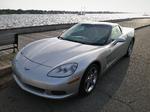

 c6 vararam dyno