



Wheel Bearing replacement

Thread Starter
Le Mans Master


Joined: Jun 2011
Posts: 8,049
Likes: 330
From: Charlotte NC
St. Jude Donor '14-'15
 Wheel Bearing replacement
I have a bad wheel bearing in the rear drivers side. I am going to buy another hub to replace it.
I want to know how difficult / possible to replace the bearings in my old Hub. I have a pretty good maintenance shop at work. I've pressed in many bearings in my time. Is there a DIY or perhaps a Video out there that someone could direct me to?
I want to know how difficult / possible to replace the bearings in my old Hub. I have a pretty good maintenance shop at work. I've pressed in many bearings in my time. Is there a DIY or perhaps a Video out there that someone could direct me to?

Race Director


Joined: May 2004
Posts: 16,667
Likes: 1,209
From: Raleigh, NC
St. Jude Donor '15
Don't even bother trying. You can get whole hubs for $100 with the bearings already installed, so there's no reason to press anything. Just unbolt the old and bolt in the new assembly and you're done.
I bought some cheapo ones on Amazon over a year and 40K miles ago and they're still fine. Gmb brand I believe.
I bought some cheapo ones on Amazon over a year and 40K miles ago and they're still fine. Gmb brand I believe.
Last edited by schpenxel; Dec 16, 2015 at 03:58 PM.
Thread Starter
Le Mans Master
Joined: Jun 2011
Posts: 8,049
Likes: 330
From: Charlotte NC
St. Jude Donor '14-'15
Don't even bother trying. You can get whole hubs for $100 with the bearings already installed, so there's no reason to press anything. Just unbolt the old and bolt in the new assembly and you're done.
I bought some cheapo ones on Amazon over a year and 40K miles ago and they're still fine. Gmb brand I believe.
I bought some cheapo ones on Amazon over a year and 40K miles ago and they're still fine. Gmb brand I believe.
People talk a lot of junk about cheap ebay knock offs but I have two on my Z28 (made in china) for well over 100,000 miles. What people don't realize is that a lot of parts are made in china these days and some on the things that are purchased at local parts stores are the same parts you see on places like ebay.
Thread Starter
Le Mans Master
Joined: Jun 2011
Posts: 8,049
Likes: 330
From: Charlotte NC
St. Jude Donor '14-'15
Race Director
Joined: Aug 2005
Posts: 13,592
Likes: 187
From: Hudson WI
NCM Sinkhole Donor
Thread Starter
Le Mans Master
Joined: Jun 2011
Posts: 8,049
Likes: 330
From: Charlotte NC
St. Jude Donor '14-'15
Corvette Stories
The Best of Corvette for Corvette Enthusiasts

5 Best & 5 Worst Corvette Daily Drivers
Joe Kucinski
The Headlights of Every Corvette Generation Explained
Joe Kucinski
5 Best & 5 Most Overrated Corvette Track Packages of All Time!
Joe Kucinski
Every 2027 Corvette Engine Explained
Joe Kucinski
Designer Imagines A Corvette That Looks More Like a Corvette Than the Corvette
Verdad Gallardo
10 Ugly Corvettes That We Still Kinda Love
Joe Kucinski
Top 10 Most Expensive Corvettes Ever Sold on Bring A Trailer
Brett Foote
10 Things Every Corvette Owner Needs (2026 Edition)
Michael S. Palmer
8 Most "Only Corvette Owners Understand" Quirks and Problems
Pouria Savadkouei
Thread Starter
Le Mans Master
Joined: Jun 2011
Posts: 8,049
Likes: 330
From: Charlotte NC
St. Jude Donor '14-'15
 I'll order them right now.
Race Director
Joined: Aug 2005
Posts: 13,592
Likes: 187
From: Hudson WI
NCM Sinkhole Donor
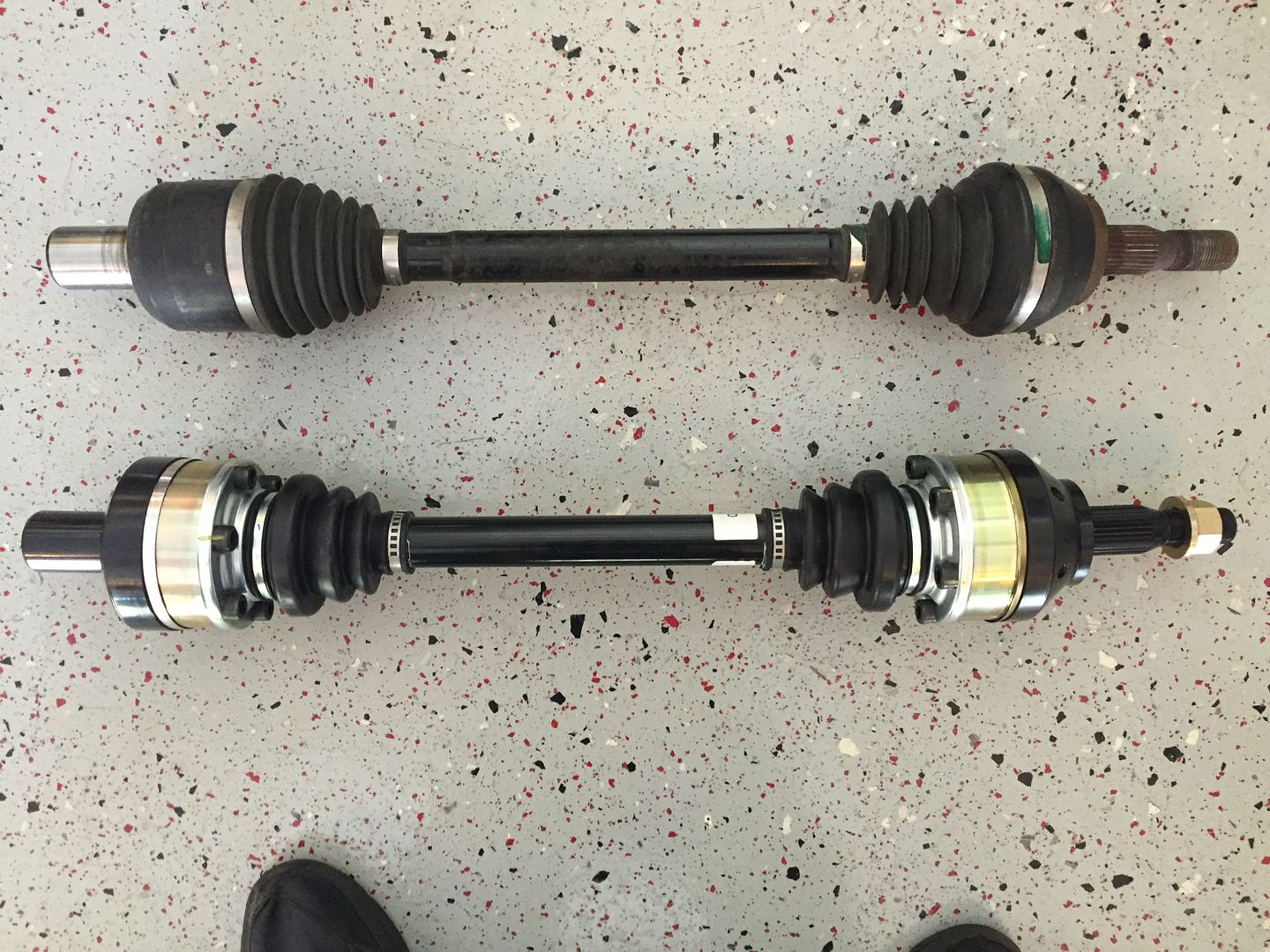
So, I had this brain fart that I needed bigger axles. They came with a flange nut that is not a GM nut and it has worked fine. Not sure if it matters that they are aftermarket axles or not. If you look at the nut in the picture it has about twice as much thread contact area as the stock nut.

Last edited by timd38; Dec 16, 2015 at 08:33 PM.

Race Director

Joined: Sep 2007
Posts: 16,557
Likes: 2,108
From: Peoria/Phoenix AZ
C6 of Year Finalist (performance mods) 2019
When I changed both my rears a year ago, I torqued the new GM nuts to spec and then used the old nut to double nut it in place. I also sprayed the nut and remaining axle threads with a little white paint for driver side and red for passenger side. I do the front hubs the same way. I spray a small amount on the back side of the wheels, so I can quickly ID which wheel goes where. It's especially helpful when swapping tires at the track with very little light available.
After spraying the axle nut and thread, I took a black felt marker and marked a line to do a visual verification the nut is still tight.
After spraying the axle nut and thread, I took a black felt marker and marked a line to do a visual verification the nut is still tight.
Race Director
Joined: Aug 2005
Posts: 13,592
Likes: 187
From: Hudson WI
NCM Sinkhole Donor
When I changed both my rears a year ago, I torqued the new GM nuts to spec and then used the old nut to double nut it in place. I also sprayed the nut and remaining axle threads with a little white paint for driver side and red for passenger side. I do the front hubs the same way. I spray a small amount on the back side of the wheels, so I can quickly ID which wheel goes where. It's especially helpful when swapping tires at the track with very little light available.
After spraying the axle nut and thread, I took a black felt marker and marked a line to do a visual verification the nut is still tight.
After spraying the axle nut and thread, I took a black felt marker and marked a line to do a visual verification the nut is still tight.
Race Director
Joined: May 2004
Posts: 16,667
Likes: 1,209
From: Raleigh, NC
St. Jude Donor '15
I torqued mine to 120 or 130 originally and got an axle "popping" noise (not uncommon, GM has changed the torque spec a few times to try to cure this)
Re-torqued to 150 and that got rid of it so far..
Re-torqued to 150 and that got rid of it so far..

Le Mans Master
Joined: Feb 2014
Posts: 5,464
Likes: 1,138
From: Chino CA
Hard to find the right torque. GM changed it and I have read anywhere between 150# and 160#. I used 154#. Always use a new nut and red Loctite. Let the Loctite cure for 24 hours before moving the car per the GM TSB.