

Intake insulation under manifold

Thread Starter
Intermediate


Joined: Mar 2009
Posts: 40
Likes: 0
From: Holbrook New York
 Intake insulation under manifold
The new corvette mag, shows new produce that goes under intake and gives about 20 hp from colder air charge. My question has anyone tried this out.

Pro


Joined: Jul 2013
Posts: 509
Likes: 62
However, the IAT sensor (in the LS3 at least) is located in the MAF sensor, which is quite a ways upstream of the manifold. One could probably install a heat barrier to the underside of the main intake tube in order to reduce heat transferred to the air before the MAF, resulting in lower IAT readings and thus a smaller amount of timing pulled by the ECM.
I have considered doing this but haven't had the time/desire to actually pull the car apart yet. It is a sound idea from an engineering standpoint, but any improvement in power output is likely difficult to quantify due to the number of variables at play.
I personally think that 20HP is a bit optimistic, however.
Team Owner


Joined: Mar 2007
Posts: 35,146
Likes: 2,098
From: Right Corner Pocket of Illinois
No-IL Events Coordinator
2026 Corvette of the Year Finalist - Unmodified
2025 C6 of the Year Winner - Unmodified
2020 C6 of the Year Finalist - Unmodified
2020 Corvette of the Year Finalist (appearance mods)
2019 C6 of Year Winner (appearance mods)
2018 C6 of Year Finalist
St. Jude Donor '12 thru '26
This one?
"Stick on horsepower! I-M Shield™ can increase horsepower (up to 12 RWHP!). It works by shielding the intake manifold and reducing the heat radiating up from the top motor. This lowers intake manifold temperatures creating a more dense fuel and air mixture, creating more power. Think of it as an intercooler for your intake, same physics and chemistry just a different way to get there. Heavy duty adhesive will stick to any clean semi-smooth surface. Simply degrease, then clean surface, then wipe with pre-paint cleaner or isopropyl alcohol, let dry then firmly press the I-M Shield™ onto the underside of the intake manifold. Use provided edging tape to finish the install. I-M Shield™ comes pre-cut but may be trimmed with heavy scissors or utility knife! Get your I-M Shield and add some Instant-Muscle and blow the competition away."
"Stick on horsepower! I-M Shield™ can increase horsepower (up to 12 RWHP!). It works by shielding the intake manifold and reducing the heat radiating up from the top motor. This lowers intake manifold temperatures creating a more dense fuel and air mixture, creating more power. Think of it as an intercooler for your intake, same physics and chemistry just a different way to get there. Heavy duty adhesive will stick to any clean semi-smooth surface. Simply degrease, then clean surface, then wipe with pre-paint cleaner or isopropyl alcohol, let dry then firmly press the I-M Shield™ onto the underside of the intake manifold. Use provided edging tape to finish the install. I-M Shield™ comes pre-cut but may be trimmed with heavy scissors or utility knife! Get your I-M Shield and add some Instant-Muscle and blow the competition away."
Pro
Joined: Jul 2013
Posts: 509
Likes: 62
This one?
"Stick on horsepower! I-M Shield™ can increase horsepower (up to 12 RWHP!). It works by shielding the intake manifold and reducing the heat radiating up from the top motor. This lowers intake manifold temperatures creating a more dense fuel and air mixture, creating more power. Think of it as an intercooler for your intake, same physics and chemistry just a different way to get there. Heavy duty adhesive will stick to any clean semi-smooth surface. Simply degrease, then clean surface, then wipe with pre-paint cleaner or isopropyl alcohol, let dry then firmly press the I-M Shield™ onto the underside of the intake manifold. Use provided edging tape to finish the install. I-M Shield™ comes pre-cut but may be trimmed with heavy scissors or utility knife! Get your I-M Shield and add some Instant-Muscle and blow the competition away."
"Stick on horsepower! I-M Shield™ can increase horsepower (up to 12 RWHP!). It works by shielding the intake manifold and reducing the heat radiating up from the top motor. This lowers intake manifold temperatures creating a more dense fuel and air mixture, creating more power. Think of it as an intercooler for your intake, same physics and chemistry just a different way to get there. Heavy duty adhesive will stick to any clean semi-smooth surface. Simply degrease, then clean surface, then wipe with pre-paint cleaner or isopropyl alcohol, let dry then firmly press the I-M Shield™ onto the underside of the intake manifold. Use provided edging tape to finish the install. I-M Shield™ comes pre-cut but may be trimmed with heavy scissors or utility knife! Get your I-M Shield and add some Instant-Muscle and blow the competition away."
ha. that's actually comical. Basic thermodynamics says that if you want to make something cooler, you have to put the heat somewhere else. An intercooler works by moving the heat from the "charge air" (that which is being forced into the engine) to the air flowing through the intercooler itself.
What this product is is nothing more than a layer of insulation. Now, I'm not saying that's not a potential spot for improvement - just that you won't be "cooling" the charge air at all - you're just preventing it from getting as warm as it would've gotten without the insulation.
To use an analogy, this product is like the insulation in the ceiling and walls of your house. No amount of insulation will ever make your house "cool" - that is, no matter how much insulation you install, your house's temperature will not decrease. It may not increase to the same level, but it will not cool down on its own. To do that you need an air conditioning system, which is simply a device that moves the heat from the air in your home to the air outside of your home.
Again, I'm not saying it's impossible for the product to work - you just won't "gain" any horsepower because the charge air isn't being cooled down from it's previous temperature. You may, depending on the circumstances, "lose less" horsepower because your car may not pull as much timing on a hot day, but beyond that you won't see any gains.

Race Director


Joined: Dec 2013
Posts: 12,502
Likes: 3,629
The intake manifold Heat shield is snake oil at it finest (hence a sucker born every min). Hence the intake manifold already has stand offs from the valley cover to solve the air heating up with what little time it does spend in the the intake manifold instead.
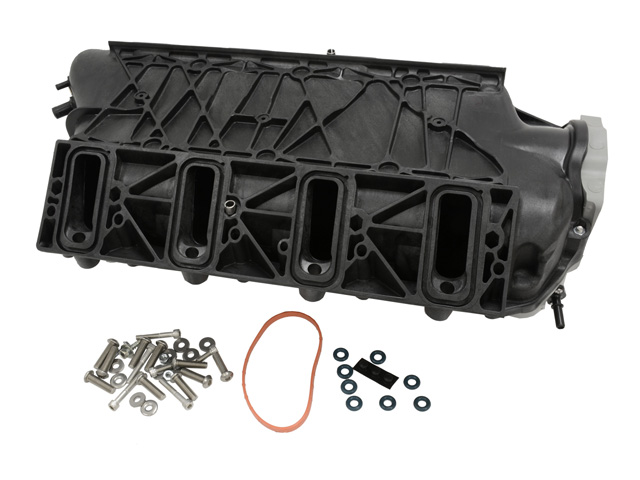
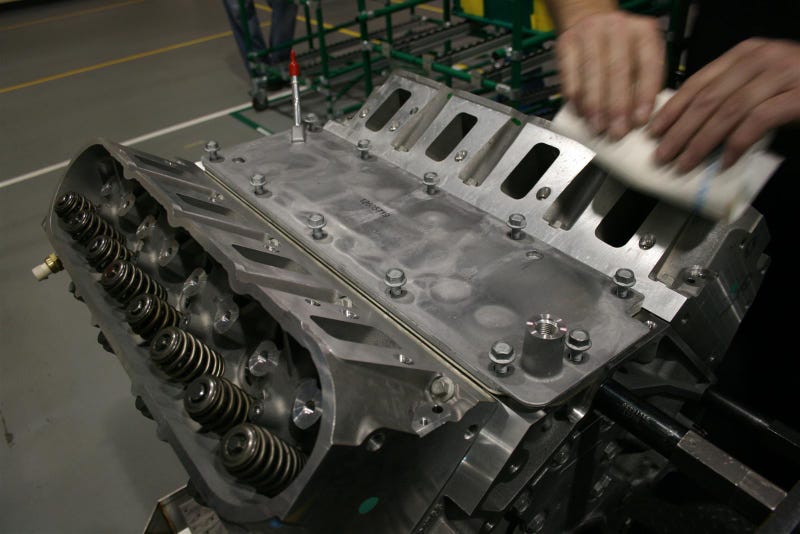
As for understanding hot intake air heat HP loss, due to the motor pulling timing the hotter the air that the motor is pulling in, The below chart gives you the idea. So when the air being pulled into the intake is even 86*, the motor will pull timing, and these leads to HP losses (if the motor was not pulling timing instead).

As for understanding hot intake air heat HP loss, due to the motor pulling timing the hotter the air that the motor is pulling in, The below chart gives you the idea. So when the air being pulled into the intake is even 86*, the motor will pull timing, and these leads to HP losses (if the motor was not pulling timing instead).

Burning Brakes


Joined: Jun 2015
Posts: 1,190
Likes: 311
From: Shelbyville Kentucky
ha. that's actually comical. Basic thermodynamics says that if you want to make something cooler, you have to put the heat somewhere else. An intercooler works by moving the heat from the "charge air" (that which is being forced into the engine) to the air flowing through the intercooler itself.
What this product is is nothing more than a layer of insulation. Now, I'm not saying that's not a potential spot for improvement - just that you won't be "cooling" the charge air at all - you're just preventing it from getting as warm as it would've gotten without the insulation.
To use an analogy, this product is like the insulation in the ceiling and walls of your house. No amount of insulation will ever make your house "cool" - that is, no matter how much insulation you install, your house's temperature will not decrease. It may not increase to the same level, but it will not cool down on its own. To do that you need an air conditioning system, which is simply a device that moves the heat from the air in your home to the air outside of your home.
Again, I'm not saying it's impossible for the product to work - you just won't "gain" any horsepower because the charge air isn't being cooled down from it's previous temperature. You may, depending on the circumstances, "lose less" horsepower because your car may not pull as much timing on a hot day, but beyond that you won't see any gains.
What this product is is nothing more than a layer of insulation. Now, I'm not saying that's not a potential spot for improvement - just that you won't be "cooling" the charge air at all - you're just preventing it from getting as warm as it would've gotten without the insulation.
To use an analogy, this product is like the insulation in the ceiling and walls of your house. No amount of insulation will ever make your house "cool" - that is, no matter how much insulation you install, your house's temperature will not decrease. It may not increase to the same level, but it will not cool down on its own. To do that you need an air conditioning system, which is simply a device that moves the heat from the air in your home to the air outside of your home.
Again, I'm not saying it's impossible for the product to work - you just won't "gain" any horsepower because the charge air isn't being cooled down from it's previous temperature. You may, depending on the circumstances, "lose less" horsepower because your car may not pull as much timing on a hot day, but beyond that you won't see any gains.

Safety Car

Joined: Feb 2007
Posts: 4,684
Likes: 107
From: Opelika Alabama
The intake manifold Heat shield is snake oil at it finest (hence a sucker born every min). Hence the intake manifold already has stand offs from the valley cover to solve the air heating up with what little time it does spend in the the intake manifold instead.
As for understanding hot intake air heat HP loss, due to the motor pulling timing the hotter the air that the motor is pulling in, The below chart gives you the idea. So when the air being pulled into the intake is even 86*, the motor will pull timing, and these leads to HP losses (if the motor was not pulling timing instead).
As for understanding hot intake air heat HP loss, due to the motor pulling timing the hotter the air that the motor is pulling in, The below chart gives you the idea. So when the air being pulled into the intake is even 86*, the motor will pull timing, and these leads to HP losses (if the motor was not pulling timing instead).
Last edited by CMY SIX; Jul 7, 2016 at 11:03 PM.
Pro
Joined: Jul 2013
Posts: 509
Likes: 62
Must be snake oil, that's why they can back it up with dyno pulls right before your very eyes, must be the thermal coated tunnel plates are BS too, the interior temps must have just went down for no reason? and they do it on multiple platforms, those "ice buckets" that the fuel lines go through in a coil that some classes of drag racers use and other classes are barred from using. cold fuel that must be BS too. ya your right BS, let me guess you got one of those tunnel plates don't you? if the intake is 200 degree's and the air that passes thru it is 200 degree's well you figure it out, hell I wonder why we run radiators?
Radiators, transmission/oil coolers, AC systems, fuel line coolers, etc. all take the heat from one source and move it to another medium, thereby making the initial source "cooler". This product does not do that. However, it is similar to the tunnel plate heat blockers, which are indeed effective in reducing the heat delivered to the vehicle's interior. This makes it easier for the AC to cool down the car because it doesn't have to move as much heat to the outside of the car.
I wouldn't entirely call this product snake oil or even a waste of money - I'll simply state that it won't increase the amount of horsepower that your engine is capable of making (which something headers, a cam, heads, forced induction, etc. will do). Because they are advertising the product as a power adder, it is a sort of scam. But, advertising a product as something that "gives you more of the power you already have" doesn't sell as much as a product that "gives you 20+ HP!!".
As I said, the product is theoretically sound in that it will reduce the amount of radiant heat transferred to the intake manifold and thus the air flowing into the engine. While it cannot physically make the air any colder, it will prevent the air from heating up as much as it would've otherwise. Thus, the car MAY not pull as much timing on a hot day as it would've otherwise. Being that the IAT is located in the MAF, which is in the frontal air intake and NOT the manifold, you're not likely to see that otherwise.
What you MAY be able to do with this product is alter your tune so that not as much timing is pulled in the IAT tables, because the air will not pick up as much heat in the manifold. If I had to guess, that's how these companies are advertising any HP gain whatsoever - they're altering the tune at the same time.
As I mentioned above, I'm thinking about trying a similar approach with SecondSkin's Thermal Block material: http://store.secondskinaudio.com/1-s...thermal-block/
$30 more than the product posted, but it is large enough to allow me to apply it to the bottom of my CAI as well - which will likely affect the IAT readings and give some power back without any further tune modifications.
Short version: the product is a good idea, just not for the reasons the manufacturer claims.
Corvette Stories
The Best of Corvette for Corvette Enthusiasts

How Much Horsepower Every Corvette Engine "LOST" in 1972
Joe Kucinski
Top 10 DOs and DON'Ts for Protecting Your Convertible Top!
Michael S. Palmer
Top 10 Most Explosive Corvettes Ever Made: Power-to-Weight Ratio Ranked!
Joe Kucinski
150 hp to 1,250 hp: Every Corvette Generation Compared by the Specs That Matter
Joe Kucinski
8 Coolest Corvette Pace Cars (and Replicas) of All Time
Verdad Gallardo
Top 10 Corvette Engines RANKED by Peak Torque (70+ Years of Muscle!)
Joe Kucinski
Corvette ZR1X Will Be Pacing the Indy 500, And Could Probably Race, Too!
Verdad Gallardo
Top 10 Corvettes Coming to Mecum Indy 2026!
Brett Foote
Top 10 C9 Corvette MUST-HAVES to Fix These C8 Generation Flaws!
Michael S. Palmer
Race Director


Joined: Sep 2007
Posts: 16,557
Likes: 2,106
From: Peoria/Phoenix AZ
C6 of Year Finalist (performance mods) 2019
Must be snake oil, that's why they can back it up with dyno pulls right before your very eyes, must be the thermal coated tunnel plates are BS too, the interior temps must have just went down for no reason? and they do it on multiple platforms, those "ice buckets" that the fuel lines go through in a coil that some classes of drag racers use and other classes are barred from using. cold fuel that must be BS too. ya your right BS, let me guess you got one of those tunnel plates don't you? if the intake is 200 degree's and the air that passes thru it is 200 degree's well you figure it out, hell I wonder why we run radiators?

Burning Brakes
Joined: Jul 2014
Posts: 897
Likes: 65
From: Ohio
Just for ***** and giggles did some wonderful google searches.
If its on the internet it has to be true, hahaha
http://www.superchevy.com/how-to/eng...ower-for-less/
http://www.svtperformance.com/2016/0...atshield-test/
If its on the internet it has to be true, hahaha
http://www.superchevy.com/how-to/eng...ower-for-less/
http://www.svtperformance.com/2016/0...atshield-test/
Last edited by Whis9; Jul 8, 2016 at 07:04 AM.
Safety Car
Joined: Feb 2007
Posts: 4,684
Likes: 107
From: Opelika Alabama
Cold fuel back in the carb days worked to compensate for jet size and hot cast iron manifolds. Now we can adjust the fuel in the tune and the injectors are right at the ports and warm fuel atomizes quicker and more completely than cold fuel. We only have to deal with air temperature, as in density to cram more oxygen in a smaller space. However, the coefficient of thermal conductivity for the plastic manifold is insignificant, so insulating them from a radiant heat source makes little sense. You'd be better off to spray methanol to cool the air.
Last edited by CMY SIX; Jul 8, 2016 at 09:49 PM.
Melting Slicks

Joined: Dec 2013
Posts: 2,232
Likes: 315
From: Bridgewater New Jersey
Just for ***** and giggles did some wonderful google searches.
If its on the internet it has to be true, hahaha
http://www.superchevy.com/how-to/eng...ower-for-less/
http://www.svtperformance.com/2016/0...atshield-test/
If its on the internet it has to be true, hahaha
http://www.superchevy.com/how-to/eng...ower-for-less/
http://www.svtperformance.com/2016/0...atshield-test/
I might wait and see if someone here tries this one...

Last edited by extrapilot; Jul 8, 2016 at 10:06 PM.

Race Director
Joined: Sep 2007
Posts: 16,557
Likes: 2,106
From: Peoria/Phoenix AZ
C6 of Year Finalist (performance mods) 2019
you forgot that they blocked off the heat risers in the manifold, WHY? to lower manifold temps, why spray meth, you great thinkers are telling us lowering the manifold temps doesn't work, so which is it? lower temps are better or not, love you guys tell a new comer you vararam is giving you 20 hp with no dyno sheet, but someone has the dyno proof and you do every thing you can to run it down
Yes, I blocked off the crossover heat risers on the old cast iron manifolds, but to avoid initially increasing the heat unequally throughout the engine. I also tied the exhaust crossover valve in the open position for the same reason. Those parts existed as an OEM solution to atomize fuel upon startup (particularly in cold weather) until the bi-metal spring opened the valve, similar to the function of the automatic choke in the carb. When racing (in the Summer), the object of that mod was to allow even temperature increases on both banks of a V8. With computer controlled port injection, we don't need the same parts or processes required on carb engines.
Spraying methanol not only reduces the temperature of the air which creates a denser charge to introduce additional oxygen, but is a fuel in itself unlike water injection that is only a cooling agent.
There is no "which is it?", because it's not a mutually exclusive issue.
If you are to believe dyno results, there would be a whole bunch of LS2/3 bolton cars running 10's in the 1/4 mile, instead of just 6 on the performance list. Dozens upon dozens of LS3 bolton cars have exceeded my highest ever dyno pull of 411, but none match my time or MPH.
Maybe the bigger question would be: What do I know that you don't?

Safety Car

Joined: May 2006
Posts: 3,693
Likes: 484
From: Potomac MD
Where I could see some benfeit here
Is you park your car (for like 20 minutes) and the manifold heat soaks while it sits. Then manifold takes a while to cool down as cold comes in from intake. Maybe this helps with the restart and driving the first few minutes after the hot park. Also maybe keeping manifold cooler helps with the poking around town when the air flow is very slow in manifold as you go stop light to stop light. At WOT not sure how much the intake temps go down I think article said like 5-10 degrees but the slow air speeds/idle maybe more.


Safety Car
Joined: Dec 2011
Posts: 4,704
Likes: 239
From: Redondo Beach CA
I had to take down a bunch of blabber mouthed embarrassment I posted, I hadn't done much thinking before I reached a conclusion, formed by the poor quality of the VEtte magazine article, I was suspicious, and it effected my thinking, what there was of it.
THankfully some here are kind enough to explain and provide posts so guys like me can get a clue, one of these days.
Thanks for helping my understnding, I might get one of the things. I know I have spent money on stupider things, and they didn't come with dyno results.
THankfully some here are kind enough to explain and provide posts so guys like me can get a clue, one of these days.
Thanks for helping my understnding, I might get one of the things. I know I have spent money on stupider things, and they didn't come with dyno results.

Safety Car
Joined: Feb 2007
Posts: 4,684
Likes: 107
From: Opelika Alabama
Sometimes you reply using circumstances that don't apply to the discussion, because you've missed the point.
Yes, I blocked off the crossover heat risers on the old cast iron manifolds, but to avoid initially increasing the heat unequally throughout the engine. I also tied the exhaust crossover valve in the open position for the same reason. Those parts existed as an OEM solution to atomize fuel upon startup (particularly in cold weather) until the bi-metal spring opened the valve, similar to the function of the automatic choke in the carb. When racing (in the Summer), the object of that mod was to allow even temperature increases on both banks of a V8. With computer controlled port injection, we don't need the same parts or processes required on carb engines.
Spraying methanol not only reduces the temperature of the air which creates a denser charge to introduce additional oxygen, but is a fuel in itself unlike water injection that is only a cooling agent.
There is no "which is it?", because it's not a mutually exclusive issue.
If you are to believe dyno results, there would be a whole bunch of LS2/3 bolton cars running 10's in the 1/4 mile, instead of just 6 on the performance list. Dozens upon dozens of LS3 bolton cars have exceeded my highest ever dyno pull of 411, but none match my time or MPH.
Maybe the bigger question would be: What do I know that you don't?
Yes, I blocked off the crossover heat risers on the old cast iron manifolds, but to avoid initially increasing the heat unequally throughout the engine. I also tied the exhaust crossover valve in the open position for the same reason. Those parts existed as an OEM solution to atomize fuel upon startup (particularly in cold weather) until the bi-metal spring opened the valve, similar to the function of the automatic choke in the carb. When racing (in the Summer), the object of that mod was to allow even temperature increases on both banks of a V8. With computer controlled port injection, we don't need the same parts or processes required on carb engines.
Spraying methanol not only reduces the temperature of the air which creates a denser charge to introduce additional oxygen, but is a fuel in itself unlike water injection that is only a cooling agent.
There is no "which is it?", because it's not a mutually exclusive issue.
If you are to believe dyno results, there would be a whole bunch of LS2/3 bolton cars running 10's in the 1/4 mile, instead of just 6 on the performance list. Dozens upon dozens of LS3 bolton cars have exceeded my highest ever dyno pull of 411, but none match my time or MPH.
Maybe the bigger question would be: What do I know that you don't?