When you click on links to various merchants on this site and make a purchase, this can result in this site earning a commission. Affiliate programs and affiliations include, but are not limited to, the eBay Partner Network.
Growing up with hot rods I found the C6 to be a little tame in the sound department. I have NPP exhaust but sometimes want louder!
Now have 3 options:
1) Quiet
2) Respectable rumble
3) Wake the neighborhood!
Not a lot of room in a C6 for cut outs. Most position near the trans and leaf spring. However, with an automatic there is even less room than with a stick. I had to go to plan B. Looking around, seemed the best (only) location was before the X pipe. I did lose about 1.5” of ground clearance. Would be almost flush if you didn’t use the electric controllers. Haven’t scraped on anything yet.
I’m really pleased with the sound, a low rumble. Not extremely loud. I guess because the exhaust has gone through the cats. No popping or backfire at deceleration. Not near as loud as my C3 with mid length headers and extensions.
I didn’t want to drill holes or install switches so I used a remote control, Velcroed to the firewall near the battery.
Now I can please the wife when cruising around and impress my buddies too!
With dumps and extensions only.
With electrically controlled butterfly valves installed
I used to run a set of QTP headers and cutouts back in my LS1 days... Good stuff for sure!
I use to run 3" cutouts on my 98 LS1 Camaro and had an issue with a couple people yelling at me saying slow down even though I was only going 20 mph. I just want the electric ones so when im coming home late I can shut them and be sort of quiet.
I don't know if those 4 bolts holding them on are quite large enough to hold well.....
Great looking setup.
Thanks! The bolts do look like they may be overkill, LOL. A sound clip wont really do it justice but I will send one. Its not as loud as I expected. Probably because the cut outs only channel some of the exhaust out the side of the pipes. The installer welded the extensions on from the inside then cut out the original pipe leaving a lip and a smaller hole. I'm considering removing the exhaust, grinding off the lip to enlarge the opening and having it welded from the outside. Should make it flow better but it will likely be louder.
Great mod, I’ve had mine for over 10 years now and I love them. Use them all the time.
Do you have headers? I think with headers you can’t put them where you have them, but headers will make them a lot louder if you could get them to fit. A cam will make it a lot louder too but without headers a cam is limited.
Great mod, I’ve had mine for over 10 years now and I love them. Use them all the time.
Do you have headers? I think with headers you can’t put them where you have them, but headers will make them a lot louder if you could get them to fit. A cam will make it a lot louder too but without headers a cam is limited.
Very nice! You have a lot more room with your standard transmission than I have with my auto. I really like the sound, not all the time but there when you want it! Not as loud as some but nice and deep and a lot louder than an aftermarket muffler. I couldn’t justify taking off my perfectly good NPP mufflers and replacing with something only incrementally louder.
I'm interested to see the difference at the track. I noticed my mileage improving as the computer adjusted to the increased air flow. I’m wondering if it confuses the computer opening and closing the exhaust. I may need to run with the cuts outs open for a while, prior to a track run, to let the computer tune for best performance.
I dyno tested with my cutouts open vs closed, with no cam and 386 rwhp the cutouts didn’t make a difference. At 436 rwhp it was 6 rwhp difference (from memory) open vs closed. Now keep in mind I have stock mufflers, so I think that 6 rwhp is captured by the NPP system as it was rated 6 rwhp more from the factory on the ls3. At 475 rwhp it was more than 6 but I don’t recall how much. As you increase in HP the effect from additional exhaust flow increases.
Keep in mind that running around with them open will cause your computer to correct fueling in open loop, keeping fueling at 14.7. But, in open loop (such as when at WOT) the computer commands about 11.5 with no feedback on corrections. You might gain a couple of hp from the cutouts but since you have NPP already it won’t be much, your exhaust is quite free flowing from the factory with NPP.
Long winded answer to say don’t get your hopes up for much if any performance gain from the cutouts since you have NPP based on my dyno experience over the years.
But, enjoy the sound! I like cutouts because they direct the sound to the ground where the deep bass sounds great. And you can hear them in the car much more than you can the NPP. One of my favorite mods!
By the way I have pics of my friend’s QTP install on his automatic, he is in Sweden and he had to create some Sweden craftsmanship to make the cutouts work with an automatic. If Photobucket wouldn’t be holding me hostage I could show you.. It wasn’t easy as you noted!
Thanks for the info. I'm learning more about these computers all the time. Are you saying the car goes out of closed loop at WOT and the computer doesn’t make any adjustments? I always thought the computer was the reason the LS cars I raced against were so inconsistent on ETs while my carbureted 383 ran within .02 every pass.
Thanks for the info. I'm learning more about these computers all the time. Are you saying the car goes out of closed loop at WOT and the computer doesn’t make any adjustments? I always thought the computer was the reason the LS cars I raced against were so inconsistent on ETs while my carbureted 383 ran within .02 every pass.
The computer doesn't correct fueling when in open loop (such as during WOT), it commands 11.5 or whatever and that's it.
LS engines have a significant timing reduction table based on inlet air temp in the stock tune, up to 12 degrees of timing starting at 86 degrees IAT. Your IAT will go up from say ambient of 80 degrees to 150 while waiting in the lanes and the car will pull 12 degrees of timing. That's why they are often so inconsistent.
Good bracket racers that race LS cars and use the stock tune know this and they will let their cars get good and hot before each pass, then the IAT will be as hot as it gets (around 150 degrees from my scans) and they will just race at about ½ of normal commanded timing. It hurts their ET but they are consistent.
Most tuners recommend a cold air intake and they reduce the inlet air timing reduction table until really hot, like 130 degrees which you don't see when you have cold air intake.
Do you notice any increase in heat coming from the cutouts when they are open? I know with my C6 Auto the trans tunnel and floor get awful hot as is with the corsa exhaust and x pipe.
Do you notice any increase in heat coming from the cutouts when they are open? I know with my C6 Auto the trans tunnel and floor get awful hot as is with the corsa exhaust and x pipe.
Not hot at all! My dumps point almost straight down which may make a difference. I drove on the highway and in city traffic with no issues. It’s a lot more fun to drive with the cut outs open, especially in paddle shift mode. Before, I couldn’t really get a feel for what the engine was doing, lugging, over revving etc. Now there is a lot more feedback and it’s very instinctive. I’m finally enjoying the paddle shifter and I’m super pleased!
The computer doesn't correct fueling when in open loop (such as during WOT), it commands 11.5 or whatever and that's it.
LS engines have a significant timing reduction table based on inlet air temp in the stock tune, up to 12 degrees of timing starting at 86 degrees IAT. Your IAT will go up from say ambient of 80 degrees to 150 while waiting in the lanes and the car will pull 12 degrees of timing. That's why they are often so inconsistent.
Good bracket racers that race LS cars and use the stock tune know this and they will let their cars get good and hot before each pass, then the IAT will be as hot as it gets (around 150 degrees from my scans) and they will just race at about ½ of normal commanded timing. It hurts their ET but they are consistent.
Most tuners recommend a cold air intake and they reduce the inlet air timing reduction table until really hot, like 130 degrees which you don't see when you have cold air intake.
That’s really interesting. Seems the best thing to do would be to disable the auto correction for temperature. Don’t know if that’s possible. I have a Vararam CAI. Would that be more or less consistent as the ambient air temp is always changing but less affected by engine temp?
That’s really interesting. Seems the best thing to do would be to disable the auto correction for temperature. Don’t know if that’s possible. I have a Vararam CAI. Would that be more or less consistent as the ambient air temp is always changing but less affected by engine temp?
Yes you can disable or reduce the timing reduction table using HP Tuners or EFI Live. Your Vararam makes it less necessary as you're getting about 5-10 degrees over ambient which is a lot cooler than you get while stopped. After about 6-7 seconds even the stock inlet air gets close to ambient and you get your timing back but those first few seconds really matter in a drag strip run.







 QTP Electric Cut Outs Installed


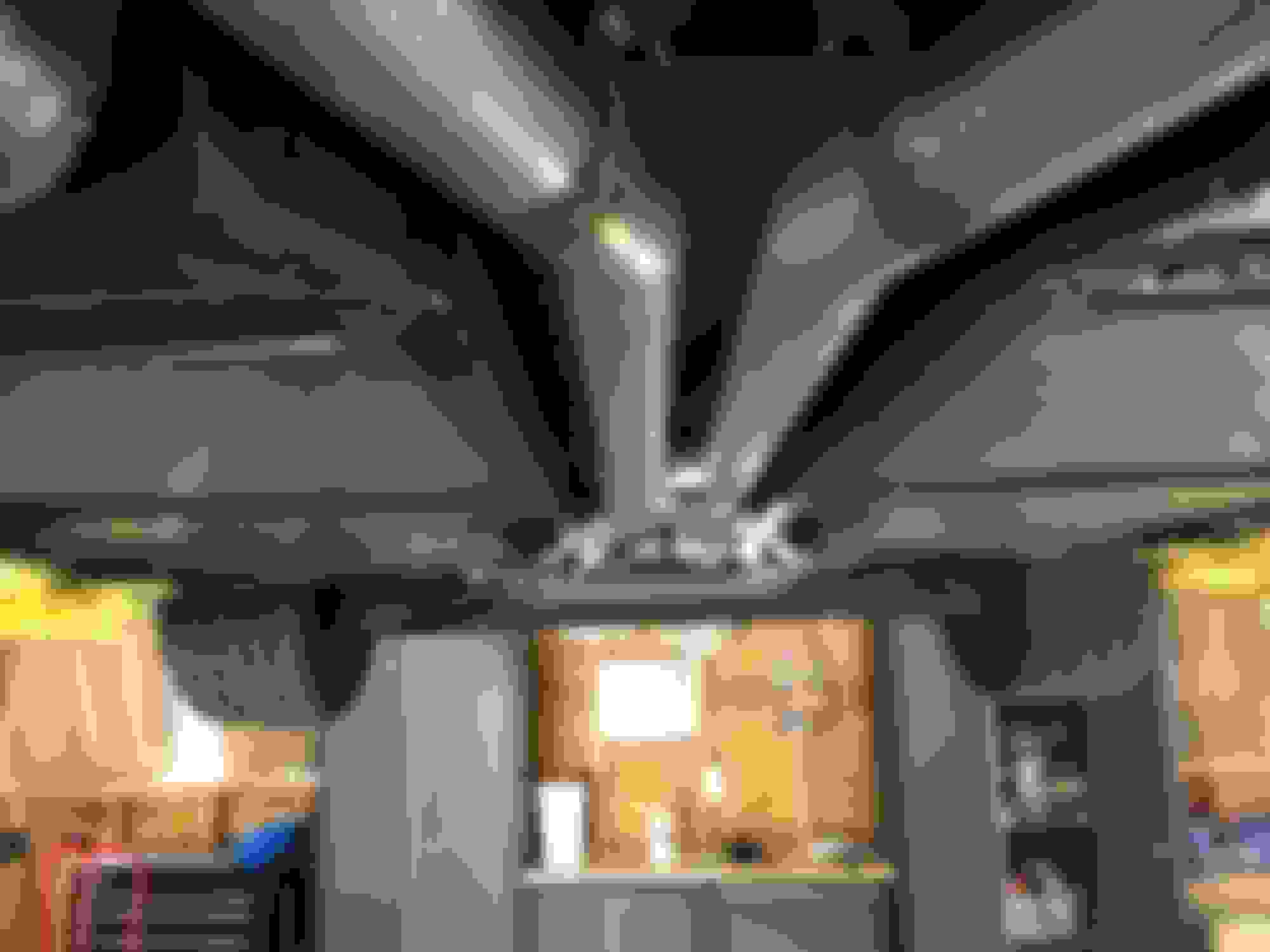





 The bolts do look like they may be overkill, LOL. A sound clip wont really do it justice but I will send one. Its not as loud as I expected. Probably because the cut outs only channel some of the exhaust out the side of the pipes. The installer welded the extensions on from the inside then cut out the original pipe leaving a lip and a smaller hole. I'm considering removing the exhaust, grinding off the lip to enlarge the opening and having it welded from the outside. Should make it flow better but it will likely be louder.
 You have a lot more room with your standard transmission than I have with my auto. I really like the sound, not all the time but there when you want it! Not as loud as some but nice and deep and a lot louder than an aftermarket muffler. I couldn’t justify taking off my perfectly good NPP mufflers and replacing with something only incrementally louder.









 . It wasn’t easy as you noted!


