






2” vs. 1 7/8” Header

Drifting


Joined: Nov 2009
Posts: 1,385
Likes: 102
Drifting
Joined: Nov 2009
Posts: 1,385
Likes: 102

Well my 2” arh clear better than my 1-7/8 looks did so I’m going to have to disagree there. Besides 1/8” here or there isn’t going to make any noticeable difference
Last edited by redbird555; Dec 28, 2017 at 07:25 PM.

Melting Slicks


Joined: Jun 2006
Posts: 2,478
Likes: 260
From: Miami Florida
I removed my ARH 1 7/8 and sold them over how hard it is to remove and install them compared to the Kooks which if you loose a handle on them from the top you have to go under the car to pick em up that's also how easy they are to install.
Also worth mention is the ARH leaked from all 4 in both collectors so I had to cut collectors weld/seal and weld them back on not wanting to ship to the NY and keep car two or more weeks on jack stands got zero for it from manufacturer.
The ARH did fit flush not so the Kooks which hang one full inch below.
All in all I prefer to adjust the Kooks.
Also worth mention is the ARH leaked from all 4 in both collectors so I had to cut collectors weld/seal and weld them back on not wanting to ship to the NY and keep car two or more weeks on jack stands got zero for it from manufacturer.
The ARH did fit flush not so the Kooks which hang one full inch below.
All in all I prefer to adjust the Kooks.

Race Director

Joined: Sep 2007
Posts: 16,557
Likes: 2,104
From: Peoria/Phoenix AZ
C6 of Year Finalist (performance mods) 2019
The brand vs tube size vs tube length vs collector size vs other mods vs the RPM desired vs the wallet, will all be factors in the best choice.
There are lots of ways to get more power, but the combination of parts and tune to match your desired result is the most important consideration.
Since you're in CA, the 2012-13 Z06 manifold, cats, X-pipe, with any decent muffler will get you through the smog check and give about a 12-15 hp boost.
There are lots of ways to get more power, but the combination of parts and tune to match your desired result is the most important consideration.
Since you're in CA, the 2012-13 Z06 manifold, cats, X-pipe, with any decent muffler will get you through the smog check and give about a 12-15 hp boost.
Corvette Stories
The Best of Corvette for Corvette Enthusiasts

Corvette ZR1X Will Be Pacing the Indy 500, And Could Probably Race, Too!
Verdad Gallardo
Top 10 Corvettes Coming to Mecum Indy 2026!
Brett Foote
Top 10 C9 Corvette MUST-HAVES to Fix These C8 Generation Flaws!
Michael S. Palmer
10 Revolutionary 'Corvette Firsts' Most People Don't Know
Joe Kucinski
5 Reasons to Upgrade to an LS6-Powered Corvette; 5 Reasons to Stay LT2
Michael S. Palmer
2027 Corvette vs The World: Every C8 vs Its Closest Competitor
Joe Kucinski
10 Most Common Corvette Problems of the Last 20 Years!
Joe Kucinski
5 MOST and 5 LEAST Popular Corvette Model Years in History!
Joe Kucinski
2027 Corvette Buyer's Guide: Everything You Need to Know!
Joe Kucinski
Race Director
Joined: Oct 2005
Posts: 14,999
Likes: 200
From: Bay Area Ca.
The brand vs tube size vs tube length vs collector size vs other mods vs the RPM desired vs the wallet, will all be factors in the best choice.
There are lots of ways to get more power, but the combination of parts and tune to match your desired result is the most important consideration.
Since you're in CA, the 2012-13 Z06 manifold, cats, X-pipe, with any decent muffler will get you through the smog check and give about a 12-15 hp boost.
There are lots of ways to get more power, but the combination of parts and tune to match your desired result is the most important consideration.
Since you're in CA, the 2012-13 Z06 manifold, cats, X-pipe, with any decent muffler will get you through the smog check and give about a 12-15 hp boost.
Drifting
Joined: Nov 2009
Posts: 1,385
Likes: 102





Racer

Joined: Jun 2017
Posts: 262
Likes: 33
From: Midwest
Not necessarily. From the same post (#20):
"I don't understand how the 1 7/8 is "best all around header" in your opinion if the 2" headers had better average and peak numbers. Could you please explain? Thanks.
A few Reasons, the additional cost does not justify the gains.
They are a Tighter fit.
They are Heavier
Most manufacturers offer a 1 7/8 headers so they are easier to get.
The biggest gains from headers are in the middle of the curve where you drive most and you can't tell the difference between 1 7/8 and 2 inch, on the dyno graph or in the car.
Unless your Racing you won't miss the 5 HP at 6300 RPM, your not there enough to use it on the street.
Hope this Helps"
Last edited by WideVette; Dec 29, 2017 at 10:23 AM.
Drifting
Joined: Nov 2009
Posts: 1,385
Likes: 102
Not necessarily. From the same post (#20):
"I don't understand how the 1 7/8 is "best all around header" in your opinion if the 2" headers had better average and peak numbers. Could you please explain? Thanks.
A few Reasons, the additional cost does not justify the gains.
They are a Tighter fit.
They are Heavier
Most manufacturers offer a 1 7/8 headers so they are easier to get.
The biggest gains from headers are in the middle of the curve where you drive most and you can't tell the difference between 1 7/8 and 2 inch, on the dyno graph or in the car.
Unless your Racing you won't miss the 5 HP at 6300 RPM, your not there enough to use it on the street.
Hope this Helps"
"I don't understand how the 1 7/8 is "best all around header" in your opinion if the 2" headers had better average and peak numbers. Could you please explain? Thanks.
A few Reasons, the additional cost does not justify the gains.
They are a Tighter fit.
They are Heavier
Most manufacturers offer a 1 7/8 headers so they are easier to get.
The biggest gains from headers are in the middle of the curve where you drive most and you can't tell the difference between 1 7/8 and 2 inch, on the dyno graph or in the car.
Unless your Racing you won't miss the 5 HP at 6300 RPM, your not there enough to use it on the street.
Hope this Helps"
So your reasoning that 1-7/8 might be better is that they weigh a couple pounds less, don’t make any more hp midrange, make less hp up top and are 50 bucks cheaper? I’ll leave fitment out because as I stated I’ve had 2” headers fit better than 1-7/8 on more than one occasionUm seriously? Lol
Last edited by redbird555; Dec 29, 2017 at 10:28 AM.
Racer
Joined: Jun 2017
Posts: 262
Likes: 33
From: Midwest
So your reasoning that 1-7/8 might be better is that they weigh a couple pounds less, don’t make any more hp midrange, make less hp up top and are 50 bucks cheaper? I’ll leave fitment out because as I stated I’ve had 2” headers fit better than 1-7/8 on more than one occasionUm seriously? Lol

Drifting
Joined: Nov 2009
Posts: 1,385
Likes: 102
Whoa man I don’t really pay attention to other guys. Cool if you do though. I was just curious on your reasoning bc literally nothing there is an actual argument on why the smaller header is better. When you’re spending 1200 on a set of headers what’s another 50 bucks? 50/5hp is 10 bucks per hp....good luck getting that ratio with any other mod.If you’ve got actual reasoning then I’d like to hear it.
Racer
Joined: Jun 2017
Posts: 262
Likes: 33
From: Midwest
Whoa man I don’t really pay attention to other guys. Cool if you do though. I was just curious on your reasoning bc literally nothing there is an actual argument on why the smaller header is better. When you’re spending 1200 on a set of headers what’s another 50 bucks? 50/5hp is 10 bucks per hp....good luck getting that ratio with any other mod.If you’ve got actual reasoning then I’d like to hear it.
As I said, my bad, your good. Happy New Year!
Race Director
Joined: Sep 2007
Posts: 16,557
Likes: 2,104
From: Peoria/Phoenix AZ
C6 of Year Finalist (performance mods) 2019


Drifting
Joined: Nov 2009
Posts: 1,385
Likes: 102
I mean no not really, if you have a 10s car and add a mod that makes 5 more hp will you see a change? Nope def not, doesn’t change the fact it’s still a better mod though.It’s weird how many people can stare point blank evidence i the face and then ignore it based on their own formed opinions lmao

Race Director


Joined: Dec 2013
Posts: 12,501
Likes: 3,627
Hence we take something like the below collector with its velocity spike, which will create a great bernoulli effect to scavenge the other tubes,
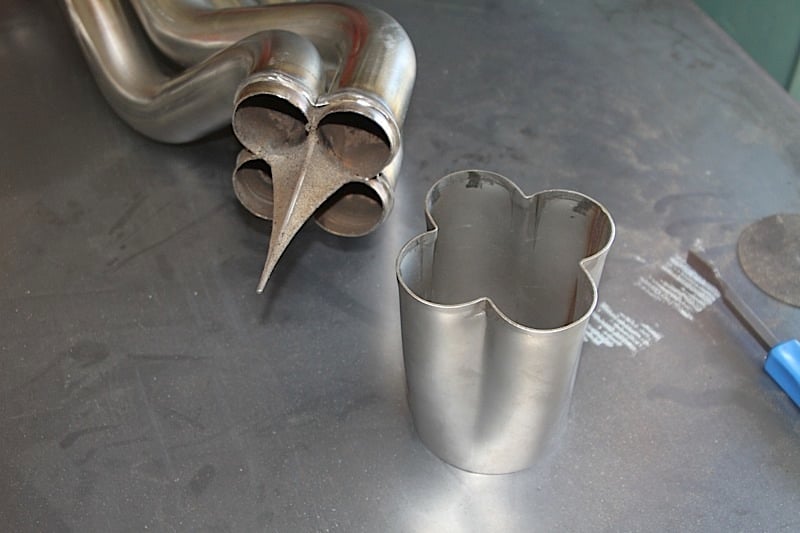
While a collector like this could be a ***** show instead,
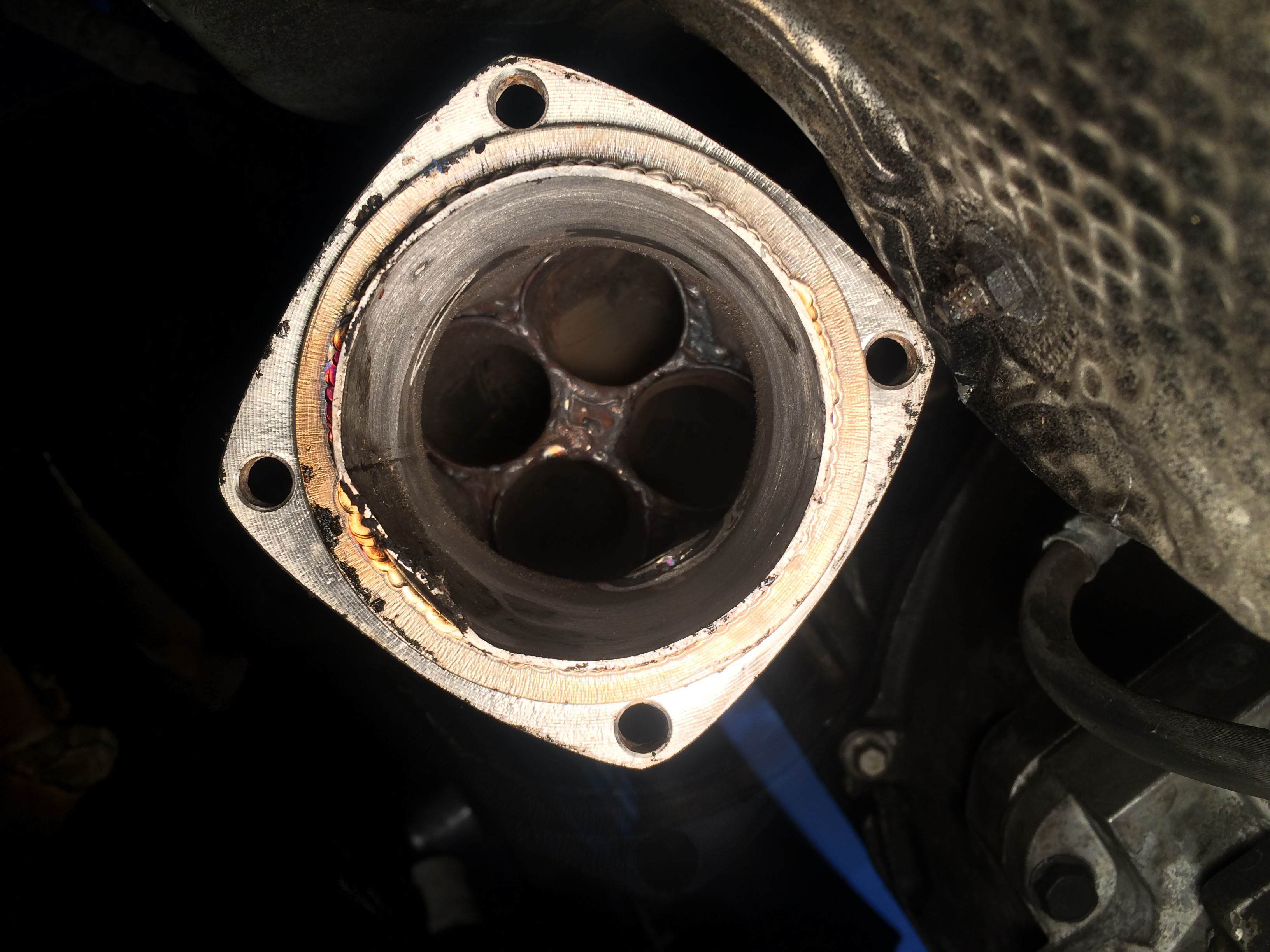
Hence it boils down to the bernoulli effect of the headers, so it stems all the way back to collect and how well it going to do its job firstly creating the needed vacuum effect in the other tubes as one tube fires through it too draw the exhaust out of the other tubes, , then how well it will scavenge the volume of the header pipes from there next (at what exhaust speeds/volumes as well).
So if you use the graph listed in the other link, then there is something wrong with the torque curves, since if the tube lengths are all the same for all the header tubes, then the smaller diameter of the tubes should have the exhaust gasses traveling through the collector faster at the lower RPM's, and will create more HP and torque lower in the RPM range instead.
Hence this is the trade off with tube sizes, being the wider more volume of the tubes, the slower your going to have the exhaust flow through the collect to start with, and it will have more power upper end instead. With smaller tube headers of the same length, its the lower rpms that the headers come on line faster, and depending on the tube size if too small, will be paying the price in the upper end isntead.
As for max HP, it just that, being only used for a brief second before you shift, and what matter more, is the entire power you are making through the working power band of the RPMs you going to running instead.
Last edited by Dano523; Dec 29, 2017 at 09:18 PM.
Race Director
Joined: Sep 2007
Posts: 16,557
Likes: 2,104
From: Peoria/Phoenix AZ
C6 of Year Finalist (performance mods) 2019
Yep, tube id size plays second fiddle to actual collect design and how well the header is scavenging the tubes in the first place.
Hence we take something like the below collector with its velocity spike, which will create a great bernoulli effect to scavenge the other tubes,
While a collector like this could be a ***** show instead,

Hence it boils down to the bernoulli effect of the headers, so it stems all the way back to collect and how well it going to do its job firstly creating the needed vacuum effect in the other tubes as one tube fires through it too draw the exhaust out of the other tubes, , then how well it will scavenge the volume of the header pipes from there next (at what exhaust speeds/volumes as well).
https://youtu.be/NekTRPx68zs
So if you use the graph listed in the other link, then there is something wrong with the torque curves, since if the tube lengths are all the same for all the header tubes, then the smaller diameter of the tubes should have the exhaust gasses traveling through the collector faster at the lower RPM's, and will create more HP and torque lower in the RPM range instead.
Hence this is the trade off with tube sizes, being the wider more volume of the tubes, the slower your going to have the exhaust flow through the collect to start with, and it will have more power upper end instead. With smaller tube headers of the same length, its the lower rpms that the headers come on line faster, and depending on the tube size if too small, will be paying the price in the upper end isntead.
As for max HP, it just that, being only used for a brief second before you shift, and what matter more, is the entire power you are making through the working power band of the RPMs you going to running instead.
Hence we take something like the below collector with its velocity spike, which will create a great bernoulli effect to scavenge the other tubes,
While a collector like this could be a ***** show instead,
Hence it boils down to the bernoulli effect of the headers, so it stems all the way back to collect and how well it going to do its job firstly creating the needed vacuum effect in the other tubes as one tube fires through it too draw the exhaust out of the other tubes, , then how well it will scavenge the volume of the header pipes from there next (at what exhaust speeds/volumes as well).
https://youtu.be/NekTRPx68zs
So if you use the graph listed in the other link, then there is something wrong with the torque curves, since if the tube lengths are all the same for all the header tubes, then the smaller diameter of the tubes should have the exhaust gasses traveling through the collector faster at the lower RPM's, and will create more HP and torque lower in the RPM range instead.
Hence this is the trade off with tube sizes, being the wider more volume of the tubes, the slower your going to have the exhaust flow through the collect to start with, and it will have more power upper end instead. With smaller tube headers of the same length, its the lower rpms that the headers come on line faster, and depending on the tube size if too small, will be paying the price in the upper end isntead.
As for max HP, it just that, being only used for a brief second before you shift, and what matter more, is the entire power you are making through the working power band of the RPMs you going to running instead.

