When you click on links to various merchants on this site and make a purchase, this can result in this site earning a commission. Affiliate programs and affiliations include, but are not limited to, the eBay Partner Network.
I believe I melted a fuseable link somewhere between the alternator and fuse box/ starter. Alternator is putting out zero volts on volt meter, took the alternator in to get tested and it’s still good. Also checked the post on the starter solinoid that Everyone says brakes, that’s not the issue. Not the best with electrical but has anyone else had this happen? I have a 2007 z06
I believe I melted a fuseable link somewhere between the alternator and fuse box/ starter. Alternator is putting out zero volts on volt meter, took the alternator in to get tested and it’s still good. Also checked the post on the starter solinoid that Everyone says brakes, that’s not the issue. Not the best with electrical but has anyone else had this happen? I have a 2007 z06
I believe the fusible link is down by the starter and is covered in the harness and difficult to see.
Put a multi meter just on the alternator with the motor idling to check for output.
Positive lead on the meter on the terminal under the back rubber boot on the black of the alternator, and negitive lead on the body of the alternator. Output should be 14.7 volts.
If you don't have voltage, then you need to check the engine fuse box for one of two blows fuses.
As for in line fuse, it's right before the starter connector from the cable that comes off the alternator. Hence it under the long rubber shelding of the end connector.
Hence the bottom most cable, under the rubber on the cable off the connector. As for what the fuse is, it just smaller gauge short piece of wire, with a fire retardant around it and a first rubber layer (so it does cause a fire when it melts through), then is in between the connector and the larger cable wiring with second layer of rubber (again all under the rubber coating just off the connector).
so the link is like this below, but a 1" long piece of wire cabling about 3/4 the gauge of the main wiring on the cable, weld in between the end of cable and end connector above.
Put a multi meter just on the alternator with the motor idling to check for output.
Positive lead on the meter on the terminal under the back rubber boot on the black of the alternator, and negitive lead on the body of the alternator. Output should be 14.7 volts.
If you don't have voltage, then you need to check the engine fuse box for one of two blows fuses.
As for in line fuse, it's right before the starter connector from the cable that comes off the alternator. Hence it under the long rubber shelding of the end connector.
Hence the bottom most cable, under the rubber on the cable off the connector. As for what the fuse is, it just smaller gauge short piece of wire, with a fire retardant around it and a first rubber layer (so it does cause a fire when it melts through), then is in between the connector and the larger cable wiring with second layer of rubber (again all under the rubber coating just off the connector).
so the link is like this below, but a 1" long piece of wire cabling about 3/4 the gauge of the main wiring on the cable, weld in between the end of cable and end connector above.
yeah I put a multi meters on is while iding and it’s reading 0 volts. No fuses are blown in the fuse box, so that’s why I’m thinking it’s the fuseable link. Thank you for the information and pictures!
yeah I put a multi meters on is while iding and it’s reading 0 volts. No fuses are blown in the fuse box, so that’s why I’m thinking it’s the fuseable link. Thank you for the information and pictures!
Zero volts at the alternator (using its back terminal under the rubber boot as postive, and body of the alternator as ground with the multi meter set to DC) has nothing to do with the fuseable link on the alternator cable down at the starter. If the fusable link was the problem, then you would have 14.7V DC at the alternator, but no voltage past the starter terminal instead.
If you have Zero volts at the actual alternator while idling, then you have a blown fuse in the fuse box or bad connector on the alternator itself.
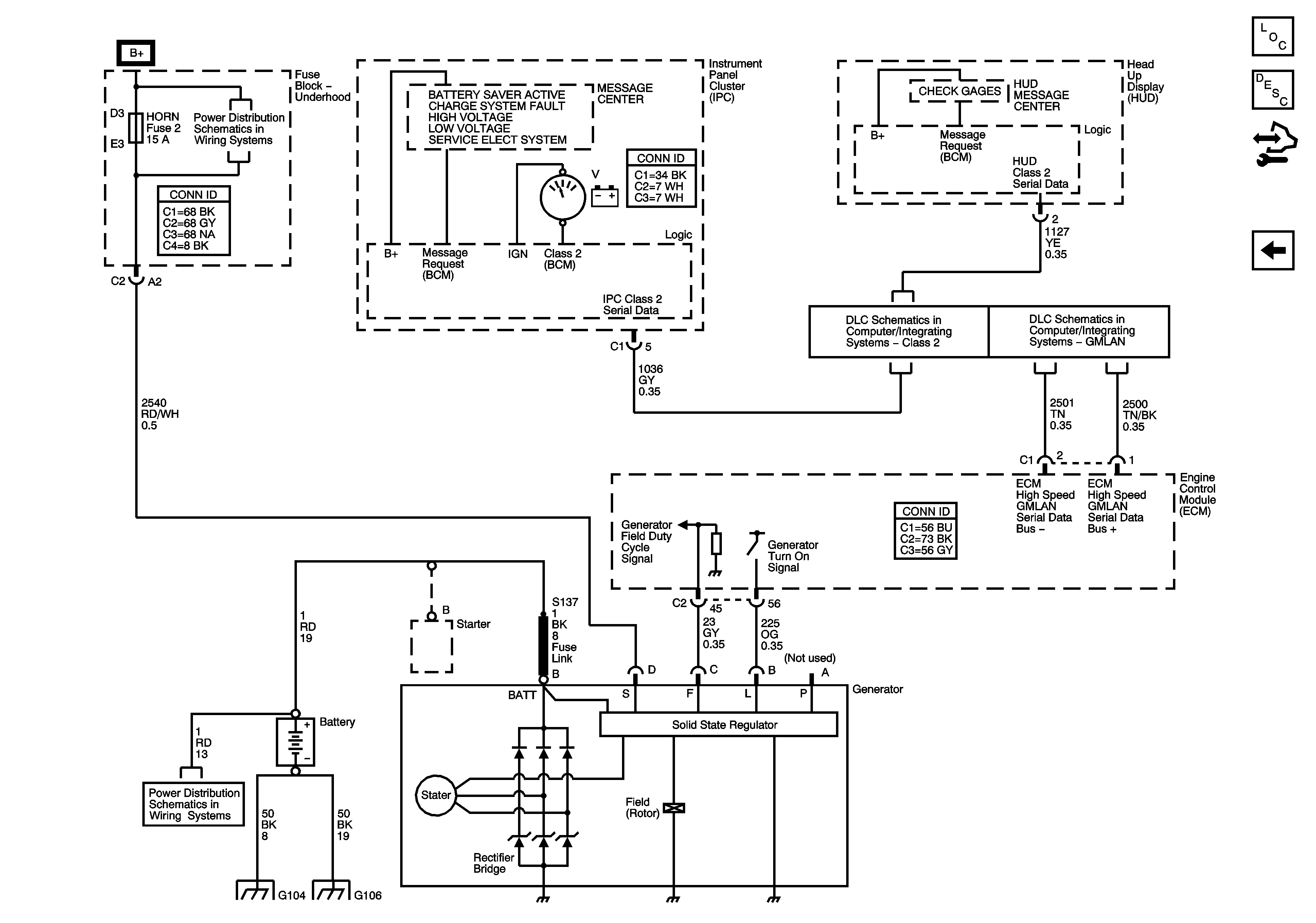
Hence the alternator uses the Horn fuse as a voltage sensing circuit, as well as the ECM controlling the output of the alternator as well.
So if you can honk the horn, the alternator bench checks fine on a test machine, then you have a problem with either the top connector on the alternator with cracked wires at the connector, or it's a back up line wire/connector problem, and could be all the way back at the ECM being bad isntead.
Bottom of diagram above is the alternator (generator),
B far left is the positive output terminal on the back of the alternator under the rubber boot (body of the alternator is ground). D-C-B are the on the snap in connector on the top of alternator. D goes back to the horn fuse, while C and B wires from that same connector goes back to the ECM.
Zero volts at the alternator (using its back terminal under the rubber boot as postive, and body of the alternator as ground with the multi meter set to DC) has nothing to do with the fuseable link on the alternator cable down at the starter. If the fusable link was the problem, then you would have 14.7V DC at the alternator, but no voltage past the starter terminal instead.
If you have Zero volts at the actual alternator while idling, then you have a blown fuse in the fuse box or bad connector on the alternator itself.
Hence the alternator uses the Horn fuse as a voltage sensing circuit, as well as the ECM controlling the output of the alternator as well.
So if you can honk the horn, the alternator bench checks fine on a test machine, then you have a problem with either the top connector on the alternator with cracked wires at the connector, or it's a back up line wire/connector problem, and could be all the way back at the ECM being bad isntead.
Bottom of diagram above is the alternator (generator),
B far left is the positive output terminal on the back of the alternator under the rubber boot (body of the alternator is ground). D-C-B are the on the snap in connector on the top of alternator. D goes back to the horn fuse, while C and B wires from that same connector goes back to the ECM.
awesome thank you for all your help. I’ll check it out when I get home from work.




 Alternator not getting power