When you click on links to various merchants on this site and make a purchase, this can result in this site earning a commission. Affiliate programs and affiliations include, but are not limited to, the eBay Partner Network.
2005 C6 with 89,00 miles. New battery and new 145 amp alternator. DIC message: check charging system. I am only getting a charge of 10.5 volts at the battery. I used a voltmeter and the instrument cluster gives me the same reading. If the alternator to starter fusible link is melted, should I get any charge at all? The starter does work but the battery charge goes down. I have not jacked the car up to make an inspection of the link. I am just doing research. I have read a number of threads regarding repairing the fusible link, but no one has mentioned a no charge or partial charge situation with a melted link.
Fusable link is a short section of wire just before the starter solenoid connector, that is two gauges smaller than the rest of the wire, and has heat proofing paste under the rubber when the wire over heats and snaps. So if link is blown, then you would not get any charging from the alternator to begin with.
My guess, would be loose nut on the starter alternator terminal, where the alternator to battery cables connect there.
Or is could just be a loose ground nut above the starter where the battery cable connects to the engine block.
Here is both, and notice that the positive terminal is cracked off the solenoid due to header heat.
As for checking both,
start the car, turn the radio-lights-ac off, and using a multi meter, first check the output of the alternator.
So positive connection point for meter will be the back terminal under the rubber boot on the alternator as positive, and the body of the alternator as the ground point. Should have 14.7 volts DC.
Now go to the battery, and should have 14.5 volts at the battery terminals with the motor still running.
Next, open the engine fuse box, use the terminal post itself as the positive point (not the nut or the wire connectors), and the body of the alternator as your ground point. Again should have 14.5 volts.
if you have a major drop at the battery or engine fuse block terminal from the alternator at 14.7, and want to weed out the ground nut to the engine block, then use the alternator body as your ground, isntead of the ground terminal of the battery. If the voltage jumps back up, then ground nut at the engine block is loose. If voltatage does not jump back up, then its the starter solenoid nut that is loose isntead.
If alternator is not putting out 14.7 volts, then it time to pull it apart and check it out.
Also, before you pull the alternator out, honk the horn and make sure it working. The alternator uses that horn circuit as a voltage sensing circuit, and if the fuse is blown, it going to cause the alternator to not put out the correct voltage to start with.
Dano 523,
Many thanks for the reply and comprehensive explanation of test procedures. I just got the car up on front wheel ramps so that I could get my jack under the front end to lift it. Inspection reveals a much easier access to the starter than my research led me to believe. The right side CAT is to hot for me to feel around at the solenoid connections. It appears that it is not difficult to remove the right side CAT which will give me lots of access to the negative ground and for me to be able to see if there are any abnormalities that are visually evident. I have some doctor's appointments over the next few days, so I probably will not really get to diagnose any problems until Saturday. I hope to be able to let you know that I was successful, but I may also be contacting you with some additional questions.
Thanks for taking the time to be so helpful,
brassbender43,
No worries, and just use the multimeter to start with, since it will tell you right where the problem is in the charging system to start with.
Hell, to many times have seen the problem just a loose nut at the engine fuse block, with everything up line fine instead.
Other time, just corrosion on the alternator wire where it connects to the back of the alternator isntead (or loose nut there as well).
As for once you do have the engine fuse box showing 14.5V to battery ground with the alternator showing 14.7volts, then switch the DIC over to voltage to give it a quick check as well.
If fuse block terminal is 14.5, but DIC is showing less than 14.1~14.3, then the problem is corrosion on the connectors from the fuse block, to the BCM, then down line to the ECM (which is gets is power from the BCM). Hence the ICP (dash) is all digital in how it works, and is getting it digital signal from the ECM to post that voltage (not the voltage at the dash that one would think).
Dano 523,
I used a trickle charger to bring the battery up to 12.18 volts. Car running, lights, ac, radio off.
Readings:
Charge at the battery: 11.88
Battery pos to alt body neg: 11.86
Engine fuse block pos to battery neg: 11.83
Engine fuse block pos to alt body neg: 11.82
Alt nut pos to alt body neg: 2.75
DIC reading 11.7
The horn honks
I got maybe a 1/4 turn on the solenoid nuts
I see no corrosion on any of the ground points and they are tight
Obviously, the strange reading (alt nut to alt body) tells us that something is wrong. The battery and ALT are new.
There is no rush to get back to me, I won't be home until this evening, and I won't be able to do any work tomorrow.
Thanks,
brassbender43
What is the charge at the alternator with motor idling with lights, ac, raditor fan off?
Hence blue arrow, pull the rubber cap up and away, and use the positive probe on that threaded part of the terminal that is under the rubber cap, and the ground probe on the body of the alternator. Again, should be 14.7 volts.
Next to check the fusable link, shut car off, get voltage reading at battery from its terminal, then again at the alternator and it as the ground as well (should be very close to the same voltage). If fuse line is blown, then should be zero volts getting back to the end of the alternator cable at the alternator.
FYI, if new alternator is rebuilt, but shows no voltage, then its the wrong model, or at least the wrong voltage regulator in it. The C5 and some of the C6 alternators are two wire system at the clip on connector, while base C6 alternator will be a three wire system.
The reading I got ALT pos to ALT body neg, with the car running, lights, AC, and radio off was 2.75 volts. I just noticed a reference to turning off the radiator fan. How do I accomplish that?
The ALT has three pins that coincide with the connector plug and three wires.
ALT (blue arrow) pos to ALT body neg with engine off is 7.7
Battery voltage with engine off is 12.28
If I understand the last voltage check, am I supposed to run test wires from battery pos to ALT body neg? If so, I got a reading of 12.26.
I hope I did this correctly. I apologize for my lack of electrical experience.
Dano523,
A little research can be a dangerous thing. I ran a continuity of fusible link, by checking battery pos cable disconnected to alt pos. I get a reading of 1.1.
Pull the alternator, and take it down to where you got it to be bench tested.
Either alternator is bad, or you have a problem at the alternator clip on top connector wires back, back to the fuse box or ECM.
Note, generator bottom of the photo, is the alternator.
So D is the sensing wire off the horn circuit, while C and B go back to the ECM. Also notice that these three wires are direct shots from connector to connector, with no intermittent connectors between them. So if alternator does check out good, then unplug the alternator top connector, put the car into run mode, motor off by holding the bottom of the start button in for 5 seconds, then go check the D pin on the alternator connector to make sure it have what every the battery voltage is.
If that checks out, then time to get to the ECM, to run continuity checks of the C and B pins back to the ecm connector pins.
Dano523,
A little research can be a dangerous thing. I ran a continuity of fusible link, by checking battery pos cable disconnected to alt pos. I get a reading of 1.1.
brassbender43
If this is 1.1ohms, then fuseible link is still good on the alternator cable.
To prove it, disconnect the alternator cable side off the back of alternator lug and keep it from grounding out with the motor shut off, and with battery positive cable connected to the battery, should get close to battery voltage using end of disconnected alternator cable as positive, and body of alternator as negative. If you do get some low funky voltage reading, the run the ground probe back to the battery ground, and see if that gives you close the normal battery reading. If it does, then the problem is at the battery ground point to the engine block.
Hence body of the alternator grounds to the engine, and the battery ground cable goes to the engine block to tie that back to the battery ground.
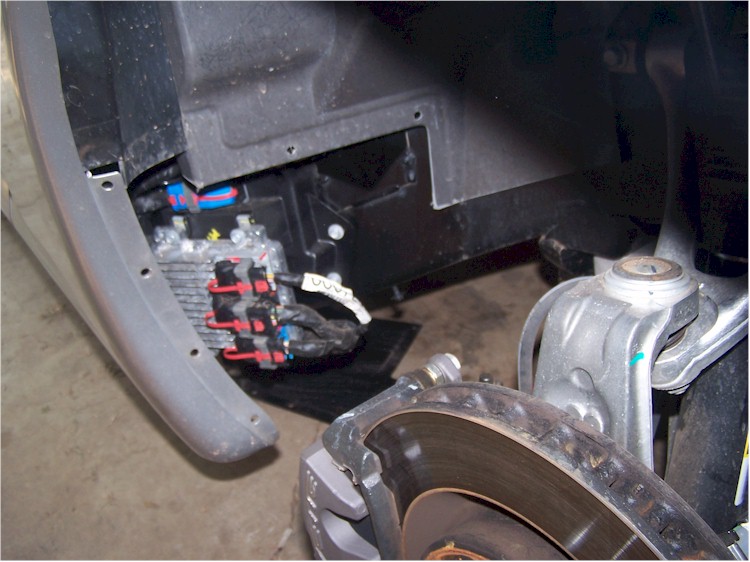
to add, location of the ECM, and with it being low in the passengers fender, not uncommon for the pins to end up corroded to hell when pulled and cleaned.
To get to it, jack up the passenger front side with jacking puck so you can remove the tire, then will have pull type snaps on the plastic back wheel well cover to remove first,
And 2 8mm bolts on the bottom of the cover under the car you will need to remove to pull the cover.
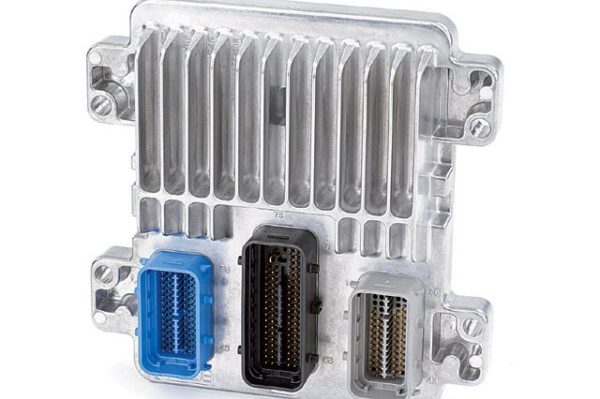
From here, will need to remove the red locking piece, then cam the main locks open to pull the connectors from the ECM to clean, then test the C and B wire pins on C2 for continuity back to the Alternator connectors pins.
PDF of the E40 connectors diagram for pin locations, and it will be the center black socket connector on the ecm that you are looking for the wire pins on the connector (not the blue or grey sockets on the E40 ecm (img[ https://www.corvetteforum.com/forums...ctor-views.pdf
Dano523,
Thanks so much for taking the time to give me additional information and procedures to follow. This is a big learning curve for me. I'll have to wait until tomorrow to start. I'll be slow at this because it is all very new.
I checked the ALT cable pos to ALT body neg, and got 0.0 as a reading. I tested ALT cable pos to battery ground near the negative cable and got 0.0. I wire brushed that ground connection, and the results were the same. Would it be practical to run a jumper wire from the ALT pos nut to the starter solenoid where the fusible link connects? It would be a short test, and I imagine I would know something immediately after start up. I took the ALT off the car and had it bench tested. It passed.
I checked the ALT cable pos to ALT body neg, and got 0.0 as a reading. I tested ALT cable pos to battery ground near the negative cable and got 0.0. .
If this was with the motor running, then alternator is not putting out any output. so either alternator is bad, or have a problem on the wires off the clip on alternator connector to the ecm back to the horn fuse circuit isntead.
As for checking the in line fuse in the alternator cable, again, just disconnect the battery positive cable off the battery, and then alternator power cable off the alternator, then run a continuity check through the two cables at there starter solenoid connection. Infinity reading on the metter means that the fuse link is blown, while lower type resistance on the meter set to ohms means that the fuse line/cables are fine and power can flow from the battery cable end to the alternator end.
So again, pull the alternator and take it back to the place you bought it to have it bench testes, and if it checks out fine, its the wires to the fuse block and ecm that is the problem (if not the ECM itself).
Dano523,
I had the fusible link repaired at a Corvette specialty shop. Everything else works fine except the Bose amp. The repair shop thinks the bad alternator, that I replaced, was contributory to the melted link. Many thanks for all of the diagnostic procedures that you gave me to work with. It was a great learning experience.











 fusible link