When you click on links to various merchants on this site and make a purchase, this can result in this site earning a commission. Affiliate programs and affiliations include, but are not limited to, the eBay Partner Network.
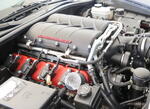
Hi all, I have a quick question. Before we get started my car is a 2011 Grand Sport AUTO w/ LS3 (wet sump). I just got a new set of valve covers and on the stock system the drivers side cover vent is capped off and the clean air line goes from the passenger side to before the throttle body. My new covers only have a vent on the driver side cover (green line in the illustration) , Can I run a new line from the driver side cover to the fitting before the throttle body (red line in the illustration) ? If it has to be run off the passenger cover I can drill and tap and run a fitting on that side. I am also adding a catch can to the system while doing my valve covers.
EDIT... This is the bottom side of both covers, The one with the fitting and baffle is the driver side that Im hoping I can hook my clean air side up to
You can use either valve cover since the intake suction is supplied to the valley cover.
I have some concerns though
1. There does not appear to be much baffle in the valve cover leading to the hose, it may aspirate oil vapors or even liquids. I would watch or check the hose for oil liquid after using for a while.
2. The hose is kind of small and long, it may not provide adequate PCV pressure drop for wide open throttle. I recommend you MEASURE the crankcase pressure at WOT using a 1-bar map sensor to ensure there is some pressure drop near the valve cover. If you need a video I have a how-to-diy
You can use either valve cover since the intake suction is supplied to the valley cover.
I have some concerns though
1. There does not appear to be much baffle in the valve cover leading to the hose, it may aspirate oil vapors or even liquids. I would watch or check the hose for oil liquid after using for a while.
2. The hose is kind of small and long, it may not provide adequate PCV pressure drop for wide open throttle. I recommend you MEASURE the crankcase pressure at WOT using a 1-bar map sensor to ensure there is some pressure drop near the valve cover. If you need a video I have a how-to-diy
If you could send me the how to video that would be appreciated. I plan on running a -6 line which is 3/8 ID, The cover has a 1/4 pipe port on it, I could go up to a -8 line if you think it would need a larger line would be beneficial (even tho I am limited to the 1/4 pipe port)
In wet sump you dont use a large line because it takes energy to move fluid and the more fluid you have will cost more energy that you don't have.
Small lines increase friction so you don't want very small either.
Main thing is short as possible. That is why I like the line near the passenger valve cover to air intake pipe, very close by.
A happy medium, you can trial and error to find ideal pressure drop by managing line diameter and air filter. The air filter provides the suction at WOT to the crankcase. The filter is rated some CFM @ pressure drop for example 500CFM @ 1.5" Hg for a random air filter. If the engine flows 500CFM then it will apply 1.5" Hg to the crankcase tube, which means < 1.5" on the crankcase since energy is lost between the tube and crankcase.
I shoot for 1.5" to 3" Hg in wet sump applications. Here is my video. Its turbo but the same thing you can do where the PCV hose attached to crankcase, monitor using map sensor.
A tenth of a volt of pressure drop on 1-bar map is around .325PSI or so, or .66" Hg.
As a general rule no less than 0.5" Hg is adequate. 0.5" to 1.5" Hg is standard for all engines from all OEM, wet sump, made before 2012~ After which many engines run even more vacuum. I prefer 2 to 3" Hg for performance engine for improved oil cleanliness, increased oil scavenging, reduced oil leaking.




 Valve Cover/PCV Question