Alky Control on Boosted Application


Thread Starter
Drifting


Joined: Apr 2020
Posts: 1,762
Likes: 666
 Alky Control on Boosted Application
I have a 2013 GS with an A&A system (V3 Si). It was tuned by A&A out in California. I was reading about the Alky Control kit you sell and how they can offer a little bit of protection against detonation with the only available 91 octane out here and it can also help cool the intake charge.
I read there are a couple of ways to have the system turn on. I had some questions and needed some info.
1 - Replacing the OEM MAP sensor with the LS9 MAP sensor. Does this need to be done?
2 - Does one need to install an IAT Sensor on the charge pipe? I read that doing so it can be tuned if the IAT temps rise, the PCM can start pulling timing.
3 - Having a tune set it to be at 11.8 AFR under full throttle and boost. With all knock sensors functioning and all safeties in place.
4 - Does the supplied MAP sensor have a 3/16 vacuum hose on it. Is that tied into the blow off valve to turn on the meth pump?
5 - Better to run 100% meth or do 50/50 water/meth?
I read there are a couple of ways to have the system turn on. I had some questions and needed some info.
1 - Replacing the OEM MAP sensor with the LS9 MAP sensor. Does this need to be done?
2 - Does one need to install an IAT Sensor on the charge pipe? I read that doing so it can be tuned if the IAT temps rise, the PCM can start pulling timing.
3 - Having a tune set it to be at 11.8 AFR under full throttle and boost. With all knock sensors functioning and all safeties in place.
4 - Does the supplied MAP sensor have a 3/16 vacuum hose on it. Is that tied into the blow off valve to turn on the meth pump?
5 - Better to run 100% meth or do 50/50 water/meth?

Pro


Joined: Oct 2024
Posts: 716
Likes: 396
From: WI
I have a 2013 GS with an A&A system (V3 Si). It was tuned by A&A out in California. I was reading about the Alky Control kit you sell and how they can offer a little bit of protection against detonation with the only available 91 octane out here and it can also help cool the intake charge.
I read there are a couple of ways to have the system turn on. I had some questions and needed some info.
1 - Replacing the OEM MAP sensor with the LS9 MAP sensor. Does this need to be done?
2 - Does one need to install an IAT Sensor on the charge pipe? I read that doing so it can be tuned if the IAT temps rise, the PCM can start pulling timing.
3 - Having a tune set it to be at 11.8 AFR under full throttle and boost. With all knock sensors functioning and all safeties in place.
4 - Does the supplied MAP sensor have a 3/16 vacuum hose on it. Is that tied into the blow off valve to turn on the meth pump?
5 - Better to run 100% meth or do 50/50 water/meth?
I read there are a couple of ways to have the system turn on. I had some questions and needed some info.
1 - Replacing the OEM MAP sensor with the LS9 MAP sensor. Does this need to be done?
2 - Does one need to install an IAT Sensor on the charge pipe? I read that doing so it can be tuned if the IAT temps rise, the PCM can start pulling timing.
3 - Having a tune set it to be at 11.8 AFR under full throttle and boost. With all knock sensors functioning and all safeties in place.
4 - Does the supplied MAP sensor have a 3/16 vacuum hose on it. Is that tied into the blow off valve to turn on the meth pump?
5 - Better to run 100% meth or do 50/50 water/meth?
2. Not required, but if you do this it's best to install it in the intake manifold directly. You would need a breakout harness to split off the IAT signal from the MAF sensor.
3. Ok
4. Not sure what size hose is included but you can tee it into any vacuum/boost line which includes your BOV line.
5. I'd run 50/50 mix but it's up to you. Here's a thread with more info discussing the differences: https://www.corvetteforum.com/forums...anol-kits.html
Burning Brakes


Joined: Apr 2010
Posts: 1,131
Likes: 126
From: Conway, AR
Julio at alky control is great. Maf signal or map will work…sells it either way. VP M1, pure and uncut. You can tune for it for octane boost or you can dial it back and use it for a safety net and cooling only. There is a gain control and an onset control. Call Julio, he will tell you to run it pure and tune for it.
Last edited by grocerygetter; May 22, 2025 at 06:52 AM.

Safety Car


Joined: Oct 2007
Posts: 4,222
Likes: 1,077
From: South Florida
Water cools better than alcohol
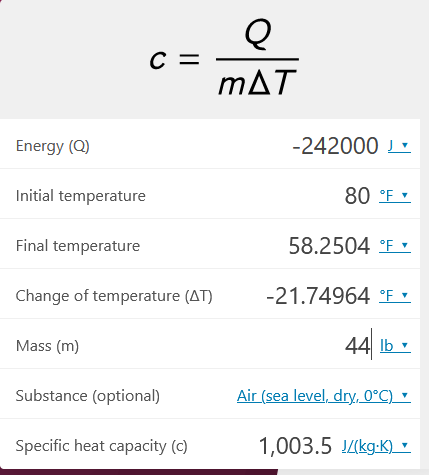
This is how you calculate IAT drop using molar mass and latent heat of vaporization
I did it by hand to verify the online calculator and show the units and process
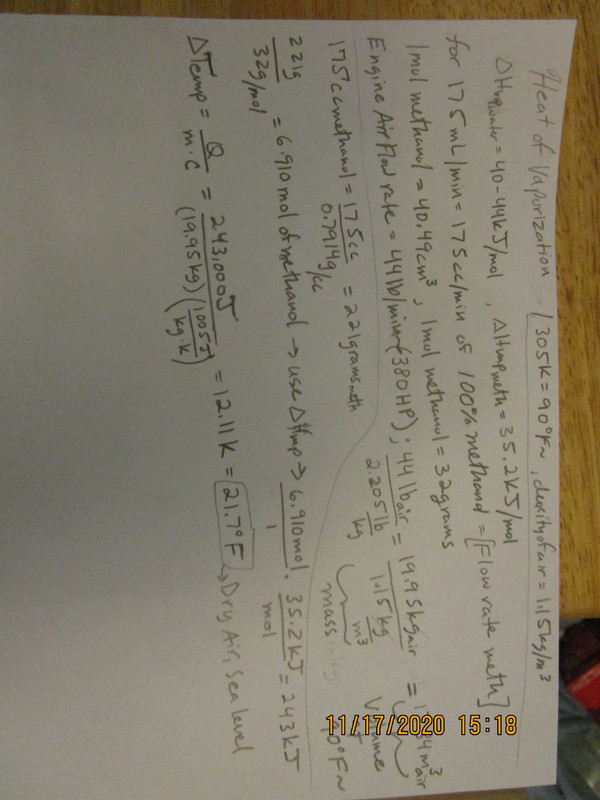
Does not account for temperature rise due to heat transfer in plumbing, e.g. the more surface area of plumbing/intake system between the injection point and the cylinder, the more the air temp will rise heating up along the way. Also vaporized gas takes up the same amount of space as any other gas, so it will displace oxygen and reduce air density even while it cools the air. Therefore one should inject as close to the cylinder as possible, just like any fuel injector closer=better affect.
All that aside I do not recommend 100% methanol for street cars. Firstly, it is highly toxic to skin contact. Methanol converts to formaldehyde when contact with alcohol dehydrogenase enzyme which is present in human cells. It basically turns to embalming fluids when you contact methanol, fixing proteins and killing cells deformed internally to the point even bacteria won't eat it.
Next, methanol will produce explosive gas, any tiny leak and its potentially accumulating a highly volatile explosive gas under your hood/chassis.
Next, methanol burns with an invisible flame, the whole engine can be on fire and you won't even see it, stuff will just start melting.
And theres more. The more methanol you inject the more alcohol dependent the setup is likely to become. Most people cannot tell when the tuning is crossing the threshold of alcohol dependency.
I recommend 50/50 methanol:distilled water ratio. This will help keep it from burning when it leaks, and reduces the chances of explosive gas forming, but does not eliminate it.
Furthermore water is better at cooling, parts and air, has a higher heat capacity so while it warms up in liquid state it pulls more energy from parts.
The point of the alcohol is the octane boost, it does little for IAT as you can see by molar mass, vaporization mathematics, the effect is nearly negligible. You'd have to spray quite a bit for a sizable drop in IAT anyways, and that is what puts the engine at dependency risk.
The water is useful for cooling engine parts, but it needs to reach them in liquid form, not a gas. Only liquid water can effectively cool a part that it comes into contact with. Water thats been atomized/turned to gas does next to no cooling. The issue with this reality is that distribution often becomes an issue when trying to inject a liquid component to a dry flow intake manifold - different masses often go to difference cylinders. Therefore, generally, Keep injection to a minimum or switch to flex-fuel for the benefits without distribution issues.
And keep in mind one more thing. The pumps, lines, fittings, corrode and are wear items that need routine maintenance. So many engines have failed over the years because the pump simply fails to turn on one day, it has a life cycle and requires replacement, and parts that tend to corrode especially when they sit. You've got to keep a constant eye on it if the setup is anywhere near alcohol dependent or cooling dependent for whatever reason. Thus I recommend tune the engine without the meth system, and only use it for additional layer of protection.
This is how you calculate IAT drop using molar mass and latent heat of vaporization
I did it by hand to verify the online calculator and show the units and process
Does not account for temperature rise due to heat transfer in plumbing, e.g. the more surface area of plumbing/intake system between the injection point and the cylinder, the more the air temp will rise heating up along the way. Also vaporized gas takes up the same amount of space as any other gas, so it will displace oxygen and reduce air density even while it cools the air. Therefore one should inject as close to the cylinder as possible, just like any fuel injector closer=better affect.
All that aside I do not recommend 100% methanol for street cars. Firstly, it is highly toxic to skin contact. Methanol converts to formaldehyde when contact with alcohol dehydrogenase enzyme which is present in human cells. It basically turns to embalming fluids when you contact methanol, fixing proteins and killing cells deformed internally to the point even bacteria won't eat it.
Next, methanol will produce explosive gas, any tiny leak and its potentially accumulating a highly volatile explosive gas under your hood/chassis.
Next, methanol burns with an invisible flame, the whole engine can be on fire and you won't even see it, stuff will just start melting.
And theres more. The more methanol you inject the more alcohol dependent the setup is likely to become. Most people cannot tell when the tuning is crossing the threshold of alcohol dependency.
I recommend 50/50 methanol:distilled water ratio. This will help keep it from burning when it leaks, and reduces the chances of explosive gas forming, but does not eliminate it.
Furthermore water is better at cooling, parts and air, has a higher heat capacity so while it warms up in liquid state it pulls more energy from parts.
The point of the alcohol is the octane boost, it does little for IAT as you can see by molar mass, vaporization mathematics, the effect is nearly negligible. You'd have to spray quite a bit for a sizable drop in IAT anyways, and that is what puts the engine at dependency risk.
The water is useful for cooling engine parts, but it needs to reach them in liquid form, not a gas. Only liquid water can effectively cool a part that it comes into contact with. Water thats been atomized/turned to gas does next to no cooling. The issue with this reality is that distribution often becomes an issue when trying to inject a liquid component to a dry flow intake manifold - different masses often go to difference cylinders. Therefore, generally, Keep injection to a minimum or switch to flex-fuel for the benefits without distribution issues.
And keep in mind one more thing. The pumps, lines, fittings, corrode and are wear items that need routine maintenance. So many engines have failed over the years because the pump simply fails to turn on one day, it has a life cycle and requires replacement, and parts that tend to corrode especially when they sit. You've got to keep a constant eye on it if the setup is anywhere near alcohol dependent or cooling dependent for whatever reason. Thus I recommend tune the engine without the meth system, and only use it for additional layer of protection.