












NPP variable exhaust question?

Thread Starter
Heel & Toe

Joined: Sep 2013
Posts: 16
Likes: 0
 NPP variable exhaust question?
Just got my Z51 a few days ago and love it! My question is , is the exhaust full open in sport mode like it is in track mode? Can't tell a difference. And if so then there are only two sound levels , Eco & tour then sport & track. Appreciate any enlightenment . Thanks
Last edited by Delta Ace; Oct 10, 2013 at 02:20 AM.

Popular Reply
Oct 10, 2013, 02:20 AM

Race Director


Joined: Sep 2013
Posts: 11,825
Likes: 2,474
From: Ft Lauderdale
Tech Contributor
Exhaust Tailpipe Flow Control Valve System — RPO NPP
The exhaust tailpipe flow control system is used to tune the exhaust note for high performance vehicles. This vehicle is equipped with two tailpipe exhaust valves. One in the left tailpipe and one in the right tailpipe. Each exhaust tailpipe valve is installed in the low restriction exhaust path of a dual outlet muffler, near the exhaust tip.
When a tailpipe exhaust valve is open, the low restriction exhaust path is opened to the atmosphere, and the exhaust note becomes more aggressive.
An output circuit from the chassis control module is used to control the actuator that opens the left and right exhaust tailpipe valves. The exhaust flow control valve opens and closes when the chassis control module commands the actuator by pulse width modulation of the control signal.
To provide a more aggressive exhaust note when the vehicle is started, the exhaust tailpipe valves are opened during an engine crank event during specific modes of operation if that option is available. Once the engine is running, accelerator pedal position, transmission gear and engine speed are used to determine the commanded state (open or closed) of the exhaust tailpipe valves.
There are four specific exhaust performance modes that result in different behavior of the exhaust tailpipe valves. These modes are:
• Weather/Eco Mode: Exhaust tailpipe valves will be closed at all times when the engine is running.
• Tour Mode: Exhaust tailpipe valves are closed when the engine is idling and during normal/non-aggressive driving. Valves open during aggressive driving.
• Sport Mode: Exhaust tailpipe valves are open when the engine is idling and during most driving scenarios.
• Track Mode: Exhaust tailpipe valves are open at all times.
It is possible to personalize the exhaust sound. Select the Driving Mode menu and the following will be displayed:
• Exhaust
• Steering
Select Exhaust. This controls how robust or quiet the engine will sound. Select:
• Auto
• Stealth
• City
• Tour
• Sport
• Track
• Off
When the engine sound enhancement is turned Off via the personalization menu, the exhaust tailpipe valves will be put into track mode no matter which vehicle mode (Weather/Eco, Tour, Sport, or Track) is displayed on the drivers instrument panel.
The exhaust tailpipe flow control system is used to tune the exhaust note for high performance vehicles. This vehicle is equipped with two tailpipe exhaust valves. One in the left tailpipe and one in the right tailpipe. Each exhaust tailpipe valve is installed in the low restriction exhaust path of a dual outlet muffler, near the exhaust tip.
When a tailpipe exhaust valve is open, the low restriction exhaust path is opened to the atmosphere, and the exhaust note becomes more aggressive.
An output circuit from the chassis control module is used to control the actuator that opens the left and right exhaust tailpipe valves. The exhaust flow control valve opens and closes when the chassis control module commands the actuator by pulse width modulation of the control signal.
To provide a more aggressive exhaust note when the vehicle is started, the exhaust tailpipe valves are opened during an engine crank event during specific modes of operation if that option is available. Once the engine is running, accelerator pedal position, transmission gear and engine speed are used to determine the commanded state (open or closed) of the exhaust tailpipe valves.
There are four specific exhaust performance modes that result in different behavior of the exhaust tailpipe valves. These modes are:
• Weather/Eco Mode: Exhaust tailpipe valves will be closed at all times when the engine is running.
• Tour Mode: Exhaust tailpipe valves are closed when the engine is idling and during normal/non-aggressive driving. Valves open during aggressive driving.
• Sport Mode: Exhaust tailpipe valves are open when the engine is idling and during most driving scenarios.
• Track Mode: Exhaust tailpipe valves are open at all times.
It is possible to personalize the exhaust sound. Select the Driving Mode menu and the following will be displayed:
• Exhaust
• Steering
Select Exhaust. This controls how robust or quiet the engine will sound. Select:
• Auto
• Stealth
• City
• Tour
• Sport
• Track
• Off
When the engine sound enhancement is turned Off via the personalization menu, the exhaust tailpipe valves will be put into track mode no matter which vehicle mode (Weather/Eco, Tour, Sport, or Track) is displayed on the drivers instrument panel.
Race Director
Joined: Sep 2013
Posts: 11,825
Likes: 2,474
From: Ft Lauderdale
Tech Contributor
Exhaust Tailpipe Flow Control Valve System — RPO NPP
The exhaust tailpipe flow control system is used to tune the exhaust note for high performance vehicles. This vehicle is equipped with two tailpipe exhaust valves. One in the left tailpipe and one in the right tailpipe. Each exhaust tailpipe valve is installed in the low restriction exhaust path of a dual outlet muffler, near the exhaust tip.
When a tailpipe exhaust valve is open, the low restriction exhaust path is opened to the atmosphere, and the exhaust note becomes more aggressive.
An output circuit from the chassis control module is used to control the actuator that opens the left and right exhaust tailpipe valves. The exhaust flow control valve opens and closes when the chassis control module commands the actuator by pulse width modulation of the control signal.
To provide a more aggressive exhaust note when the vehicle is started, the exhaust tailpipe valves are opened during an engine crank event during specific modes of operation if that option is available. Once the engine is running, accelerator pedal position, transmission gear and engine speed are used to determine the commanded state (open or closed) of the exhaust tailpipe valves.
There are four specific exhaust performance modes that result in different behavior of the exhaust tailpipe valves. These modes are:
• Weather/Eco Mode: Exhaust tailpipe valves will be closed at all times when the engine is running.
• Tour Mode: Exhaust tailpipe valves are closed when the engine is idling and during normal/non-aggressive driving. Valves open during aggressive driving.
• Sport Mode: Exhaust tailpipe valves are open when the engine is idling and during most driving scenarios.
• Track Mode: Exhaust tailpipe valves are open at all times.
It is possible to personalize the exhaust sound. Select the Driving Mode menu and the following will be displayed:
• Exhaust
• Steering
Select Exhaust. This controls how robust or quiet the engine will sound. Select:
• Auto
• Stealth
• City
• Tour
• Sport
• Track
• Off
When the engine sound enhancement is turned Off via the personalization menu, the exhaust tailpipe valves will be put into track mode no matter which vehicle mode (Weather/Eco, Tour, Sport, or Track) is displayed on the drivers instrument panel.
The exhaust tailpipe flow control system is used to tune the exhaust note for high performance vehicles. This vehicle is equipped with two tailpipe exhaust valves. One in the left tailpipe and one in the right tailpipe. Each exhaust tailpipe valve is installed in the low restriction exhaust path of a dual outlet muffler, near the exhaust tip.
When a tailpipe exhaust valve is open, the low restriction exhaust path is opened to the atmosphere, and the exhaust note becomes more aggressive.
An output circuit from the chassis control module is used to control the actuator that opens the left and right exhaust tailpipe valves. The exhaust flow control valve opens and closes when the chassis control module commands the actuator by pulse width modulation of the control signal.
To provide a more aggressive exhaust note when the vehicle is started, the exhaust tailpipe valves are opened during an engine crank event during specific modes of operation if that option is available. Once the engine is running, accelerator pedal position, transmission gear and engine speed are used to determine the commanded state (open or closed) of the exhaust tailpipe valves.
There are four specific exhaust performance modes that result in different behavior of the exhaust tailpipe valves. These modes are:
• Weather/Eco Mode: Exhaust tailpipe valves will be closed at all times when the engine is running.
• Tour Mode: Exhaust tailpipe valves are closed when the engine is idling and during normal/non-aggressive driving. Valves open during aggressive driving.
• Sport Mode: Exhaust tailpipe valves are open when the engine is idling and during most driving scenarios.
• Track Mode: Exhaust tailpipe valves are open at all times.
It is possible to personalize the exhaust sound. Select the Driving Mode menu and the following will be displayed:
• Exhaust
• Steering
Select Exhaust. This controls how robust or quiet the engine will sound. Select:
• Auto
• Stealth
• City
• Tour
• Sport
• Track
• Off
When the engine sound enhancement is turned Off via the personalization menu, the exhaust tailpipe valves will be put into track mode no matter which vehicle mode (Weather/Eco, Tour, Sport, or Track) is displayed on the drivers instrument panel.

AIR FORCE VETERAN


Joined: Nov 2009
Posts: 6,223
Likes: 441
From: Pennsylvania
My NPP does not drone with my A6.. I use Eco mode 90% of the time. In my car, and I can only speak for my car, When I hit the throttle in Eco the exhaust goes LOUD. It acts a lot like the C6 NPP. This is just my experience.

Race Director


Joined: Jun 2005
Posts: 10,909
Likes: 2,701
From: Phila Suburbs 2023 C8 & 2013 650ix
So it sounds to me like I'd still want a simple "on/off" switch like the "Mild to Wild" to make easy changes between open and closed without going thru mode changes. Unlike others, with my current C6 NPP I frequently switch between the two modes.

Burning Brakes


Joined: Mar 2013
Posts: 1,135
Likes: 14
Exhaust Tailpipe Flow Control Valve System — RPO NPP
The exhaust tailpipe flow control system is used to tune the exhaust note for high performance vehicles. This vehicle is equipped with two tailpipe exhaust valves. One in the left tailpipe and one in the right tailpipe. Each exhaust tailpipe valve is installed in the low restriction exhaust path of a dual outlet muffler, near the exhaust tip.
When a tailpipe exhaust valve is open, the low restriction exhaust path is opened to the atmosphere, and the exhaust note becomes more aggressive.
An output circuit from the chassis control module is used to control the actuator that opens the left and right exhaust tailpipe valves. The exhaust flow control valve opens and closes when the chassis control module commands the actuator by pulse width modulation of the control signal.
To provide a more aggressive exhaust note when the vehicle is started, the exhaust tailpipe valves are opened during an engine crank event during specific modes of operation if that option is available. Once the engine is running, accelerator pedal position, transmission gear and engine speed are used to determine the commanded state (open or closed) of the exhaust tailpipe valves.
There are four specific exhaust performance modes that result in different behavior of the exhaust tailpipe valves. These modes are:
• Weather/Eco Mode: Exhaust tailpipe valves will be closed at all times when the engine is running.
• Tour Mode: Exhaust tailpipe valves are closed when the engine is idling and during normal/non-aggressive driving. Valves open during aggressive driving.
• Sport Mode: Exhaust tailpipe valves are open when the engine is idling and during most driving scenarios.
• Track Mode: Exhaust tailpipe valves are open at all times.
It is possible to personalize the exhaust sound. Select the Driving Mode menu and the following will be displayed:
• Exhaust
• Steering
Select Exhaust. This controls how robust or quiet the engine will sound. Select:
• Auto
• Stealth
• City
• Tour
• Sport
• Track
• Off
When the engine sound enhancement is turned Off via the personalization menu, the exhaust tailpipe valves will be put into track mode no matter which vehicle mode (Weather/Eco, Tour, Sport, or Track) is displayed on the drivers instrument panel.
The exhaust tailpipe flow control system is used to tune the exhaust note for high performance vehicles. This vehicle is equipped with two tailpipe exhaust valves. One in the left tailpipe and one in the right tailpipe. Each exhaust tailpipe valve is installed in the low restriction exhaust path of a dual outlet muffler, near the exhaust tip.
When a tailpipe exhaust valve is open, the low restriction exhaust path is opened to the atmosphere, and the exhaust note becomes more aggressive.
An output circuit from the chassis control module is used to control the actuator that opens the left and right exhaust tailpipe valves. The exhaust flow control valve opens and closes when the chassis control module commands the actuator by pulse width modulation of the control signal.
To provide a more aggressive exhaust note when the vehicle is started, the exhaust tailpipe valves are opened during an engine crank event during specific modes of operation if that option is available. Once the engine is running, accelerator pedal position, transmission gear and engine speed are used to determine the commanded state (open or closed) of the exhaust tailpipe valves.
There are four specific exhaust performance modes that result in different behavior of the exhaust tailpipe valves. These modes are:
• Weather/Eco Mode: Exhaust tailpipe valves will be closed at all times when the engine is running.
• Tour Mode: Exhaust tailpipe valves are closed when the engine is idling and during normal/non-aggressive driving. Valves open during aggressive driving.
• Sport Mode: Exhaust tailpipe valves are open when the engine is idling and during most driving scenarios.
• Track Mode: Exhaust tailpipe valves are open at all times.
It is possible to personalize the exhaust sound. Select the Driving Mode menu and the following will be displayed:
• Exhaust
• Steering
Select Exhaust. This controls how robust or quiet the engine will sound. Select:
• Auto
• Stealth
• City
• Tour
• Sport
• Track
• Off
When the engine sound enhancement is turned Off via the personalization menu, the exhaust tailpipe valves will be put into track mode no matter which vehicle mode (Weather/Eco, Tour, Sport, or Track) is displayed on the drivers instrument panel.

Intermediate
Joined: Jul 2011
Posts: 35
Likes: 8
Corvette Stories
The Best of Corvette for Corvette Enthusiasts

Top 10 Most Explosive Corvettes Ever Made: Power-to-Weight Ratio Ranked!
Joe Kucinski
150 hp to 1,250 hp: Every Corvette Generation Compared by the Specs That Matter
Joe Kucinski
8 Coolest Corvette Pace Cars (and Replicas) of All Time
Verdad Gallardo
Top 10 Corvette Engines RANKED by Peak Torque (70+ Years of Muscle!)
Joe Kucinski
Corvette ZR1X Will Be Pacing the Indy 500, And Could Probably Race, Too!
Verdad Gallardo
Top 10 Corvettes Coming to Mecum Indy 2026!
Brett Foote
Top 10 C9 Corvette MUST-HAVES to Fix These C8 Generation Flaws!
Michael S. Palmer
10 Revolutionary 'Corvette Firsts' Most People Don't Know
Joe Kucinski
5 Reasons to Upgrade to an LS6-Powered Corvette; 5 Reasons to Stay LT2
Michael S. Palmer
Team Owner

Joined: Sep 2005
Posts: 20,352
Likes: 568
From: Ventura County, Calif
Anyone know for sure?
Okay to speculate and opine but would like a definitive answer if possible.

Burning Brakes
Joined: Mar 2013
Posts: 1,135
Likes: 14
My post is NOT CONJECTURE. I have a Stingray in my garage and that's all the menu shows. The documentation is in error. Evidently the menu was changed when the cars went into production.
Race Director
Joined: Jun 2005
Posts: 10,909
Likes: 2,701
From: Phila Suburbs 2023 C8 & 2013 650ix
Sorry for the misunderstanding but this makes my earlier conclusion even more valid.

Instructor
Joined: Jun 2013
Posts: 180
Likes: 0
If you would like more of a distinction between the quiet and loud side, as well as more bass and volume in both modes - stay tuned for our Fusion exhaust system for the C7. It is currently in development (we'll also be bringing a CAI and engine management upgrades).
We currently offer the Fusion for C5 and C6. It replaces the OE mufflers and completely integrates with the stock NPP system - just hook up the stock vacuum lines to the Fusion.
In case folks are saying "C5 didn't come with NPP" - we have a retrofit kit. We have a retrofit kit for C6 as well.
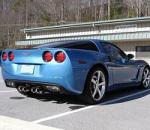
This photo is of the Fusion for C6:
We currently offer the Fusion for C5 and C6. It replaces the OE mufflers and completely integrates with the stock NPP system - just hook up the stock vacuum lines to the Fusion.
In case folks are saying "C5 didn't come with NPP" - we have a retrofit kit. We have a retrofit kit for C6 as well.
This photo is of the Fusion for C6:
Last edited by Jon@bbexhaust; Oct 11, 2013 at 10:27 AM.
Racer
Joined: Jan 2012
Posts: 298
Likes: 5
From: Bowie MD
I apologize for reviving a 4-year old thread, but Jon@bbexhaust does not have private messaging enabled.
Jon, does Billy Boat have any plans of releasing a variable exhaust retrofit to C7s that did not come with NPP?
Jon, does Billy Boat have any plans of releasing a variable exhaust retrofit to C7s that did not come with NPP?



Le Mans Master


Joined: Feb 2008
Posts: 8,515
Likes: 255
From: Rochester New York
I could not get ride of Drone on my C6 fussion systemeven after buying resonators prior to the mufflers. If you do buy them get a special muffler size/packing as the norm is much loader than a std, NPP system for me.



Drifting

Joined: Jun 2007
Posts: 1,425
Likes: 238
From: Macomb MI
You need to have the NPP exhaust to have these options in the Settings.
The NPP exhaust has larger exhaust tips with valves in the outer ones.
To Check:
Go to Settings (gear icon) -> Driving Mode -> Engine Sound Management
If Engine Sound Management (ESM) exists as an option, you have NPP. Then you will have settings:
2014: Auto or Off
2015+: Stealth, Auto, Touring, Sport, Track
Off and Track ESM settings are equivalent. This keeps the NPP exhaust valves open as much as federal pass-by noise laws allow. So they will still close at times.
The whole fuse pull thing mentioned is for NPP equipped cars. This fuse #41 for 2014 and fuse #42 in 2015+ cars in the engine bay fuse box. Pulling this fuse prevents the NPP valves from ever closing, but it also disables controlling their functions from the ESM settings. This is why some have rigged up a switch (wired or wireless) to control the fuse.
The NPP exhaust has larger exhaust tips with valves in the outer ones.
To Check:
Go to Settings (gear icon) -> Driving Mode -> Engine Sound Management
If Engine Sound Management (ESM) exists as an option, you have NPP. Then you will have settings:
2014: Auto or Off
2015+: Stealth, Auto, Touring, Sport, Track
Off and Track ESM settings are equivalent. This keeps the NPP exhaust valves open as much as federal pass-by noise laws allow. So they will still close at times.
The whole fuse pull thing mentioned is for NPP equipped cars. This fuse #41 for 2014 and fuse #42 in 2015+ cars in the engine bay fuse box. Pulling this fuse prevents the NPP valves from ever closing, but it also disables controlling their functions from the ESM settings. This is why some have rigged up a switch (wired or wireless) to control the fuse.
