When you click on links to various merchants on this site and make a purchase, this can result in this site earning a commission. Affiliate programs and affiliations include, but are not limited to, the eBay Partner Network.
Our 2017 Z51 A8 doesn't tell us much about acceptable oil temperatures. Even the Service Manual is mostly mum.
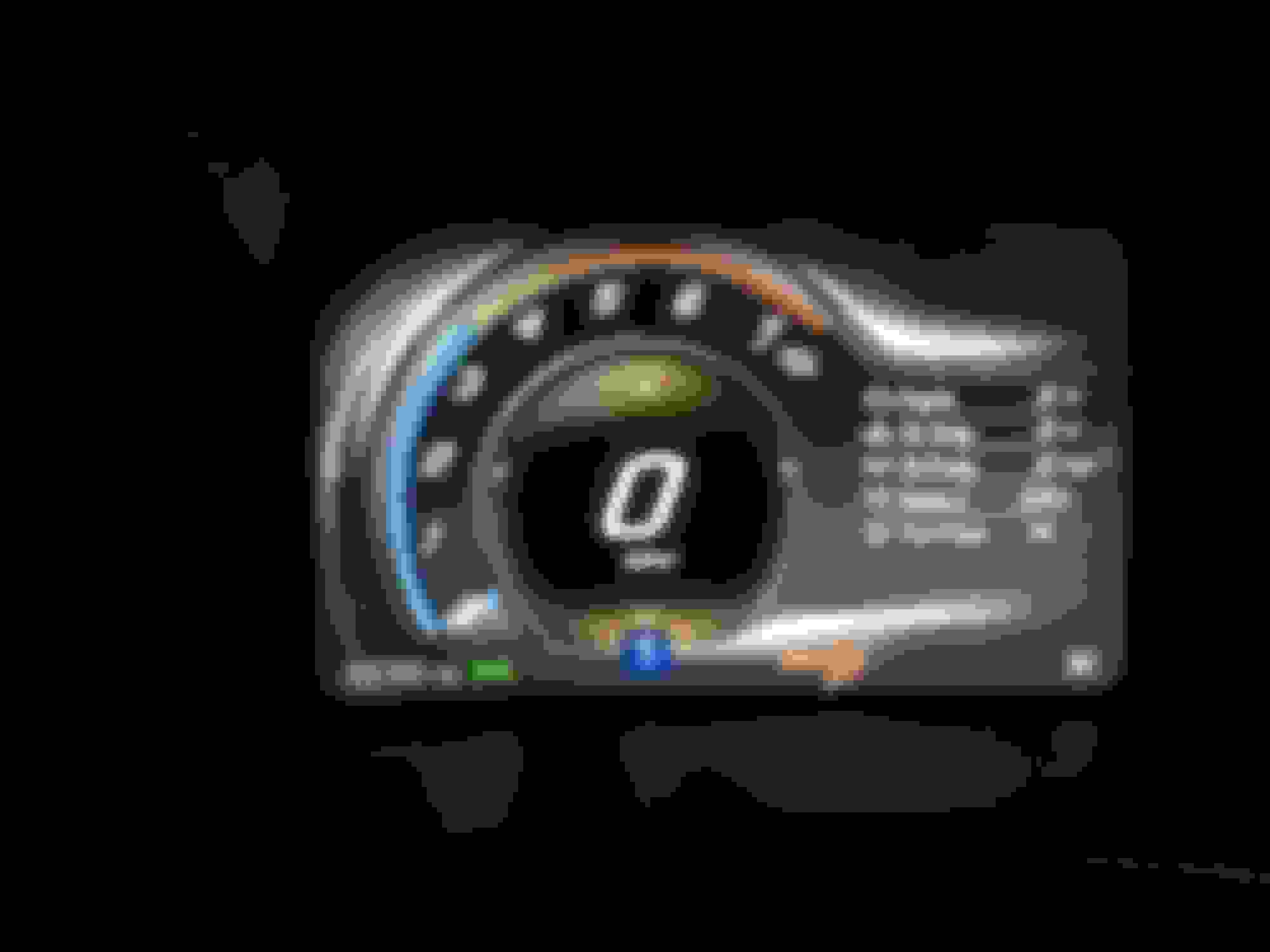
The reduced rpm yellow-red arc on the tachometer goes away by about 140'F oil (and water), is it really wise to go full throttle/rpm with the oil that cool?
The specified temperature for checking oil quantity is 175'F, and my oil usually runs 175-200 in normal driving. So I use 175' as my personal "free to have fun" number.
If things get hot, the tick marks on the oil temp pocket gauge are red above about 300'. But there's nothing in the manual about whether that is for 5W-30 or 15W-50. Or both.
I figure the 0W-40 was not on the table back then.
IIRC, our C6 manual told us that the hot oil message came on at 302'F and the Change Oil Now came on at 320'F, but the LT1 is a different engine.
What numbers do you use to guide your behavior with the C7, and how did you decide what numbers to use?
Last edited by Gearhead Jim; Apr 28, 2018 at 12:54 PM.
Look at the tach... in Performance Mode..... there are various color bands to show you how far you can safely "wind" your engine....as the engine warms the band reduces - generally about 500 rpms per progression - until all bands disappear and you can flog it all you want.
Last edited by 4thC4at60; Apr 28, 2018 at 04:04 PM.
Reason: Clarification
Engine is different but oil is the same. 300 max is a good number.
Back in late 60s early 70s my modified Corvair oil operated 325+ F when pused even modestly. Left a scum on the oil fill tube. The oil was breaking down.
In 1974, to solve a problem with the Hitachi SU's in my 260Z, the Datsun area service rep recommended I use Mobil 1 in the dashpots! It worked. Was expensive at that time After reading about what was then a true synthetic with man made molecules, I used it in my modified Corvair. Oil still was 325 but no scum!
I follow the rpm advise someone mentioned the car tach provides. However I won't go near redline unless it is past ~180 F
Yesterday drove my favorite road in NC to the zMAX Dragway, Rt 218. ~35 miles of twisty curves each way on a ridge that parallels 74. Used lower gears and oil ran up to 220. I'm sure the engine was happy!
Would think folks tracking should be concerned if it gets to 300. Driven on the street even in the hot summer in SC it won't get that hot.
Just my $0.02!
PS: This is what it says on the Mobil 1 website: Mobil 1 motor oil can withstand high temperatures of up to 500 degrees Fahrenheit.
I am going to install a heat shield on the cat next to the oil cooler to keep the heat down. I am also going to install front brake ducts but not the control arm mounted shields to hopefully direct cooler air around the engine oil cooler. I have already removed the rubber strip at the rear edge of the hood, front license bracket and the rubber strip from the bottom of the front bumper. I notice when I drive my A8 with the paddles the oil temperature rises quickly over the middle area of the gauge to about 220 degrees or more but never approaching overheat. When I stop using the paddles the oil temperature slowly drops to under the middle of the gauge - it does not matter if it is 30 degrees or 80 degrees outside. I can only surmise that the extra heat to the oil is coming from the extra engine revs heating the cat that is so close to the oil cooler that it heats the oil vs. cooling the oil. The coolant temperature is always cool as it can be never even getting close to the middle of the gauge.
I will say at Spring Mountain, pushing a GS MN7 in 80 degree temps hard, the highest oil temperature I saw was 253 degrees and most of the time it was in the 240-250 degree range while running laps. The instructors say the more important thing is not to press the car too hard when the oil temp is below 180.
I notice when I drive my A8 with the paddles the oil temperature rises quickly over the middle area of the gauge to about 220 degrees or more but never approaching overheat.
Curious, what is your objection to 220F? As the post above states re Spring Mountain and my own practice, below 180F is too cold and not optimum.
What numbers do you use to guide your behavior with the C7, and how did you decide what numbers to use?
My personal "safety zone" for going full throttle is between 180F and 230F. I don't think I've ever seen the oil temp on any of the Corvettes I've owned ever get above 230F though. But if it did get that high I would certainly not push it, the oil is quite a bit thinner at those high temps and won't protect the engine nearly as well. (this is another good reason for people to switch to the new 0w40 too, as it'll allow for that higher margin of safety when the oil temps get high)
I and a lot of others wait until the oil temp is above 150 before wailing on the engine. At the other end of things anything below 300 is fine. My Z06 on track oil temps run in the mid 270s in 90-95 degree ambient temps while the coolant temps run in the mid 220s. All far from overheating territory. Not sure at what temp Mobil 1 breaks down but it is at least above 320 degrees.
I am going to install a heat shield on the cat next to the oil cooler to keep the heat down. I am also going to install front brake ducts but not the control arm mounted shields to hopefully direct cooler air around the engine oil cooler. I have already removed the rubber strip at the rear edge of the hood, front license bracket and the rubber strip from the bottom of the front bumper. I notice when I drive my A8 with the paddles the oil temperature rises quickly over the middle area of the gauge to about 220 degrees or more but never approaching overheat. When I stop using the paddles the oil temperature slowly drops to under the middle of the gauge - it does not matter if it is 30 degrees or 80 degrees outside. I can only surmise that the extra heat to the oil is coming from the extra engine revs heating the cat that is so close to the oil cooler that it heats the oil vs. cooling the oil. The coolant temperature is always cool as it can be never even getting close to the middle of the gauge.
I installed the heat shield, seems to run close to the same temp, maybe a little cooler, close to the engine water temp 180-210.
My personal "safety zone" for going full throttle is between 180F and 230F. I don't think I've ever seen the oil temp on any of the Corvettes I've owned ever get above 230F though. But if it did get that high I would certainly not push it, the oil is quite a bit thinner at those high temps and won't protect the engine nearly as well. (this is another good reason for people to switch to the new 0w40 too, as it'll allow for that higher margin of safety when the oil temps get high)
Is that oil temp or coolant temp?
On our 2017 Z51 A8, I can't get the oil above ~220'F unless I deliberately paddle into lower gears to keep the rpm abnormally high.
Someone told me that all Stingrays have the oil cooler, but I don't know if that's correct.
On our 2009, I had the oil temp above 290'F on several track sessions one day. I'm certainly not recommending that, and was worried that I might have harmed the engine, but the next oil analysis showed everything identical to previous oil changes done after nothing but normal street driving.
The specified temperature for checking oil quantity is 175'F, and my oil usually runs 175-200 in normal driving. So I use 175' as my personal "free to have fun" number.
Same here, but is probably overkill for all practical purposes. I personally wouldn't punch it at 140°.
What numbers do you use to guide your behavior with the C7, and how did you decide what numbers to use?
I figure that since OT rises more slowly than CT it gives the drivetrain hardware more time to get to tolerances at normal operating temps. That's the rationale that I've used on cars for the past 45 years, all of which have had OT gauges, most being aftermarket hardware. My C6 and two C7s are the only ones that had a stock gauge.
Back in late 60s early 70s my modified Corvair oil operated 325+ F when pused even modestly.
I've never had a car run OT that high, even the turbo cars. My Harley would often get to 230° or a bit higher in traffic before I installed a fan kit on it, and to me that's the limit.
I follow the rpm advise someone mentioned the car tach provides. However I won't go near redline unless it is past ~180 F
My C6 ran higher OT than either of my C7s, but not higher than 225° in summer traffic. Both C7s usually stay around 195° once fully warmed up, but that takes quite a while, and the GS won't go higher than 175° in cold (<45°) weather. The GS takes longer to warm up, holds a moderate temperature more consistently, and takes longer to cool down. That's likely because the 2015 was a wet sump and the 2017 a dry sump with higher capacity. I don't recall seeing the Stingray or GS get higher than 200° even in our S. LA summer traffic, but we don't have any hills to climb here like you do. These are good numbers IMO, and I always make sure OT gets to at least 175° before shutting the car down for the day. I never make short trips that allow the oil to get contaminated. My friends think I'm terminally OCD (guilty), but finding an excuse to drive the car more is not difficult for me.
Viscosity specs are ranges rather than precise numbers, and measured oil temperature is not the same as oil temperature in the bearings, and “safe” viscosity range can be debated. But if you grant me some wiggle room due to those statements, I’d say that before you stomp on it during the warm up period, you certainly want to be below 40, and ideally below 30 centistokes (cSt). On the hot end, you’re getting into questionable territory below 7, and outright risky below 5 cSt. For the three grades of oil that get talked about most frequently, those viscosities occur at about the following temps.
The 0W40 does a better job over covering a wide range than the others due to its wider spread (difference between W and normal number), which is why it’s now recommended for C7’s. But the wider spread comes at the expense of needing VI improver of at least somewhat questionable stability to get there. If the VI improver fails, it will end up close to 0W25, somewhat thinner on the hot end than 5W30. I wouldn’t worry about that happening in less than 5000 miles, but if it were my car, I wouldn’t run it beyond 5000 until or unless I see some used oil analyses that said it held viscosity that long. It’s not so much that I don’t trust GM engineers who started recommending it this year. Trouble is some presumably non-dumb German makes started recommending it several years ago when I know from having seen data that it wasn’t reliable at long intervals. So at this point, I don’t know whether VI improvers have gotten more stable in the 7 years since I retired, or whether GM is simply joining the bandwagon in saying that it’s usually ok, except, uh, sometimes it’s not.
At the other end of things anything below 300 is fine. My Z06 on track oil temps run in the mid 270s in 90-95 degree ambient temps while the coolant temps run in the mid 220s. All far from overheating territory. Not sure at what temp Mobil 1 breaks down but it is at least above 320 degrees.
Bill
Originally Posted by iclick
I've never had a car run OT that high, even the turbo cars. My Harley would often get to 230° or a bit higher in traffic before I installed a fan kit on it, and to me that's the limit.
In my modified Corvair the oil was obviously breaking down with conventional oil but was not with Mobil 1. I had installed a black aluminum pad that had fins externally and cone fins that went inside the crackcase wherever there was room. Also had black finned valve covers. It only had a small oil cooler. It was not designed for aggressive use! Still ran fine when I sold it. Did change the oil often (as well as spark plugs until I discover NGK Copper core plugs that covered several heat ranges!) Use Bosh Super Copper Core plugs in the 502 BB in my street rod as they don't foul when cruising and are not running hot on aggressive runs!
As I just posted, the current Mobil 1 website states: Mobil 1 motor oil can withstand high temperatures of up to 500 degrees Fahrenheit. Assume it breaks down after that! As Bill states 300 is probably a good limit.
As I just posted, the current Mobil 1 website states: Mobil 1 motor oil can withstand high temperatures of up to 500 degrees Fahrenheit. Assume it breaks down after that! As Bill states 300 is probably a good limit.
Agree that base oil will not thermally break down at any temps your engine will plausibly encounter. That’s true even of dino oil. The issue is the additive package, particularly my favorite, the VI improvers. Their stability is questionable at normal engine temps and gets worse as temp increases. The biggest single advantage of synthetics is that you can get about a 25 spread (like 5W30) on synthetics without VI improvers. To go above 25 spread on synthetics, or to get any spread rather than just straight single weight on dino oil, you need VI improvers, and therein lies your biggest stability issue.
As I just posted, the current Mobil 1 website states: Mobil 1 motor oil can withstand high temperatures of up to 500 degrees Fahrenheit. Assume it breaks down after that! As Bill states 300 is probably a good limit.
Just because it can withstand 500° for a short time doesn't mean the VI package and other additives aren't breaking down below that. It'll break down anyway over time, but above 180° it increases at an exponential rate, so the more the oil is subjected to abnormally high temps the sooner it will need to be changed.
I and a lot of others wait until the oil temp is above 150 before wailing on the engine. At the other end of things anything below 300 is fine. My Z06 on track oil temps run in the mid 270s in 90-95 degree ambient temps while the coolant temps run in the mid 220s. All far from overheating territory. Not sure at what temp Mobil 1 breaks down but it is at least above 320 degrees.
Bill
It's not about the oil breaking down that worries me, but like LDB shows below, the oil is considerably thinner when it gets too hot, so it's not going to provide the same "cushion" for the bearings.
Originally Posted by Gearhead Jim
Is that oil temp or coolant temp?
Oil temp. I do find that my oil temp doesn't lag too far behind my coolant temp during warmup though, it only takes one mile of driving after my coolant reaches normal operating temp (around 90C for me) before the oil also hits that temp as well.
I am going to install a heat shield on the cat next to the oil cooler to keep the heat down. I am also going to install front brake ducts but not the control arm mounted shields to hopefully direct cooler air around the engine oil cooler. I have already removed the rubber strip at the rear edge of the hood, front license bracket and the rubber strip from the bottom of the front bumper. I notice when I drive my A8 with the paddles the oil temperature rises quickly over the middle area of the gauge to about 220 degrees or more but never approaching overheat. When I stop using the paddles the oil temperature slowly drops to under the middle of the gauge - it does not matter if it is 30 degrees or 80 degrees outside. I can only surmise that the extra heat to the oil is coming from the extra engine revs heating the cat that is so close to the oil cooler that it heats the oil vs. cooling the oil. The coolant temperature is always cool as it can be never even getting close to the middle of the gauge.
Removing the weather strip at the back of the hood is not good for cooling. You're now allowing high pressure air to enter the engine bay from the rear making it harder for air to enter through the front at the radiator. Also, the oil cooler is a coolant-to-oil heat exchanger, air wont do much there. But the cat shield should help. I did that. 220 is nothing. That's low.
Designer Imagines A Corvette That Looks More Like a Corvette Than the Corvette
Slideshow: A Jaguar designer's personal project imagines what a modern front-engined Corvette might look like if Chevrolet revisited the golden age of the Stingray.







 Specs for Oil Temperature