When you click on links to various merchants on this site and make a purchase, this can result in this site earning a commission. Affiliate programs and affiliations include, but are not limited to, the eBay Partner Network.
Im interested in the controller. My warranty states that I can't do any modifications. Is the controller easily removable? I think I would need to remove it before having any warranty work done.
The short answer to your question is - Yes. It’s just as easy to remove, as it is to install. Depending on what warranty work you would be having done, in most cases, the dealer or anyone else for that matter wouldn’t even know you had one.
I'm a big fan of the Soler products. I installed both the TB and the TC on my 2017 Z51 and was blown away by the difference in throttle response and driveability. It was like a completely different car. And the installation was pretty straight forward and simple to do. The hardest part for me was hiding the TC throttle module that the pedal connects to. But everything is tucked out of sight. I control the TC with the included bluetooth app but can attach the control fob easily if I have to (haven't had to tho). I've had it for almost two years now and it has worked flawlessly.
I'm a big fan of the Soler products. I installed both the TB and the TC on my 2017 Z51 and was blown away by the difference in throttle response and driveability. It was like a completely different car. And the installation was pretty straight forward and simple to do. The hardest part for me was hiding the TC throttle module that the pedal connects to. But everything is tucked out of sight. I control the TC with the included bluetooth app but can attach the control fob easily if I have to (haven't had to tho). I've had it for almost two years now and it has worked flawlessly.
Thank you so much for the awesome feedback! We’re thrilled to hear you’ve been enjoying the throttle body and controller on your 2017 Z51 — and for almost two years with flawless performance, that’s what we love to hear!
Sounds like you nailed the install too — clean and hidden setups are always a win. If you ever need anything down the road or have questions about future upgrades, don’t hesitate to reach out.
I just installed the TC on my '16 Z51 coupe and wish I had installed one sooner! Just wondering if you installed the 91mm or the 95mm throttle body? And did you have your car tuned after installing the TB?
I just installed the TC on my '16 Z51 coupe and wish I had installed one sooner! Just wondering if you installed the 91mm or the 95mm throttle body? And did you have your car tuned after installing the TB?
Hi, I didn’t see you quote anyone’s message, so I’ll answer just in case this was meant for us at Soler Performance.
The 91mm is best for stock to lightly modified vehicles—think CAI and some exhaust work. The 95mm is recommended for heavier modifications like a full bolt-on setup (built exhaust, CAI, upgraded manifold, headers, etc.). The 95mm will require an adapter if your manifold isn’t ported to at least 93mm.
You don’t have to tune or retune with our 91mm or 95mm, though it’s recommended if you want to make sure you’re getting the full potential out of the throttle body—it’s really a personal preference.
You can use code TIFF5OFF for a discount, and let us know if you need any help choosing the right setup.
I just installed the throttle controller. Holy Smoke what a difference. easy to put in. I have had my car for 8 years and I should have installed this years ago. 2015 Z51 7spd 135k miles, it's like a new car
Not too sure how to install the throttle controller? Maybe need a confidence boost before purchasing? Check out our Throttle Controller installation video!
Don't forget to use tiff5off at checkout to save on your order!
Not too sure how to install the throttle controller? Maybe need a confidence boost before purchasing? Check out our Throttle Controller installation video!
Don't forget to use tiff5off at checkout to save on your order! Soler Performance DLX Throttle Controller Installation
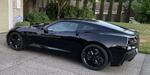
Looks like my car which I just installed your Throttle Controller in! Took maybe ten minutes (not including the 10 minutes you have to wait for the car to power down)! I originally had it in my C7.
Can't wait to see how it changes the throttle response.
If my wife likes it on mine, she will want one for her 2013 GS next.
Awesome, that’s great to hear! Thank you! 🎉 Your order will be going out today.
The discount code tiff5off never expires, so when your wife is ready to order one for her 2013 GS, she can use it too.
We just posted a new video featuring Luis, our Co-Founder and President. In it, he explains airflow and shaft design, how air moves through our throttle body, and how design choices impact airflow.
Question on the following statement from the chart on the 95mm TB:
* Must have aftermarket inlet duct/CAI or expandable coupler.
I am running a stock setup and do not plan to mod the car, can you point me in the right direction for a coupler?
Hi there,
You might be able to stretch the stock CAI coupler over the 95mm throttle body, but it would be very difficult to do so. If you don’t plan to modify your vehicle and want to keep it stock or lightly modded, we recommend the 91mm throttle body, which is perfect for stock to lightly modified setups. We typically recommend the 95mm throttle body for full bolt-on (FBO) vehicles.
Are there any tests done to show these vortices happening inside a TB as you describe? Would be good to see a clear/plastic tube or a cross section test done with actual air flowing at different engine speeds to see this effect and if the dimple machining works. Curious if your CAD flow simulations mimic actual results.
Hi smitty2919. Absolutely, the phenomenon described is not exclusive to our design nor this type of valve. For further context, this is not the first butterfly valve we have worked on / designed (we mainly focus on aerospace applications). CAD flow simulations and real world testing have proven that these features contribute to the overall design and performance benefits. And again, it is not the only aspect making our throttle bodies flow more and more efficiently than anything else on the market. We have the highest SCFM numbers and it is very much related to the accumulation of such effects / design. There is a video coming out tomorrow which I will link here showing airflow numbers which were validated by an independent 3rd party, with no affiliations, who witnessed and documented every stage of calibration and airflow testing on our 91mm throttle body and other brands. Stay tuned!
Fluid Dynamic / Aerodynamic studies have these pretty well documented in countless test, textbooks, scientific journals and studies across a variety of industries / applications. "flow/laminar separation", "wake", "bluff object", etc...
Cheers!
Hi smitty2919 , there's our engineering gut feeling (helped me many times) and then there's reality. Going with our gut feeling vs. experiments is the very definition of confirmation bias. Let me explain.
The very first thing (gut feeling) that caught our attention about making TB's more efficient was the stream lining of these features you are talking about, and so we did, only to realize that no matter what you do to those areas (lip/ridge/...) did not affect the WOT flow. The WOT flow is 970+/-10 CFM no matter how well you round or streamline that lip/ridge or anything on the wall for that matter.
Why? B/c we are dealing with Mach numbers from ~0.1 at WOT to 1 when idling, there's no throttle position at which we get anything close to laminar flow, the minimum Reynolds number for the LT1/LT2 is nearly 250, 000, that is almost 10 times greater than what it needs to be to be considered transitional, let alone laminar. The consequences of that are:
1) Very turbulent flow at any throttle position, which is made even worse by the fact that the air comes from a bend in the upstream duct swirling in opposite directions. and that the throttle body is S-shaped (not a straight bore).
2) Unstable boundary layer, the TB is so short that the boundary layer never gets to develop or stabilize.
3) What matters is Area, area, and more area.
At this point we are convinced (against our gut) that every penny we spend on streamlining the wall is not going to pay off (at least in practice), but we know that customers can have the same gut feeling we had, and we still smooth and polish them out anyway, but we know it is a myth at this point.
Now the notch at 12 o'clock. What's the most effective and controllable way to get more flow area at low throttle? We could remove some of that ridge along the perimeter times a radial small gap distance; or we can have a slot of limited width for which we have better control of the larger radial gap. The latter is best as you can probably guess. The sharp corners it creates are parallel to the flow direction, yet we still smooth them out. But even if they were perpendicular to the flow and sharp, they would not matter.