







Progress report Halltech's Stinger Intake system

Thread Starter
Supporting Vendor


Joined: Mar 2002
Posts: 13,099
Likes: 672
From: Bristol, Tennessee
St. Jude Donor '09
 Progress report Halltech's Stinger Intake system
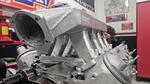
Update: Our complete carbon fiber intake will be finished Wednesday Dec 18th. We'll have pictures and videos then. The first system out will go to Katech for their chassis dyno testing having already completed the engine dyno testing +12BHP/+10lb-ft Torque SAE correction. +13/+10 STP correction. Texas Speed should have theirs shipping by Friday. The week after we are hoping to get our retail customer pre-orders shipped. The airbox will be fully enclosed, sealed to the fender exactly the way stock is set up. We are debating whether or not to keep the CKN Technology standard, or as an option to keep our pricing at $999.99 retail.


The one piece air box mold is finishing Weds or Thursday, two will be shipping to pre-paid dealers (Katech and Texas Speed), so by Friday or Saturday we expect 15 rwhp from their dyno testing. Our car will be chassis dyno tested as well. No tuning.
The one piece air box mold is finishing Weds or Thursday, two will be shipping to pre-paid dealers (Katech and Texas Speed), so by Friday or Saturday we expect 15 rwhp from their dyno testing. Our car will be chassis dyno tested as well. No tuning.
__________________

"World Class Performance for your Corvette"
Intake Design and Engineering since 1999
Halltech Systems, LLC
423-915-6056
For service email:
orders@halltechsystems.com
www.halltechsystems.com
"World Class Performance for your Corvette"
Intake Design and Engineering since 1999
Halltech Systems, LLC
423-915-6056
For service email:
orders@halltechsystems.com
www.halltechsystems.com
Last edited by Halltech; Dec 15, 2013 at 11:21 AM.

Instructor


Joined: Jan 2011
Posts: 191
Likes: 2
The mustang crowd has one that you can run without a tune, then there is a all out intake that requires a tune. if designing an intake to run one stock calibration holds back potential HP at even cam only levels perhaps you would make money on two models.

Le Mans Master


Joined: Jul 2000
Posts: 6,559
Likes: 4,501
From: North Dallas 40 TX
Looks cool, but I have to think that if this thing costs more than $400 than it won't be worth it IMO.
I assume this intake will only translate into about 7-8 HP at the wheels, with a majority of that power coming from switching to K&N filtering element which lets too much dirt into the motor and uses oil to filter.
As for IATs, I don't see how going from a fully enclosed air box that the stock system uses to an exposed "heat shield" system is better. Unless it fully seals against the hood, there is a good chance the filter will pull air from the engine bay which is obviously not as efficient at the fully sealed stock air box which is a true cold air setup.
The stock systems tubes may run hotter than your carbon fiber and heat resistant coating, but air moves at such a high speed it barely has time to heat up before entering the motor. This is why the stock system is usually perfectly adequate in that regard. Now, with this intake, it can likely pull in hot engine air that is already heated and it doesn't matter if the plumbing blocks heat better than stock or not, since it is pulling hot air to begin with.
Not to mention the stock dry air filter is more efficient at keeping the dirt out of your motor.
I know you will have buyers for this thing and that is great, good for you - but I really am just trying to wrap my head around why in this case it would be a wise purchase for the C7.
Thank you
I assume this intake will only translate into about 7-8 HP at the wheels, with a majority of that power coming from switching to K&N filtering element which lets too much dirt into the motor and uses oil to filter.
As for IATs, I don't see how going from a fully enclosed air box that the stock system uses to an exposed "heat shield" system is better. Unless it fully seals against the hood, there is a good chance the filter will pull air from the engine bay which is obviously not as efficient at the fully sealed stock air box which is a true cold air setup.
The stock systems tubes may run hotter than your carbon fiber and heat resistant coating, but air moves at such a high speed it barely has time to heat up before entering the motor. This is why the stock system is usually perfectly adequate in that regard. Now, with this intake, it can likely pull in hot engine air that is already heated and it doesn't matter if the plumbing blocks heat better than stock or not, since it is pulling hot air to begin with.
Not to mention the stock dry air filter is more efficient at keeping the dirt out of your motor.
I know you will have buyers for this thing and that is great, good for you - but I really am just trying to wrap my head around why in this case it would be a wise purchase for the C7.
Thank you
I would be stunned if Halltech does not also offer a rotomolded non-CF product as well that will be a bit less expensive than the CF version. I believe he has stated this in another thread.
The real comes when you add other power adders. The stock system flows well for the stock configuration. When you start flowing more air, then the limitations of the stock system show up.
Also a system like HallTech's sounds better. The stock system purposefully mutes intake noise.
Last edited by Racer X; Nov 7, 2013 at 04:22 PM.
Melting Slicks


Joined: Aug 2000
Posts: 2,606
Likes: 826
From: Phoenix, AZ USA
It's too bad that you couldn't find an "out of the box" way to route the air from directly below the hood scoop rather than to the right so that you would have a soft transition/bend rather than the severe 90 degree tube like the OEM inlet......my personal experience on the dyno says that these sharp 90's kill torque and power (meaning that there is still more free TQ & HP just waiting even in your current configuration!).

Intermediate
Joined: Nov 2013
Posts: 33
Likes: 0
I am very interested in the roto-mold version of this system and seeing the before & after chassis dyno results.
Halltech - I know some aftermarket units have larger diameter intake pipes which can slow the air velocity down at lower RPMs, mostly noticeable when driving on the freeway in 5th/6th/7th gear under 2000 RPMs and accelerating at part throttle. The low end lags a bit but the tradeoff is more power above 2K RPMs. With your testing so far, has there been a loss of torque with this system below 2K RPMs? Dyno tests aside, I am talking seat of the pants feeling.
So far, your intake is on the top of the list for me so I really look forward to seeing the finished version.
Halltech - I know some aftermarket units have larger diameter intake pipes which can slow the air velocity down at lower RPMs, mostly noticeable when driving on the freeway in 5th/6th/7th gear under 2000 RPMs and accelerating at part throttle. The low end lags a bit but the tradeoff is more power above 2K RPMs. With your testing so far, has there been a loss of torque with this system below 2K RPMs? Dyno tests aside, I am talking seat of the pants feeling.
So far, your intake is on the top of the list for me so I really look forward to seeing the finished version.
Corvette Stories
The Best of Corvette for Corvette Enthusiasts

Top 10 Most Expensive Corvettes Ever Sold on Bring A Trailer
Brett Foote
10 Things Every Corvette Owner Needs (2026 Edition)
Michael S. Palmer
8 Most "Only Corvette Owners Understand" Quirks and Problems
Pouria Savadkouei
10 Reasons the C6 Z06 is Still A Performance Benchmark After 20 Years
Joe Kucinski
How Much Horsepower Every Corvette Engine "LOST" in 1972
Joe Kucinski
Top 10 DOs and DON'Ts for Protecting Your Convertible Top!
Michael S. Palmer
Top 10 Most Explosive Corvettes Ever Made: Power-to-Weight Ratio Ranked!
Joe Kucinski
150 hp to 1,250 hp: Every Corvette Generation Compared by the Specs That Matter
Joe Kucinski
8 Coolest Corvette Pace Cars (and Replicas) of All Time
Verdad Gallardo
Advanced

Joined: Oct 2013
Posts: 68
Likes: 2
From: North NJ
Under $500 when we get the roto mold version done. The chassis dyno will be the same for both the carbon fiber version and roto mold version.
Katech is seeing +13/10 on the engine dyno.
Capacity will be around 1 per day in carbon fiber, so even if the price came in right, capacity will be too limited.
We have 5 on order, so that puts us around the first week of December.
Now snow. Hopefully we can get this done before major snowfall.
Katech is seeing +13/10 on the engine dyno.
Capacity will be around 1 per day in carbon fiber, so even if the price came in right, capacity will be too limited.
We have 5 on order, so that puts us around the first week of December.
Now snow. Hopefully we can get this done before major snowfall.
Advanced
Joined: Oct 2013
Posts: 68
Likes: 2
From: North NJ
Your request is fullfilled. You will be first in and first out. #1.
https://www.halltechsystems.com/Prod...uctCode=HSTRRM
https://www.halltechsystems.com/Prod...uctCode=HSTRRM

8th Gear
Joined: Dec 2013
Posts: 8
Likes: 0
Beautiful piece Halltech.
I am wondering, I am currently using the Pfadt tune which increased power and throttle response significantly for me.
If I add this intake, do you think it won't be a problem if I do not have a retune? There should be margins the PCM can play with in regards to the MAF sensor and adding fuel based on additional intake air flow correct?
I'd ask a tech at my dealership but they really know nothing about this type of thing.
Thank you
I am wondering, I am currently using the Pfadt tune which increased power and throttle response significantly for me.
If I add this intake, do you think it won't be a problem if I do not have a retune? There should be margins the PCM can play with in regards to the MAF sensor and adding fuel based on additional intake air flow correct?
I'd ask a tech at my dealership but they really know nothing about this type of thing.
Thank you

Former Vendor
Joined: Mar 2004
Posts: 3,442
Likes: 18
From: Winchester CA
You would have to check with Pfadt. If they have not changed the MAF transfer curve, you should be ok. This intake is designed to change the air fuel ratio by about .3 without tuning, so it will go leaner.
The margins you refer to are closed loop stoichiometric re-trimming done automatically by the O2 sensor loop feedback. There are margins of +or-25%. The problem is open loop. The loop feedback is off during load or full throttle. That is where the unreported air might cause too lean conditions if there tune has already gone leaner to add power.
Jim
The margins you refer to are closed loop stoichiometric re-trimming done automatically by the O2 sensor loop feedback. There are margins of +or-25%. The problem is open loop. The loop feedback is off during load or full throttle. That is where the unreported air might cause too lean conditions if there tune has already gone leaner to add power.
Jim



 What model is this engine going into? Details please!
Thread Starter
Supporting Vendor
Joined: Mar 2002
Posts: 13,099
Likes: 672
From: Bristol, Tennessee
St. Jude Donor '09
Halltech CKN Technology
All of our StingerCKN cold air intakes for the C7 are made entirely with our CKN technology. Carbon fiber outer and inner layers, with Kevlar, Nomex® III A sandwich meat.
Pending orders should start shipping December 18th. We have revised the heat shield to include a cover, for complete encapsulation.
The new mold will be finished next week, but PRI eats up the rest of the week.
We are now back-ordered through Christmas with pre-orders.

Instructor

Joined: Dec 2005
Posts: 172
Likes: 0
From: Toms River NJ
So then what were the final gains with this intake? If I understood correctly, you saw 10 or 12 hp on the engine dyno, which would translate to about 8 hp at the wheels. Awfully steep price for such a small gain. That being said, this is one of the nicest pieces of work I've seen for this or any car.


Thread Starter
Supporting Vendor
Joined: Mar 2002
Posts: 13,099
Likes: 672
From: Bristol, Tennessee
St. Jude Donor '09