When you click on links to various merchants on this site and make a purchase, this can result in this site earning a commission. Affiliate programs and affiliations include, but are not limited to, the eBay Partner Network.
Replacing my 19's Grand Sports wheels and tires and looking for recommendations for online purchase.
Do any buyers recommend the Continental tires for this car, which are about $500 cheaper than the stock track Pilot cups? CONTINENTAL
EXTREMECONTACT SPORT
Are the regular summer tires betters and do they work well in the rain and below 30 degrees? My problem with the stock tires is that they felt ready to hydroplane and were useless if not dangerous below 30 degrees. MICHELIN PILOT SUPER SPORT ZP
Yeah, that's why I am ditching it. The Continentals say 32 degrees and up which is fine by me. 30-50 degrees is where I need some improvement over OEM but I am staying away from all season. I just need a little boost over the base ones. I have to drive semi occasionally in that colder weather but never in the snow, sleet or freezing rain.
I am ditching the Run Flats too. I am going for the best ride and hoping to avoid wheel damage.
What are you thoughts on ditching the 19/20 and going to a 18/19?
Since you are getting wheels, That opens up more options.
Conti does make a tire that would work on our cars with a -1 change.
The taller sidewall would be a good thing for both ride, and pothole impact protection.
I did the same thing, with no regrets at all, 100% better ride, especially after Back surgery.
I knew it would help, but the difference was bigger then excepted - which is a good thing. I swear Sport mode now feels almost like Tour mode. I think having lighter wheels helps too, for example my rears are 8lbs lighter (with tires) when compared to the OEM setup.
AS 3+. Quiet and a RF. Saved my butt in BFE Oklahoma. I will only use RF on long road trips or in the cold. Went 19s in all corners as there are way more tire options however I got the AS3+ in OEM sizes as I put them on factory wheels. I had 3 cracked factory rims and did not replace them as they were garbage to begin with. I run Toyo r888rs now but they are crazy loud. Highway drives are not as fun especially if the surface is concrete.
I went through the cracked wheel/run-flat mess with my ZO6. The Grand Sport uses the same wheel set up. The only way to really fix the problem is to go to forged wheels and non run-flats. I went with Continentals and they were a huge improvement over the Mich's for street driving. No skipping around on cold mornings, they hook up well, they're much quieter and ride is much more civilized. Plus, you wont't be picking up every stone and trowing them up into the car. It's smart to carry a 12v compressor and a leak repair kit with you just in case. Takes about 7 minutes to repair a flat on the roadside with the wheel still on the car.
On the wheel question there are many things to consider. All forged wheels are not alike, as in flow-forged vs. monoblock for instance; I've posted this on the ZO6 forum but I think it will be helpful here also. Monoblocks will take care of the problem, flow-forged, not so much. I got my monos from Deity Motorsports. Call Khoa and he will get you fixed up fast and is great to deal with. There are other good vendors also, just make sure you don't buy flow-forged. You're looking at $4K and up for good wheels.
Here's some educational material:
1. Cast aluminum wheels 2. Flow-Formed wheels
3. 1-piece "Monoblock" forged wheels
4. 2-piece welded construction wheels
5. 2-piece bolted construction wheels
6. 3-piece bolted construction wheels
Cast Aluminum Wheels
These are the lowest priced wheels, and are typically what are found on production vehicles. Cast aluminum wheels are created by pouring molten aluminum into a mold that is shaped like a wheel. This produces a wheel casting. Some final machining work is then done to clean up the rough surface, and paint/finishing is applied.
Pros: Lowest price, easiest to mass-produce.
Cons: More brittle than forged wheels. Spoke details and edges aren't as sharp as a machined forged wheel. Heaviest weight of all wheel construction types. Lowest quality. Limited offsets, width increments, diameter selection available. Nearly impossible to repair when cracked or severely bent - safely, that is. A damaged cast wheel usually needs to be replaced.
Flow-Formed Wheels (Rotary Forged)
Flow-Formed wheels start out identical to cast poured wheels, but with different hoop thickness. The casting process above is used to create the spoke pattern only. Then the wheel castings are put into a flow-forming machine to form the outer hoops. This is done using high heat and high pressure rollers, which "flow-form" the outer hoop. This results in a stronger outer hoop, with aligned aluminum grain structure. The resulting wheel is a cast faced wheel with a hoop that has properties similar to a forged wheel. They are stronger and lighter than cast wheels.
Pros: Low Price, Lightweight, Higher strength than cast wheels.
Cons: Cast face still lacks the sharp edges and details of a machined forged wheel. Limited width increments and diameters available. Hard to repair when severely bent or cracked.
1-Piece Monoblock Forged Wheels
The term "Monoblock" is used throughout the industry to describe the 1-piece forged wheels. "Mono" meaning one, and "Block" meaning it was created from one block of aluminum. The block in this case is actually a round bar stock of high quality, aerospace-quality 6061-T6 Aluminum Alloy. The round bar is pressed in a huge forging machine, to stamp out a wheel shaped blank. Forging is a hot working process, and helps to align the grain structure of the alloy. This results in a very strong, very lightweight wheel construction material. The wheel blank is then flow-formed to create the outer barrel shape. Following that process, the wheel blank is loaded into a CNC milling machine and there the spoke pattern is milled out.
Pros: Lightest of the forged wheel construction methods.
Cons: Priced about the same as expensive 3-piece construction. Difficult to repair when bent or severely damaged.
2-Piece Welded Construction Forged Wheels
These are considered the entry level forged wheels, as they are priced slightly lower than 3-piece forged wheels. The centers start out as a blank of forged 6061-T6 Aluminum alloy, and the spoke patterns are CNC machined with a milling machine. The wheel hoop is also a forged aluminum material. On a 2-piece wheel, the center is simply welded to the hoop on the backside of the wheel. Some manufacturers also offer cast aluminum centers, to reduce cost. Quality and weight of the cast centers is not as good as forged/machined, however.
Pros: Lowest Price of the Forged wheels. Same weight, appearance, quality as 3-piece wheels.
Cons: Limited widths increments available. Cannot easily chrome plate or paint the lip, since it has to be welded on. More difficult to repair a bent lip compared to a 3-piece wheel, as the center has to be cut out and a new hoop welded on.
2-Piece Bolted Construction Forged Wheels
These are built very similar to the 2-piece welded construction wheels above, but use a hoop that has a bolting ring already in place. Instead of welding the center to the hoop, it is simply bolted on. This is the least common method of forged wheel construction, as the hoops tend to cost more than simple welded hoops. Some manufacturers also offer cast aluminum centers, to reduce cost. Quality and weight of the cast centers is not as good as forged/machined, however.
Pros: Lips can be easily chrome plated or painted, since no welding required. Easier to replace a hoop when it gets bent.
Cons: Limited width increments available. Few brands offer this type.
3-Piece Forged Wheels
Three piece forged wheels are usually the most expensive wheel construction, mostly due to the assembly labor and components used. The wheels consist of three main pieces; the center, the outer hoop (lip), and the inner hoop. These three parts are held together with a series of perimeter bolts. Silicone RTV is used to seal between the two hoops. Some manufacturers also offer cast aluminum centers, to reduce cost. Quality and weight of the cast centers is not as good as forged/machined, however.
Pros: Most width increments available, truly perfect fitments available. Easiest of all wheels to repair if lip gets bent or damaged, as hoops are easy to replace. Easy to paint or chrome plate lip, since no welding is required. Can have different color rear hoop and outer hoop, since they are two different pieces. Highest resale value for used wheels.
Cons: Most expensive forged wheel construction. RTV silicone seal can be damaged by inexperience tire installers, resulting in leaks.
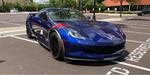
I put chrome ZR1 wheels on my Admiral Blue GS and I personally think they look awesome. The slightly offset spokes really draw your eye to them. I got them from House of Wheels, a forum member.








 Tire and wheel recommendations