When you click on links to various merchants on this site and make a purchase, this can result in this site earning a commission. Affiliate programs and affiliations include, but are not limited to, the eBay Partner Network.
Since some of these CIA's are running a little lean how about a small methanol/water injection system to bring it back more in line and cool things a bit. Ask Him!
Last edited by johnglenntwo; Jun 10, 2015 at 11:28 PM.
I have not received my new Z yet. but what I do know, from the Zs I have seen in person, and herd complaints posted on the Forum. just being able to lean out the factory "rich" fuel is worth the Halltech system.
With this intake, my car will have a crisper throttle resopnse, better fuel milage, more horsepower and torque. plus you will not have to keep cleaning up the unspent fuel that shows up on your exhaust tips.
I am not cracking my computer and no worries on a possible warrentee.
I have not received my new Z yet. but what I do know, from the Zs I have seen in person, and herd complaints posted on the Forum. just being able to lean out the factory "rich" fuel is worth the Halltech system.
With this intake, my car will have a crisper throttle resopnse, better fuel milage, more horsepower and torque. plus you will not have to keep cleaning up the unspent fuel that shows up on your exhaust tips.
I am not cracking my computer and no worries on a possible warrentee.
The tips are only clean until the computer learns the trims in a week or so.
The tips are only clean until the computer learns the trims in a week or so.
maybe true on the halltech, but after 200 miles on aFe intake, tips were still clean as can be. Lean conditions can be dangerous, but I'm not getting into another discussion about CAI's running lean.
I still would like a conclusive answer re. a 'lean condition' with my AFE. After about 250 miles I have a hard time feeling any power increase in 'seat of the pants', but I do have my dirty tips. I don't know if conclusions can be drawn just from that though that its not 'running lean'?
I still would like a conclusive answer re. a 'lean condition' with my AFE. After about 250 miles I have a hard time feeling any power increase in 'seat of the pants', but I do have my dirty tips. I don't know if conclusions can be drawn just from that though that its not 'running lean'?
No matter what intake you put on your car, ours, stock, LMR, Afe, you cannot run lean when driving normally, or under 70% throttle.
When you are driving in Closed Loop, which is under 70% throttle position, your air fuel ratio is a consistent 14.1:1. That is stoichiometric for e10 fuel. In other words, Lambda 1.00=14.1:1 when using 10% ethanol/gasoline mix.
As you drive, the O2 sensors during closed loop will always adjust your air fuel ratio back to 14.1:1. Our intake needs no adjusting since the MAF read is in parity with the actual air being measured by the O2 sensors. Over time, if any adjustment takes place, either adding pulse width or deleting it to keep your engine in "trim" so to speak, the Long Term Fuel Trim averages will show that average in a percentage + for adding fuel to compensate or - when taking some fuel out of the burn.
The idea is to always have a clean burn. 14.1:1 is the theoretically complete combustion for e10. Stoichiometric, or no fuel or O2 molecule left behind. If your O2 sensor sees left over oxygen, it adds just enough fuel to bring that fuel cell (related to a specific throttle position) back to stoich.
When you push the throttle past 70%, you go into what is known as PE or Power Enrichment Open Loop mode. Every rpm has a specific equivalency ratio that adds fuel to keep the engine from detonating. The power tuners try to dial in their favorite air fuel ratio either with wideband O2s on the dyno or onboard. We use onboard O2s for a more accurate reading.
Here is a typical air fuel ratio event done by Smokey's Dyno back in January using our prototype intake with the 689 cfm filter. Note: The actual air fuel ratio is actually .959 of what you see. The software used on dynos is still assuming 14.7:1 air fuel ratio for Lambda 1.00. So divide 14.1 by 14.7 to get the actual ratio for e10.
Hope this helps.
[I]Red: Bone stock everything<br/>Blue: Halltech Stinger CKNZ stock programming i.e No tuning. +51.6 RWHP
If you are wondering why the air fuel ratio drops into the 10:1 area, and even 9.8:1 stock, is the Cat Over Temp Protection Nanny. It pours fuel into the cylinders when it see 1600F at the O2 sensors. Does this rob power with the stock tune? Actually not much. Remember, the actual air fuel ratio is .959 corrected from the graph ratio
One more footnote. The reason you see lean air fuel ratios prior to 3,000 rpm is because when the dyno operator is about to enter Open Loop, the car is still in closed loop (14.1:1) then the pedal is trompted. It takes a few seconds for the air fuel ratio to straighten out. What is see is the Closed Loop to Open Loop transitional ratio.
Footnote 2: Note that the air fuel ratio just before the pedal goes down is 14.7:1. That is incorrect, but the software assumption is pure gasoline or Lamba 1:00= 14.7:1, when Lamda 1.00 is actually 14.1:1 since e10 is the standard fuel now everywhere.
__________________ "World Class Performance for your Corvette"
Intake Design and Engineering since 1999
Halltech Systems, LLC
423-915-6056
Thankyou for all that info. So, when above 70% throttle input in open loop, can you explain more in detail how the car avoids running lean with an aftermarket air intake, and stock tune?
Originally Posted by Halltech
No matter what intake you put on your car, ours, stock, LMR, Afe, you cannot run lean when driving normally, or under 70% throttle.
When you are driving in Closed Loop, which is under 70% throttle position, your air fuel ratio is a consistent 14.1:1. That is stoichiometric for e10 fuel. In other words, Lambda 1.00=14.1:1 when using 10% ethanol/gasoline mix.
As you drive, the O2 sensors during closed loop will always adjust your air fuel ratio back to 14.1:1. Our intake needs no adjusting since the MAF read is in parity with the actual air being measured by the O2 sensors. Over time, if any adjustment takes place, either adding pulse width or deleting it to keep your engine in "trim" so to speak, the Long Term Fuel Trim averages will show that average in a percentage + for adding fuel to compensate or - when taking some fuel out of the burn.
The idea is to always have a clean burn. 14.1:1 is the theoretically complete combustion for e10. Stoichiometric, or no fuel or O2 molecule left behind. If your O2 sensor sees left over oxygen, it adds just enough fuel to bring that fuel cell (related to a specific throttle position) back to stoich.
When you push the throttle past 70%, you go into what is known as PE or Power Enrichment Open Loop mode. Every rpm has a specific equivalency ratio that adds fuel to keep the engine from detonating. The power tuners try to dial in their favorite air fuel ratio either with wideband O2s on the dyno or onboard. We use onboard O2s for a more accurate reading.
Here is a typical air fuel ratio event done by Smokey's Dyno back in January using our prototype intake with the 689 cfm filter. Note: The actual air fuel ratio is actually .959 of what you see. The software used on dynos is still assuming 14.7:1 air fuel ratio for Lambda 1.00. So divide 14.1 by 14.7 to get the actual ratio for e10.
Hope this helps.
[I]Red: Bone stock everything<br/>Blue: Halltech Stinger CKNZ stock programming i.e No tuning. +51.6 RWHP
If you are wondering why the air fuel ratio drops into the 10:1 area, and even 9.8:1 stock, is the Cat Over Temp Protection Nanny. It pours fuel into the cylinders when it see 1600F at the O2 sensors. Does this rob power with the stock tune? Actually not much. Remember, the actual air fuel ratio is .959 corrected from the graph ratio
One more footnote. The reason you see lean air fuel ratios prior to 3,000 rpm is because when the dyno operator is about to enter Open Loop, the car is still in closed loop (14.1:1) then the pedal is trompted. It takes a few seconds for the air fuel ratio to straighten out. What is see is the Closed Loop to Open Loop transitional ratio.
Footnote 2: Note that the air fuel ratio just before the pedal goes down is 14.7:1. That is incorrect, but the software assumption is pure gasoline or Lamba 1:00= 14.7:1, when Lamda 1.00 is actually 14.1:1 since e10 is the standard fuel now everywhere.
Thankyou for all that info. So, when above 70% throttle input in open loop, can you explain more in detail how the car avoids running lean with an aftermarket air intake, and stock tune?
How an aftermarket intake can cause lean conditions.
There are two critical areas of development that we use to dial in the air fuel ratio. One is the MAF read area, the other is the resistance to flow of the filter being used in the application.
The MAF area scaling is done by adjusting the amount of shot weight into the mold. For instance a 4" diameter at the MAF read area is 12.57 sq inches. The read area diameter is 101.6 mm. You can make this area larger or smaller with the amount of material in the mold.
Let's say the MAF read area is scaled to the stock intake. Assume 101.6mm or 4" area. You increase the size of the read area by 10% with a new design. 111.8mm or 4.4". The MAF transfer curve are tables developed for all the closed loop fuel cells to maintain Lambda 1.00. So having the MAF under-report 10% of the air mass passing by the hot wire, and the O2 sensors seeing that unburned O2 would increase fuel delivery in the amount necessary to bring the air fuel ratio back to stoichiometric, or 14.1:1. What you would see if you did a log file is that the LTFTs in B1 and B2 (Long Term Fuel Trim Averages) would be right around +10% both banks. It takes over 25% correction in either direction to cause a code.
The problem is that the extra fuel may not make it into open loop. Remember there is no loop feedback in WOT or open loop.
I have had extensive discussions with a few tuners regarding the KAM (Keep Active Memory) in the LT4, and while the Keep Active Memory is designed to carry the LTFTs over into Open Loop, there are other factors that tend to lean the WOT air fuel ratio beyond the safe margin. The intake design can be the problem where turbulence at the MAF sensor causes misreads and can cause incorrect air fuel ratios. How far the velocity stack is in relationship to the MAF read window, and are there Eddie currents that might cause misreads.
I have had 55 years experience in engine building and design and 17 years experience with Corvette tuning and air flow dynamics. I've found that relying solely on the KAM circuit can lead to bad things happening. This is why folks are told to dyno-log their engine with any new intake. We had over 15 shops do that for us, and so far they have all reported back with a green light on our air fuel ratio. Dyno-logging does not void your warranty. If you change anything in the ECM, you might lose it.
Also, our filter can be another method to attenuate airflow and gain some richness, which is why we recommend the dry filter with the CKNZ intake system. The high flow filter is right on the margin, and with enough heat, could lead to pinging and loss of timing, which defeats the purpose of an intake system.
The Stinger-RZ uses the high flow filter as the standard, because we approached the intake design around the filter, not in reverse as we did with the CKNZ. As it turns out, the Dry filter makes as much power as the high flow filter, telling me that both filters have tons of head-room for much more power.
Last edited by Halltech; Jun 12, 2015 at 10:07 AM.



 plus a little more blower whine which is good.



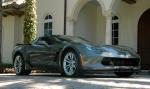


 I was thinking about this today!