






Z06 teaser?

Racer


Joined: Aug 2018
Posts: 443
Likes: 464

From my other post on this subject:
I think alot of folks on this forum are really hung up on numbers esp Torque. Look how fast the 991.2 GT3 from Porsche goes around the 'ring. It does a 6:56 from 513HP and only 347lb-ft of torque. 3180lbs. I am not saying there isn't a place for stupid HP and Torque in terms of selling cars, but rather there is a big profitable hole in the Corvette line where they could compete with the GT3.
If driven a GT3 and ridden in a GT3 RS and they are AMAZING vehicles and I am no Porsche Fanboy. GT3 does 0-60 in 3.2 with only 347lb-ft of torque! The short gearing from the high redline will slam you into your seat. If GM can put a flat plane crank engine that revs to 8000+ with 550HP(which seems consistent with other FPC outputs), they will have a winner for $15-$30K extra(depending on lightweighting).
IMHO, THAT CAR should be called the ZORA. Zora Arkus Duntov was all about racing. Keep the Z06 with TT lots of power and torque for the cars & coffee crowd. It will ultimately be easier to hit power and emissions targets with the Z06 with TT than NA. Make the TT with Electric the ZR-1.
That makes GM fit into Porsche's proven segments(Also Ford). ZORA=GT3=GT350 Z06=911 Turbo=GT500 ZR-1=GT2=Ford GT. Mo Money for GM, Better Brand Positioning, Mega Win for us.
As usrodeo4 says, "as an engineer, it gets curiouser and curiouser" As an engineer, I agree with this. Flat-Plane crank and Twin-Turbo seem like odd bed fellows to me. Whenever GM does forced induction, they reduce RPM, to reduce engine stresses. The Flat-Plane crank engine makes power by spinning faster. It will reduce crank mass but more than make up with it with DOHC. So then add turbo weight to that too? Hmmmm. From a driver perspective, the larger Rev range is very visceral. Going down to 6000-6500rpm redline is not very exciting.
As they reduce displacement, they have to reduce compression ratio to run higher and higher boost to hit power targets. This makes the engine lazy.
First choice would be a 5+ L high static compression NA FPC that revs to 8000+RPM. Use lightweighting on the rest of it to make it your "GT3" option.
If it has to be TT, I would like to see a low boost, high static compression ratio FPC engine that revs as well. If they go small displacement high boost, they are just wasting my time. That would make a great numbers car but be really uninteresting to me.
I think alot of folks on this forum are really hung up on numbers esp Torque. Look how fast the 991.2 GT3 from Porsche goes around the 'ring. It does a 6:56 from 513HP and only 347lb-ft of torque. 3180lbs. I am not saying there isn't a place for stupid HP and Torque in terms of selling cars, but rather there is a big profitable hole in the Corvette line where they could compete with the GT3.
If driven a GT3 and ridden in a GT3 RS and they are AMAZING vehicles and I am no Porsche Fanboy. GT3 does 0-60 in 3.2 with only 347lb-ft of torque! The short gearing from the high redline will slam you into your seat. If GM can put a flat plane crank engine that revs to 8000+ with 550HP(which seems consistent with other FPC outputs), they will have a winner for $15-$30K extra(depending on lightweighting).
IMHO, THAT CAR should be called the ZORA. Zora Arkus Duntov was all about racing. Keep the Z06 with TT lots of power and torque for the cars & coffee crowd. It will ultimately be easier to hit power and emissions targets with the Z06 with TT than NA. Make the TT with Electric the ZR-1.
That makes GM fit into Porsche's proven segments(Also Ford). ZORA=GT3=GT350 Z06=911 Turbo=GT500 ZR-1=GT2=Ford GT. Mo Money for GM, Better Brand Positioning, Mega Win for us.
As usrodeo4 says, "as an engineer, it gets curiouser and curiouser" As an engineer, I agree with this. Flat-Plane crank and Twin-Turbo seem like odd bed fellows to me. Whenever GM does forced induction, they reduce RPM, to reduce engine stresses. The Flat-Plane crank engine makes power by spinning faster. It will reduce crank mass but more than make up with it with DOHC. So then add turbo weight to that too? Hmmmm. From a driver perspective, the larger Rev range is very visceral. Going down to 6000-6500rpm redline is not very exciting.
As they reduce displacement, they have to reduce compression ratio to run higher and higher boost to hit power targets. This makes the engine lazy.
First choice would be a 5+ L high static compression NA FPC that revs to 8000+RPM. Use lightweighting on the rest of it to make it your "GT3" option.
If it has to be TT, I would like to see a low boost, high static compression ratio FPC engine that revs as well. If they go small displacement high boost, they are just wasting my time. That would make a great numbers car but be really uninteresting to me.
I have a 991.2 GT3RS and the relatively “low” HP and TQ numbers fool a lot of people. It’s fast as hell and ridiculous fun with the high revving engine.
A FPC high revving C8 Z06 would be awesome. I hope they do it. I’m not really interested in the base C8, but would buy the Z06 if they go this route.

Race Director


Joined: Oct 2008
Posts: 16,688
Likes: 7,746
From: NJ
The next engine going into the Corvette will be dohc. All will be turbo. Then hybrid assist. And even that will trickle down.
By 2024 the base C8 will be dohc tt. The Z06 same displacement but larger turbos and more boost and ZR1 more with hybrid assist. It's cost effective for the mfr. And has been adopted by numerous German automakers for once Chevy is following them down the right road. Exciting times ahead. Fpc makes zero sense in the street car given the nvh. But a dohc screamer makes perfect sense boosted.. high revs and low end torque.
By 2024 the base C8 will be dohc tt. The Z06 same displacement but larger turbos and more boost and ZR1 more with hybrid assist. It's cost effective for the mfr. And has been adopted by numerous German automakers for once Chevy is following them down the right road. Exciting times ahead. Fpc makes zero sense in the street car given the nvh. But a dohc screamer makes perfect sense boosted.. high revs and low end torque.

Melting Slicks


Joined: Sep 2005
Posts: 2,521
Likes: 146
From: Watertown CT
Those comparing a GT3 RS to a potential NA C8 Z06 need to look at a weight comparison as they Vette is much heavier than the GT3 RS. I have a buddy who owned the GT3 RS and the car was a ton of fun to drive but these aren't the same cars, not even close.

Le Mans Master


Joined: Jul 2010
Posts: 6,592
Likes: 2,649
From: Lancaster, PA
Not really. A true sequential transmission has a clutch pedal. A DCT equipped car does not. That makes it fundamentally different. The internals are also completely different. The C8 has the DCT, the C8R has a sequential transmission by all accounts (just like the C7R).
As yours...
As yours...
Corvette Stories
The Best of Corvette for Corvette Enthusiasts

Every 2027 Corvette Engine Explained
Joe Kucinski
Designer Imagines A Corvette That Looks More Like a Corvette Than the Corvette
Verdad Gallardo
10 Ugly Corvettes That We Still Kinda Love
Joe Kucinski
Top 10 Most Expensive Corvettes Ever Sold on Bring A Trailer
Brett Foote
10 Things Every Corvette Owner Needs (2026 Edition)
Michael S. Palmer
8 Most "Only Corvette Owners Understand" Quirks and Problems
Pouria Savadkouei
10 Reasons the C6 Z06 is Still A Performance Benchmark After 20 Years
Joe Kucinski
How Much Horsepower Every Corvette Engine "LOST" in 1972
Joe Kucinski
Top 10 DOs and DON'Ts for Protecting Your Convertible Top!
Michael S. Palmer
Burning Brakes

Joined: Sep 2018
Posts: 844
Likes: 729
From: Desert
I'm thinking this "Z06" is not going to be the just one step up from the base car.
Now this is all based on what we are all presuming to be the case: That the C8R will have a road going version to qualify it for it's race class, and that the car will have a naturally aspirated, DOHC 5.5 v8.
If GM developed this engine for a roadcar, which roadcar would be using it? It is not associated with the Cadillac Blackwing motor. It is not a modular architecture platform that will be used as a 2.0 4, a 3.0 6, or a 4.0 8 with turbos and hybridization for each depending on vehicle use. It's a groundbreaking new motor from GM that wouldn't have a home anywhere else in the lineup.
To me, this C8R streetcar is going to be something special. I think the car will be built in limited numbers, will have all of the wings, flaps, and cannards, and be a "race car for the street". Considering how closely Chevy has been following the high end sport car playbook in terms of options and customization, why wouldn't they build a Corvette GTLM road car, limit to 1000 USA only cars, and charge $160k each?
How else could this engine be used, to justify its creation for a $100k upgrade over the base car?
Now this is all based on what we are all presuming to be the case: That the C8R will have a road going version to qualify it for it's race class, and that the car will have a naturally aspirated, DOHC 5.5 v8.
If GM developed this engine for a roadcar, which roadcar would be using it? It is not associated with the Cadillac Blackwing motor. It is not a modular architecture platform that will be used as a 2.0 4, a 3.0 6, or a 4.0 8 with turbos and hybridization for each depending on vehicle use. It's a groundbreaking new motor from GM that wouldn't have a home anywhere else in the lineup.
To me, this C8R streetcar is going to be something special. I think the car will be built in limited numbers, will have all of the wings, flaps, and cannards, and be a "race car for the street". Considering how closely Chevy has been following the high end sport car playbook in terms of options and customization, why wouldn't they build a Corvette GTLM road car, limit to 1000 USA only cars, and charge $160k each?
How else could this engine be used, to justify its creation for a $100k upgrade over the base car?


Banned Scam/Spammer
Joined: Aug 2015
Posts: 3,166
Likes: 3,781
Race Director

Joined: Jun 2001
Posts: 10,084
Likes: 3,056
From: CA
The next engine going into the Corvette will be dohc. All will be turbo. Then hybrid assist. And even that will trickle down.
By 2024 the base C8 will be dohc tt. The Z06 same displacement but larger turbos and more boost and ZR1 more with hybrid assist. It's cost effective for the mfr. And has been adopted by numerous German automakers for once Chevy is following them down the right road. Exciting times ahead. Fpc makes zero sense in the street car given the nvh. But a dohc screamer makes perfect sense boosted.. high revs and low end torque.
By 2024 the base C8 will be dohc tt. The Z06 same displacement but larger turbos and more boost and ZR1 more with hybrid assist. It's cost effective for the mfr. And has been adopted by numerous German automakers for once Chevy is following them down the right road. Exciting times ahead. Fpc makes zero sense in the street car given the nvh. But a dohc screamer makes perfect sense boosted.. high revs and low end torque.
Last edited by Michael A; Oct 13, 2019 at 12:51 PM.
Le Mans Master
Joined: Jul 2010
Posts: 6,592
Likes: 2,649
From: Lancaster, PA
GM's V8s engines are much larger than the German and Italian counterparts, so perhaps they will put a naturally aspirated DOHC engine in the base model. I agree FPC makes no sense for a street car given the NVH, especially at Corvette engine displacements. The BMW M3 V8 was not FPC, and it had a redline of 8400 rpm. People are mixing up crankshaft layout with maximum RPM. There is no relationship, other than the FPC engine vibration is just going to get worse and worse as RPM climbs to the point where parts fail. Ford had to add so much counterweighting to the GT350 engine to keep it together, that the end result was zero reduction in rotational inertial than if they just stuck with a CPC. The FPC ended up being nothing more than a marketing gimmick.

Le Mans Master

Joined: Aug 2000
Posts: 5,531
Likes: 1,943
From: Austin Texas
so perhaps they will put a naturally aspirated DOHC engine in the base model. I agree FPC makes no sense for a street car given the NVH,
especially at Corvette engine displacements. The BMW M3 V8 was not FPC, and it had a redline of 8400 rpm. People are mixing up crankshaft layout with maximum RPM. There is no relationship, other than the FPC engine vibration is just going to get worse and worse as RPM climbs to the point where parts fail.
Ford had to add so much counterweighting to the GT350 engine to keep it together, that the end result was zero reduction in rotational inertial than if they just stuck with a CPC. The FPC ended up being nothing more than a marketing gimmick.
FPC also enables the headers to flow air more evenly.


Pro

Joined: Apr 2019
Posts: 551
Likes: 263
Wondering how long it will take for someone to attempt to swap the sequential manual into a street car. And I do agree they are completely different. The sequential manual is a shift forward to move up in gear and shift down to more down. It's manual, not electronic and has less failure potential in a race environment. Not easy to drive on the street, but that's also not the point, it would be a true racecar feel by sacrificing the comfort associated with the DCT.
Drifting

Joined: Jul 2019
Posts: 1,325
Likes: 701
From my other post on this subject:
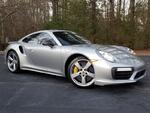
I think alot of folks on this forum are really hung up on numbers esp Torque. Look how fast the 991.2 GT3 from Porsche goes around the 'ring. It does a 6:56 from 513HP and only 347lb-ft of torque. 3180lbs. I am not saying there isn't a place for stupid HP and Torque in terms of selling cars, but rather there is a big profitable hole in the Corvette line where they could compete with the GT3.
If driven a GT3 and ridden in a GT3 RS and they are AMAZING vehicles and I am no Porsche Fanboy. GT3 does 0-60 in 3.2 with only 347lb-ft of torque! The short gearing from the high redline will slam you into your seat. If GM can put a flat plane crank engine that revs to 8000+ with 550HP(which seems consistent with other FPC outputs), they will have a winner for $15-$30K extra(depending on lightweighting).
IMHO, THAT CAR should be called the ZORA. Zora Arkus Duntov was all about racing. Keep the Z06 with TT lots of power and torque for the cars & coffee crowd. It will ultimately be easier to hit power and emissions targets with the Z06 with TT than NA. Make the TT with Electric the ZR-1.
That makes GM fit into Porsche's proven segments(Also Ford). ZORA=GT3=GT350 Z06=911 Turbo=GT500 ZR-1=GT2=Ford GT. Mo Money for GM, Better Brand Positioning, Mega Win for us.
As usrodeo4 says, "as an engineer, it gets curiouser and curiouser" As an engineer, I agree with this. Flat-Plane crank and Twin-Turbo seem like odd bed fellows to me. Whenever GM does forced induction, they reduce RPM, to reduce engine stresses. The Flat-Plane crank engine makes power by spinning faster. It will reduce crank mass but more than make up with it with DOHC. So then add turbo weight to that too? Hmmmm. From a driver perspective, the larger Rev range is very visceral. Going down to 6000-6500rpm redline is not very exciting.
As they reduce displacement, they have to reduce compression ratio to run higher and higher boost to hit power targets. This makes the engine lazy.
First choice would be a 5+ L high static compression NA FPC that revs to 8000+RPM. Use lightweighting on the rest of it to make it your "GT3" option.
If it has to be TT, I would like to see a low boost, high static compression ratio FPC engine that revs as well. If they go small displacement high boost, they are just wasting my time. That would make a great numbers car but be really uninteresting to me.
I think alot of folks on this forum are really hung up on numbers esp Torque. Look how fast the 991.2 GT3 from Porsche goes around the 'ring. It does a 6:56 from 513HP and only 347lb-ft of torque. 3180lbs. I am not saying there isn't a place for stupid HP and Torque in terms of selling cars, but rather there is a big profitable hole in the Corvette line where they could compete with the GT3.
If driven a GT3 and ridden in a GT3 RS and they are AMAZING vehicles and I am no Porsche Fanboy. GT3 does 0-60 in 3.2 with only 347lb-ft of torque! The short gearing from the high redline will slam you into your seat. If GM can put a flat plane crank engine that revs to 8000+ with 550HP(which seems consistent with other FPC outputs), they will have a winner for $15-$30K extra(depending on lightweighting).
IMHO, THAT CAR should be called the ZORA. Zora Arkus Duntov was all about racing. Keep the Z06 with TT lots of power and torque for the cars & coffee crowd. It will ultimately be easier to hit power and emissions targets with the Z06 with TT than NA. Make the TT with Electric the ZR-1.
That makes GM fit into Porsche's proven segments(Also Ford). ZORA=GT3=GT350 Z06=911 Turbo=GT500 ZR-1=GT2=Ford GT. Mo Money for GM, Better Brand Positioning, Mega Win for us.
As usrodeo4 says, "as an engineer, it gets curiouser and curiouser" As an engineer, I agree with this. Flat-Plane crank and Twin-Turbo seem like odd bed fellows to me. Whenever GM does forced induction, they reduce RPM, to reduce engine stresses. The Flat-Plane crank engine makes power by spinning faster. It will reduce crank mass but more than make up with it with DOHC. So then add turbo weight to that too? Hmmmm. From a driver perspective, the larger Rev range is very visceral. Going down to 6000-6500rpm redline is not very exciting.
As they reduce displacement, they have to reduce compression ratio to run higher and higher boost to hit power targets. This makes the engine lazy.
First choice would be a 5+ L high static compression NA FPC that revs to 8000+RPM. Use lightweighting on the rest of it to make it your "GT3" option.
If it has to be TT, I would like to see a low boost, high static compression ratio FPC engine that revs as well. If they go small displacement high boost, they are just wasting my time. That would make a great numbers car but be really uninteresting to me.
Drifting

Joined: Feb 2004
Posts: 1,950
Likes: 363
From: Colorado
From my other post on this subject:
I think alot of folks on this forum are really hung up on numbers esp Torque. Look how fast the 991.2 GT3 from Porsche goes around the 'ring. It does a 6:56 from 513HP and only 347lb-ft of torque. 3180lbs. I am not saying there isn't a place for stupid HP and Torque in terms of selling cars, but rather there is a big profitable hole in the Corvette line where they could compete with the GT3.
If driven a GT3 and ridden in a GT3 RS and they are AMAZING vehicles and I am no Porsche Fanboy. GT3 does 0-60 in 3.2 with only 347lb-ft of torque!
I think alot of folks on this forum are really hung up on numbers esp Torque. Look how fast the 991.2 GT3 from Porsche goes around the 'ring. It does a 6:56 from 513HP and only 347lb-ft of torque. 3180lbs. I am not saying there isn't a place for stupid HP and Torque in terms of selling cars, but rather there is a big profitable hole in the Corvette line where they could compete with the GT3.
If driven a GT3 and ridden in a GT3 RS and they are AMAZING vehicles and I am no Porsche Fanboy. GT3 does 0-60 in 3.2 with only 347lb-ft of torque!

Advanced
Joined: Dec 2018
Posts: 64
Likes: 44
The lighter weight FPC allows more rapid acceleration and deceleration of the rotating assembly but it wont allow any higher RPM then would a CPC and in fact I would suspect a CPC would ultimately rev higher due its better overall balance... for what it's worth I'm a fan of conventional boosted OHV V8's, pound for pound inch for inch they are the most power dense engines you can get , when I say inch for inch I am talking physical size of the engine itself.. the OHV design allows massive cylinder displacement in relation to the engines physical size , and the powerband is wicked for day to day driving and even more wicked down the 1/4 mile. Stuff the LT5 in the C8 platform and call it the new Z06 and I'd be as happy as could be... imagine what the LT5 could do with the C8's traction ?

Drifting
Joined: Nov 2017
Posts: 1,900
Likes: 1,351
You're refering to the 991 GT2RS which is a completely different animal with 690 hp and 553 lb./tq. The 991.1 and 991.2 are completely lacking in torque. My 991S X51 is not nearly as much fun to drive as my '17 Z07. For me the fun factor quotient starts at a minimum of 450 + torque otherwise you're spending all your time above 6000 rpm in the 991 NA.
So many people in this forum have been living under a rock and have huge blinders blocking the reality.
Drifting
Joined: Nov 2017
Posts: 1,900
Likes: 1,351
You're refering to the 991 GT2RS which is a completely different animal with 690 hp and 553 lb./tq. The 991.1 and 991.2 are completely lacking in torque. My 991S X51 is not nearly as much fun to drive as my '17 Z07. For me the fun factor quotient starts at a minimum of 450 + torque otherwise you're spending all your time above 6000 rpm in the 991 NA.
So many people in this forum have been living under a rock and have huge blinders blocking the reality.
my gt350 weighs 3680 lbs. it seats 4 people and a massive car. How can a 2 seater “exotic” weigh almost the same? How much do you think Z models with more cooling and hardware will weigh? At least 200 lbs more. Now you have a 2 seater car hitting almost 4000 lbs. you skipped the physics class in school if you think smart electronics and more power can cheat law of physics.