




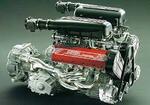



2022 Engine Updates Explained

Thread Starter
Moderator


Joined: Dec 2002
Posts: 40,902
Likes: 4,352
From: Lakewood Ranch, FL

Drifting

Joined: Apr 2021
Posts: 1,911
Likes: 2,569
From: Chicago-ish

Here’s to hoping these new systems don’t bring a bunch of headache down the line with malfunctions and mysterious CEL’s. Always hate being the guinea pig for a new thing but I’ll be damned if I delay my order for a ‘22 just for that. I imagine the new FPC motors will also be using some form of these improvements as well.

Race Director


Joined: Mar 2007
Posts: 11,466
Likes: 8,640
I read the article. I still can't tell, but I assume this is at least partly a hardware modification to some engine components? If its all software, then it could potentially be available via OTA updates, and could actually be included in 2021s being built now. Not that it sounds like anything we need to have.

Race Director


Joined: Sep 2016
Posts: 13,180
Likes: 10,528
Other sources have provided more info than (not) GM (not and) Authority.
The big news concerns changes made to the 6.2-liter small block V8. Chevy says it upgraded the fuel injection system and “improved” the engine calibration. We chatted with Chief Engineer Josh Holder to dig into this and the other changes on a deeper level. Essentially, the injection system operates at a higher pressure now, and Holder says this helps to lower emissions and provides greater stability at idle. That said, the engine keeps its 490 horsepower rating in base trim and 495 horsepower rating with the performance exhaust system. The 0-60 mph time for the Z51 car remains at 2.9 seconds, too. Holder noted that it took some work to both lower emissions and keep the power levels where they stand currently.
The last powertrain tweak is an “enhanced” Active Fuel Management range. Holder says that the engine will now deactivate cylinders over a broader range of rpms and in lower gears now. Engineers aren't claiming that the EPA ratings will inch upward yet (we're told to wait and see on that front), but they're certain that real world fuel economy will see a noticeable improvement."
The last powertrain tweak is an “enhanced” Active Fuel Management range. Holder says that the engine will now deactivate cylinders over a broader range of rpms and in lower gears now. Engineers aren't claiming that the EPA ratings will inch upward yet (we're told to wait and see on that front), but they're certain that real world fuel economy will see a noticeable improvement."

Pro


Joined: Feb 2020
Posts: 581
Likes: 574
Corvette Stories
The Best of Corvette for Corvette Enthusiasts

5 Best & 5 Worst Corvette Daily Drivers
Joe Kucinski
The Headlights of Every Corvette Generation Explained
Joe Kucinski
5 Best & 5 Most Overrated Corvette Track Packages of All Time!
Joe Kucinski
Every 2027 Corvette Engine Explained
Joe Kucinski
Designer Imagines A Corvette That Looks More Like a Corvette Than the Corvette
Verdad Gallardo
10 Ugly Corvettes That We Still Kinda Love
Joe Kucinski
Top 10 Most Expensive Corvettes Ever Sold on Bring A Trailer
Brett Foote
10 Things Every Corvette Owner Needs (2026 Edition)
Michael S. Palmer
8 Most "Only Corvette Owners Understand" Quirks and Problems
Pouria Savadkouei
Racer

Joined: Aug 2004
Posts: 379
Likes: 170
From: Buffalo Grove IL
My understanding is that the failures were due to the OBD-II system still being in the "Not Ready" state, e.g. they engine hasn't been run in enough different conditions that all of the self-tests were able to complete. It was not related to actual emission levels, which is what the higher fuel pressure would address.


Pro
Joined: Nov 2013
Posts: 630
Likes: 94
No detailed information provided..... left to speculate....
Fuel rail pressure raised from what... to what? 2,700 to 2,900psi?
To what effect?
Seems it would make LT2 more knock resistant. Engine management
encounter fewer situations where it has to pull timing.
Sure there's more to it than that....
Fuel rail pressure raised from what... to what? 2,700 to 2,900psi?
To what effect?
Seems it would make LT2 more knock resistant. Engine management
encounter fewer situations where it has to pull timing.
Sure there's more to it than that....

Le Mans Master


Joined: Aug 2000
Posts: 5,531
Likes: 1,944
From: Austin Texas


