







 All the best.
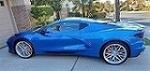

Mod Wheel Question

Melting Slicks


Joined: Dec 2019
Posts: 2,599
Likes: 1,793
From: Mandalore

Cons: You need to buy new tires that fit, becomes a more expensive consumable to replace regularly. Thinner sidewall reduces comfort and increases chance of impact break (hit a bump or leave a driveway too briskly and the sidewall can get pinched enough to bust a hole due to smaller air cushion--happened to me before). Heavier vs 19/20 setup.
Pros: Thinner sidewall widens contact patch for more grip.
Side opinion: More intricate, aggressive wheel faces look awkward as 19/20 but natural as 20/21. But need to lower somewhat aggressively (0.75" or more) for 20/21 to look good. If stock height or moderately lowered 0.5", then 19/20 looks better.
Pros: Thinner sidewall widens contact patch for more grip.
Side opinion: More intricate, aggressive wheel faces look awkward as 19/20 but natural as 20/21. But need to lower somewhat aggressively (0.75" or more) for 20/21 to look good. If stock height or moderately lowered 0.5", then 19/20 looks better.
Last edited by switchlanez; Aug 6, 2022 at 03:44 AM.

Thread Starter
Instructor


Joined: May 2022
Posts: 218
Likes: 111
From: Morristown, NJ
Cons: You need to buy new tires that fit, becomes a more expensive consumable to replace regularly. Thinner sidewall reduces comfort and increases chance of impact break (hit a bump or leave a driveway too briskly and the sidewall can get pinched enough to bust a hole due to smaller air cushion--happened to me before). Heavier vs 19/20 setup.
Pros: Thinner sidewall widens contact patch for more grip.
Side opinion: More intricate, aggressive wheel faces look awkward as 19/20 but natural as 20/21. But need to lower somewhat aggressively (0.75" or more) for 20/21 to look good. If stock height or moderately lowered 0.5", then 19/20 looks better.
Pros: Thinner sidewall widens contact patch for more grip.
Side opinion: More intricate, aggressive wheel faces look awkward as 19/20 but natural as 20/21. But need to lower somewhat aggressively (0.75" or more) for 20/21 to look good. If stock height or moderately lowered 0.5", then 19/20 looks better.

Race Director


Joined: Sep 2016
Posts: 13,180
Likes: 10,522
Heavier also means slower acceleration and worse ride.
A thinner sidewall doesn't make the contact patch larger. A wider rim and tire makes the contact patch wider. The only real benefit is styling, if you prefer the look. Functionally it'll be worse in every respect. Most race cars use 18" wheel and tires, not 21", or 22" or ....
A thinner sidewall doesn't make the contact patch larger. A wider rim and tire makes the contact patch wider. The only real benefit is styling, if you prefer the look. Functionally it'll be worse in every respect. Most race cars use 18" wheel and tires, not 21", or 22" or ....
Thread Starter
Instructor
Joined: May 2022
Posts: 218
Likes: 111
From: Morristown, NJ
Melting Slicks
Joined: Dec 2019
Posts: 2,599
Likes: 1,793
From: Mandalore
Heavier also means slower acceleration and worse ride.
A thinner sidewall doesn't make the contact patch larger. A wider rim and tire makes the contact patch wider. The only real benefit is styling, if you prefer the look. Functionally it'll be worse in every respect. Most race cars use 18" wheel and tires, not 21", or 22" or ....
A thinner sidewall doesn't make the contact patch larger. A wider rim and tire makes the contact patch wider. The only real benefit is styling, if you prefer the look. Functionally it'll be worse in every respect. Most race cars use 18" wheel and tires, not 21", or 22" or ....
Not only that, a larger diameter also increases longitudinal contact patch (rubber touches more ground front to rear, along the wheel's tangential plane). Z06 engineers in multiple interviews explained that effect when choosing 1" larger diameter wheels for the Z06 (didn't need to discuss increasing the width because that's obvious and goes without saying). An exaggerated illustration: Pretend you have an dough roller (3"x11" wheel) vs the C8's 20"x11" stock rear wheel. Exact same 11" width between the two touches the ground but the C8 wheel will flatten more dough even if both aren't rolling. Likewise, bump that 20" wheel up to 21" will flatten slightly more dough (or in this case, flatten more tire rubber against the ground forming more front-to-back contact patch).
So changing to a larger diameter without even changing width still increases contact patch in both length (longitudinally) and width (laterally).
Last edited by switchlanez; Aug 8, 2022 at 03:13 AM.
Corvette Stories
The Best of Corvette for Corvette Enthusiasts

Top 10 Most Explosive Corvettes Ever Made: Power-to-Weight Ratio Ranked!
Joe Kucinski
150 hp to 1,250 hp: Every Corvette Generation Compared by the Specs That Matter
Joe Kucinski
8 Coolest Corvette Pace Cars (and Replicas) of All Time
Verdad Gallardo
Top 10 Corvette Engines RANKED by Peak Torque (70+ Years of Muscle!)
Joe Kucinski
Corvette ZR1X Will Be Pacing the Indy 500, And Could Probably Race, Too!
Verdad Gallardo
Top 10 Corvettes Coming to Mecum Indy 2026!
Brett Foote
Top 10 C9 Corvette MUST-HAVES to Fix These C8 Generation Flaws!
Michael S. Palmer
10 Revolutionary 'Corvette Firsts' Most People Don't Know
Joe Kucinski
5 Reasons to Upgrade to an LS6-Powered Corvette; 5 Reasons to Stay LT2
Michael S. Palmer
Melting Slicks


Joined: Jan 2006
Posts: 2,299
Likes: 1,860
From: Oregon
20/21 really make the car look super fast - exotic, but that is expensive in more than one way. The cost of those low profile tires is really high, and the ride will certainly be harder.
In theory a shorter sidewall should make the car handle better, but the OEM suspension is tuned for a 19/20 combination, and that is about as good as it is going to get.
You may notice a difference in the steering with less sidewall flex, but the ride will probably be harder. Overall it is an expensive change that will look cool, but any gains in performance come at a cost of ride quality.
I agree with DSO, most race cars don't use bigger wheels because the tires are so expensive, and it makes the suspension harder to tune. Shocks and springs have to be tuned to match.
In theory a shorter sidewall should make the car handle better, but the OEM suspension is tuned for a 19/20 combination, and that is about as good as it is going to get.
You may notice a difference in the steering with less sidewall flex, but the ride will probably be harder. Overall it is an expensive change that will look cool, but any gains in performance come at a cost of ride quality.
I agree with DSO, most race cars don't use bigger wheels because the tires are so expensive, and it makes the suspension harder to tune. Shocks and springs have to be tuned to match.
Race Director
Joined: Sep 2016
Posts: 13,180
Likes: 10,522
If you only change wheel diameter and tire size and keep outer diameter, tire model, and tire width the same, the shorter sidewall bows inwards less at the shoulder forcing the shoulder/sidewall to stand more upright or perpendicular to the ground. The result is a more squared shoulder (rather than rounded like donuts) and increased lateral contact patch, even if the tire's width spec remains unchanged (ex: going from 305/30R20 to 305/25R21). Think of it like a thin rubber band being more flat against the ground than a thick rubber o-ring. They have the same outer diameter, but the o-ring has a smaller inner diameter (fits a 20" wheel) vs the rubber band (fits a 21" wheel).
Not only that, a larger diameter also increases longitudinal contact patch (rubber touches more ground front to rear, along the wheel's tangential plane). Z06 engineers in multiple interviews explained that effect when choosing 1" larger diameter wheels for the Z06 (didn't need to discuss increasing the width because that's obvious and goes without saying). An exaggerated illustration: Pretend you have an dough roller (3"x11" wheel) vs the C8's 20"x11" stock rear wheel. Exact same 11" width between the two touches the ground but the C8 wheel will flatten more dough even if both aren't rolling. Likewise, bump that 20" wheel up to 21" will flatten slightly more dough (or in this case, flatten more tire rubber against the ground forming more front-to-back contact patch).
Melting Slicks
Joined: Dec 2019
Posts: 2,599
Likes: 1,793
From: Mandalore
"The taller wheel or the longer tire patch is a huge enabler that gives the [contact patch] shape instead of a thin oval, it makes it more stretched out from a fore-aft standpoint. So it gives you more ability to put power down . . . more so than the width."
Last edited by switchlanez; Aug 8, 2022 at 08:02 PM.